Tung Jen's Chinese astrology

 76
76

Tung Jen's Chinese astrology
Dong Ren's "Tung Jen's Chinese Astrology" offers a direct, unadorned primer on a system often obscured by layers of cultural and linguistic barriers. Its strength lies in its methodical presentation of the core components: the Five Elements, the animal zodiac, and their interplay through the Ba Zi. The text avoids the florid prose common in later esoteric works, opting instead for a clarity that, while sometimes stark, is appreciated by those seeking foundational knowledge. A particular passage detailing the generative and destructive cycles of the Five Elements is presented with admirable economy. However, the work's primary limitation is its age; the 1944 publication predates much of the cross-pollination between Eastern and Western esoteric thought that occurred later in the century, meaning it offers less comparative context than more contemporary analyses. Despite this, it serves as a solid, if unembellished, entry point into a profound system.
📝 Description
76
Published in 1944, Tung Jen's Chinese Astrology explains the core mechanics of this ancient divination system.
Tung Jen's Chinese Astrology, released in 1944, offers a detailed look at the principles behind Chinese divination and fate interpretation. The book's aim is to clarify Chinese cosmology as it relates to personal destiny. It is written for readers who want to grasp the fundamental workings of Chinese astrology, going deeper than simple sun sign readings. Students of different divination methods and those interested in the history of astrological ideas in East Asia will find this text particularly useful.
The work covers key concepts like Yin-Yang philosophy, the Five Elements (Wu Xing), the Heavenly Stems, and the Earthly Branches, which include the twelve zodiac animals. It also explains the Ba Zi, or Eight Characters, used for birth chart analysis. The book shows how these elements combine to influence a person's character and life course.
Tung Jen's work emerged in the mid-20th century, a time when Western interest in Eastern thought was growing. This book served as a connection point between traditional Chinese calendrical systems and a Western readership. It presented these concepts independently of the contemporary Western astrological revival, offering a specific lens on Eastern esoteric practices.
💡 Why Read This Book?
• Understand the fundamental Ba Zi (Eight Characters) system, learning how your birth year, month, day, and hour, as represented by Heavenly Stems and Earthly Branches, are believed to influence destiny, a concept central to Dong Ren's analysis. • Grasp the cyclical interactions of the Five Elements (Wu Xing) – Wood, Fire, Earth, Metal, Water – and their role in shaping personality and predicting fortune, a key framework for interpreting astrological charts presented in the book. • Gain insight into the historical transmission of Chinese astrological knowledge to a Western audience, specifically appreciating the 1944 publication's attempt to bridge cultural divides in understanding Yin-Yang cosmology.
⭐ Reader Reviews
Honest opinions from readers who have explored this book.
❓ Frequently Asked Questions
What is the Ba Zi system explained in Tung Jen's Chinese Astrology?
The Ba Zi, or Eight Characters, is a core concept in Chinese astrology detailed in the book. It consists of four pairs of characters representing the year, month, day, and hour of birth, derived from the Heavenly Stems and Earthly Branches.
When was Tung Jen's Chinese Astrology first published?
Tung Jen's Chinese Astrology was first published in 1944, offering a mid-20th-century perspective on traditional Chinese astrological principles.
Does the book cover the Chinese Zodiac animals?
Yes, the book explains the twelve Earthly Branches, which correspond to the twelve animals of the Chinese Zodiac and are integral to understanding birth charts and yearly predictions.
What are the Five Elements according to this book?
The book details the Five Elements (Wu Xing): Wood, Fire, Earth, Metal, and Water. It explains their cyclical relationships, including how they generate and overcome each other, influencing destiny.
Is this book suitable for beginners in astrology?
Yes, Dong Ren's work is suitable for beginners seeking a foundational understanding of Chinese astrology's core components, presented in a straightforward manner.
Does the book discuss Yin and Yang?
Indeed, the fundamental principles of Yin and Yang are discussed as a foundational aspect of Chinese cosmology, underpinning the interactions between the various astrological components presented.
🔮 Key Themes & Symbolism
The Ba Zi Framework
Central to Dong Ren's exposition is the Ba Zi, or Eight Characters system. This method utilizes the interplay of the Heavenly Stems and Earthly Branches, corresponding to specific dates and times, to construct a unique astrological chart for an individual. The book elaborates on how these eight characters, derived from one's birth hour, day, month, and year, are interpreted to reveal personality traits, potential life events, and inherent strengths or weaknesses. Understanding the Ba Zi is presented as the key to unlocking personal destiny within the Chinese cosmological framework.
The Cycle of Wu Xing
The Five Elements—Wood, Fire, Earth, Metal, and Water—form another a core part of the astrological system discussed. Dong Ren details the generative (Sheng) and destructive (Ke) cycles that govern these elements. This understanding is crucial for interpreting the relationships between the Ba Zi components and predicting how energies will flow and interact throughout a person's life. The book emphasizes that imbalances or harmonious interactions within the Wu Xing cycle are significant indicators of fortune and challenges.
Yin-Yang Duality
The foundational concept of Yin and Yang permeates the entire astrological system presented. Dong Ren explains how these complementary, opposing forces are inherent in all phenomena, including the Heavenly Stems, Earthly Branches, and the Five Elements. Each component of the Ba Zi chart is analyzed for its Yin or Yang polarity, and the balance (or imbalance) between these forces is considered critical for a comprehensive reading. This duality provides a framework for understanding the dynamic equilibrium of cosmic energies.
Cosmic Influence on Destiny
This work posits that the configuration of celestial bodies and elemental energies at the precise moment of birth exerts a profound influence on an individual's life path. Dong Ren's text explores how the specific arrangement of Stems, Branches, Elements, and Yin-Yang polarities within a Ba Zi chart acts as a blueprint for one's character, relationships, career prospects, and overall fortune. It offers a deterministic perspective, suggesting that understanding these influences allows for a degree of foresight and preparedness.
💬 Memorable Quotes
Direct passages from the work, attributed to the author.
“The balance of Yin and Yang within the chart indicates stability.”
— This interpretation of a core concept underscores the importance of equilibrium between the dualistic forces of Yin and Yang as presented in the book for a harmonious life.
💡 Key Ideas
Editorial paraphrase of the work's core concepts — not direct quotes.
The Eight Characters determine the general outline of a person's life.
This paraphrased concept highlights the book's view of the Ba Zi system as a foundational determinant of an individual's fate, akin to a cosmic blueprint laid out at birth.
Water nourishes Wood, Wood fuels Fire, Fire creates Earth, Earth bears Metal, Metal holds Water.
This is a paraphrased representation of the generative cycle of the Five Elements (Wu Xing), illustrating how each element supports and gives rise to the next in a continuous flow.
Fire melts Metal, Metal cuts Wood, Wood parts Earth, Earth dams Water, Water douses Fire.
This paraphrased concept describes the destructive or controlling cycle of the Five Elements, showing how each element can overcome or restrain another, a critical aspect in astrological analysis.
Each animal sign is associated with specific elemental qualities and characteristics.
This paraphrased statement reflects the book's explanation of the Chinese Zodiac animals, linking their inherent nature to the broader system of the Five Elements and Yin-Yang.
🌙 Esoteric Significance
Tradition
This work falls within the broad category of East Asian traditional cosmology and divination, which shares philosophical underpinnings with various esoteric traditions through its emphasis on cyclical patterns, elemental forces, and the interconnectedness of macrocosm and microcosm. While not strictly Hermetic or Kabbalistic, its focus on symbolic interpretation, numerology (inherent in the Stems and Branches), and the mapping of celestial influences onto human lives aligns with the core concerns of Western esotericism.
Symbolism
Key symbols include the Heavenly Stems (甲, 乙, 丙, 丁, 戊, 己, 庚, 辛, 壬, 癸) and Earthly Branches (子, 丑, 寅, 卯, 辰, 巳, 午, 未, 申, 酉, 戌, 亥), which form the basis of the Ba Zi. The Twelve Animals associated with the Branches (Rat, Ox, Tiger, etc.) are potent symbols representing distinct energies. The Five Elements (Wu Xing) – Wood, Fire, Earth, Metal, Water – are fundamental symbolic forces whose interactions dictate cosmic and personal dynamics.
Modern Relevance
Contemporary practitioners of Chinese Metaphysics, Feng Shui consultants, and astrologers globally continue to reference the foundational principles laid out in works like Dong Ren's. The Ba Zi system remains a primary tool for personality analysis and predictive astrology in East Asia and among diasporic communities. Modern esoteric thinkers also draw upon the Wu Xing and Yin-Yang concepts for broader philosophical frameworks applicable to psychology and elemental magic.
👥 Who Should Read This Book
• Aspiring practitioners of Chinese Metaphysics seeking a clear introduction to the foundational elements like the Ba Zi and the Five Elements, moving beyond superficial zodiac animal interpretations. • Students of comparative divination systems interested in understanding the unique cosmological underpinnings of East Asian fate analysis as presented in a mid-20th-century context. • Individuals curious about their personal destiny through the lens of traditional Chinese astrology, looking for a text that explains the mechanics of how birth time influences life path.
📜 Historical Context
Dong Ren's "Tung Jen's Chinese Astrology," published in 1944, emerged during a period of significant global upheaval and burgeoning interest in comparative spiritual and divinatory systems. In the West, esoteric traditions like Theosophy and Anthroposophy had already begun popularizing Eastern philosophies, creating a receptive audience for such texts. This work arrived at a time when Western astrology was also experiencing a revival, spurred by figures like Dane Rudhyar. However, Dong Ren's book focused squarely on the traditional Chinese framework, offering a view distinct from the Western astrological renaissance. It provided a relatively unadulterated introduction to concepts like the Ba Zi and the Five Elements, bridging cultural divides without necessarily integrating them into Western esoteric paradigms. The reception was likely varied, appealing to those specifically interested in Chinese culture and divination, rather than a broad occult readership.
📔 Journal Prompts
The generative cycle of the Five Elements: How might these interactions manifest in daily decisions?
Your Ba Zi birth chart: Which element is most prominent, and what does the book suggest this implies?
Yin and Yang polarity: Identify a situation where both forces are clearly present and in tension.
The Earthly Branches: Reflect on the characteristics associated with your birth animal and any perceived alignment.
Interpreting life's outlines: Consider the book's assertion that the Eight Characters determine a person's life path.
🗂️ Glossary
Ba Zi (八字)
Literally 'Eight Characters,' this refers to the four pairs of Chinese characters (Heavenly Stems and Earthly Branches) representing the year, month, day, and hour of a person's birth, forming their unique astrological chart.
Heavenly Stems (天干)
A cycle of ten characters (Jia, Yi, Bing, Ding, Wu, Ji, Geng, Xin, Ren, Gui) used in the Chinese calendar and astrology, often paired with Earthly Branches.
Earthly Branches (地支)
A cycle of twelve characters (Zi, Chou, Yin, Mao, Chen, Si, Wu, Wei, Shen, You, Xu, Hai) associated with the twelve animals of the Chinese Zodiac, also used in astrological calculations.
Wu Xing (五行)
The Five Phases or Elements: Wood (木), Fire (火), Earth (土), Metal (金), and Water (水). Their dynamic interactions are central to Chinese philosophy and astrology.
Yin (陰) and Yang (陽)
Fundamental concepts representing complementary, opposing forces in Chinese philosophy. Yin is typically associated with passive, dark, and feminine qualities, while Yang is active, light, and masculine.
Sheng Cycle (生)
The generative or 'mother-child' cycle of the Five Elements, where one element gives birth to or nourishes the next (e.g., Wood nourishes Fire).
Ke Cycle (克)
The destructive or controlling cycle of the Five Elements, where one element overcomes or restrains another (e.g., Fire melts Metal).
🔮 Readers Also Liked
Browse all →









More by Dong Ren
All books →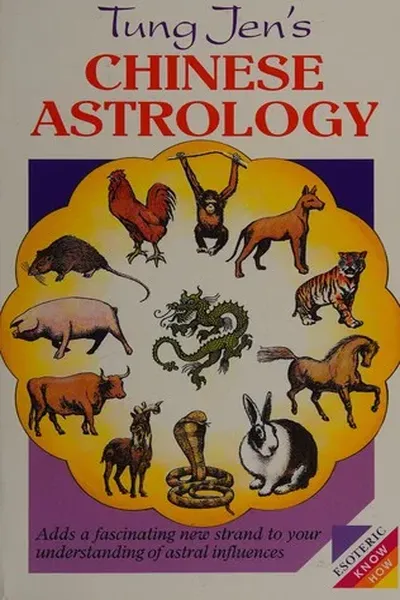
More Free Astrology & Cosmology Books
View all →