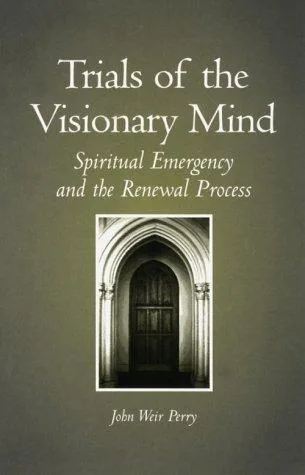
Trials of the Visionary Mind
 75
75

Trials of the Visionary Mind
John Weir Perry’s Trials of the Visionary Mind offers a compelling reframing of intense psychological experiences. Rather than a dry academic treatise, Perry writes with a clinician’s empathy and a philosopher’s rigor. His insistence on viewing visionary states not solely through the lens of pathology but as potential crucibles of meaning is particularly insightful. The section exploring the archetypal patterns within these crises, drawing parallels to shamanic traditions, provides a rich framework for understanding. However, the book’s dense prose can occasionally obscure its core arguments, requiring a dedicated reader to fully absorb its nuances. A particularly striking passage details the disorientation of ego dissolution and the subsequent re-emergence of a reorganized self. Perry’s work remains a vital contribution for anyone seeking a more holistic understanding of the human psyche’s capacity for transformation. It presents a case for the profound potential held within even the most challenging inner landscapes.
📝 Description
75
John Weir Perry's 1998 book examines the psychological states of visionary experiences.
This book scrutinizes the psychological terrain of visionary experiences, moving beyond simple diagnoses of psychosis or mysticism. Perry proposes that these altered states of consciousness possess their own unique phenomenology and inherent meaning. The work investigates the inner world of individuals undergoing significant psychic shifts, viewing these episodes not simply as pathology but as potential pathways to deeper self-knowledge. It is written for students of consciousness, depth psychology practitioners, and anyone curious about how altered states connect to personal transformation. Readers who challenge standard psychiatric views when faced with subjective visionary episodes will find this book particularly relevant. Scholars of religion and mythology may also appreciate its perspective on symbolic patterns and archetypal occurrences.
Perry's writing appeared when the psychiatric field often prioritized chemical and behavioral treatments for mental distress. His focus on the visionary mind offered a contrast, highlighting the symbolic and narrative aspects of psychological upheaval. This period saw other researchers, like Stanislav Grof, also broadening the understanding of non-ordinary states through work with psychedelics and holotropic breathwork. These concurrent interests suggest a wider intellectual movement exploring the latent potential within altered states of consciousness.
John Weir Perry's work engages with traditions that view altered states of consciousness as significant psychological events. His focus on the visionary crisis and its potential for personal growth aligns with contemplative and shamanic practices that interpret intense inner experiences as transformative. The book acknowledges a lineage of thought that seeks meaning in non-ordinary realities, contrasting with purely medical or reductionist approaches to mental phenomena. This perspective finds echoes in psychological anthropology and certain branches of comparative religion that explore symbolic systems and ecstatic states.
💡 Why Read This Book?
• Understand the 'visionary crisis' as a distinct psychological phenomenon with its own phenomenology, moving beyond standard diagnostic labels, as explored in Perry's 1998 work. • Gain insight into the potential for profound personal growth and meaning-making within periods of intense psychological upheaval, as detailed through case examples. • Explore the archetypal parallels between modern visionary experiences and ancient shamanic journeys, offering a cross-cultural perspective on altered states.
⭐ Reader Reviews
Honest opinions from readers who have explored this book.
❓ Frequently Asked Questions
What is the primary focus of John Weir Perry's 'Trials of the Visionary Mind'?
The book's primary focus is on understanding the psychological states associated with visionary experiences, exploring their meaning and potential for transformation beyond conventional psychiatric definitions.
When was 'Trials of the Visionary Mind' first published?
John Weir Perry's 'Trials of the Visionary Mind' was first published in 1998.
Does the book offer a path to healing from psychological distress?
While not a direct self-help manual, the book suggests that understanding the narrative and symbolic dimensions of visionary crises can be a crucial step toward integration and healing.
What is the 'visionary crisis' as described by Perry?
Perry describes the 'visionary crisis' as an intense period of psychological transformation characterized by altered states of consciousness and profound subjective experiences, which can lead to significant personal reorientation.
Who would benefit most from reading this book?
Students of psychology, depth psychology practitioners, comparative religion scholars, and individuals interested in altered states of consciousness and personal transformation would find this book particularly beneficial.
How does Perry's work differ from traditional psychiatric approaches?
Perry's approach differs by emphasizing the inherent meaning and symbolic landscape within visionary experiences, viewing them not solely as pathology but as potential sources of profound insight and growth.
🔮 Key Themes & Symbolism
The Visionary Crisis
Perry meticulously details the 'visionary crisis,' a state of profound psychological upheaval that transcends typical mental health categories. This theme explores the subjective experience of individuals undergoing these intense episodes, highlighting the disorienting yet potentially revelatory nature of altered consciousness. The work emphasizes that these crises are not mere breakdowns but can represent a fundamental restructuring of the psyche, offering a unique lens through which to view psychological distress as a potential catalyst for transformation and self-discovery.
Archetypal Patterns in Consciousness
A central theme is the recognition of recurring archetypal patterns within visionary experiences, drawing parallels to shamanic traditions and mythological narratives. Perry suggests that the individual's journey through a visionary crisis often follows a structure akin to the shamanic quest – a descent into the unknown, encounters with symbolic figures, and a return with new wisdom. This theme underscores the idea that these intensely personal experiences tap into universal psychological structures, offering a bridge between individual psyche and collective unconscious.
Integration and Meaning-Making
The book strongly posits that the value of a visionary crisis lies in its potential for integration and the subsequent creation of personal meaning. Perry argues that when these profound experiences are understood, contextualized, and worked with, they can lead to a significant reorientation of one's life and worldview. This theme addresses the process by which individuals can move from disorientation and potential suffering to a more integrated sense of self and purpose, transforming psychological challenges into profound personal growth.
Beyond Pathology
Perry's work critically challenges the reductionist view of visionary experiences as solely pathological. He advocates for a more nuanced understanding that acknowledges the potential for useful insights, spiritual emergence, and psychological development within these states. This theme is crucial for readers seeking alternative frameworks to conventional psychiatric models, offering a perspective that respects the subjective reality and potential wisdom embedded within altered states of consciousness.
💬 Memorable Quotes
Direct passages from the work, attributed to the author.
“Integration of the visionary experience is key to its transformative potential.”
— This interpretation highlights the central tenet that the value and healing power of visionary episodes are realized through the conscious process of incorporating their insights and energies into one's life.
“Psychic upheaval can be a doorway to profound personal transformation.”
— This interpretation captures Perry's optimistic yet rigorous view that intense psychological challenges can serve as catalysts for significant personal development and a redefinition of one's existence.
💡 Key Ideas
Editorial paraphrase of the work's core concepts — not direct quotes.
The visionary state is not necessarily an illness, but a different mode of experiencing reality.
This paraphrase captures Perry's core argument that intense psychological experiences characterized by visions should be viewed with a broader perspective, acknowledging their potential for insight rather than immediate categorization as pathology.
The structure of the visionary crisis often mirrors ancient shamanic journeys.
This conceptual paraphrase points to Perry's exploration of archetypal parallels, suggesting that the personal journey through a profound psychological state can echo universal patterns found in spiritual traditions like shamanism.
Understanding the symbolic language of the visionary mind is crucial.
This paraphrased concept emphasizes Perry's focus on the symbolic and narrative dimensions of visionary states, arguing that deciphering this inner language is essential for psychological integration and growth.
🌙 Esoteric Significance
Tradition
Perry's work draws implicitly from the depth psychology tradition, particularly Jungian analytical psychology, with its emphasis on archetypes and the collective unconscious. While not explicitly Gnostic or Hermetic, his exploration of visionary states as potential pathways to transformation and deeper self-knowledge aligns with perennialist philosophies that seek universal truths across diverse spiritual and psychological traditions. He departs from strict adherence to any single esoteric lineage by focusing on the phenomenology of spontaneous psychic events, offering a bridge between clinical observation and esoteric understanding of consciousness.
Symbolism
The book frequently engages with symbolic motifs that arise during visionary experiences. Key symbols include the 'dark night of the soul,' representing a period of profound ego dissolution and existential crisis, and the emergence of 'light' or luminous figures, often symbolizing integrated aspects of the self or divine encounters. The concept of the 'shamanic journey' itself functions as a potent symbolic structure, representing the descent into the unconscious and the quest for wisdom, mirroring motifs found across numerous esoteric traditions.
Modern Relevance
Perry's emphasis on the potential for meaning and transformation within profound psychological experiences resonates strongly with contemporary movements in transpersonal psychology, integral theory, and psychedelic-assisted therapy. Thinkers and practitioners exploring consciousness expansion, spiritual emergence, and the therapeutic potential of altered states continue to draw on his insights. His work provides a foundational perspective for understanding the 'spiritual emergency' concept and for developing therapeutic approaches that honor the symbolic and existential dimensions of challenging psychological states.
👥 Who Should Read This Book
• Students of depth psychology and Jungian analysis seeking to understand the symbolic and archetypal dimensions of profound psychological experiences. • Clinicians and therapists interested in alternative frameworks for understanding and working with clients undergoing intense psychic upheaval or spiritual emergence. • Individuals exploring their own visionary experiences and seeking a theoretical model that validates their subjective reality and potential for personal growth.
📜 Historical Context
John Weir Perry’s Trials of the Visionary Mind, published in 1998, arrived during a period of shifting perspectives in psychology and psychiatry. While the dominant paradigm increasingly favored psychopharmacological interventions and empirical, often reductionist, models of mental health, Perry's work represented a resurgence of interest in the qualitative and symbolic dimensions of altered states of consciousness. This era also saw continued exploration in transpersonal psychology and the legacy of figures like Carl Jung, whose concepts of archetypes and the collective unconscious provided a theoretical backdrop for understanding the deeper structures of the psyche. Perry's approach stood in contrast to purely biomedical models, aligning more with depth psychology traditions that sought to find meaning within psychological distress. His work implicitly engaged with the broader discourse on consciousness that included research into psychedelics and non-ordinary states, though his focus remained on spontaneous visionary crises.
📔 Journal Prompts
The concept of the visionary crisis: What are its distinguishing features?
Archetypal patterns in personal experience: How might they manifest?
The process of integration: What steps can foster meaning from upheaval?
Symbolism of light and darkness: Reflect on their appearance in your inner landscape.
The 'shamanic journey' as a metaphor for personal challenges.
🗂️ Glossary
Visionary Crisis
A period of intense psychological transformation characterized by profound altered states of consciousness, vivid imagery, and a potential restructuring of the individual's worldview and sense of self.
Integration
The process by which an individual consciously incorporates the insights, energies, and experiences gained during a visionary crisis into their everyday life and sense of identity.
Archetype
Universal, archaic patterns and images that derive from the collective unconscious and are the psychic counterpart of the behavior or symbol.
Phenomenology
The philosophical study of the structures of experience and consciousness as experienced from the first-person point of view.
Shamanic Journey
A spiritual practice involving a journey to non-ordinary domains of reality, often undertaken to gain knowledge, healing, or guidance, typically involving symbolic encounters.
Ego Dissolution
A state experienced during profound altered consciousness where the usual sense of self or personal identity temporarily dissolves or becomes fluid.
Depth Psychology
A broad category of psychological theories and therapies that emphasize the role of the unconscious mind and past experiences in shaping behavior and personality.
🔮 Readers Also Liked
Browse all →








More by John Weir Perry
All books →

More Free Occult Philosophy Books
View all →