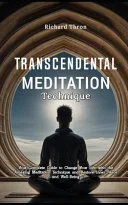
Transcendental Meditation Technique
 73
73

Transcendental Meditation Technique
Richard Thron’s "Transcendental Meditation Technique" serves as a functional primer for a practice that has demonstrably impacted millions. The work’s strength lies in its clear, step-by-step presentation of the TM method, avoiding the often-opaque jargon that can alienate newcomers to esoteric disciplines. It effectively highlights the technique's scientific validation, a crucial element for attracting a broad audience. However, the book occasionally leans too heavily on anecdotal evidence and the celebrity appeal of practitioners like Ellen DeGeneres, which, while motivating for some, can detract from the technique's inherent depth for others. A more thorough exploration of the philosophical underpinnings, beyond the purely pragmatic, would have offered a richer context. Nonetheless, for those seeking a straightforward introduction to TM, Thron provides a solid, actionable manual.
📝 Description
73
Richard Thron's 1972 manual details the Transcendental Meditation technique.
This book presents the Transcendental Meditation (TM) technique as a straightforward method for mental clarity and well-being. It explains the practice, noting its scientific validation and the benefits reported by practitioners worldwide. Thron aims to make TM accessible, addressing common questions and guiding individuals on how to incorporate it into their daily routines.
The text is suited for those seeking a structured meditation approach, especially those who value empirical evidence. It serves beginners curious about TM and experienced practitioners wanting a review or a more thorough grasp of the method. The book acknowledges those motivated by endorsements from public figures and scientific backing when considering new personal practices.
Transcendental Meditation gained prominence in the West during the 1960s and 1970s, largely due to Maharishi Mahesh Yogi's efforts. It was promoted as a secular, easily acquired skill, different from traditional religious or yogic disciplines. This approach attracted a wide audience, resonating with a growing Western interest in Eastern philosophies and meditation within counter-culture and academic settings.
While presented as secular, TM draws from the Vedic tradition of India. Its emphasis on a specific mantra, assigned by a teacher, to quiet the mind aligns with practices found in some Tantric and yogic lineages that aim for altered states of consciousness or deep inner stillness. The technique's stated goal of 'restful alertness' suggests a specific mental state cultivated through disciplined inner attention, a common thread in contemplative traditions seeking to transcend ordinary awareness.
💡 Why Read This Book?
• Learn the precise mechanics of the Transcendental Meditation technique, including how to utilize a personal mantra, a core element introduced by Maharishi Mahesh Yogi. • Understand the scientific research supporting TM, such as studies on reduced stress and improved brain function, providing empirical validation beyond anecdotal claims. • Discover how TM differs from other meditation forms by focusing on effortless settling of the mind, a key distinction emphasized in the book’s explanation of the technique's unique approach.
⭐ Reader Reviews
Honest opinions from readers who have explored this book.
❓ Frequently Asked Questions
What is Transcendental Meditation and how does it work?
Transcendental Meditation (TM) is a mantra-based meditation technique introduced by Maharishi Mahesh Yogi. It involves silently repeating a specific mantra for 15-20 minutes twice daily to allow the mind to settle into a state of deep rest and awareness.
Is Transcendental Meditation difficult to learn?
No, TM is designed to be simple and effortless. It requires no concentration or contemplation and can be learned by anyone, regardless of their background or beliefs, through instruction from a certified TM teacher.
What are the benefits of practicing Transcendental Meditation?
Practitioners report numerous benefits including reduced stress and anxiety, improved focus and clarity, better sleep, and increased creativity. Scientific studies have explored its effects on physiological markers like blood pressure.
Who developed Transcendental Meditation?
Transcendental Meditation was introduced to the West by Maharishi Mahesh Yogi, who developed the technique based on ancient Vedic traditions of India.
How many people practice Transcendental Meditation worldwide?
The book suggests that nearly 5 million people worldwide practice Transcendental Meditation, indicating its widespread adoption and popularity since its introduction.
Does Transcendental Meditation involve any religious beliefs?
TM is presented as a secular technique that does not require adherence to any religious or philosophical system. It is accessible to people of all backgrounds and beliefs.
🔮 Key Themes & Symbolism
The Mantra Mechanism
The book elaborates on the central role of the mantra in TM. This is not an ordinary word or phrase, but a specific sound vibration, often derived from ancient Sanskrit, assigned to the practitioner by a certified teacher. The mantra acts as a vehicle, allowing the mind to transcend active thought processes and settle into a state of deep, effortless rest. The technique emphasizes that the mantra is used passively, without concentration, facilitating a natural descent into inner quietude.
Scientific Validation
A significant portion of the text is dedicated to presenting the scientific research supporting the efficacy of Transcendental Meditation. This includes studies conducted over decades, investigating TM's impact on the nervous system, stress hormones, cardiovascular health, and cognitive functions. The emphasis on empirical evidence aims to bridge the gap between esoteric practices and conventional understanding, offering concrete data on benefits like reduced anxiety and improved mental clarity.
Effortless Practice
The core philosophy of TM, as presented, is its inherent effortlessness. Unlike concentration-based meditation techniques, TM requires no mental exertion, focus, or control. The practitioner is instructed to allow the mind to settle naturally, with the mantra serving as a gentle anchor. This emphasis on ease is a key differentiator, making the technique accessible to individuals who find other forms of meditation challenging or unattainable.
The State of Restful Alertness
TM aims to induce a unique state termed 'restful alertness.' This condition is characterized by deep physical relaxation coupled with a clear, alert mind. It is distinct from ordinary waking consciousness, dreaming, or deep sleep. The book explains this state as the optimal condition for the mind and body to heal, recharge, and function at their best, leading to enhanced creativity and problem-solving abilities.
💬 Memorable Quotes
Direct passages from the work, attributed to the author.
“The technique allows the mind to settle naturally.”
— This highlights the non-striving nature of TM. It suggests that the practice isn't about forcing a state but about creating conditions for the mind to return to its inherent state of quietude, much like allowing a disturbed body of water to naturally become still.
“Nearly 5 million practitioners reap its rewards.”
— This statistic underscores the widespread adoption and perceived success of TM. It serves as social proof, suggesting that if so many people have benefited, the technique likely holds genuine value and effectiveness.
“Celebrities have attested to its life-changing power.”
— Mentioning public figures like Ellen DeGeneres or Jerry Seinfeld is a marketing tactic to build credibility and relatability. It implies that if these well-known individuals can integrate TM into busy lives and find it beneficial, then perhaps an average person can too.
“A comprehensive manual to transcendental meditation.”
— This positions the book as a complete resource for learning and practicing TM. It suggests that readers will find all the necessary information within its pages, from the basic technique to understanding its benefits and context.
“Supported by scientific evidence.”
— This phrase appeals to a rational, evidence-based mindset. It differentiates TM from purely faith-based or mystical practices by highlighting its compatibility with scientific inquiry and measurable outcomes.
🌙 Esoteric Significance
Tradition
Transcendental Meditation draws heavily from the Vedic tradition of India, specifically the Upanishadic concept of transcending ordinary thought. While Maharishi Mahesh Yogi presented TM as a secular technique, its roots are in ancient Indian spiritual knowledge concerning consciousness and its inherent potential. It departs from many esoteric lineages by de-emphasizing ritual, guru devotion, and complex metaphysical doctrines, focusing instead on a specific, repeatable mental practice aimed at deep rest and expanded awareness.
Symbolism
The primary 'symbol' in TM is the mantra itself, which is considered a sound vibration that carries spiritual significance within the Vedic tradition. It is not meant to be contemplated or visualized in a conventional symbolic sense, but rather to be used as a vehicle for transcending thought. The concept of 'restful alertness' can also be seen as symbolic of the balanced state of consciousness that TM practitioners aim to achieve—a union of stillness and awareness.
Modern Relevance
TM continues to be relevant in contemporary wellness and mindfulness movements. Its emphasis on stress reduction and cognitive enhancement aligns with modern concerns about mental health and productivity. Therapists and wellness coaches sometimes incorporate TM principles or recommend the technique, and it's often cited in discussions comparing various meditation styles. Its scientific validation makes it a frequent reference point in popular psychology and self-help literature.
👥 Who Should Read This Book
• Individuals seeking a scientifically validated method for stress reduction and mental clarity, who may be skeptical of purely spiritual or philosophical approaches. • Busy professionals and students looking for a simple, time-efficient technique to improve focus, energy levels, and overall well-being amidst demanding schedules. • Those curious about meditation but intimidated by complex practices, who would benefit from a straightforward, easily learned technique with broad appeal.
📜 Historical Context
The emergence of Transcendental Meditation in the West, particularly in the 1960s and 1970s, occurred during a period of intense cultural exchange and spiritual seeking. Maharishi Mahesh Yogi, the technique's primary proponent, skillfully presented TM as a secular, easily accessible method distinct from the more complex philosophical systems of Eastern traditions like Vedanta or Yoga. This positioning allowed it to bypass the skepticism often directed at overtly religious or esoteric movements. While figures like The Beatles famously embraced meditation during this era, TM carved its own path, emphasizing scientific research and practical benefits over spiritual dogma. This approach contrasted with the more academically or philosophically dense explorations of consciousness prevalent in circles influenced by figures like Aldous Huxley or Alan Watts, who were also exploring altered states and Eastern thought but often through different lenses.
📔 Journal Prompts
The assigned mantra's role in transcending thought.
Personal experience of 'restful alertness' during practice.
How the scientific evidence presented influences your perception of TM.
The distinction between TM's effortless practice and concentration-based methods.
Reflecting on the global community of nearly 5 million practitioners.
🗂️ Glossary
Mantra
A specific sound or word, often of Sanskrit origin, used silently in Transcendental Meditation. It is assigned by a certified teacher and serves as a vehicle for the mind to settle into a state of deep rest.
Transcendental Meditation (TM)
A specific, effortless mental technique practiced for 15-20 minutes twice daily, involving the silent use of a mantra to achieve a state of restful alertness.
Restful Alertness
A unique state of consciousness achieved through TM, characterized by deep physical relaxation combined with a clear, alert mind. It is considered a state of optimal functioning for mind and body.
Vedic Tradition
An ancient body of knowledge originating from India, encompassing spiritual, philosophical, and ritualistic traditions. TM is presented as stemming from this tradition's insights into consciousness.
Effortless Technique
Describes TM's core principle: it requires no concentration, contemplation, or mental effort. The mind is allowed to settle naturally without force or control.
Maharishi Mahesh Yogi
The spiritual teacher who introduced Transcendental Meditation to the world, developing and disseminating the technique based on ancient Vedic principles.
Scientific Evidence
Refers to research and studies conducted to validate the physiological and psychological benefits of TM, often focusing on stress reduction, brain function, and well-being.