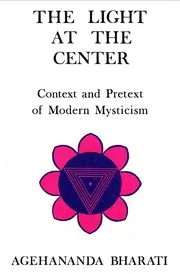
The Universe as Symbols & Signs

 75
75

The Universe as Symbols & Signs
Bishop Velimirovich’s attempt to decode the universe as a divine lexicon is ambitious, presenting a vision where creation itself becomes a sacred text. His argument for nature as a church, with every element a symbol of the divine, is particularly compelling. The strength lies in its deeply spiritual perspective, urging a re-enchantment of the mundane. However, the work occasionally strains under the weight of its own symbolic interpretations, sometimes feeling more like a personal theological vision than a universally applicable system. The passage on the symbolic meaning of the serpent, while illustrative, risks oversimplification common in such allegorical readings. Ultimately, it’s a work that demands an open heart and mind, offering a unique spiritual lens, though one not without its subjective biases.
📝 Description
75
Bishop Nikolai Velimirovich argued in 1921 that the universe communicates through a language of signs.
The Universe as Symbols & Signs posits that creation is a divine text, with every element acting as a signpost to spiritual truths. Bishop Nikolai Velimirovich, a Serbian Orthodox bishop, viewed the cosmos not as mere physical matter, but as a living language. He believed that understanding these symbols was essential for comprehending God's presence and purpose.
This book is for readers interested in a symbolic understanding of reality, moving beyond conventional dogma. It particularly appeals to those drawn to Orthodox Christianity, comparative religion, or the philosophy of symbolism. The work speaks to anyone who senses a hidden language in the world, seeking a deeper theological and philosophical engagement with existence.
Emerging from early 20th-century Serbian Orthodoxy, this work counters secularization by asserting the primacy of spiritual meaning. Bishop Velimirovich, influenced by Eastern Christian traditions and European philosophy, presented a view of the universe as divinely ordered and communicative. His thought aligns with mystical traditions that seek divine revelation not only in scripture but also in the created order, understanding nature as a manifestation of God's word and reason.
💡 Why Read This Book?
• Gain a unique perspective on the divine Logos as the architect of cosmic language, understanding how Bishop Velimirovich interprets creation as a living text, a concept central to his theological framework. • Explore the concept of nature as a church, learning how specific natural phenomena are presented as symbols pointing to the Creator, a perspective distinct from purely scientific or anthropocentric views. • Develop the 'eye of the soul' as advocated by Velimirovich, cultivating a deeper capacity to perceive hidden spiritual meanings in everyday occurrences, fostering a more contemplative engagement with the world.
⭐ Reader Reviews
Honest opinions from readers who have explored this book.
❓ Frequently Asked Questions
What is the primary theological tradition behind Bishop Nikolai Velimirovich's 'The Universe as Symbols & Signs'?
The book is rooted in the Eastern Orthodox Christian tradition. Bishop Velimirovich, a prominent Serbian Orthodox bishop, interprets creation through the lens of Orthodox theology, emphasizing the concept of the Logos and the sacramental nature of the created world.
When was Bishop Nikolai Velimirovich active as a writer and bishop?
Bishop Nikolai Velimirovich was active primarily in the first half of the 20th century. He lived from 1881 to 1956, serving as a bishop and prolific writer during a period of significant spiritual and political upheaval in Europe.
How does 'The Universe as Symbols & Signs' differ from standard theological texts?
Unlike many standard theological texts that focus on dogma or biblical exegesis, this book emphasizes a symbolic and allegorical reading of all creation. It posits that God communicates directly through natural phenomena and historical events, not just scripture.
What is the 'eye of the soul' as mentioned in the book?
The 'eye of the soul' refers to a spiritual faculty of perception, distinct from physical sight. It is the ability to discern the divine, symbolic meaning inherent in the created world, a capacity that Velimirovich believed could be cultivated through prayer and contemplation.
Is this book suitable for someone unfamiliar with Orthodox Christianity?
Yes, while rooted in Orthodox thought, the book's exploration of symbolism in nature is accessible to a broader audience interested in spiritual philosophy and the idea that the universe communicates.
What kind of symbols does Velimirovich discuss in the book?
Velimirovich discusses a wide range of symbols, including natural elements like stars, plants, and animals, as well as historical events and human actions, all interpreted as expressions of divine will and meaning.
🔮 Key Themes & Symbolism
Creation as Divine Text
Velimirovich argues passionately that the entire universe is a divinely authored book, written in a language of symbols and signs. This perspective moves beyond a purely scientific, mechanistic view of existence, suggesting that every star, plant, and creature carries a message from the Creator. The book invites readers to adopt a contemplative stance, seeking out these divine inscriptions within the natural world and historical events, thereby uncovering a deeper layer of reality that points towards God's presence and purpose in all things.
The Logos and Universal Order
Central to Velimirovich's thought is the concept of the Logos, understood as the divine Reason and Word that underpins all existence. This principle is not confined to theology but is seen as the organizing force behind the cosmos, imbuing it with order, beauty, and meaning. The work posits that understanding the Logos allows one to perceive the inherent structure and purpose within phenomena, revealing the universe as a coherent manifestation of divine intelligence rather than a product of random chance.
Nature as a Sacred Space
The book re-envisions nature not merely as a backdrop for human activity but as a sacred space, a 'church' where God's presence is made manifest. Every natural element, from the smallest insect to the grandest mountain, is presented as a potential sacrament or symbol. This viewpoint encourages a reverence for the natural world, fostering an awareness that the physical environment is imbued with spiritual significance and can serve as a conduit for divine revelation if one learns to perceive its symbolic language.
Perception and the 'Eye of the Soul'
Velimirovich stresses the importance of developing an inner faculty, the 'eye of the soul,' to truly comprehend the universe's symbolic language. This is not about intellectual understanding alone but about a spiritual attunement that allows one to see beyond the superficial appearance of things. The work encourages a disciplined practice of prayer, contemplation, and spiritual awareness to sharpen this inner vision, enabling the reader to perceive the divine messages woven into the fabric of existence.
💬 Memorable Quotes
Direct passages from the work, attributed to the author.
“The universe is a book and God is its author.”
— This concise statement captures the core thesis of the book: that reality is not accidental but divinely authored and intentionally meaningful, presenting itself to humanity as a text to be read and understood.
“Nature is a church where God is worshipped.”
— This interpretation elevates the natural world from a mere physical environment to a sacred sanctuary. It suggests that the beauty, order, and phenomena of nature are acts of worship and revelations of the divine, inviting human participation.
“Every star is a word of God.”
— This highlights the symbolic approach to cosmology, where celestial bodies are not just astronomical objects but carriers of divine meaning. Each star becomes a unit of language in God's cosmic discourse.
“We must learn to see with the eye of the soul.”
— This points to the necessity of spiritual perception over mere physical or intellectual understanding. It suggests that true comprehension of the universe's symbolic language requires an inner awakening and cultivated spiritual faculty.
“The Logos is the hidden thread connecting all creation.”
— This emphasizes the unifying principle of the Logos, suggesting it is the divine intelligence and order that binds the diverse elements of the universe into a coherent and meaningful whole.
🌙 Esoteric Significance
Tradition
Velimirovich's work is deeply embedded within the Eastern Orthodox Christian tradition, particularly its mystical and patristic streams. However, his explicit focus on interpreting the *entire cosmos* as a symbolic language aligns with broader esoteric currents that seek hidden meanings in nature. While not strictly Hermetic or Gnostic, his approach shares with these traditions a belief in a divinely ordered universe accessible through non-literal perception and a recognition of symbolic correspondences between the microcosm and macrocosm.
Symbolism
The book engages with a vast array of natural symbols. For instance, celestial bodies like stars are presented as divine words, signifying order and divine communication. The very act of creation is a symbolic act by God. Velimirovich likely explores concepts like light (representing divine illumination), water (representing life and purification), and perhaps even specific flora and fauna as carrying inherent spiritual messages, all understood within the framework of Orthodox theology.
Modern Relevance
Contemporary interest in eco-spirituality, integral spirituality, and the perennial philosophy finds echoes in Velimirovich's vision. Thinkers and practitioners seeking to bridge science and spirituality, or to find deeper meaning in the natural world beyond a purely materialist framework, may draw inspiration from his work. His emphasis on 'seeing with the eye of the soul' speaks to modern mindfulness and contemplative practices that aim to cultivate deeper awareness and perception.
👥 Who Should Read This Book
• Students of comparative religion and theology: To understand how a prominent 20th-century Orthodox bishop interpreted creation through a symbolic lens, offering a unique cross-traditional perspective. • Seekers of spiritual meaning in nature: For those who feel a deep connection to the natural world and wish to explore its potential for divine revelation beyond conventional scientific explanations. • Readers interested in esoteric philosophy: To engage with a work that, while rooted in a specific Christian tradition, explores universal themes of cosmic symbolism and hidden knowledge accessible through inner perception.
📜 Historical Context
Bishop Nikolai Velimirovich's work emerged in the early to mid-20th century, a period marked by intense philosophical shifts across Europe. As a prominent figure in Serbian Orthodoxy, he wrote against a backdrop of rising secularism, positivism, and materialist ideologies that sought to explain the universe solely through scientific observation. His emphasis on the symbolic nature of creation and the divine Logos offered a spiritual counter-narrative, deeply rooted in the Eastern Christian tradition but also engaging with broader European currents of thought that sought meaning beyond the purely empirical. While his theological output was substantial, his writings on cosmic symbolism provided a unique perspective that stood apart from the more academic theological discourse of figures like Karl Barth or Paul Tillich, who were also grappling with faith in a modernizing world. Velimirovich's work, though not always widely translated or studied in the West during his lifetime, resonated with those seeking a deeply spiritual interpretation of existence.
📔 Journal Prompts
The universe as a divine book: What elements of your immediate environment could be interpreted as 'words' from the Creator?
Reflect on the concept of the Logos as the unifying principle in your own understanding of existence.
How does the idea of nature as a church alter your perception of natural spaces?
Cultivating the 'eye of the soul': What practices could sharpen your spiritual perception of the world around you?
Consider a specific natural phenomenon you observe regularly; what symbolic meaning might it hold?
🗂️ Glossary
Logos
In Velimirovich's context, the divine Reason and Word of God, understood as the organizing principle of the universe, imbuing creation with order, meaning, and intelligibility.
Symbol
An element in creation that stands for or suggests something else, particularly a divine truth or reality, acting as a visible sign of an invisible spiritual reality.
Eye of the Soul
A spiritual faculty of perception, beyond physical sight or intellectual reasoning, enabling one to discern the hidden, symbolic meaning within the created world.
Nature as Church
The concept that the natural world itself functions as a sacred space, a place of divine revelation and worship, where God's presence is manifest through phenomena.
Divine Text
The notion that the universe, in its entirety, is a divinely authored and meaningful communication, analogous to a book, intended for human understanding.
Sacrament
An outward and visible sign of an inward and spiritual grace. In this context, natural elements or events can act as sacraments pointing to God.
Orthodox Christianity
The Eastern branch of Christianity that adheres to the doctrines and traditions of the early Church as preserved by the Greek and Slavic churches.
🔮 Readers Also Liked
Browse all →




More Free Mysticism & Contemplation Books
View all →