The Snow Leopard

 77
77

The Snow Leopard
Matthiessen's prose in "The Snow Leopard" possesses a rare clarity, particularly when describing the stark beauty of the Dolpo region and the subtle shifts within his own consciousness. The account of his trek with George Schaller in 1973 to observe the blue sheep is more than a travelogue; it’s an immersion into the rigorous discipline of Buddhist practice. While the narrative occasionally meanders, mirroring the contemplative state it seeks to evoke, its strength lies in its honest portrayal of doubt and revelation. The descriptions of the monks and their ascetic lives offer a stark counterpoint to modern materialism. A deeply personal yet universally resonant examination of seeking.
📝 Description
77
Peter Matthiessen's 2017 memoir recounts a 1978 trek through Nepal's Shey Phoksundo National Park.
Peter Matthiessen's "The Snow Leopard" documents his 1978 journey with George Schaller into the remote reaches of Nepal's Shey Phoksundo National Park. This personal account is more than a travelogue; it is a deep reflection on the author's spiritual quest, undertaken during a period of personal grief and a burgeoning interest in Eastern contemplative traditions. Matthiessen grapples with Buddhist philosophy, particularly Zen and Tibetan Buddhism, as he travels through the stark, beautiful landscape.
The book interweaves the physical challenges of the expedition with the author's internal state. He contemplates themes of impermanence, the nature of reality, and the search for meaning amidst the vastness of the Himalayas. The spiritual quest is intertwined with the scientific observation of wildlife, notably the elusive snow leopard, serving as a metaphor for the untamed and the sought-after.
Matthiessen's prose captures both the external environment and his internal landscape. The narrative invites readers to consider their own relationship with nature, spirituality, and the human condition. It is a contemplative work that resonates with those who seek to understand the intersection of the inner and outer worlds.
Published in 2017 but recounting a 1978 journey, "The Snow Leopard" arrived as Western engagement with Eastern spiritual traditions was deepening. Matthiessen, a practitioner of Zen, brought his contemplative lens to the stark realities of a Himalayan pilgrimage. The book engages directly with concepts from Tibetan Buddhism and Zen, such as shunyata (emptiness) and the practice of mindfulness, framing them within the context of a challenging physical journey. It reflects a broader cultural moment where individuals sought wisdom and alternative perspectives outside of Western frameworks, making it a significant text for understanding the transmission of esoteric ideas into accessible, personal narratives.
💡 Why Read This Book?
• Gain an intimate understanding of the Buddhist concept of shunyata, as experienced during the challenging 1973 trek through Nepal's Dolpo region. • Feel the transformative power of wilderness, specifically the stark, high-altitude landscapes that serve as a backdrop for profound spiritual inquiry. • Grasp the practical application of Zen and Tibetan Buddhist principles through Matthiessen's personal reflections on impermanence and presence.
⭐ Reader Reviews
Honest opinions from readers who have explored this book.
❓ Frequently Asked Questions
What is the primary focus of Peter Matthiessen's "The Snow Leopard"?
The book chronicles Matthiessen's 1973 pilgrimage with George Schaller into the Himalayas, blending natural history observation with deep engagement with Buddhist philosophy and practice.
When was "The Snow Leopard" first published?
The initial publication date for "The Snow Leopard" was 2017, though the events it describes took place much earlier.
What role does George Schaller play in the book?
George Schaller, a renowned naturalist, accompanied Matthiessen on the expedition to Nepal's Dolpo region. He serves as a scientific counterpoint and companion on the journey.
Does the book contain specific Buddhist teachings?
Yes, Matthiessen integrates his experiences with the teachings of Tibetan Buddhism and Zen, discussing concepts like shunyata and impermanence.
Is "The Snow Leopard" a nature writing book or a spiritual one?
It masterfully combines both, offering vivid descriptions of the Himalayan environment while exploring the author's inner spiritual quest and Buddhist reflections.
What is the significance of the snow leopard in the book?
The elusive snow leopard symbolizes the ultimate spiritual realization or enlightenment that Matthiessen seeks, representing the profound and often unseen aspects of existence.
🔮 Key Themes & Symbolism
The Nature of Reality
Matthiessen uses the vast, often harsh, Himalayan landscape as a mirror for exploring Buddhist concepts of emptiness (shunyata) and impermanence. The physical journey becomes a metaphor for the spiritual quest, where the perceived solidity of the world is questioned. The elusive snow leopard itself embodies this, representing a truth that is both present and intangible, just beyond ordinary perception.
Spiritual Discipline and Practice
The book offers a raw look at the rigors of Buddhist practice, particularly Zen and Tibetan traditions, as experienced by Matthiessen. His personal struggles with meditation, doubt, and physical hardship on the 1973 trek highlight the demanding nature of spiritual discipline. The presence of Buddhist monks and lamas provides context for the application of these teachings in daily life.
Interconnectedness of Being
Through his observations of wildlife, particularly the blue sheep and the titular snow leopard, Matthiessen underscores the profound interconnectedness of all life. The journey encourages a recognition of shared existence between humans, animals, and the natural world. This theme aligns with Buddhist notions of non-duality and compassion for all sentient beings.
The Wild as Teacher
Matthiessen posits the wilderness of the Himalayas not merely as a setting, but as an active participant in spiritual transformation. The remote landscapes and challenging conditions strip away superficial concerns, fostering a deeper awareness and connection to fundamental truths. The wild serves as a potent catalyst for introspection and awakening.
💬 Memorable Quotes
Direct passages from the work, attributed to the author.
“Enlightenment is not a distant goal, but a present reality.”
— This interpretation reflects Matthiessen's integration of Buddhist teachings. It suggests that the profound states of awareness and understanding are accessible here and now, rather than being something to be attained far in the future.
“The stark beauty of the Himalayas strips away illusion.”
— This sentiment captures the transformative power of the environment. The austere and majestic field of the Dolpo region serves to dismantle Maya, or illusion, forcing a confrontation with reality in its purest form.
“To see the world clearly is to see the void.”
— This interpretation links direct perception with the Buddhist concept of shunyata (emptiness). It suggests that true clarity of vision reveals the insubstantial nature of phenomena, which is not a negation but a fundamental truth.
💡 Key Ideas
Editorial paraphrase of the work's core concepts — not direct quotes.
The quest for the snow leopard is a quest for the self, for the ultimate nature of mind.
This paraphrased concept highlights the central metaphor of the book. The physical search for the elusive animal becomes intrinsically linked to the inner spiritual journey of self-discovery and understanding the mind's true nature.
Each breath is a universe, each moment a new beginning.
This paraphrased idea speaks to the Buddhist emphasis on mindfulness and the present moment. It underscores the infinite potential and richness contained within each individual experience, urging a deeper appreciation of the now.
🌙 Esoteric Significance
Tradition
This work deeply engages with the Vajrayana (Tibetan) and Mahayana Buddhist traditions, particularly Zen. It represents a modern Western interpretation and application of these ancient lineages. Matthiessen’s personal journey into the Himalayas and his integration of contemplative practice align with the tradition of spiritual pilgrimage and the search for direct experience of ultimate reality.
Symbolism
The snow leopard itself is a potent symbol, representing the elusive nature of enlightenment, ultimate reality (Buddha-nature), and the profound, often hidden, aspects of the spiritual path. The stark, high-altitude Himalayan landscape symbolizes the purity and emptiness (shunyata) of mind, a challenging yet clear terrain for spiritual development.
Modern Relevance
Contemporary mindfulness practitioners, seekers of contemplative practices, and eco-spiritualists draw inspiration from Matthiessen's work. His integration of wilderness experience with Buddhist philosophy speaks to modern eco-psychology and the growing awareness of the interconnectedness between inner peace and the health of the planet.
👥 Who Should Read This Book
• Dedicated practitioners of Zen and Tibetan Buddhism seeking relatable accounts of integrating practice with lived experience. • Naturalists and conservationists interested in the spiritual dimensions of wilderness and the human connection to the natural world. • Readers exploring comparative religion and philosophy, particularly those curious about the intersection of Eastern thought and Western consciousness.
📜 Historical Context
Peter Matthiessen's "The Snow Leopard," while published in 2017, draws directly from his experiences during a 1973 expedition. This period marked a significant surge in Western fascination with Tibetan Buddhism and Zen, fueled by figures like Chögyam Trungpa, whose Naropa Institute was gaining prominence. Matthiessen himself was a practitioner of Zen, and his work arrived as a bridge between the burgeoning interest in Eastern spirituality and serious literary exploration. While not facing overt censorship, works exploring Eastern mysticism were often viewed with skepticism by mainstream academia. Matthiessen's literary approach, however, lent credibility. His contemporaries included writers like Gary Snyder, who also explored nature and Eastern philosophy, creating a dialogue around consciousness and the wild.
📔 Journal Prompts
The starkness of the Dolpo region landscape as a catalyst for confronting impermanence.
Reflect on the elusive nature of the snow leopard and its parallel to spiritual insight.
Matthiessen's struggle with doubt during his 1973 pilgrimage.
The role of physical hardship in spiritual discipline, as depicted in the trek.
Interpreting the concept of shunyata through the lens of the Himalayan environment.
🗂️ Glossary
Shunyata
A fundamental concept in Mahayana Buddhism, often translated as 'emptiness' or 'voidness.' It refers to the lack of inherent existence or independent self-nature in all phenomena.
Vajrayana
A branch of Mahayana Buddhism that emphasizes tantric practices, rituals, and meditation techniques to achieve enlightenment rapidly. It is the dominant form of Buddhism in Tibet.
Zen
A school of Mahayana Buddhism that originated in China, emphasizing meditation (zazen) and direct experience of enlightenment, often through koans and mindful daily activity.
Dolpo
A remote, high-altitude region in the Nepalese Himalayas, known for its pristine landscapes and traditional Bon and Tibetan Buddhist culture.
Pilgrimage
A journey undertaken for religious or spiritual reasons, often to a sacred place. In this context, it signifies a quest for both external experience and internal transformation.
Impermanence (Anicca)
A core Buddhist teaching stating that all conditioned phenomena are in a constant state of flux and change; nothing is permanent.
Blue Sheep (Bharal)
A species of wild sheep native to the Himalayas, significant in the book as a primary subject of observation for naturalist George Schaller and a symbol of the wild.
🔮 Readers Also Liked
Browse all →









More by Peter Matthiessen
All books →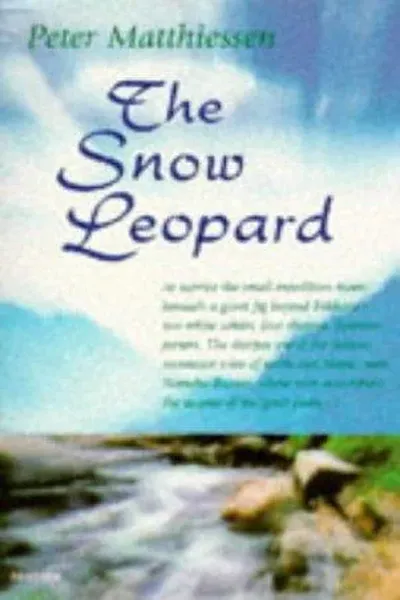

More Free Occult Philosophy Books
View all →