The Shaman's Oracle
 80
80

The Shaman's Oracle
John Matthews and Wil Kinghan's "The Shaman's Oracle" presents a compelling visual language derived from cave art, aiming to connect users with prehistoric consciousness. The strength of this deck lies in its raw, evocative imagery, which avoids the polished aesthetic of many modern oracles. The archetypal structure—Spirits, Ancestors, Hunters, Dancers, and Shamans—offers a grounded framework for interpretation. However, the system's reliance on a somewhat generalized interpretation of "ancestral" wisdom might feel less specific to practitioners of tightly defined shamanic traditions. A particular passage discussing the "Hunter" archetype’s connection to instinctual action feels potent, directly linking visual cues to primal urges. The accompanying text, while informative, sometimes leans towards a broad spiritual narrative rather than deep dives into specific prehistoric cultures. Overall, it's a visually arresting tool for introspection, best suited for those exploring broader themes of primal connection and intuition.
📝 Description
80
Published in 2013, The Shaman's Oracle uses prehistoric art to connect users with ancestral wisdom.
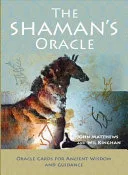
John Matthews and Wil Kinghan created The Shaman's Oracle, a 52-card oracle deck and guide released in 2013. The system draws on prehistoric cave art for its visual language, aiming to provide a method for accessing ancestral knowledge and answering difficult questions. Its structure is built around five core archetypes: Spirits, Ancestors, Hunters, Dancers, and Shamans.
The deck is designed for those interested in shamanism, connecting with their lineage, and ancient spiritual practices. It offers a visual means for divination and appeals to individuals drawn to art, mythology, and exploring their inner selves. The artwork, reminiscent of Paleolithic visuals, intends to stir subconscious understanding and ancestral memories. The oracle is situated within a renewed interest in shamanic traditions that developed in the late 20th century, influenced by scholarly work on indigenous spiritualities.
This oracle connects to a modern revival of shamanic practices, a field studied extensively since the mid-20th century. Works like Mircea Eliade's "Shamanism: Archaic Techniques of Ecstasy" (1951) brought these traditions to wider attention. Matthews and Kinghan's deck situates itself within this context, using ancient visual cues to make shamanic concepts accessible for contemporary divination and personal insight.
💡 Why Read This Book?
• Gain a direct connection to primal wisdom through 52 cards inspired by ancient cave art, offering a unique lens for divination not found in contemporary decks. • Explore the five core archetypes—Spirits, Ancestors, Hunters, Dancers, and Shamans—as presented by John Matthews, fostering a deeper understanding of instinctual human experience. • Utilize a system designed by shamanic artist Wil Kinghan, whose visual interpretations aim to unlock subconscious landscapes and ancestral memories through evocative imagery.
⭐ Reader Reviews
Honest opinions from readers who have explored this book.
❓ Frequently Asked Questions
What is the primary inspiration behind The Shaman's Oracle deck?
The deck's imagery and conceptual framework are directly inspired by prehistoric cave art, aiming to connect users with the wisdom and consciousness of our ancient ancestors.
Who are the creators of The Shaman's Oracle?
The oracle was created by John Matthews, a modern-day shaman, and Wil Kinghan, a shamanic artist, who collaborated to bring this system to life.
How many cards are in The Shaman's Oracle deck?
The Shaman's Oracle deck consists of 52 cards, each representing one of the five core archetypes or variations thereof.
What are the five archetypes featured in the deck?
The five archetypes are Spirits, Ancestors, Hunters, Dancers, and Shamans, each linked to different aspects of human experience and consciousness.
What kind of questions can The Shaman's Oracle help answer?
The oracle is designed to help answer life's most vital questions by providing insights drawn from ancestral wisdom and primal intuition.
When was The Shaman's Oracle first published?
The Shaman's Oracle was first published in June 2013.
🔮 Key Themes & Symbolism
Ancestral Wisdom & Connection
This theme explores the concept of tapping into the collective unconscious and the stored knowledge of generations past. The oracle uses imagery derived from cave paintings, suggesting a direct line to prehistoric human experience. It posits that by engaging with these primal symbols, individuals can access deeper layers of intuition and understanding, fostering a sense of connection to lineage and the enduring human spirit. The deck encourages looking beyond the immediate to the elements of the past for guidance.
The Five Archetypes
Central to the oracle are five distinct archetypes: Spirits, Ancestors, Hunters, Dancers, and Shamans. Each represents a fundamental human mode of being or interaction with the world. Spirits relate to the ethereal and unseen, Ancestors to lineage and heritage, Hunters to instinct and survival, Dancers to ritual and expression, and Shamans to mediation and transformation. Understanding these archetypes provides a framework for interpreting the cards and applying their messages to contemporary life.
Primal Instinct and Subconscious
The oracle's design taps into the power of primal instincts and the subconscious mind. The evocative, often raw, imagery is intended to bypass rational thought and speak directly to deeper psychological and instinctual levels. By engaging with symbols that resonate with our most basic human drives and experiences, the deck aims to uncover hidden truths and facilitate self-discovery. It suggests that answers often lie not in logic, but in our most ancient, instinctual responses.
Cave Art as Divination
This theme focuses on the unique choice of cave art as the primary visual source for the oracle. It highlights how these ancient artistic expressions, created thousands of years ago, are seen not just as historical artifacts but as potent carriers of meaning and spiritual energy. The oracle reinterprets these primal symbols for modern divination, suggesting that the fundamental human quest for meaning and connection is timeless and can be accessed through these ancient visual languages.
💬 Memorable Quotes
Direct passages from the work, attributed to the author.
“The cards represent five archetypes: Spirits, Ancestors, Hunters, Dancers, and Shamans.”
— This statement captures the structural foundation of the oracle. It signifies that the deck is organized around fundamental human roles and energies, providing a clear system for interpreting the divinatory messages.
“Evocative images touch on ancestral memories and subconsciou”
— This suggests the oracle's imagery is designed to bypass conscious filters and access deeper, inherited psychological patterns. It implies a direct link to a collective past embedded within our minds.
“Modern-day shaman John Matthews and shamanic artist Wil Kinghan have created a special deck of 52 cards inspired by cave art.”
— This highlights the creators' backgrounds and the unique source material. It positions the oracle as a contemporary interpretation of ancient shamanic practices and visual traditions.
“This innovative oracle connects us directly to the wisdom of our prehistoric ancestors.”
— This sentence articulates the core promise of the oracle: a direct channel to ancient knowledge and consciousness, framed as a novel approach to divination.
“Their unique system can help us find answers to life's most vital questions.”
— This emphasizes the practical application of the oracle, suggesting its capacity to provide guidance and clarity on significant life challenges through its distinct methodology.
🌙 Esoteric Significance
Tradition
This work draws upon a broad interpretation of shamanic traditions, emphasizing the direct connection to nature, ancestors, and the spirit world. It doesn't strictly adhere to a single, codified lineage like Hermeticism or Kabbalah but instead taps into a more universal, primal form of spiritual practice informed by Paleolithic art and archetypal psychology. It represents a modern attempt to reclaim and utilize ancient methods of divination and self-understanding outside of established Western esoteric orders.
Symbolism
The symbolism is rooted in the visual language of Paleolithic cave art. Motifs like animal figures (e.g., horses, bison, deer) represent primal forces, instincts, and totemic connections to the natural world. Human figures, often depicted in motion or ritualistic poses, symbolize ancestral presence, communal practices, and the shamanic role of mediator. Abstract signs and patterns found in caves are reinterpreted as energetic symbols or spiritual markers, aiming to evoke deep, subconscious recognition and facilitate communication with the unseen.
Modern Relevance
In contemporary practice, The Shaman's Oracle appeals to those exploring animism, eco-spirituality, and depth psychology. It speaks to modern shamans, psychotherapists using archetypal imagery, and individuals seeking to reconnect with a sense of primal belonging in an increasingly digitized world. Its visual style and thematic focus on ancestral memory align with current interests in decolonizing spirituality and exploring non-Western epistemologies, offering a tangible link to humanity's ancient past.
👥 Who Should Read This Book
• Individuals interested in shamanic practices and ancestral communication who seek a visually intuitive oracle system beyond traditional tarot. • Art enthusiasts and historians interested in the symbolic language of prehistoric cultures and its application in modern divination and self-reflection. • Those feeling disconnected from primal instincts and seeking a tool to explore their subconscious landscape and reconnect with fundamental human experiences.
📜 Historical Context
The Shaman's Oracle, published in 2013, emerged during a period of sustained interest in shamanism and indigenous spiritual practices, a trend that gained significant traction from the mid-20th century onwards. Influential works like Mircea Eliade's "Shamanism: Archaic Techniques of Ecstasy" (1951) had already laid academic groundwork, while figures like Michael Harner popularized shamanic journeying in Western circles. This book aligns with the New Age movement's broader exploration of alternative spiritualities and ancient wisdom traditions. It can be seen as part of a lineage of oracle decks and divination systems that draw inspiration from historical symbolism, such as the Rider-Waite tarot or more esoteric systems. While not directly engaging with specific academic debates of its time, its emphasis on primal imagery and direct connection to the subconscious reflects a departure from more structured, ritualistic magical systems prevalent in earlier esoteric movements.
📔 Journal Prompts
Reflect on the Hunter archetype and its manifestation in your life.
Consider the visual language of the Dancers cards; what movements or rituals do they evoke for you?
Explore the concept of Ancestors through the lens of the oracle. What messages do they seem to convey?
How does the imagery of the Spirits cards influence your perception of the unseen world?
Meditate on the role of the Shaman as depicted in the deck. What does this archetype represent in your personal journey?
🗂️ Glossary
Archetype
In this context, archetypes are fundamental, primal patterns of human experience and behavior represented by the five core categories of the oracle: Spirits, Ancestors, Hunters, Dancers, and Shamans.
Cave Art
Visual representations created in caves during prehistoric times, serving as the primary inspiration for the oracle's imagery and thematic content.
Shaman
A person who is believed to have the ability to communicate with the spirit world, often acting as a healer, diviner, and mediator between the human and supernatural realms.
Ancestral Memory
The concept that memories, knowledge, or predispositions are passed down through generations, accessible via intuition or subconscious connection, as evoked by the oracle's imagery.
Primal Instinct
Basic, innate drives and behavioral patterns that are fundamental to survival and reproduction, often associated with the 'Hunter' archetype in the oracle.
Divination
The practice of seeking knowledge of the future or the unknown by supernatural means, in this case, through the interpretation of the oracle's cards.
Subconscious
The part of the mind of which one is not aware but which influences one's feelings and actions; the oracle aims to access this deeper level of consciousness.