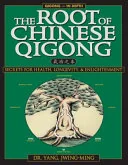
The root of Chinese Qigong
 83
83

The root of Chinese Qigong
Jwing-Ming Yang's "The Root of Chinese Qigong" offers a meticulous dissection of the practice, moving past the commonly presented forms to address its foundational theories. Yang's strength lies in his systematic approach, connecting Qigong to its historical and philosophical antecedents with clarity. The section detailing the concept of Qi and its cultivation through specific postures and breathing patterns is particularly illuminating, providing a scientific yet esoteric framework. However, the book's academic rigor, while a virtue, can sometimes make the text dense for readers seeking purely practical application without deep theoretical study. A passage discussing the subtle energetic interactions during a specific movement, for instance, requires focused attention to fully grasp. Ultimately, this is an essential resource for serious students of Qigong, offering an unparalleled depth of understanding its origins.
📝 Description
83
Jwing-Ming Yang's The Root of Chinese Qigong, published in 1997, examines Qigong's origins and theoretical underpinnings.
This book by Jwing-Ming Yang, first published in 1997, examines the origins and theoretical underpinnings of Chinese Qigong. It moves beyond simple exercise descriptions to detail the historical development and theoretical framework that shaped Qigong. Yang aims to give readers a thorough understanding of Qigong's historical roots, making the subject accessible to newcomers while still offering depth for those already familiar with it.
The work is suited for those seeking a detailed, academic understanding of Qigong. It is especially useful for students of traditional Chinese medicine, martial arts practitioners focused on internal development, and scholars of Eastern philosophies. Readers who appreciate detailed explanations of physiological and energetic concepts, placed within their historical context, will find considerable value here. It is not intended for individuals looking only for quick exercise routines.
Yang's research traces Qigong's lineage from early Daoist and Buddhist texts through its integration into healing and martial arts systems. The book places Qigong within the broader context of Chinese philosophy and medicine, emerging from a period of renewed global interest in traditional Chinese practices following the Cultural Revolution.
Yang's work situates Qigong within the tradition of internal cultivation practices found in Daoism and Chinese medicine. It connects the physical movements and breathing techniques to the concept of Qi, the vital life force. The book traces how these practices were historically integrated into various systems for health, longevity, and spiritual development, drawing from ancient texts and philosophical frameworks.
💡 Why Read This Book?
• Understand the fundamental concept of Qi, the vital life force, and its cultivation methods as detailed in Yang's systematic analysis, offering a deeper comprehension than general wellness books. • Explore the historical lineage of Qigong, tracing its development from ancient Chinese philosophies and practices, providing context unavailable in contemporary fitness guides. • Learn about specific Qigong techniques, including breathing and visualization, as explained through Yang's detailed approach, enabling a more informed and profound personal practice.
⭐ Reader Reviews
Honest opinions from readers who have explored this book.
❓ Frequently Asked Questions
What is the primary focus of "The Root of Chinese Qigong"?
The book's primary focus is on the fundamental principles and historical origins of Qigong, exploring its theoretical underpinnings rather than just presenting exercise routines.
Who is the author, Jwing-Ming Yang?
Jwing-Ming Yang is a renowned author and martial arts grandmaster, known for his extensive writings on Qigong, Tai Chi, and Kung Fu, blending traditional knowledge with scientific explanations.
When was "The Root of Chinese Qigong" first published?
The book was first published in 1997, reflecting a period of growing global interest in traditional Chinese energetic practices.
What is the central concept discussed in the book?
The central concept is Qi, the vital life force in Chinese philosophy, and how Qigong practices are designed to cultivate, regulate, and direct this energy.
Is this book suitable for absolute beginners to Qigong?
While it covers foundational concepts, the book's detailed theoretical and historical approach is best suited for those seeking a serious, in-depth understanding, potentially after some initial exposure to Qigong.
What other related practices does the book connect Qigong to?
The book connects Qigong to traditional Chinese medicine, Daoist philosophy, Buddhist practices, and various martial arts systems, illustrating its broad influence.
🔮 Key Themes & Symbolism
Cultivation of Qi
This theme centers on Qi, the vital energy that permeates the universe and human body according to traditional Chinese thought. Yang meticulously details how Qigong practices serve as a method for consciously cultivating, refining, and directing this essential life force. The book explains that Qi is not merely a metaphor but a tangible energetic substance that can be influenced through specific physical postures, controlled breathing patterns, and focused mental intention. Understanding Qi cultivation is presented as the core objective of serious Qigong practice, aiming for enhanced vitality, health, and spiritual awareness.
Historical Lineage
Yang traces the historical development of Qigong, situating it within the broader context of ancient Chinese civilization. This involves examining its roots in early Daoist and Buddhist philosophies, its integration into medical texts, and its role in martial arts training. The book explores how Qigong evolved over centuries, adapting to different cultural and philosophical currents while retaining its fundamental principles. By presenting this historical lineage, Yang provides a framework for understanding the diverse forms of Qigong practiced today and their shared origins.
Energetic Anatomy
A significant aspect of the book is its exploration of the body's energetic structure as understood in traditional Chinese systems. This includes concepts like meridians (Jingluo), the Dan Tian, and the relationship between Qi and the internal organs. Yang explains how Qigong exercises are designed to harmonize the flow of Qi through these energetic pathways, clear blockages, and strengthen the body's internal energetic network. This understanding of energetic anatomy is crucial for practitioners aiming to achieve specific health or spiritual benefits through their practice.
Mind-Body Integration
The Root of Chinese Qigong emphasizes the inseparable connection between the mind and the body in energetic cultivation. Yang illustrates how mental focus, intention (Yi), and visualization are as critical as physical movements and breath control in Qigong practice. The book explains that conscious awareness directed towards the body's energetic processes can significantly amplify the effects of Qigong. This integration of mental discipline with physical and respiratory techniques is presented as fundamental to achieving profound results.
💬 Memorable Quotes
Direct passages from the work, attributed to the author.
“Qi is the fundamental substance of the universe.”
— This statement captures the core tenet of Qi as the primary energetic element in Chinese cosmology, forming the basis for understanding all phenomena, including life itself.
“Qigong is the art of cultivating Qi.”
— This concise definition highlights the active, skill-based nature of Qigong, positioning it as a discipline focused on the conscious development and refinement of vital energy.
“The body's energetic pathways are like rivers flowing through the land.”
— This analogy vividly illustrates the concept of meridians, emphasizing their role as conduits for Qi circulation and the importance of unobstructed flow for health.
“Intention directs the Qi.”
— This highlights the critical role of the mind in Qigong, suggesting that focused willpower and mental visualization are key mechanisms for guiding and manipulating the body's energetic currents.
“Ancient practices provide the foundation for modern Qigong.”
— This underscores the book's focus on historical roots, suggesting that contemporary Qigong forms are direct descendants of older traditions and that understanding these origins is vital.
🌙 Esoteric Significance
Tradition
This work is deeply rooted in the Daoist tradition of internal alchemy and cultivation, which seeks to harmonize the body's energies for longevity and spiritual enlightenment. It draws heavily from concepts central to Daoism, such as Qi, Yin and Yang, and the pursuit of balance within the natural order. While presented with a scientific and systematic approach, Yang's exploration of Qi cultivation aligns with esoteric goals of transforming the physical body into a vessel for higher energetic states, a hallmark of internal alchemy practices.
Symbolism
Key symbols explored include the Dan Tian, often visualized as a reservoir of Qi located in the lower abdomen, representing the seat of vital energy and transformation. The concept of meridians (Jingluo) functions symbolically as an energetic map of the body, guiding the circulation of Qi. The interplay of Yin and Yang, representing fundamental opposing yet complementary forces, is also implicitly symbolized in the balanced movements and breathwork advocated, aiming to harmonize these energies within the practitioner.
Modern Relevance
Contemporary practitioners of internal martial arts, such as Tai Chi and Baguazhang, frequently refer to Yang's work for its detailed explanations of energetic principles. Furthermore, researchers and practitioners in integrative medicine and somatic therapies find value in its systematic approach to mind-body connection and energy cultivation. Modern Daoist study groups and Qigong schools globally continue to utilize this book as a foundational text for understanding the theoretical underpinnings of their practice.
👥 Who Should Read This Book
• Dedicated students of Traditional Chinese Medicine seeking to understand the energetic basis of diagnosis and treatment. • Martial artists interested in developing internal power (Nei Jin) and understanding the theoretical framework behind energetic cultivation in combat arts. • Scholars and practitioners of comparative religion and philosophy exploring the esoteric dimensions of Eastern spiritual traditions and mind-body practices.
📜 Historical Context
Published in 1997, "The Root of Chinese Qigong" emerged during a significant period of global dissemination and academic interest in traditional Chinese practices. Following decades of relative isolation and suppression during the Cultural Revolution, China began to re-evaluate and promote its cultural heritage. Yang's work contributed to this re-emergence by providing a scholarly yet accessible account of Qigong's origins, often found in Daoist texts and early medical treatises. This era saw a surge of Western interest in mind-body disciplines, with Qigong and Tai Chi gaining popularity alongside practices like yoga. Yang's detailed explanations offered a counterpoint to more superficial Western interpretations, grounding Qigong in its philosophical and physiological context. Contemporaries like the Dalai Lama were also advocating for the integration of Eastern contemplative practices with modern understanding, reflecting a broader intellectual current.
📔 Journal Prompts
The cultivation of Qi: How does the concept of directing energy align with your personal understanding of vitality?
Historical lineage of Qigong: Reflect on the journey of Qigong from ancient China to its current global presence.
Energetic anatomy: Consider the body's energetic pathways as described by Yang and their potential influence on physical well-being.
Mind-body integration: Explore the role of intention (Yi) in your daily activities and how it might affect your energetic state.
The root of Qigong: What does understanding the origins of a practice reveal about its deeper purpose?
🗂️ Glossary
Qi (Chi)
The fundamental vital life force or energy that permeates all things in the universe, according to traditional Chinese philosophy and medicine. It is believed to be the basis of all life and can be cultivated and directed.
Meridians (Jingluo)
Specific pathways or channels within the body through which Qi is believed to circulate. These are analogous to an energetic circulatory system that connects various organs and tissues.
Dan Tian
Literally 'elixir field,' these are specific energetic centers in the body, most notably in the lower abdomen, considered reservoirs and focal points for Qi cultivation and storage.
Yin and Yang
Two fundamental, complementary, and opposing forces or principles that govern the natural world and the human body. Their balance is essential for health and harmony.
Yi
Often translated as intention, mind, or will. In Qigong, Yi is crucial for directing Qi and focusing consciousness during practice, signifying the mind's power over energy.
Nei Gong
Internal work or cultivation, referring to practices that focus on developing internal energy (Qi) and awareness, as opposed to external (Wai Gong) physical conditioning.
Daoism
An ancient Chinese philosophy and religion emphasizing living in harmony with the Dao (the Way), the natural order of the universe. It profoundly influenced Qigong development.
🔮 Readers Also Liked
Browse all →








More by Jwing-Ming Yang
All books →





More Free Occult Philosophy Books
View all →