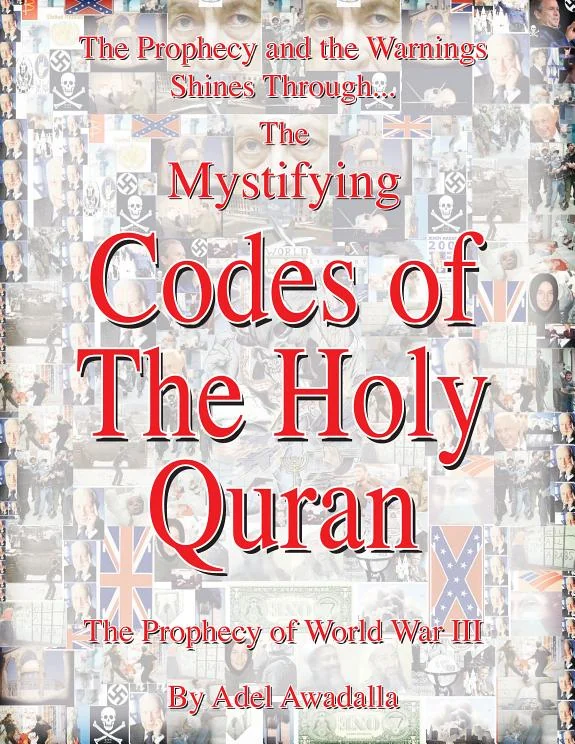
The Prophecy and the Warnings Shines Through the Mystifying Codes of the Holy Quran
 80
80

The Prophecy and the Warnings Shines Through the Mystifying Codes of the Holy Quran
Adel Awadalla’s exploration of the Quran's predictive potential, as detailed in *The Prophecy and the Warnings Shines Through the Mystifying Codes of the Holy Quran*, is an ambitious undertaking. The author’s assertion that the sacred text harbors coded prophecies comparable to Nostradamus’s quatrains is a bold claim that will surely provoke discussion. Awadalla’s strength lies in his earnest attempt to connect disparate interpretive traditions, seeking a universal mechanism for foreknowledge. However, the work falters in its execution, often presenting speculative interpretations as definitive truths without rigorous evidential support beyond its own interpretive framework. A specific passage that illustrates this is the author’s analysis of Quranic verses to uncover specific dates or events, which, while creatively argued, lacks the substantiation required for critical acceptance. The book is ultimately more valuable as an example of modern esoteric interpretation than as a definitive historical or theological document.
📝 Description
80
Adel Awadalla's 2004 book argues the Quran contains predictive prophecies accessed through coded analysis.
Published in 2004, Adel Awadalla's The Prophecy and the Warnings Shines Through the Mystifying Codes of the Holy Quran proposes that the Quran holds hidden meanings and predictive capabilities. Awadalla suggests that specific analytical methods can unlock these layers, revealing prophecies and warnings akin to those found in Western esoteric traditions. The book aims to establish that the Quran possesses a predictive power that rivals or surpasses that of figures like Nostradamus, presenting these insights as not just theological but also prescient.
The work is aimed at readers interested in comparative esotericism, particularly those looking to connect Western prophetic traditions with Islamic scripture. It will attract scholars and practitioners of Islamic mysticism, individuals who study the intersection of faith and divination, and those curious about non-traditional interpretations of sacred texts. Readers open to alternative exegesis and seeking evidence of hidden knowledge within religious frameworks may find this book of interest.
Awadalla's text emerged in the early 21st century, a time of increased interest in esotericism and comparative religion. It engages with the tradition of figures like Nostradamus, whose prophecies have long been studied. The book implicitly addresses the historical tension between orthodox religious views and mystical or divinatory practices, seeking to integrate the latter within an Islamic context. It distinguishes itself from standard academic Quranic studies by focusing on its predictive content.
This book situates itself within the broader field of comparative esotericism, drawing parallels between Islamic scripture and Western prophetic traditions exemplified by figures like Nostradamus. It aligns with gnostic and mystical approaches to religious texts that seek hidden, predictive meanings beyond literal or moral interpretations. The work engages with the idea that sacred writings can serve as conduits for foreknowledge, a concept found across various esoteric traditions seeking to understand divine will and future events through symbolic or coded language.
💡 Why Read This Book?
• Understand a unique method for interpreting sacred texts, as Awadalla proposes specific analytical techniques for deciphering "mystifying codes" within the Quran, offering an alternative to conventional exegesis. • Explore the historical parallels drawn between Quranic prophecy and figures like Nostradamus, learning how the author connects 16th-century prophetic traditions to early 21st-century scriptural analysis. • Gain a new perspective on divine revelation, considering the possibility that scripture may contain concealed foreknowledge beyond its theological and legal directives, as presented in the book's premise.
⭐ Reader Reviews
Honest opinions from readers who have explored this book.
❓ Frequently Asked Questions
What is the core argument of 'The Prophecy and the Warnings Shines Through the Mystifying Codes of the Holy Quran'?
The book argues that the Holy Quran contains hidden "mystifying codes" which reveal prophecies and warnings, akin to those attributed to Nostradamus. It suggests these codes can be deciphered to predict future events, presenting a unique interpretive approach to Islamic scripture.
Who is Adel Awadalla and what is his background?
Adel Awadalla is the author of 'The Prophecy and the Warnings Shines Through the Mystifying Codes of the Holy Quran', first published in 2004. Information regarding his specific academic or esoteric background is limited in the original publication, but his work positions him as an interpreter of religious texts through an esoteric lens.
How does this book compare Quranic prophecy to Nostradamus?
The book directly compares the predictive capacity of the Quran, through its proposed "mystifying codes," to the prophecies of Nostradamus. It posits that the precision of Nostradamus's predictions suggests he utilized secret methods, which Awadalla suggests are mirrored or surpassed by techniques applicable to the Quran.
What kind of "mystifying codes" are discussed in the book?
While specific details depend on the text's internal explanations, the concept of "mystifying codes" generally refers to hidden patterns—potentially linguistic, numerical, or structural—within the Quran that are believed to encode prophetic information. These are presented as discernible through specialized analytical methods.
Is this book an orthodox or traditional interpretation of the Quran?
No, this book presents a highly unconventional, esoteric interpretation of the Quran. It moves beyond standard theological or historical exegesis to explore divinatory and predictive aspects, which may not align with traditional Islamic scholarship.
What is the publication date and original context of this work?
The book was first published in 2004. It emerged during a period of growing interest in esoteric studies and comparative religion, seeking to find predictive elements within sacred texts that could be understood through non-traditional analytical frameworks.
🔮 Key Themes & Symbolism
Quranic Predictive Codes
This theme focuses on the central thesis that the Quran contains concealed "mystifying codes" capable of revealing future events. Awadalla proposes that these codes, potentially based on linguistic, numerical, or structural analyses, offer a form of divine prophecy. The work seeks to demonstrate that this predictive capacity is an inherent, though hidden, aspect of the scripture, accessible through specific interpretive methodologies that go beyond conventional exegesis and theological study.
Comparative Prophecy
The book draws explicit parallels between the supposed predictive elements within the Quran and the prophecies of historical figures like Nostradamus. By examining the precision attributed to Nostradamus's 16th-century predictions, Awadalla argues for the existence of secret methods of foreknowledge. This comparative approach aims to validate the Quran's predictive potential by aligning it with well-known, albeit controversial, Western prophetic traditions.
Esoteric Interpretation Methods
A significant theme is the exploration and application of specific, non-traditional methods for deciphering sacred texts. The work suggests that understanding the Quran's prophetic dimension requires employing analytical techniques that uncover hidden layers of meaning. This theme studies the idea that divine revelation can be multi-layered, with esoteric interpretations revealing truths not apparent through literal or conventional readings.
Divine Foreknowledge
This theme addresses the concept of God's foreknowledge as expressed through scripture. Awadalla posits that the Quran, beyond its role as a guide for life, serves as a repository of future knowledge. The book explores how this divine foreknowledge is encoded and how its decipherment can offer insights into historical trajectories and future occurrences, framing prophecy as an element of God's comprehensive knowledge.
💬 Memorable Quotes
Direct passages from the work, attributed to the author.
“Someone who predicts the future with this precision must be a man who knew the secret methods of predicting the future.”
— This statement highlights the author's core assumption: that exceptional predictive accuracy implies possession of hidden, systematic knowledge. It serves as a foundational premise for seeking similar 'secret methods' within the Quran.
“The prophecy and the warnings shines through the mystifying codes of the Holy Quran.”
— This phrase captures the book's central argument, suggesting that the Quran is not merely a spiritual text but also a source of encoded prophecies and warnings that require specific methods for revelation.
“How could he get to this precision in his predictions? So, could Nostradamus make these predictions?”
— These questions frame the initial inquiry into Nostradamus's abilities. They serve to establish the benchmark of predictive precision and to pose the challenge that the book aims to answer by applying similar logic to the Quran.
“The author will show you how these predictions came about, and how we can make our own.”
— This direct statement from the original blurb promises practical application. It suggests the book aims not only to interpret existing prophecies but also to equip readers with methods for understanding or even generating their own predictive insights.
“He must be a man who knew the secret methods of predicting the future, as we will explain.”
— This interpretation of Nostradamus's ability underscores the book's focus on methodology. It promises that the text will elucidate specific techniques for deciphering hidden predictive knowledge, positioning the Quran as a source for such methods.
🌙 Esoteric Significance
Tradition
This work positions itself within the broader spectrum of esoteric interpretation, drawing parallels between Islamic scripture and Western prophetic traditions like those associated with Nostradamus. While not strictly adhering to a single lineage such as Hermeticism or Gnosticism, it shares the esoteric principle of seeking hidden knowledge (gnosis) within established religious texts. It departs from traditional Islamic scholarship by prioritizing predictive and divinatory aspects, suggesting a layered reality accessible through specialized analytical methods.
Symbolism
The "mystifying codes" themselves function as a form of symbolic language within the book's framework. While specific symbols aren't detailed in the blurb, the concept implies that linguistic patterns, numerical sequences (like Gematria in other traditions), or structural arrangements within the Quran act as symbols for future events or hidden truths. The book likely interprets these symbolic patterns as divine signposts, guiding the initiated reader toward a deeper understanding of cosmic and temporal unfolding.
Modern Relevance
In contemporary esoteric circles, the book speaks to an ongoing interest in finding universal patterns and predictive capabilities across diverse religious traditions. Thinkers and practitioners exploring comparative esotericism, numerology in sacred texts, and the intersection of faith and divination might find Awadalla's approach a point of reference. It contributes to discussions about whether ancient scriptures hold keys to understanding contemporary global events or future possibilities, resonating with those who believe in layered scriptural meanings.
👥 Who Should Read This Book
• Students of comparative religion and esotericism: Those interested in how different religious traditions are interpreted through mystical or predictive lenses will find Awadalla's comparison between the Quran and Nostradamus informative. • Seekers of hidden knowledge in sacred texts: Individuals who believe that religious scriptures contain layers of meaning beyond the literal, particularly those focused on prophecy and foreknowledge, will appreciate the book's core premise. • Researchers of prophetic traditions: Scholars or enthusiasts studying historical prophets and their methods, especially those exploring unconventional approaches to divination and prediction, can gain insights into a unique interpretive framework.
📜 Historical Context
Adel Awadalla's *The Prophecy and the Warnings Shines Through the Mystifying Codes of the Holy Quran* (2004) emerged in a contemporary landscape where esoteric interpretations of religious texts gained traction. It engages with a long-standing tradition of seeking hidden meanings within sacred scriptures, a practice found across various mystical traditions. The work explicitly references Nostradamus, the 16th-century French astrologer whose quatrains have captivated interpreters for centuries, placing Awadalla's project within a lineage of comparative prophecy studies. While orthodox Islamic scholarship primarily focuses on theological, legal, and historical exegesis, Awadalla's approach aligns more with heterodox or mystical interpretations. This book can be seen as a product of the early 21st-century's globalized interest in spirituality and comparative mysticism, attempting to bridge Western esoteric concepts with Islamic scripture in a manner distinct from earlier Theosophical or Sufi-inspired works.
📔 Journal Prompts
The concept of "mystifying codes" within the Quran.
Awadalla's comparison between Quranic prophecy and Nostradamus.
Potential methods for deciphering hidden meanings in sacred texts.
The role of divine foreknowledge in religious scripture.
Interpreting predictive elements across diverse spiritual traditions.
🗂️ Glossary
Mystifying Codes
Refers to hidden patterns, potentially linguistic or numerical, within the Holy Quran that the author claims reveal prophecies and warnings about future events. These codes are presented as requiring specialized methods for decipherment.
Esoteric Interpretation
An approach to understanding texts, particularly sacred ones, that seeks hidden, inner, or spiritual meanings beyond the literal or exoteric level. This often involves symbolic analysis and mystical insight.
Prophecy
The foretelling of future events, often believed to be divinely inspired. In this context, it refers to specific predictions allegedly encoded within the Quranic text.
Nostradamus
A 16th-century French astrologer and physician renowned for his book 'Les Prophéties,' a collection of quatrains purported to predict future events. He serves as a comparative figure in the book's argument.
Divine Foreknowledge
The concept that God possesses complete knowledge of all events, past, present, and future. The book explores how this foreknowledge might be embedded within the Quran.
Exegesis
Critical explanation or interpretation of a text, especially of scripture. The book proposes an esoteric exegesis that differs from traditional theological approaches.
Secret Methods
Implied techniques or systems of analysis that allow for the accurate prediction of future events, as attributed to figures like Nostradamus and potentially applicable to the Quran.
This book appears in 1 collection
🔮 Readers Also Liked
Browse all →







From the “Illuminati” Collection
View all →

More Free Freemasonry & Secret Societies Books
View all →