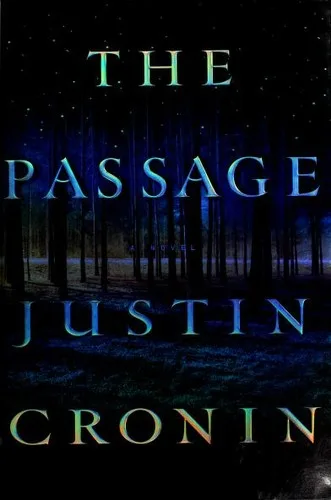
The Passage
 82
82

The Passage
Justin Cronin's The Passage is an ambitious, sprawling narrative that attempts to fuse the visceral horror of a viral apocalypse with a multi-generational saga of human endurance. The sheer scale of the world-building, spanning over a century from the initial outbreak, is impressive. Cronin excels at depicting the immediate chaos and the quiet desperation of survivors in the early years. The character of Amy, the enigmatic child at the heart of the story, provides a compelling anchor, embodying both vulnerability and an unnerving resilience. However, the novel's pacing falters in its middle sections, becoming somewhat diffuse as it attempts to cover vast swathes of time and introduce numerous characters. The transition from immediate survival to the establishment of a new, albeit fragile, civilization feels less organic than the initial collapse. A particular strength lies in the descriptions of the virals themselves, portrayed not as mindless monsters but as something far more chillingly familiar yet alien. The narrative's primary limitation is its occasional indulgence in lengthy exposition that can slow the momentum. Despite these structural issues, the novel's exploration of what it means to be human when humanity itself is under existential threat offers significant rewards. It is a challenging, often bleak, but ultimately resonant examination of legacy and survival.
📝 Description
82
Justin Cronin's 2016 novel, The Passage, imagines a world remade by a viral pandemic.
Published in 2016, Justin Cronin's The Passage is a substantial work of speculative fiction. The narrative begins with a viral pandemic that irrevocably alters humanity, transforming people into predatory beings that blur the line between life and undeath. The book's structure is complex, spanning centuries and shifting perspectives. It details the collapse of society and the desperate, often morally ambiguous, efforts to survive and rebuild.
This novel suits readers who appreciate expansive, character-driven stories with high stakes and a grim portrayal of societal breakdown. Those interested in post-apocalyptic scenarios that examine the human condition under extreme duress will find much to consider. It appeals to those who enjoy detailed world-building and a slow unfolding of a complex, multi-generational story, rather than immediate action.
While not overtly occult, The Passage engages with themes that resonate within esoteric thought. The concept of a transformative plague that reshapes humanity and the subsequent struggle for survival echo motifs found in various apocalyptic and Gnostic traditions. The "virals" themselves, possessing a terrifying blend of animalistic instinct and a semblance of their former selves, can be seen as a modern interpretation of primal forces or fallen states that disrupt the natural order. The novel's focus on the long-term consequences of catastrophe and the potential for human resilience taps into a cultural zeitgeist that contemplates societal transformation and the search for meaning after widespread disruption.
💡 Why Read This Book?
• Gain insight into the long-term societal impact of catastrophic events, exemplified by the centuries-long struggle following the viral outbreak, offering a unique perspective on rebuilding civilization. • Experience a narrative that grapples with the nature of humanity and survival through the character of Amy, a figure whose resilience and mysterious origins are central to the plot's unfolding. • Explore themes of faith, sacrifice, and the persistence of hope in the face of overwhelming despair, as depicted in the arduous journey of the surviving human factions throughout the narrative.
⭐ Reader Reviews
Honest opinions from readers who have explored this book.
❓ Frequently Asked Questions
Is The Passage a standalone novel or part of a series?
The Passage is the first book in a trilogy. It is followed by 'The Twelve' and 'The City of Mirrors,' which conclude the narrative arc initiated in the first novel.
What is the central conflict in Justin Cronin's The Passage?
The central conflict revolves around humanity's struggle for survival against the "virals," infected beings who are terrifyingly powerful and driven by an insatiable thirst, following a global pandemic.
How does The Passage differ from typical zombie apocalypse stories?
Unlike many zombie narratives, The Passage focuses on the long-term, multi-generational aftermath of the apocalypse, exploring societal rebuilding and the philosophical implications of humanity's fight for existence over centuries.
What role does faith play in The Passage?
Faith, in various forms – religious, personal, and in the idea of a future – serves as a crucial element for many characters, providing motivation and solace amidst the devastation and existential threat posed by the virals.
When was Justin Cronin's The Passage originally published?
Justin Cronin's The Passage was first published in 2016, positioning it within the contemporary boom of speculative fiction exploring societal collapse.
Does The Passage contain supernatural elements beyond the viral infection?
While the "virals" exhibit extraordinary abilities that border on the supernatural, the core of the story is grounded in a biological catastrophe. The focus remains on the human response and the altered state of the infected.
🔮 Key Themes & Symbolism
The Nature of Survival
The novel meticulously details the brutal realities of survival in a post-apocalyptic world. It moves beyond immediate needs, exploring the psychological and societal adaptations required to persist across generations. This isn't just about staying alive, but about what remains of humanity when stripped bare, focusing on the sacrifices made and the enduring will to rebuild and find meaning in a fundamentally altered existence.
Legacy and Memory
Spanning over a thousand years, The Passage is deeply concerned with what humanity leaves behind. It examines how collective memory is shaped, distorted, and preserved in the absence of established institutions. Characters grapple with the stories of the past, the lessons learned (or ignored), and the burden of ensuring that the future is not merely a repetition of destruction but a continuation of something meaningful.
The Enduring Human Spirit
Against a backdrop of unimaginable devastation, the narrative consistently returns to the resilience of the human spirit. Hope, often a fragile commodity, is depicted not as a passive wish but as an active force – found in acts of courage, compassion, and the persistent drive to create community and purpose. The character of Amy embodies this, representing a clear source of possibility in a world consumed by darkness.
Transformation and Otherness
The "virals" represent a profound transformation of humanity, blurring the lines between life and death, human and monster. The work explores how society reacts to and defines otherness, particularly when that otherness is born from within. It questions what truly constitutes humanity when faced with beings that were once human but are now fundamentally alien and dangerous.
💬 Memorable Quotes
Direct passages from the work, attributed to the author.
“We were the remnants, the scattered seeds of a world that had burned.”
— This interpretation reflects the novel's depiction of humanity reduced to small, isolated groups after the viral outbreak. It underscores the fragility of civilization and the immense challenge of preserving knowledge and culture across vast distances and time.
“The light was still there, a stubborn ember in the ashes.”
— This concept speaks to the persistent hope that fuels the characters' actions. Even in the darkest hours, the novel suggests that the potential for good, for rebuilding, and for a future remains, however faint.
“Survival was not an event; it was a process.”
— This interpretation expresses the novel's multi-generational scope. It emphasizes that overcoming the apocalypse is not a single victory but a continuous, arduous effort that spans centuries and requires constant adaptation and sacrifice.
💡 Key Ideas
Editorial paraphrase of the work's core concepts — not direct quotes.
The world had ended, but it had not ended for us.
This paraphrased concept captures the novel's central theme of enduring human will. Despite the global catastrophe, the narrative emphasizes the personal and collective drive to continue living, adapt, and find purpose, highlighting resilience over despair.
They remembered being human, but they were no longer.
This paraphrased idea addresses the nature of the virals. It highlights the chilling aspect of the infection – the retention of some human memory or semblance while being driven by monstrous, inhuman urges, creating a disturbing reflection of what was lost.
🌙 Esoteric Significance
Tradition
While not explicitly aligned with a single esoteric tradition, The Passage engages with themes that echo Gnostic and Hermetic concerns regarding fallen worlds, the struggle against corrupting forces, and the preservation of divine sparks within humanity. The "virals" can be seen as a manifestation of a corrupting influence that degrades the human form and spirit, a concept familiar in Gnostic cosmologies. The narrative’s focus on hidden knowledge, enduring lineage, and the search for salvation within a broken world also speaks to Hermetic principles of ascent and purification.
Symbolism
The "viral" itself functions as a potent symbol of corruption and the loss of authentic self, a perversion of the divine image. Amy, the immortal child, represents a persistent, perhaps salvific, element – a pure essence that endures beyond the decay of the world, akin to a divine seed or a symbol of eternal life. The "Passage" itself symbolizes not only the catastrophic event but also the arduous, often painful, transition from one state of being to another, a spiritual journey through darkness towards potential renewal.
Modern Relevance
Contemporary readers interested in transhumanism, bioethics, and the philosophical implications of radical biological change find resonance in The Passage. The novel’s exploration of what constitutes humanity after a profound alteration speaks to current debates about artificial intelligence, genetic engineering, and the potential futures of our species. Thinkers examining societal resilience in the face of pandemics or ecological collapse may also draw parallels to Cronin's depiction of long-term survival and societal reconstruction.
👥 Who Should Read This Book
• Readers interested in the long-term societal and psychological effects of large-scale catastrophes, moving beyond immediate survival to explore generational rebuilding. • Those who appreciate expansive, multi-generational narratives that focus on character development and the enduring human spirit against overwhelming odds. • Fans of speculative fiction that blends elements of horror, drama, and philosophical inquiry into the nature of humanity and existence.
📜 Historical Context
The Passage, released in 2016, emerged during a period of heightened public fascination with dystopian narratives and post-apocalyptic scenarios, fueled by popular media like *The Walking Dead* (which began its run in 2010) and Suzanne Collins' *The Hunger Games* series. Cronin's work, however, positioned itself as a more literary and expansive exploration of societal collapse. Unlike many contemporary works focusing on immediate survival, Cronin’s novel ambitiously spans centuries, looking at the long-term consequences of a global pandemic and the arduous process of rebuilding civilization. It tapped into a cultural undercurrent that grappled with existential threats, from pandemics to environmental concerns, offering a narrative that contemplated not just the end of the world, but the challenging rebirth that might follow. While not directly part of a specific intellectual movement like the earlier apocalyptic literature of the mid-20th century, it reflects a similar societal anxiety about large-scale catastrophe and the human capacity for both destruction and endurance.
📔 Journal Prompts
The weight of the "remnants" and the burden of preserving human memory.
Amy's enduring light: reflecting on sources of hope in personal adversity.
The transformation into "virals" and what it signifies about losing one's self.
The multi-generational "process" of survival: lessons from enduring hardship.
Defining "humanity" when faced with radical otherness and societal collapse.
🗂️ Glossary
Virals
The antagonists of the novel, humans infected by a virus that transforms them into incredibly fast, strong, and predatory beings who are driven by an insatiable thirst, yet retain fragmented memories of their former lives.
The Passage
Refers to both the initial catastrophic event that unleashed the viral pandemic and the subsequent centuries of human struggle for survival and societal rebuilding in its wake.
Amy
An enigmatic child who becomes infected but does not succumb to the viral transformation, instead gaining a form of immortality and extraordinary resilience, serving as a central figure of hope and mystery.
The First Colony
One of the early settlements established by human survivors attempting to rebuild society, representing the initial, often fragile, efforts to create order after the collapse.
The Passage War
The protracted conflict between the remaining human factions and the virals, spanning decades and centuries, as humanity fights for its very existence.
The Twelve
A group of exceptionally powerful and ancient virals who appear later in the narrative, posing a significant threat and possessing a level of intelligence and influence beyond typical infected.
The City of Mirrors
A metaphorical and literal representation of the fractured state of humanity and its search for identity and a stable future in the post-apocalyptic world.
🔮 Readers Also Liked
Browse all →








More by Justin Cronin
All books →




More Free Occult Philosophy Books
View all →