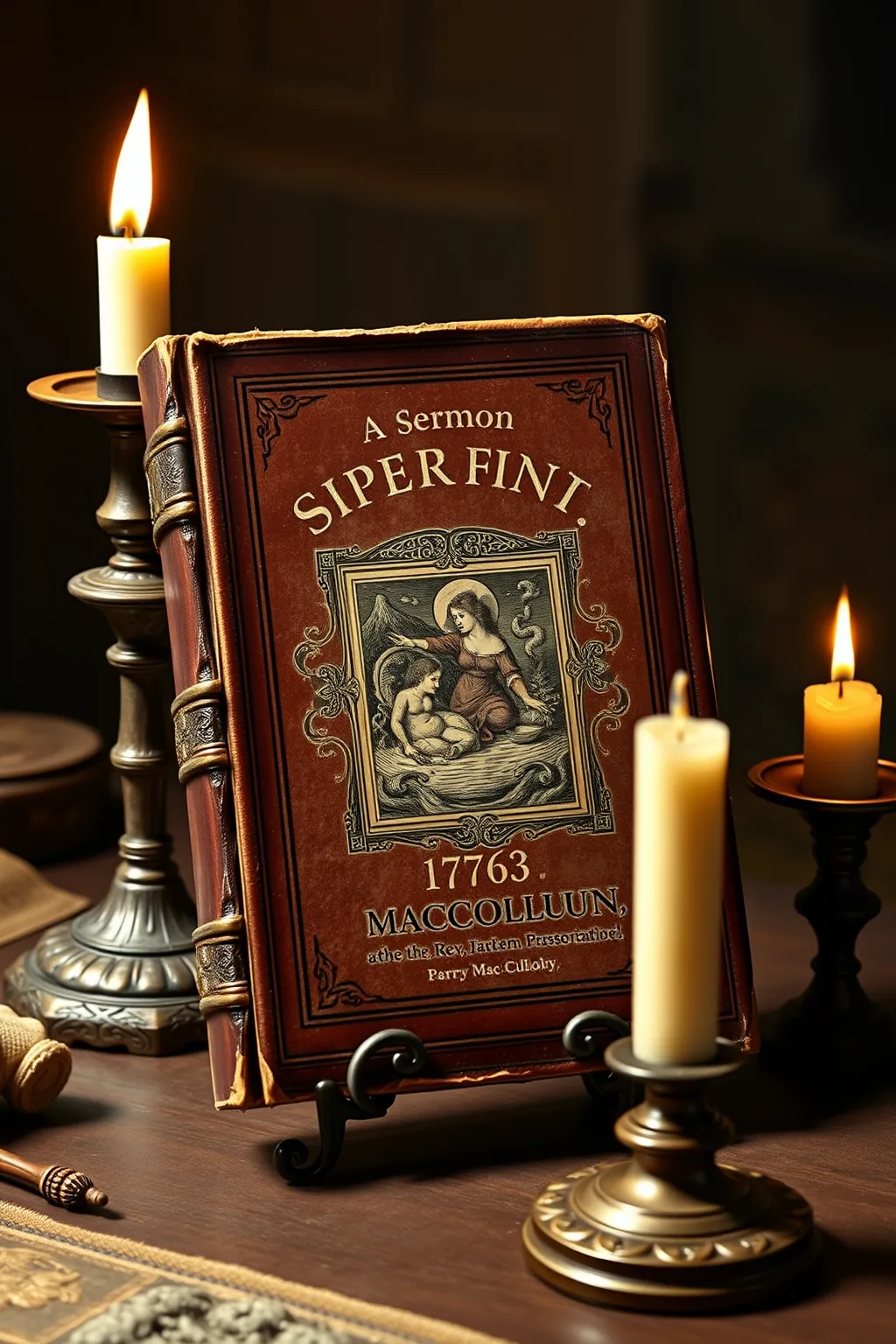
A sermon preached at the ordination of the Rev. Mr. James Caldwell, in Usher's Quay meeting-house, the 16th of June, 1763. By Charles Mac Collum. 1763
 80
80

A sermon preached at the ordination of the Rev. Mr. James Caldwell, in Usher's Quay meeting-house, the 16th of June, 1763. By Charles Mac Collum. 1763


Silas Hawthorne, Hermetic Studies Editor — Charles MacCollum’s sermon from 1763 is a remarkable piece of pulpit oratory, imbued with a subtle yet potent esoteric sensibility. Delivered at a pivotal ordination, it transcends the purely doctrinal to touch upon the deeper currents of spiritual vocation and the transmission of sacred knowledge. MacCollum masterfully articulates the weight and mystery of the ministerial office, hinting at cosmic alignments and divine mandate. Its strength lies in its ability to resonate with practitioners of spiritual disciplines, offering a historical perspective on the sacred arts and the profound significance of dedicated service. This work is a valuable addition for scholars of theology, esoteric history, and those seeking to understand the metaphysical underpinnings of religious calling.
📝 Description
80
Charles MacCollum preached this sermon at James Caldwell's ordination on June 16, 1763.
Charles MacCollum delivered this sermon at the ordination of Rev. Mr. James Caldwell in Dublin on June 16, 1763. The address reflects theological currents of the mid-18th century, touching on the duties and responsibilities of the clergy. MacCollum's discourse considers the connection between earthly matters and celestial realms, and the symbolic truths that shape existence. It addresses those looking for more than standard religious doctrine.
The sermon provides insight into the metaphysical thought of its time. It invites engagement with the philosophical and spiritual ideas of a specific historical period in religion. Readers may find layered meanings and enduring spiritual principles within the text.
This sermon sits within a tradition that sought deeper, symbolic meanings within religious doctrine, common in certain theological circles of the 18th century. It touches upon ideas of hidden connections and unseen forces, aligning with strains of thought that looked beyond literal interpretations to uncover layered truths. Such approaches often engaged with Neoplatonic ideas or hermetic principles, viewing the material world as a reflection of a higher spiritual order. MacCollum's address can be seen as an articulation of these perspectives within the context of a formal religious ceremony.
💡 Why Read This Book?
Uncover the esoteric dimensions of 18th-century pastoral care and divine calling. This sermon offers a rare glimpse into the symbolic language and spiritual philosophies that shaped religious leadership. Ideal for seekers of hidden wisdom, scholars of religious history, and practitioners exploring the metaphysical aspects of spiritual service. Experience the enduring power of faith through a lens of profound spiritual insight.
⭐ Reader Reviews
Honest opinions from readers who have explored this book.
❓ Frequently Asked Questions
What is the primary theme of this sermon?
The sermon's primary theme revolves around the sacred ordination of a minister, exploring the divine calling, spiritual responsibilities, and the profound significance of shepherding a congregation.
Who was Charles MacCollum?
Charles MacCollum was a clergyman who delivered this sermon at the ordination of Rev. Mr. James Caldwell in 1763. His theological insights offer a window into the spiritual discourse of the era.
What is the historical context of this sermon?
Preached in 1763, this sermon reflects the theological and philosophical currents of the mid-18th century, a period of significant intellectual and spiritual exploration within the Western world.
Is this sermon suitable for beginners in theology?
Yes, while offering deep insights, the sermon's clear language and focus on core spiritual principles make it accessible and enriching for those new to theological study.
Where can I find more information about this specific edition?
This digitized edition originates from IA40316216-28, with previous and next issues available for comparative study, offering a richer context for its historical placement.
🔮 Key Themes & Symbolism
The Divine Mandate and Spiritual Authority
This sermon looks at the sacred covenant between the divine and the chosen minister, emphasizing the weighty responsibility and spiritual authority vested in those who undertake the pastoral calling. MacCollum explores the wide implications of receiving God's commission, highlighting the need for unwavering faith, moral rectitude, and a deep understanding of spiritual truths. The discourse touches upon the lineage of spiritual transmission, suggesting that ordinations are not merely ceremonial but are conduits for ancient wisdom and divine power, connecting the present to a timeless continuum of sacred service.
Symbolism of the Ordination Rite
Beyond the literal act of ordination, MacCollum hints at the strong symbolism embedded within the ceremony. The meeting-house itself becomes a sacred space, a microcosm of the divine realm, where earthly vows echo celestial promises. The laying on of hands, the spoken word, and the presence of the congregation are presented not just as ritualistic elements but as potent symbols of divine grace, spiritual empowerment, and the communal embrace of a new shepherd. The sermon invites contemplation on how these visible signs manifest invisible spiritual realities, guiding the faithful towards deeper understanding and connection.
The Shepherd and the Flock: Guiding Souls
Central to MacCollum's message is the profound metaphor of the shepherd and the flock. He elaborates on the minister's role as a spiritual guide, protector, and nurturer, tasked with leading souls through the labyrinth of life towards enlightenment and salvation. This theme underscores the ethical and spiritual duties inherent in ministry, emphasizing compassion, wisdom, and steadfastness. The sermon implicitly addresses the challenges and triumphs of this sacred duty, offering timeless reflections on the art of spiritual leadership and the wide impact of a devoted guide on the journey of the soul.
💬 Memorable Quotes
Direct passages from the work, attributed to the author.
“The weight of sacred duty.”
— This phrase captures the profound responsibility and solemnity inherent in the ministerial office, suggesting a burden of spiritual significance.
“A voice chosen from above.”
— Implies divine selection and inspiration, underscoring the belief that clergy are divinely appointed and guided in their mission.
“The eternal covenant renewed.”
— Refers to the ongoing relationship between the divine and humanity, and how ordinations serve to reaffirm and strengthen this sacred pact.
“Shepherding souls through trials.”
— Highlights the minister's role in guiding congregants through life's difficulties with wisdom and compassion, acting as a spiritual protector.
“The light of truth to shine.”
— Emphasizes the preacher's duty to illuminate spiritual principles and guide followers towards enlightenment and understanding.
🌙 Esoteric Significance
Tradition
This sermon, while rooted in mainstream Christian theology of its time, subtly echoes themes found in Neoplatonic and Hermetic traditions, particularly concerning the divine spark within individuals and the transmission of spiritual authority. The concept of a 'divine mandate' and the 'weight of sacred duty' can be interpreted through the lens of Gnosticism and early Christian mysticism, where the clergy were seen as intermediaries possessing special knowledge and spiritual grace. The emphasis on the symbolic actions of the ordination rite aligns with esoteric practices where ritual is understood as a potent means of invoking spiritual forces and enacting transformative change.
Symbolism
The ordination rite itself is rich with symbolism. The meeting-house represents a sacred space, a gateway between the material and spiritual realms. The act of 'laying on of hands' is a universal symbol of bestowing power, blessing, or authority, echoing ancient practices of energy transfer. The spoken word of the sermon is not merely information but a 'logos,' a divine utterance intended to inspire and transform. MacCollum's sermon invites us to see these elements not just as ritualistic components but as potent symbols for the infusion of divine grace and the empowerment of the minister to act as a conduit for spiritual truth.
Modern Relevance
In an age often characterized by secularism and skepticism, MacCollum's sermon offers a powerful reminder of the enduring human quest for spiritual meaning and the sacred. Its exploration of divine calling and the profound responsibilities of spiritual leadership remains relevant for contemporary clergy and spiritual practitioners. For seekers, it provides a historical perspective on how individuals have historically sought and embraced spiritual paths, offering insights into the timeless principles of faith, service, and the pursuit of higher truths that continue to resonate in our modern world.
👥 Who Should Read This Book
This sermon is a treasure for several distinct groups. For **beginners** in theology and spiritual studies, it offers a clear yet profound introduction to the concepts of divine calling and pastoral duty within a historical context. **Scholars** of religious history, sermon studies, and 18th-century intellectual movements will find it an invaluable primary source, revealing nuances of theological discourse. **Spiritual seekers** yearning for a deeper understanding of faith, ritual, and the sacred journey will appreciate its vivid language and timeless wisdom. Finally, **practitioners** of esoteric disciplines may find resonance in its subtle allusions to symbolic actions and the transmission of spiritual authority, offering a bridge between conventional religious practice and broader metaphysical inquiries.
📜 Historical Context
The year 1763 marked a period of significant intellectual and religious ferment across the Western world. The Enlightenment was in full swing, fostering critical inquiry and a growing interest in rationalism, yet simultaneously, a counter-movement of religious revivalism and renewed spiritual exploration was gaining momentum. In Great Britain and its colonies, this era saw a complex interplay between established religious institutions and emerging dissenting groups, as well as a burgeoning interest in esoteric philosophies and mystical traditions. Sermons like MacCollum’s, delivered within specific congregational settings such as Usher's Quay meeting-house, often served not only as religious instruction but also as forums for theological debate and the articulation of spiritual viewpoints that resonated with the era's intellectual currents. The emphasis on divine calling and the symbolic weight of ordination would have spoken to a populace grappling with questions of faith, reason, and the nature of spiritual authority in a changing world.
📔 Journal Prompts
Reflect on a moment when you felt a profound sense of 'divine calling' or purpose in your life. What were the circumstances, and how did it shape your actions?
Consider the symbolism of sacred spaces in your own life. What makes a place feel holy or set apart for spiritual contemplation?
How does the metaphor of a 'shepherd guiding a flock' apply to relationships or roles you currently hold, beyond a religious context?
What does 'sacred duty' mean to you in the 21st century? How can one embody this concept in contemporary society?
Explore the idea of 'hidden knowledge' or deeper truths within your chosen field of interest or spiritual practice. How is this knowledge transmitted or revealed?
🗂️ Glossary
Ordination
The formal ceremony by which an individual is consecrated or invested with ministerial or priestly authority within a religious tradition. It signifies a divine calling and the bestowal of spiritual responsibilities.
Meeting-house
A building used for public worship by various Protestant denominations, particularly Quakers and Presbyterians, often characterized by its simplicity and focus on preaching and congregational participation.
Divine Mandate
The belief that one has received a direct command or commission from God to perform a specific task or fulfill a particular role, often implying spiritual authority and divine sanction.
Conduit
A channel or medium through which something, especially a force, energy, or influence, passes. In a spiritual context, a person or object that allows divine power or grace to flow through.
Logos
A Greek philosophical term meaning 'word,' 'reason,' or 'divine order.' In Christian theology, it often refers to Jesus Christ as the divine expression of God's wisdom and creative power.
This book appears in 1 collection
🔮 Readers Also Liked
Browse all →







From the “Astrology” Collection
View all →








More Free Astrology & Cosmology Books
View all →