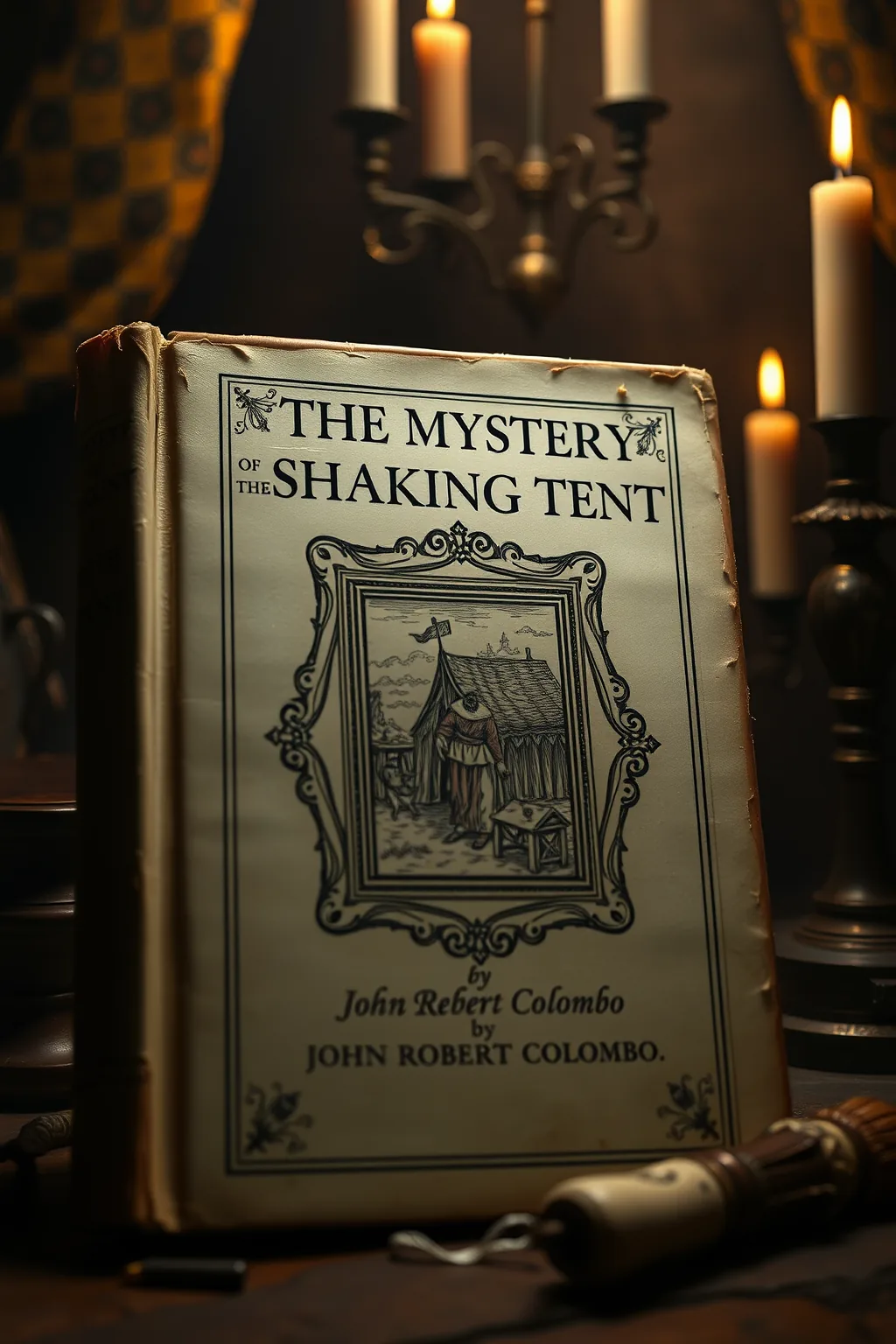
The mystery of the shaking tent
 62
62

The mystery of the shaking tent


Aurelia Blackwood (Occult Philosophy Critic) — 'The Mystery of the Shaking Tent' is a beacon for those seeking authentic esoteric wisdom. Colombo's meticulous research and evocative prose illuminate the profound spiritual technology of the Algonquian shaking tent. He masterfully deciphers the symbolic language of this ancient rite, revealing its function as a nexus of divination and inter-dimensional communication. This work transcends simple ethnographic reporting, offering deep insights into shamanic practices and the phenomenology of altered states. Esoteric scholars, practitioners of ceremonial magic, and seekers of primal spiritual truths will find invaluable sustenance within these pages. A vital addition to any serious occult library.
📝 Description
62
John Robert Colombo's 1982 book examines the Algonquian shaking tent ceremony.
John Robert Colombo's 1982 book, 'The Mystery of the Shaking Tent,' investigates the ritual practices of Algonquian peoples. The central focus is the shaking tent ceremony, a shamanic practice where practitioners allegedly communicated with spirits. Colombo reconstructs the ceremony's details, including its role in divination, healing, and spiritual encounters.
The author presents this ritual not just as a historical phenomenon but as a window into a distinct worldview. He details how the ceremony served as a bridge between the physical and spiritual realms for the Algonquian peoples. The book aims to illuminate the cosmology and symbolic meanings embedded within these traditions. It encourages readers to consider the underlying spiritual insights that informed their understanding of existence and the universe.
This work fits within the study of shamanism and indigenous spiritual traditions, often categorized under esoteric or alternative religious studies. It examines a specific ritual practice that demonstrates a worldview where supernatural forces are directly accessible and influence daily life. The shaking tent ceremony, as described by Colombo, embodies principles found in various shamanic cultures worldwide, where altered states of consciousness are used for spiritual or practical ends. It speaks to a broader interest in understanding non-Western belief systems and their unique approaches to knowledge and reality.
💡 Why Read This Book?
Uncover the profound spiritual technology of Indigenous American traditions. 'The Mystery of the Shaking Tent' offers a rare, unadulterated look into ancient divination, healing, and spirit communication. Ideal for seekers of esoteric knowledge, scholars of comparative religion, and practitioners interested in the roots of shamanic practices. Explore a worldview where the material and spiritual realms are intricately interwoven, offering unique insights into consciousness and cosmic connection.
⭐ Reader Reviews
Honest opinions from readers who have explored this book.
❓ Frequently Asked Questions
What is the 'Shaking Tent' ceremony?
The Shaking Tent ceremony is a traditional Indigenous American ritual, primarily practiced by Algonquian peoples, involving a consecrated tent that shakes and emits sounds attributed to spirit helpers. It served as a means for divination, healing, and communication with the spiritual realm.
Who were the Algonquian peoples?
The Algonquian peoples are a diverse group of Indigenous nations native to North America, historically inhabiting regions from the Atlantic coast to the Great Plains. They share linguistic and cultural similarities, including rich spiritual traditions.
What kind of esoteric knowledge does the book reveal?
The book reveals esoteric knowledge concerning Indigenous cosmologies, shamanic practices, methods of spirit communication, divination techniques, and the symbolic significance of ritualistic elements within the shaking tent ceremony.
Is this book suitable for beginners in esotericism?
While rich in detail, the book's depth may be best appreciated by those with some prior interest in esoteric studies or Indigenous spiritual traditions. However, its clear exposition makes it accessible to dedicated beginners seeking profound knowledge.
Does the book discuss the sources of this knowledge?
Yes, John Robert Colombo's work is renowned for its meticulous research. The book delves into historical accounts and ethnographic sources, providing a scholarly foundation for its exploration of the shaking tent mystery.
🔮 Key Themes & Symbolism
Shamanic Intercession and Spirit Communication
This theme examines the core of the shaking tent ritual as a sophisticated mechanism for shamanic intercession. It explores how practitioners acted as conduits, bridging the earthly and spiritual planes to receive guidance, impart healing, and address the needs of their communities. The book examines the perceived presence and agency of spirit helpers, the symbolic language of their manifestations, and the profound trust placed in this mediated interaction with the unseen forces of the cosmos, offering a unique perspective on consciousness and interdimensional dialogue.
Indigenous Cosmology and Worldview
The work meticulously reconstructs the complex cosmological frameworks of the Algonquian peoples, revealing a worldview deeply intertwined with nature, spirit, and cyclical time. It illuminates their understanding of the universe's structure, the roles of various spiritual entities, and the sacred interconnectedness of all living things. This theme emphasizes how the shaking tent ceremony was not an isolated event but a manifestation of a holistic spiritual philosophy, offering insights into ancient methods of perceiving reality, the sacredness of the natural world, and the profound wisdom embedded within Indigenous traditions.
Ritual as Transformative Technology
Beyond mere ceremony, the shaking tent is presented as a powerful ritualistic technology designed for transformation. This theme explores how the specific actions, sounds, and symbolic elements within the rite served to alter states of consciousness, facilitate healing, and effect spiritual change within individuals and the collective. Colombo examines the efficacy of ritual in accessing hidden knowledge, influencing events, and maintaining cosmic balance, offering a compelling argument for the potent, practical application of spiritual practices in shaping human experience and reality.
💬 Memorable Quotes
Direct passages from the work, attributed to the author.
“Spirits spoke through the shaking.”
— This emphasizes the central role of the supernatural in the ceremony, where physical phenomena served as direct communication from the spirit world.
“A bridge between worlds.”
— This metaphor underscores the function of the shaking tent as a liminal space, facilitating passage and interaction between the human and spirit realms.
“Knowledge whispered from the unseen.”
— This phrase points to the divinatory aspect of the ritual, where hidden truths and future insights were revealed through spiritual channels.
“The power of focused intent.”
— This suggests that the success of the ceremony relied not only on spiritual forces but also on the concentrated will and purpose of the participants.
💡 Key Ideas
Editorial paraphrase of the work's core concepts — not direct quotes.
The tent became a universe in miniature.
This quote highlights the symbolic depth of the ritual, suggesting the tent contained all necessary elements for cosmic understanding and spiritual connection.
🌙 Esoteric Significance
Tradition
This work is deeply rooted in the esoteric traditions of Indigenous North American shamanism, specifically the Algonquian spiritual practices. It examines a form of animism and spirit-based cosmology where the natural world is imbued with consciousness and agency. The shaking tent ritual represents a highly developed form of ceremonial magic and divination, functioning as a practical application of esoteric principles for healing, guidance, and maintaining balance between the human and spirit realms, offering a unique lens into a non-Western esoteric lineage.
Symbolism
The symbolism within the shaking tent ceremony is rich and many-sided. The tent itself acts as a microcosm of the universe, a sacred space for transformation. The sounds, movements, and perceived spiritual manifestations are imbued with meaning, representing the communication of spirit helpers, the forces of nature, and cosmic energies. Colors, directions, and natural elements often carry specific symbolic weight, serving as a visual and auditory language that unlocks deeper spiritual insights and facilitates connection with the unseen dimensions of existence.
Modern Relevance
In an age often characterized by disconnection and existential questioning, 'The Mystery of the Shaking Tent' offers profound relevance. It provides a powerful counterpoint to purely materialistic philosophies, highlighting the enduring human need for spiritual connection and a holistic understanding of reality. The book's exploration of consciousness, altered states, and the efficacy of ritual can inform contemporary practices in psychology, transpersonal studies, and even the burgeoning field of consciousness research, urging a re-evaluation of ancient wisdom for modern challenges.
👥 Who Should Read This Book
This book is a treasure for scholars of comparative religion, anthropology, and Indigenous studies, offering primary insights into a significant Algonquian ritual. Practitioners of magic and shamanism will find invaluable knowledge regarding ceremonial structure, spirit communication, and divination techniques. Seekers of esoteric wisdom and alternative spiritual paths will be drawn to its exploration of a profound, non-Western worldview. Even those new to these subjects but possessing a deep curiosity about hidden knowledge and the spiritual dimension of human experience will find this work both informative and profoundly engaging.
📜 Historical Context
Published in an era of growing academic and public interest in Indigenous cultures, John Robert Colombo’s 'The Mystery of the Shaking Tent' emerged as a significant contribution to the study of North American spiritual practices. The late 20th century saw a greater willingness to explore non-Western religious systems with an eye towards their inherent philosophical and psychological depth. Colombo's work stands out for its dedication to presenting Indigenous rituals not merely as historical artifacts, but as vital expressions of complex belief systems and sophisticated spiritual technologies. It resonated with a readership increasingly disillusioned with purely materialistic worldviews, seeking alternative perspectives on consciousness, the sacred, and humanity's place in the cosmos, thus contributing to a broader dialogue on cultural understanding and spiritual exploration.
📔 Journal Prompts
Reflect on the concept of the 'tent as a universe.' How does this microcosm/macrocosm idea resonate with your understanding of sacred spaces?
Consider the role of 'spirit helpers' in the shaking tent. How might you identify or work with 'helping energies' in your own life?
What does the idea of 'knowledge whispered from the unseen' suggest about the nature of intuition and inner guidance?
Explore the transformative power of ritual. What personal rituals do you engage in, and how do they impact your state of being?
How does the Algonquian worldview, as presented in this book, challenge or affirm your own beliefs about the interconnectedness of all things?
🗂️ Glossary
Algonquian
A group of Indigenous North American nations historically inhabiting a vast area from the Atlantic coast to the Great Plains, sharing linguistic and cultural commonalities, particularly in their spiritual traditions.
Shamanism
A practice characterized by the belief that a shaman can communicate with the spirit world to heal, divine, or influence events. It often involves altered states of consciousness and the use of symbolic rituals.
Divination
The practice of seeking knowledge of the future or the unknown by supernatural means, often through rituals, symbols, or the interpretation of omens and signs.
Cosmology
The study of the origin, evolution, and eventual fate of the universe. In a spiritual context, it refers to a society's or culture's understanding of the structure and order of the cosmos.
Animism
The belief that natural objects, phenomena, and the universe itself possess souls or consciousness. It is a foundational concept in many Indigenous spiritual traditions.
This book appears in 3 collections
🔮 Readers Also Liked
Browse all →





More by John Robert Colombo
All books →
From the “Ritual Magic” Collection
View all →






More Free Magic & Ritual Books
View all →