The magical body

 74
74

The magical body
Richard Eves’s "The Magical Body" presents a detailed, if somewhat dry, examination of the corporeal form as a vehicle for occult energies. The strength lies in its systematic approach, treating the body not as mere flesh but as an intricate energetic system ripe for manipulation and understanding. Eves meticulously outlines various energetic centers and pathways, drawing parallels across different traditions without resorting to overly florid language. A particularly compelling section discusses the energetic imprint of trauma on the subtle body, offering a framework for understanding psychosomatic phenomena through an esoteric lens. However, the book’s limitation is its academic detachment; it often feels like a scholarly treatise rather than a practical grimoire, with fewer explicit exercises than some readers might expect. The dense prose, while precise, can occasionally obscure the very vitality it seeks to describe. Ultimately, "The Magical Body" serves as a valuable, albeit demanding, primer on esoteric physiology for the dedicated student.
📝 Description
74
Richard Eves's 1998 book, 'The Magical Body,' examines the human form as a center for spiritual and energetic phenomena.
Published in 1998, 'The Magical Body' by Richard Eves approaches the human body not merely as flesh and bone, but as a complex system of subtle energies, consciousness, and untapped magical potential. The book moves past standard anatomical descriptions to investigate how these energies can be perceived, managed, and used for personal growth and engagement with unseen forces. Eves argues that understanding and aligning these internal energetic structures is a necessary step for advanced magical work. He suggests that when viewed through an esoteric perspective, the physical body becomes a reflection of universal energies and a pathway to expanded states of awareness.
The work is aimed at serious students of occult philosophy, esoteric anatomy, and comparative mysticism. It suits those who prefer a rigorous, analytical approach to spiritual study, wanting to connect theoretical insights with practical application. Individuals interested in the energetic and symbolic aspects of human physiology, separate from conventional biology or psychology, will find extensive material within its pages. Eves contrasts his corporeal focus with more intellectual or ritualistic approaches found in some occult circles.
Emerging in 1998, 'The Magical Body' appeared during a period of renewed interest in esoteric traditions and their synthesis with modern ideas. The book acknowledges influences from figures like Aleister Crowley and Dion Fortune, but distinguishes itself by concentrating specifically on the physical body as a primary tool for magic. This focus on the corporeal form sets it apart from contemporary magical practices that might emphasize intellectual pursuits or ritual alone.
💡 Why Read This Book?
• Gain a conceptual framework for understanding the body as an energetic matrix, as detailed in the book's exploration of subtle anatomy first presented in 1998. • Learn to identify and work with specific energetic centers within the body, moving beyond abstract concepts to tangible points of focus. • Discover how the physical body acts as a conduit for manifestation, a core tenet explored throughout Eves’s analysis of corporeal magic.
⭐ Reader Reviews
Honest opinions from readers who have explored this book.
❓ Frequently Asked Questions
What is the primary focus of Richard Eves's 'The Magical Body'?
The book's primary focus is the human body understood as a complex energetic system, a vessel for consciousness, and a tool for magical practice. It explores subtle anatomy and the cultivation of latent potential.
When was 'The Magical Body' first published?
'The Magical Body' by Richard Eves was first published in 1998.
Does 'The Magical Body' offer practical exercises?
While it provides a theoretical foundation and conceptual understanding for practice, the book is more focused on explaining the principles of esoteric physiology rather than offering extensive step-by-step exercises.
What esoteric traditions influence the book?
The work draws upon various esoteric traditions that discuss subtle bodies and energy systems, though it synthesizes these into a unique framework rather than adhering strictly to one lineage.
Is 'The Magical Body' suitable for beginners in occult studies?
It is best suited for those with some foundational knowledge of esoteric concepts, as it delves into complex ideas about energetic anatomy without extensive introductory material.
What distinguishes Eves's approach to the 'magical body'?
Eves's approach is characterized by its systematic and analytical examination of the body's energetic functions, treating it as a primary instrument for spiritual development and magical work.
🔮 Key Themes & Symbolism
Subtle Anatomy and Energy Centers
Eves systematically details the concept of the subtle body, presenting it not as a mere metaphor but as a tangible energetic construct. This includes discussions on various energy centers, often paralleled with concepts like chakras or nadis from Indian traditions, but examined through Eves's specific esoteric lens. The work emphasizes how these centers are not static but dynamic points of interaction between the physical and non-physical, influencing health, consciousness, and magical potential. Understanding their function is presented as crucial for any practitioner seeking to manipulate or harmonize vital forces within themselves or their environment.
The Body as a Magical Instrument
A central theme is the reconceptualization of the physical body from a passive biological entity into an active, potent instrument for magic. Eves argues that the body's inherent energetic field and its various components can be consciously directed and amplified. This perspective allows for the exploration of how physical posture, breath, and even internal energetic flows can be utilized in ritual and manifestation. The book posits that mastering the body's energetic architecture is a prerequisite for advanced esoteric work, enabling practitioners to become more effective conduits for magical energies.
Energetic Imprints and Manifestation
The work addresses how experiences, emotions, and intentions leave energetic imprints on the physical and subtle bodies. Eves explores the idea that these imprints can shape an individual's reality and manifest as physical conditions or circumstantial patterns. The book provides a framework for understanding how to identify, cleanse, and transform these energetic residues. By purifying and harmonizing the body's energetic field, practitioners can, according to Eves, achieve greater control over manifestation and align their personal energy with desired outcomes.
Consciousness and Corporeal Form
Eves investigates the intricate relationship between consciousness and the physical form, proposing that the body is not merely a container for consciousness but is deeply integrated with it. The book explores how altering the energetic state of the body can lead to profound shifts in consciousness, including altered states of awareness and expanded perception. This perspective challenges dualistic views, suggesting a holistic unity where the corporeal and the mental/spiritual are intrinsically linked and interdependent in esoteric practice.
💬 Memorable Quotes
Direct passages from the work, attributed to the author.
“The physical form is the densest expression of energetic potential.”
— This statement highlights Eves's core thesis: that the material body, often seen as separate from or lesser than spirit, is in fact the most concrete manifestation of underlying forces and can therefore be a powerful point of magical leverage.
“Intentional focus upon the body reconfigures its energetic matrix.”
— This interpretation suggests that by consciously directing one's attention and will towards specific aspects or centers within the body, a practitioner can actively alter and refine its energetic patterns.
“The body acts as both a receptor and a transmitter of cosmic energies.”
— This core idea posits the physical form's dual role in esoteric functioning: it can draw in universal energies and, when properly attuned, can also project or channel them outwards.
“Understanding the energetic anatomy is the first step towards magical mastery.”
— This reflects Eves's pedagogical approach, emphasizing that a thorough grasp of the body's subtle energetic systems is foundational, preceding more advanced magical techniques and practices.
💡 Key Ideas
Editorial paraphrase of the work's core concepts — not direct quotes.
Energetic blockages in the corporeal structure manifest as dis-ease.
This paraphrased concept points to Eves's view on psychosomatic health, suggesting that physical ailments are often rooted in disruptions or stagnation within the body's subtle energy systems, requiring an esoteric approach to healing.
🌙 Esoteric Significance
Tradition
The work aligns with the broader Hermetic and Renaissance tradition of understanding the human body as a microcosm reflecting the macrocosm. It shares conceptual ground with yogic traditions regarding subtle anatomy (chakras, nadis) and Qi Gong, but Eves synthesizes these with a distinct Western esoteric framework. It departs from purely Theosophical models by focusing more intently on the physical body as the primary locus of magical interaction, rather than emphasizing astral or mental planes as the primary site of work.
Symbolism
Key symbols include the 'energetic centers' (akin to chakras), which represent focal points of consciousness and power within the subtle body, and the 'energetic pathways' (akin to nadis or meridians), symbolizing the flow of vital force. Eves also implicitly uses the body itself as a symbol of the practitioner's entire being, a tangible representation of their spiritual potential and the interface between the mundane and the divine.
Modern Relevance
Contemporary practitioners of somatic magic, energy healing modalities that emphasize energetic anatomy, and certain branches of modern Hermeticism draw upon Eves's systematic approach. His work provides a theoretical underpinning for practices that seek to consciously manipulate and harmonize bodily energies for spiritual growth and magical efficacy, influencing current discussions on embodied consciousness within esoteric circles.
👥 Who Should Read This Book
• Aspiring practitioners of Western Esotericism seeking a rigorous, systematic understanding of the body's energetic functions as a tool for magic. • Students of comparative mysticism interested in how different traditions conceptualize subtle anatomy and vital force, particularly Eves's unique synthesis. • Individuals exploring the intersection of consciousness, physiology, and manifestation, looking for a framework that bridges the physical and energetic aspects of being.
📜 Historical Context
Richard Eves's "The Magical Body," published in 1998, emerged during a late 20th-century resurgence of interest in esoteric studies, a period that saw a proliferation of works exploring various occult traditions. While figures like Aleister Crowley had earlier emphasized the body's role in magic (e.g., through Thelema and concepts of the 'knowledge and conversation of the Holy Guardian Angel'), Eves's contribution lies in its detailed, systematic examination of esoteric physiology. The book can be seen as a response to a perceived need for a more structured understanding of the body's energetic functions within Western esotericism, distinct from the more purely psychological or ritualistic focuses of some contemporary magical orders. It followed in the wake of thinkers like Alice Bailey, who also discussed subtle bodies extensively, but Eves offered a more grounded, corporeal-centric perspective that resonated with practitioners seeking to integrate mind and body in their magical work. The work’s meticulous approach provided a counterpoint to more New Age interpretations of energy healing and spiritual development prevalent at the time.
📔 Journal Prompts
The energetic matrix of the physical form: identify one area of your body where you feel a distinct energetic presence.
Corporeal representation of intent: how might a specific physical posture embody a desired magical outcome?
Cultivating subtle awareness: describe a sensation that arises when you consciously focus on your breath flow.
Energetic blockages and their physical correlates: reflect on a time you experienced physical discomfort and consider its potential energetic root.
The body as a conduit: how can you consciously attune your physical self to receive subtle energies?
🗂️ Glossary
Subtle Body
A non-physical energetic counterpart to the physical body, composed of various energy centers and pathways through which vital force flows.
Energetic Centers
Specific focal points within the subtle body where energy is concentrated, influencing physical, emotional, and spiritual states.
Vital Force
The animating energy that permeates living beings, often referred to as Prana, Qi, or Mana in different traditions; the fundamental substance of the subtle body.
Energetic Imprint
A residual energetic signature left upon the body by experiences, emotions, or thoughts, which can influence current states of being.
Corporeal Structure
Refers to the physical, material body and its inherent energetic architecture as understood within an esoteric context.
Manifestation
The process by which intention or energy is brought into physical reality, often understood as being facilitated or influenced by the state of the magical body.
Dis-ease
A state of imbalance or disharmony within the physical and/or subtle body, viewed esoterically as a precursor or component of physical illness.
🔮 Readers Also Liked
Browse all →









More by Richard Eves
All books →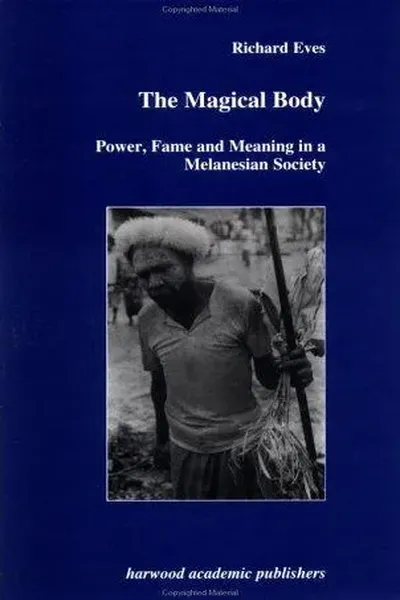
More Free Magic & Ritual Books
View all →