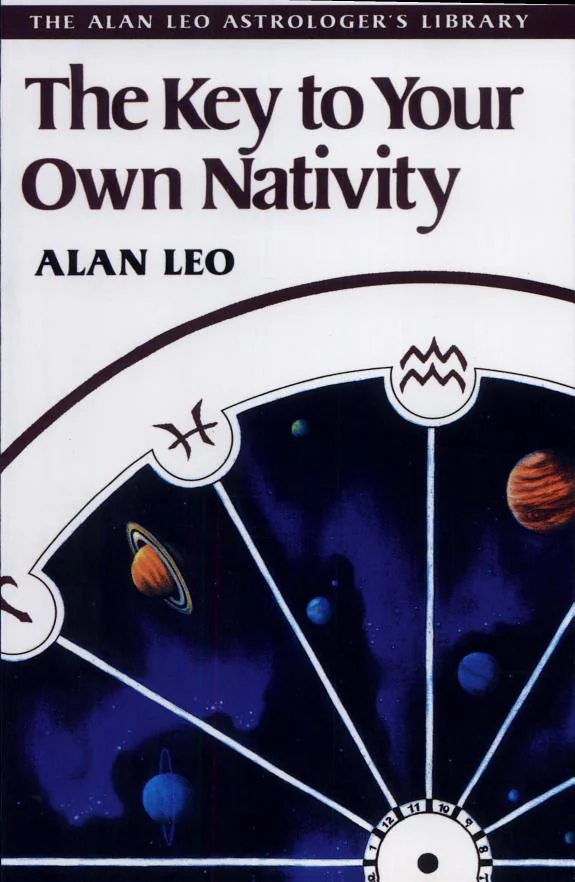
The Key to Your Own Nativity
 73
73

The Key to Your Own Nativity
Alan Leo’s 'The Key to Your Own Nativity' attempts a thorough dissection of the birth chart, presenting a method that, for its time, was remarkably accessible. The strength lies in its exhaustive nature; it genuinely covers the indications for a vast spectrum of life concerns, from the mundane (finance) to the esoteric (occultism). However, the prose, while clear, can sometimes feel a touch dry, a characteristic of astrological texts from the early to mid-20th century. A particularly illustrative section is the detailed breakdown of how each planet functions within each of the twelve houses, offering a granular understanding of potential manifestations. The limitation, perhaps inherent in its comprehensive ambition, is that it doesn't always deeply explore the synthesis of complex chart patterns, focusing more on individual component analysis. It remains a solid, if somewhat dated, manual for chart interpretation.
📝 Description
73
Alan Leo's 1978 book, The Key to Your Own Nativity, offers a structured method for natal chart interpretation.
The Key to Your Own Nativity systematically breaks down the astrological blueprint of an individual. It details the significance of planetary placements, house cusps, and aspects, acting as a guide to understanding the potentials and challenges presented at birth. The book covers a wide array of life areas, including financial prospects, professional paths, personal relationships, and spiritual inclinations. This work is principally aimed at aspiring astrologers and those seeking a deeper understanding of their own birth chart. It provides the knowledge necessary for beginners to interpret horoscopes with confidence. Individuals interested in self-discovery through astrological lenses will find its systematic approach beneficial, and it is also suitable for experienced practitioners seeking a clear reference on chart analysis.
Leo synthesized older traditions with contemporary psychological understandings in his approach to natal interpretation. His earlier work, such as 'The Art of Synthesis' (1912), laid groundwork for this comprehensive method. This text aims to present the natal chart as a holistic map of the psyche and destiny, focusing on the core concepts of the twelve zodiac signs and the twelve houses, each representing different facets of human experience.
First published in March 1978, The Key to Your Own Nativity emerged during a period of astrological resurgence in the West. Following the occult revival of the late 19th and early 20th centuries, astrology began to re-establish itself as a system of symbolic interpretation. Alan Leo, a prominent figure in early 20th-century British astrology, synthesized older traditions with contemporary psychological understandings. His work built upon earlier foundations, aiming to present natal interpretation in a comprehensive manner.
💡 Why Read This Book?
• Gain a systematic framework for dissecting a natal chart, learning Leo's method for identifying specific indicators for finance and profession within the twelve houses. • Understand the fundamental astrological archetypes—planets, signs, and houses—and how their interplay, as detailed in the book's 1978 publication, creates a unique personal blueprint. • Develop practical skills in interpreting horoscopes by studying Leo's comprehensive descriptions of planetary positions and aspects, enabling a beginner's confident chart analysis.
⭐ Reader Reviews
Honest opinions from readers who have explored this book.
❓ Frequently Asked Questions
When was Alan Leo's 'The Key to Your Own Nativity' first published?
Alan Leo's 'The Key to Your Own Nativity' was first published in March 1978. This edition serves as a comprehensive guide to natal chart interpretation.
What life areas does 'The Key to Your Own Nativity' cover?
The book provides analysis for numerous life areas, including finance, travel, environment, enterprise, sickness, marriage, legacies, philosophy, profession, friends, and occultism, offering detailed interpretations for each.
Is 'The Key to Your Own Nativity' suitable for beginners?
Yes, Alan Leo's method is presented as easy to follow, making it a fundamental resource for beginners seeking to understand natal chart interpretation and astrological basics.
What is the primary focus of the book's analysis?
The book's primary focus is a complete and comprehensive analysis of the horoscope, offering full descriptions of every position and aspect within a natal chart.
Who is Alan Leo?
Alan Leo (1860-1917) was a pioneering British astrologer, often called the 'father of modern astrology'. He popularized astrological concepts and made them more accessible to the public.
Does the book explain planetary aspects?
Yes, the book details how to find indications within the horoscope for various interests, which includes the interpretation of planetary positions and the relationship between them (aspects).
🔮 Key Themes & Symbolism
Natal Chart Interpretation
The central theme is the systematic interpretation of the birth chart as a complete map of an individual's life. Leo meticulously details how to analyze the placement of planets within the twelve zodiac signs and houses, and how these interact through aspects. The work emphasizes that the horoscope offers specific indications for diverse life areas, from financial standing and career trajectory to marital compatibility and spiritual inclinations, providing a framework for understanding one's inherent potentials and challenges from birth.
Planetary and House Significators
A core concept is the assignment of specific meanings to each planet (as archetypal forces) and each house (as a domain of experience). The book systematically outlines what each planet signifies when placed in particular houses, such as Jupiter in the 10th house indicating professional success or Saturn in the 7th house suggesting challenges in marriage. This detailed cataloging allows readers to pinpoint specific energies and life areas within their own or others' charts.
Astrology for Self-Discovery
Leo positions astrological interpretation as a tool for profound self-understanding and personal development. By analyzing the natal chart, individuals can gain insights into their strengths, weaknesses, motivations, and life path. The book encourages a practical application of astrological knowledge for personal growth, helping readers to better understand their innate talents and potential obstacles, thereby fostering a more conscious engagement with their life experiences.
Comprehensive Life Analysis
This work aims to be exhaustive, covering a wide array of life sectors. It presents the horoscope not just as a predictor of major events, but as a detailed indicator of tendencies and potentials across the spectrum of human experience. The book's comprehensive nature extends to areas such as health, relationships, finances, and even spiritual pursuits, demonstrating astrology's capacity for detailed analysis of the human condition.
💬 Memorable Quotes
Direct passages from the work, attributed to the author.
“The horoscope gives indications for finance, travel, environment, enterprise, sickness, marriage, legacies, philosophy, profession, friends, occultism, and a host of other interests.”
— This statement expresses the book's ambition: to demonstrate the comprehensive predictive and analytical power of the natal chart across nearly every facet of human life and experience.
“Here is the master astrologer's easy to follow method for chart interpretation.”
— This highlights Leo's intention to clarify complex astrological techniques, presenting them in a structured and accessible manner suitable for both novice students and experienced practitioners.
“This complete and comprehensive analysis of the horoscope gives full descriptions of every position in a natal chart.”
— This emphasizes the book's thoroughness, promising readers a detailed examination of each element within a birth chart, leaving no significant component unaddressed.
“It shows where to find indications in the horoscope for...”
— This phrase points to the practical, diagnostic nature of the book, framing the horoscope as a diagnostic tool where specific life events and tendencies can be located and understood.
“A must for the beginner.”
— This direct assessment underscores the book's foundational importance for those new to astrology, positioning it as an essential starting point for learning chart interpretation.
🌙 Esoteric Significance
Tradition
This work firmly resides within the Western Esoteric Tradition, specifically drawing from Hermetic and Renaissance astrological principles. Alan Leo synthesized older forms of astrological interpretation, prevalent before the decline of occult studies in the 18th century, with a more accessible, almost educational, style. It aligns with the Hermetic maxim 'As Above, So Below,' viewing the celestial sphere as a symbolic reflection of earthly life and human psychology. Leo's approach, while practical, retains the esoteric understanding of the cosmos as an interconnected, meaningful system.
Symbolism
The book inherently works with core astrological symbols: the twelve signs of the Zodiac (e.g., Aries as the initiator, Pisces as the mystic), the ten planets (representing archetypal energies like Mars the warrior or Venus the lover), and the twelve Houses (symbolizing distinct areas of life experience, from the self in the 1st House to hidden matters in the 12th). Leo interprets the interplay of these symbols, particularly how planetary energies manifest within specific life domains (houses) and how their geometric relationships (aspects) create a unique symbolic language for the individual's destiny.
Modern Relevance
Contemporary astrologers, particularly those focusing on practical chart interpretation and psychological astrology, continue to reference Leo's foundational texts. His clear, systematic approach informs many modern teaching methods. Thinkers in fields like depth psychology who explore symbolic systems and archetypes often find resonance in Leo's work, even if they don't practice astrology directly. The emphasis on self-understanding through symbolic mapping aligns with current interests in mindfulness and personal growth.
👥 Who Should Read This Book
['• Beginning students of Western astrology seeking a structured, comprehensive guide to understanding the fundamentals of natal chart interpretation and the meaning of planetary positions.', '• Individuals interested in self-exploration and personal development who wish to use astrological charts as a tool for gaining insight into their inherent potentials and life path.', '• Comparative religion or philosophy scholars examining the historical development and application of astrological systems within Western esoteric thought during the early 20th century.']
📜 Historical Context
Alan Leo's 'The Key to Your Own Nativity,' first published in March 1978, emerged during a significant period of astrological revival in the Western world. Following the esoteric awakenings of the late 19th century, championed by movements like Theosophy and figures such as Helena Blavatsky, astrology began to shed its more fringe associations and gain traction among intellectuals and the public. Leo himself, active from the late 1800s, was instrumental in this popularization, aiming to present astrology as a symbolic language of the psyche. His earlier work, 'The Art of Synthesis' (1912), had already begun to shape modern astrological methodology. 'The Key to Your Own Nativity' builds upon this foundation, offering a systematic approach that resonated with a generation increasingly interested in personal psychology and spiritual exploration. While contemporaries like Dane Rudhyar were exploring more psychological and archetypal interpretations, Leo's approach remained rooted in a more traditional, though accessible, method of chart delineation, making his work a key reference point for practical natal interpretation.
📔 Journal Prompts
The indications for finance found within the birth chart.
Your own natal chart's representation of marriage and partnerships.
The planetary placements in the houses of occultism and philosophy.
How your profession is depicted in your horoscope.
Reflecting on the house of friends and social connections in your chart.
🗂️ Glossary
Natal Chart
A symbolic map of the positions of the planets, Sun, and Moon at the exact moment and location of an individual's birth, used for astrological interpretation.
Horoscope
Synonymous with natal chart; the diagram representing celestial positions at a specific time, used in astrology to understand personality and predict future trends.
Houses
The twelve divisions of the astrological chart, each representing a different area of life experience, such as self, possessions, communication, home, and career.
Planets
In astrology, celestial bodies (including the Sun and Moon) used as symbolic indicators of different energies, drives, and archetypal forces within a chart.
Aspects
The angular relationships between planets in a natal chart, indicating how their energies interact and influence each other, affecting personality and life events.
Zodiac Signs
The twelve divisions of the celestial ecliptic, each associated with specific symbolic meanings, archetypes, and elemental qualities that color planetary expression.
Nativity
The moment of birth; the natal chart is often referred to as the 'nativity' or 'birth chart'.
This book appears in 1 collection
🔮 Readers Also Liked
Browse all →








From the “Natal Astrology” Collection
View all →








More Free Astrology & Cosmology Books
View all →