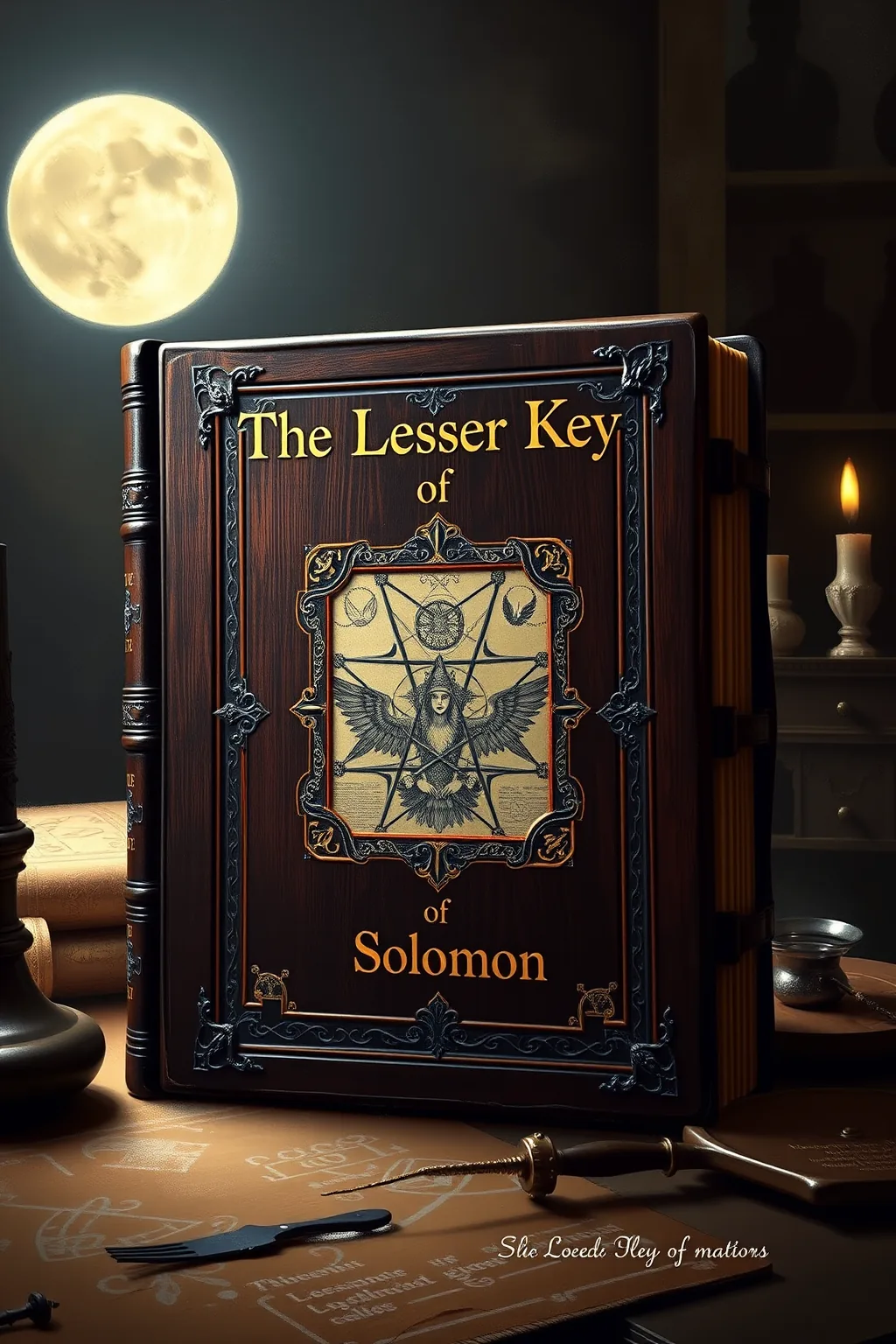
The Lesser Key of Solomon
 83
83

The Lesser Key of Solomon


Evander Ashcroft (Alchemy & Hermeticism Editor) — Mathers' transcription of 'The Lesser Key of Solomon' remains a cornerstone for serious practitioners and historians of ceremonial magic. Its meticulous presentation of the Lemegeton's five books, particularly the renowned Ars Goetia, offers unparalleled access to Solomonic ritual. While its density demands dedication, the insights into angelic and demonic hierarchies, conjured through precise invocations and sigil work, are profound. This is an essential text for anyone aspiring to understand or engage with the practical dimensions of Western esotericism, providing a direct lineage to ancient magical practices and a potent framework for spiritual exploration.
📝 Description
83
Published in 1904, The Lesser Key of Solomon details Solomonic magic rituals and spirit hierarchies.
S. L. MacGregor Mathers transcribed this grimoire, known in Latin as Lemegeton Clavicula Salomonis, making its contents available in 1904. The text functions as a practical guide to ceremonial magic. It covers specific rituals, the creation and use of sigils, and describes the ranks and natures of various spiritual entities.
The work is especially noted for its 'Ars Goetia' section. This part lists seventy-two specific demonic beings, detailing their characteristics and instructions for summoning and commanding them. The book connects these practices to King Solomon, presenting them as a system for interacting with spiritual forces and understanding cosmic order.
The Lesser Key of Solomon belongs to the tradition of Solomonic magic, a body of Western esoteric literature claiming derivation from the biblical King Solomon. These texts typically focus on angelic or demonic magic, grimoires, and the use of talismans and rituals for various purposes, from protection to acquiring knowledge or power. This grimoire specifically details the hierarchy and characteristics of seventy-two demons, providing methods for their conjuration, reflecting a common theme in grimoires of cataloging and commanding spiritual entities.
✍️ Author
💡 Why Read This Book?
Embark on a journey into the heart of ceremonial magic. 'The Lesser Key of Solomon' offers a direct conduit to ancient Solomonic rituals, spirit invocation, and potent sigil work. It is indispensable for serious practitioners seeking to master the art, scholars unraveling occult history, and seekers drawn to the profound mysteries of the unseen world. Unlock a legacy of hidden knowledge.
⭐ Reader Reviews
Honest opinions from readers who have explored this book.
❓ Frequently Asked Questions
What is 'The Lesser Key of Solomon'?
It is a 17th-century grimoire detailing Solomonic magic, including rituals, sigils, and lists of spirits, famously transcribed by S. L. MacGregor Mathers and published in 1904.
What is the 'Ars Goetia'?
The most famous section of 'The Lesser Key of Solomon,' it lists and describes the seventy-two demons that King Solomon is said to have summoned and controlled, providing methods for their invocation.
Is this book suitable for beginners?
While a foundational text, its complexity and practical nature are best suited for those with some prior understanding of occult principles or a dedicated desire to study ceremonial magic rigorously.
What is the historical significance of this grimoire?
It represents a significant compilation and dissemination of Solomonic magical traditions, influencing subsequent occult literature and practices within Western esotericism throughout the 20th century and beyond.
Can I use this book for practical magic?
Yes, it is a practical grimoire intended for practitioners of ceremonial magic, providing the necessary instructions and knowledge for performing rituals and interacting with the spiritual entities described within.
🔮 Key Themes & Symbolism
Solomonic Magic and the Art of Evocation
This grimoire is a definitive treatise on Solomonic magic, focusing on the intricate art of evocation. It provides detailed instructions for summoning and commanding various spiritual entities, including the seventy-two demons of the Ars Goetia and numerous angels. The text emphasizes the importance of precise ritualistic procedures, symbolic tools, and the proper use of divine names and incantations to establish control and achieve desired outcomes, offering a practical framework for understanding and engaging with these ancient magical arts.
The Hierarchy of Spirits and Their Attributes
A core element of 'The Lesser Key of Solomon' is its comprehensive cataloging of the spirit world. It meticulously details the ranks, appearances, powers, and specific abilities of both demonic and angelic beings. This structured approach allows practitioners to discern the nature of different entities and understand their potential influence or assistance. The book serves as an encyclopedic reference, mapping the intricate celestial and infernal hierarchies, crucial for anyone working through the complexities of spiritual intercourse and magical operations.
Ritualistic Practice and Symbolic Technology
The grimoire is a blueprint for ceremonial magic, outlining specific rituals that are rich in symbolism and require precise execution. From the construction of magical circles and the preparation of talismans and sigils to the chanting of conjurations and the use of consecrated implements, every detail is designed to create a controlled and potent magical environment. This symbolic technology is not mere superstition but a sophisticated system for focusing intent, channeling energy, and interacting with the subtle forces of the cosmos, bridging the material and spiritual planes.
💬 Memorable Quotes
Direct passages from the work, attributed to the author.
“Know that the Names of God are potent and holy.”
— This highlights the fundamental belief in the inherent power of divine nomenclature within Solomonic magic, emphasizing their role in invoking authority and safeguarding the magician.
“The spirit shall appear in a fair and comely form.”
— This speaks to the magician's ability to shape the manifestation of summoned entities, suggesting control over their appearance for clarity and reduced fear.
“Bind them by the oaths of the Most High.”
— This underscores the crucial element of coercion and control in ritual, where divine authority is invoked to compel spirits to obey the magician's will.
“Let the circle be thy defense.”
— A foundational principle of ceremonial magic, this emphasizes the protective barrier created by the magical circle, essential for the magician's safety during spirit invocation.
“The sigil is the key to the spirit's essence.”
— This points to the profound symbolic power of sigils, suggesting they are direct representations or conduits to the unique energetic signature of each spirit.
🌙 Esoteric Significance
Tradition
This grimoire is a central to the Western Esoteric Tradition, specifically within the lineage of Solomonic magic and ceremonial ritualism. It represents a practical application of Kabbalistic principles and Hermetic philosophy, aiming to achieve spiritual ascent and mastery over the forces of the cosmos through structured magical operations. Its emphasis on angelic and demonic hierarchies also connects it to early forms of demonology and theosophical systems that sought to map the spiritual planes.
Symbolism
The text is replete with potent symbolism, from the geometric precision of the magical circle and the pentagram, representing divine order and protection, to the unique sigils that serve as keys to the essence of each spirit. The divine names invoked are not merely words but carry immense energetic weight, symbolizing the ultimate power of creation. The colors, materials, and astrological timings prescribed for rituals further imbue the practice with layers of symbolic meaning, creating a body of correspondences designed to resonate with universal forces.
Modern Relevance
Despite its ancient origins, 'The Lesser Key of Solomon' remains profoundly relevant for contemporary practitioners of ceremonial magic, occult scholars, and those interested in the psychology of belief and consciousness. It offers a structured, albeit challenging, path to exploring altered states of consciousness, developing willpower, and understanding the archetypal forces that influence human experience. Its detailed system of spirit interaction continues to be studied and adapted by modern occultists seeking to engage with the subtle realms.
👥 Who Should Read This Book
This important work is essential for the dedicated practitioner of ceremonial magic seeking to master the art of spirit evocation and ritualistic control. Scholars of occult history and demonology will find it an invaluable primary source for understanding the evolution of Western esoteric traditions. Seekers of hidden knowledge and deeper spiritual understanding will be drawn to its intricate system of cosmic order and its exploration of the unseen realms. However, beginners should approach with caution, ideally under guidance, as the material is dense and requires a serious commitment to study and practice.
📜 Historical Context
Emerging from the crucible of the late Renaissance and early modern period, 'The Lesser Key of Solomon' draws upon centuries of occult tradition, particularly the complex range of Kabbalah, Jewish mysticism, and medieval demonology. Its compilation and dissemination in the 17th century occurred during a time when the boundaries between natural philosophy, theology, and magic were fluid. This era saw intense interest in understanding the divine order and humanity's place within it, often through the lens of esoteric knowledge. The grimoire's influence extended through secret societies and clandestine magical circles, impacting the development of Western esotericism and ceremonial magic throughout the Enlightenment and into the modern occult revival of the late 19th and early 20th centuries, making Mathers' transcription a vital bridge to this rich historical continuum.
📔 Journal Prompts
Reflect on the concept of divine names as described in the text. How might the power of language influence reality?
Consider the seventy-two spirits of the Ars Goetia. What archetypal aspects of the human psyche might they represent?
Meditate on the importance of the magical circle as a symbol of protection and focus. What are its modern-day equivalents in your life?
The text details specific rituals for summoning. How can the principles of structured intent and focused will be applied to non-magical goals?
Explore the idea of 'control' over spiritual entities. What ethical considerations arise when interacting with forces beyond human comprehension?
🗂️ Glossary
Grimoire
A textbook of magic, typically containing instructions on how to create magical objects, perform rituals, and invoke spirits. 'The Lesser Key of Solomon' is a prime example.
Solomonic Magic
A branch of ceremonial magic attributed to King Solomon, focusing on the invocation and command of angels and demons, often through specific rituals and divine names.
Ars Goetia
The first book of 'The Lesser Key of Solomon,' which lists and describes the seventy-two demons said to have been summoned by King Solomon.
Sigil
A symbol or glyph believed to represent or contain magical power, often created by condensing intent into a visual form. Used extensively in Solomonic magic.
Evocation
The act of calling forth or summoning a spirit or entity, typically from the spiritual realm, into a visible manifestation or controlled presence.
This book appears in 3 collections
🔮 Readers Also Liked
Browse all →







More by S L Macgregor Mathers
All books →
From the “Transcendental Meditation” Collection
View all →






More Free Magic & Ritual Books
View all →