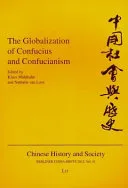
The Globalization of Confucius and Confucianism
 75
75

The Globalization of Confucius and Confucianism
Mühlhahn and van Looy's exploration of Confucianism's global reach offers a timely, if somewhat academic, perspective. The book excels in detailing the various international reception histories of Confucian thought, moving beyond simplistic portrayals of its influence. A particularly strong section discusses the adoption of Confucian ethics in Southeast Asian economic development models, highlighting specific policy adaptations. However, the work occasionally struggles to connect its dense historical analysis with a truly accessible esoteric interpretation, sometimes feeling more like a political science treatise than a mystical exploration. The authors' discussion of *li* (rites and propriety) as a framework for social order is compelling, but could benefit from a deeper engagement with its potential symbolic or spiritual dimensions. Ultimately, the book provides a valuable, fact-heavy account of Confucianism's internationalization, but leaves the more mystical implications largely for the reader to infer.
📝 Description
75
Klaus Mühlhahn and Nathalie van Looy's 2012 book examines how Confucian thought gained international traction.
Published in 2012, The Globalization of Confucius and Confucianism investigates the spread and reinterpretation of Confucian principles across the globe. The authors trace how these ancient teachings are adapted to address contemporary issues, often presented as an alternative to Western philosophical and political thought. This work analyzes the enduring influence of Confucius's ideas, which have shaped Chinese culture for over two millennia, and their reception in the early 21st century.
The book situates this global diffusion within a period of growing interest in non-Western philosophies, coinciding with China's economic rise and a renewed focus on its cultural heritage. It is written for academics in East Asian studies, political science, sociology, and comparative philosophy. Policymakers, business leaders focused on East Asian markets, and anyone interested in China's expanding global role will find this analysis valuable.
While not strictly esoteric in the sense of occultism, this book engages with a tradition often perceived as such by the West. It details how Confucianism, a system of thought deeply embedded in East Asian cultures for millennia, is actively being presented and understood globally. The work observes how its ethical and social tenets are being reframed and applied to modern challenges, sometimes positioning it as a distinct intellectual current separate from dominant Western paradigms. This re-emergence and re-contextualization on a world stage lends it a character of rediscovered or newly relevant wisdom.
💡 Why Read This Book?
• Gain specific insights into how Confucian concepts like *ren* (benevolence) are actively being reinterpreted for modern global governance, a nuance often lost in simplified accounts. • Understand the historical trajectory of Confucianism's spread, particularly its reception in Southeast Asia post-1945, a critical period often overlooked in broader surveys. • Grasp the symbolic weight of Confucianism's revival as a marker of China's evolving self-perception, as detailed in the book's analysis of the early 21st century.
⭐ Reader Reviews
Honest opinions from readers who have explored this book.
❓ Frequently Asked Questions
When was The Globalization of Confucius and Confucianism first published?
The book was first published in 2012, reflecting a growing international interest in Confucian thought during the early 21st century and China's increasing global prominence.
What are some core Confucian concepts discussed in the book?
The work frequently addresses key concepts such as *ren* (benevolence), *li* (rites and propriety), and *xiao* (filial piety), examining their adaptation in contemporary global settings.
Who are the primary authors of this book?
The primary authors are Klaus Mühlhahn and Nathalie van Looy, who collaborated on this study of Confucianism's international diffusion.
Does the book focus solely on ancient Confucianism?
No, while it acknowledges the ancient roots of Confucianism, the book's main focus is on its modern globalization and reinterpretation in the 21st century.
What is the book's stance on Confucianism as an alternative to Western thought?
The book explores how Confucian values are presented and perceived internationally as a potential alternative or complement to prevailing Western philosophical and political models.
What is the significance of Confucianism's rise in the context of China's global image?
The work links the international popularity of Confucianism to China's growing self-confidence and its efforts to project traditional values as part of its modern identity.
🔮 Key Themes & Symbolism
Confucianism as a Global Philosophy
This theme explores how Confucian teachings, originating in ancient China, have transcended geographical and cultural boundaries to become a significant force in global intellectual and political discourse. The book details how concepts like *ren* (benevolence) and *li* (propriety) are not confined to East Asian societies but are actively discussed and integrated into various international contexts, often presented as a distinct philosophical system offering alternatives to Western paradigms. It examines the mechanisms of this diffusion, including academic exchange, political rhetoric, and cultural diplomacy.
The Revival of Traditional Values
The work analyzes the contemporary resurgence of interest in Confucianism as intrinsically linked to China's evolving national identity and increasing global influence. This revival is presented not merely as a historical curiosity but as a strategic assertion of cultural heritage. The book investigates how Confucianism is employed to foster social cohesion, guide economic policy, and project a distinct civilizational model, symbolizing a nation reclaiming and re-exporting its philosophical traditions in the 21st century.
Confucianism and Modern Crises
A central aspect is the examination of how Confucian principles are invoked as potential solutions or stabilizing forces in the face of contemporary global challenges. This includes political instability, economic uncertainty, and social fragmentation. The book discusses how the emphasis on order, hierarchy, ethical conduct, and collective well-being inherent in Confucian thought is seen by some as a necessary counterpoint to perceived excesses of individualism and market-driven capitalism found in Western systems.
Eastern Alternatives to Western Hegemony
This theme scrutinizes the positioning of Confucianism as a viable intellectual and ethical alternative to dominant Western philosophical frameworks. The book studies how Confucianism is presented internationally as offering a different path to modernity, one that prioritizes social harmony, collective responsibility, and a nuanced understanding of human relationships. It explores the implications of this narrative for global intellectual exchange and the rebalancing of cultural power.
💬 Memorable Quotes
Direct passages from the work, attributed to the author.
“Confucian ideas have gained recognition as an Eastern alternative to Western concepts.”
— This highlights the book's core argument that Confucianism is increasingly viewed internationally not just as a historical tradition, but as a relevant philosophical system offering distinct perspectives on governance and ethics compared to Western thought.
“This return to China's very own tradition and values can be seen as symbolizing China's new self-confidence.”
— This statement underscores the connection between the global resurgence of Confucianism and China's modern political and cultural assertiveness. It suggests that embracing tradition is part of a national identity project.
“The philosopher's legacy has now endured for over 2,500 years.”
— This emphasizes the remarkable longevity and adaptability of Confucian thought, framing it as a continuously relevant tradition that has persisted through vast historical changes.
“Confucian values are praised as the (universal) way, especially in the face of current political, social, and economic crises.”
— This points to the contemporary appeal of Confucianism, positioning its ethical and social principles as potential remedies or guiding frameworks for addressing the complex problems facing the modern world.
“The popularity of Confucianism is on the rise, not only in China, but also internationally.”
— This serves as the foundational observation for the entire work, setting the stage for an analysis of how and why this ancient philosophy is experiencing renewed global attention.
🌙 Esoteric Significance
Tradition
While Confucianism is primarily a socio-ethical philosophy, its emphasis on ritual (*li*), cosmic harmony, and the cultivation of virtue can be interpreted through an esoteric lens, particularly within traditions that value structured self-improvement and societal order. It aligns with systems that seek to harmonize the individual with the social and natural worlds, akin to certain Hermetic or Stoic principles focused on living in accordance with nature and reason, albeit with a distinct emphasis on relational ethics.
Symbolism
The concept of *li* (rites and propriety) functions as a powerful symbolic system, representing the proper ordering of human interactions and societal structures. It symbolizes the invisible threads that bind a community together, guiding behavior and reinforcing moral principles. The ideal of the *junzi* (gentleman or superior person) symbolizes the aspirational individual who embodies ethical perfection through diligent self-cultivation and adherence to social norms.
Modern Relevance
Contemporary thinkers and institutions exploring ethical governance, sustainable development, and cross-cultural understanding often draw upon Confucian principles. Schools of thought focused on virtue ethics and communitarianism find resonance in Confucianism's emphasis on character development and collective well-being. Its principles are also relevant in discussions concerning East Asian diplomacy and the philosophical underpinnings of economic models that prioritize social stability alongside growth.
👥 Who Should Read This Book
• Scholars of comparative philosophy and East Asian studies seeking detailed analysis of Confucianism's international diffusion and adaptation. • Policymakers and diplomats interested in understanding the cultural and philosophical underpinnings of China's global engagement and its proposed models for governance. • Individuals exploring alternative ethical frameworks to Western liberalism, particularly those interested in how traditional philosophies are being reinterpreted to address modern societal challenges.
📜 Historical Context
Published in 2012, The Globalization of Confucius and Confucianism emerged during a period of significant global reevaluation of philosophical traditions. The early 21st century witnessed China's unprecedented economic growth, prompting widespread academic and public interest in its cultural and intellectual heritage. This volume situated itself within ongoing debates about modernization and the search for alternatives to Western liberal democratic models, particularly after the 2008 financial crisis. While scholars like Francis Fukuyama had previously theorized the 'end of history' with Western liberal democracy as its apparent endpoint, the ascendance of China challenged this narrative. Mühlhahn and van Looy's work engages with this intellectual current, exploring how Confucianism, championed by Chinese leadership, was being presented as a distinct pathway to development and social order, contrasting with the perceived individualism and instability of Western societies. The book's focus on the international reception of Confucianism reflects a broader trend of Sinology engaging with contemporary global politics.
📔 Journal Prompts
The symbolic weight of *li* in maintaining social harmony.
Confucianism's role as an 'Eastern alternative' in the 21st century.
The connection between China's self-confidence and its traditional values.
Reflections on *ren* (benevolence) in global political discourse.
The enduring legacy of Confucius over 2,500 years.
🗂️ Glossary
Ren (仁)
A core Confucian virtue often translated as benevolence, humaneness, or goodness. It represents the ideal ethical quality of empathy and concern for others, forming the foundation of moral conduct.
Li (禮)
A complex concept encompassing rites, rituals, propriety, etiquette, and social norms. *Li* guides human behavior, fosters social harmony, and maintains proper order within society and the cosmos.
Xiao (孝)
Filial piety, a fundamental Confucian virtue emphasizing respect, obedience, and care for one's parents and elders. It extends to loyalty to family and, by extension, to the state.
Junzi (君子)
Literally 'son of a ruler,' this term refers to the ideal person or 'superior man' in Confucian thought. The *junzi* embodies moral virtue, cultivates self-improvement, and acts with integrity.
Globalization
The process by which businesses or other organizations develop international influence or start operating on an international scale. In this context, it refers to the spread and adaptation of Confucianism beyond China.
Self-confidence (China)
Refers to the growing national pride and assertiveness of the People's Republic of China on the global stage, often linked to its economic power and renewed emphasis on its cultural heritage.
Eastern Alternative
A concept suggesting that philosophies and value systems originating from Eastern cultures (like Confucianism) can offer valid or superior approaches to societal organization and ethics compared to dominant Western paradigms.