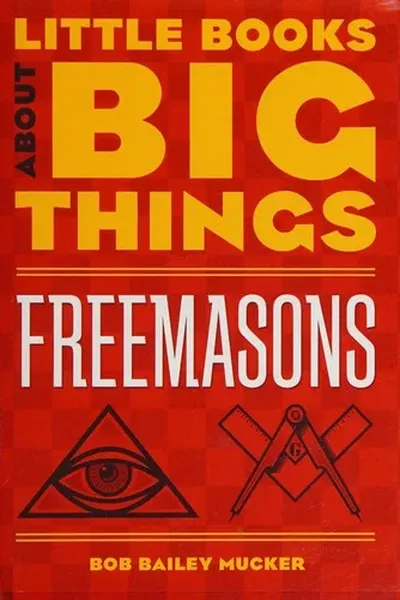
The Freemasons

 77
77

The Freemasons
Ridley's "The Freemasons" provides a grounded examination of a subject frequently obscured by legend. The author’s strength lies in meticulously detailing the historical progression of the Craft, particularly its emergence from medieval guilds into a significant force during the Enlightenment. He avoids speculative leaps, offering instead a narrative built on documentary evidence and scholarly consensus. A notable aspect is his careful tracing of the 1717 formation of the Grand Lodge of England, a pivotal moment in formalizing the organization. However, the work’s exhaustive detail, while commendable for its thoroughness, can at times feel dense for the casual reader, occasionally sacrificing narrative momentum for granular historical reporting. Ridley’s measured approach, while accurate, might leave those seeking the more esoteric interpretations wanting. It is a solid historical piece, but perhaps less a gateway into the deeper mystical currents some associate with Masonry.
📝 Description
77
Jasper Godwin Ridley's 2000 book examines Freemasonry's journey from guilds to philosophical society.
Jasper Godwin Ridley's "The Freemasons" provides a historical survey of the fraternal organization, moving past common myths to detail its origins, development, and societal influence. The book traces Freemasonry's path from its beginnings in guilds of stonemasons to its shift into a speculative and philosophical society during the 17th and 18th centuries.
This work is suited for readers interested in the historical and social evolution of fraternal orders. It offers a factual account of Freemasonry's structure, rituals, and philosophical ideas, avoiding sensationalized lore. Academics studying the Enlightenment, social history, or Western esoteric traditions will find valuable material within its pages. Ridley situates his work within scholarly efforts to demystify Freemasonry, placing it in the context of post-Reformation Europe and the rise of rationalism.
Ridley's book addresses the period when speculative Masonry gained prominence, particularly in England after the Grand Lodge formed in 1717. It examines how the fraternity's internal growth interacted with external societal shifts, including the rise of rationalism and Enlightenment thought. The work aims to demystify Freemasonry by placing it within the broader context of post-Reformation Europe and its intellectual currents.
💡 Why Read This Book?
• Gain a factual understanding of Freemasonry's evolution from operative guilds to speculative lodges, particularly the significance of the 1717 Grand Lodge formation, separating historical reality from myth. • Learn about the Enlightenment intellectual currents that shaped early speculative Freemasonry, including its emphasis on reason, morality, and self-improvement as presented in the book's analysis. • Understand the structural and symbolic framework of Freemasonry as described by Ridley, offering insight into the fraternity's internal organization and ritualistic language beyond common speculation.
⭐ Reader Reviews
Honest opinions from readers who have explored this book.
❓ Frequently Asked Questions
When was "The Freemasons" by Jasper Godwin Ridley first published?
Jasper Godwin Ridley's "The Freemasons" was first published in the year 2000, providing a modern scholarly perspective on the history of the fraternity.
What are the main subjects covered in Ridley's book on Freemasons?
The book covers the historical development of Freemasonry, its transition from operative to speculative guilds, its philosophical underpinnings during the Enlightenment, and its societal impact.
Does Ridley's "The Freemasons" focus on conspiracy theories?
No, Ridley's work aims for a factual and historical account, moving beyond popular myths and conspiracy theories to examine the organization's origins and evolution.
What historical period is particularly emphasized in the book?
The book places significant emphasis on the 17th and 18th centuries, particularly the period surrounding the formation of the Grand Lodge of England in 1717 and the rise of speculative Masonry.
Is Ridley's "The Freemasons" suitable for academic study?
Yes, the book is well-suited for academic study due to its detailed historical research and contextualization within the Enlightenment and social history.
What is the author's approach to Freemasonry's rituals?
Ridley examines the symbolic language and philosophical meaning embedded within Masonic rituals, presenting them as part of the fraternity's historical and intellectual tradition.
🔮 Key Themes & Symbolism
Operative to Speculative Transition
Ridley meticulously charts the transformation of Freemasonry from its practical origins among medieval stonemasons (operative Masons) to its philosophical and symbolic iterations (speculative Masons) in the late 17th and early 18th centuries. This shift involved the absorption of new members from various social strata and the reinterpretation of craft tools and practices into allegorical lessons on morality, ethics, and self-cultivation, moving the fraternity into the field of esoteric thought.
Enlightenment Philosophy and Masonry
The work highlights the profound influence of Enlightenment ideals on the development of speculative Freemasonry. Concepts such as reason, tolerance, universal brotherhood, and the pursuit of knowledge became central tenets. Ridley explores how Masonic lodges served as spaces where these ideas were discussed and disseminated, contributing to the intellectual ferment of the era and shaping the fraternity's philosophical outlook.
Ritual and Symbolism
A significant focus is placed on the symbolic language and ritualistic practices that define Freemasonry. Ridley examines how elements like the square, compasses, apron, and architectural motifs are imbued with allegorical meanings. These symbols are presented not merely as decorative elements but as pedagogical tools designed to convey moral and philosophical instruction, forming the core of the esoteric learning within the lodges.
Social and Historical Impact
Beyond its internal structure and philosophy, the book addresses Freemasonry's broader societal role. It discusses the fraternity's function as a social network, its involvement in charitable endeavors, and its presence among influential figures of the time. Ridley contextualizes the growth of Masonry within the political and social landscapes of Europe, examining its reception and occasional controversies.
💬 Memorable Quotes
Direct passages from the work, attributed to the author.
“The transition from operative to speculative Masonry involved a redefinition of its purpose and membership.”
— This highlights the fundamental shift where the fraternity moved from a craft-based organization to one focused on moral and philosophical instruction, admitting members not based on trade but on character and belief.
“Enlightenment ideals of reason and brotherhood found fertile ground within early Masonic lodges.”
— This suggests that the intellectual climate of the 18th century, with its emphasis on rational inquiry and social progress, provided a supportive environment for the philosophical principles that Freemasonry espoused.
“Masonic symbols are allegorical tools for moral and spiritual education.”
— This interpretation points to the symbolic nature of Masonic regalia and ritual, emphasizing their function as visual aids and narratives designed to teach ethical and philosophical lessons.
“The formation of the Grand Lodge in 1717 marked a crucial step in the formalization of Freemasonry.”
— This emphasizes the historical significance of the 1717 event as a turning point where the disparate Masonic lodges began to coalesce under a central governing body, standardizing practices and structure.
💡 Key Ideas
Editorial paraphrase of the work's core concepts — not direct quotes.
Ridley presents Freemasonry as a social phenomenon intertwined with the historical currents of its time.
This paraphrase suggests that the author views the fraternity not in isolation, but as deeply connected to and influenced by the broader social, political, and intellectual movements of the periods it existed within.
🌙 Esoteric Significance
Tradition
Ridley's work primarily engages with the Western Esoteric tradition, specifically focusing on the historical development of Freemasonry as a philosophical and ethical society. While not strictly adhering to a single lineage like Kabbalah or Hermeticism, it examines how Masonic thought absorbed and reinterpreted elements from various streams of esoteric and mystical philosophy prevalent during the Enlightenment, particularly those emphasizing natural religion, symbolic interpretation, and self-perfection.
Symbolism
Central to the book's exploration of Masonic symbolism are the square and compasses, representing morality, order, and the relationship between the material and spiritual realms. The Working Tools of operative Masonry, such as the plumb rule and level, are discussed as repurposed allegories for upright conduct and equality. The concept of the 'Temple of Solomon' serves as a foundational motif, symbolizing the construction of a spiritual edifice within the individual and the community.
Modern Relevance
Contemporary interest in Western Esotericism, comparative religion, and the history of secret societies continues to draw upon foundational historical texts like Ridley's. Thinkers and practitioners exploring modern Masonic philosophy, the evolution of fraternal orders, or the impact of Enlightenment thought on spiritual movements find valuable historical grounding in this work. It serves as a reference point for understanding the roots of practices and beliefs that continue to influence various esoteric circles today.
👥 Who Should Read This Book
• Students of Western Esotericism seeking a historically grounded account of Freemasonry's origins and philosophical underpinnings, moving beyond popular myths. • Researchers of the Enlightenment and social history interested in the role of fraternal organizations in disseminating ideas and fostering social networks in 17th and 18th century Europe. • Individuals curious about the symbolic language and ritualistic framework of Freemasonry, looking for a factual overview of its structure and allegorical teachings.
📜 Historical Context
Jasper Godwin Ridley's "The Freemasons," published in 2000, arrived at a time when scholarly interest in fraternal organizations and their role in the Enlightenment was well-established. The book engages with a tradition of historical inquiry that sought to situate Freemasonry within the intellectual and social milieu of post-Reformation Europe, moving beyond earlier, often sensationalized, accounts. Ridley specifically addresses the period following the formation of the Grand Lodge of England in 1717, a key moment in the formalization of speculative Masonry. He contextualizes this within a Europe grappling with religious shifts and the burgeoning power of rationalism, contrasting Masonic ideals with other contemporary philosophical movements like Deism. While not directly engaging with a specific named contemporary scholar's critique or reception event in the text itself, Ridley's work implicitly dialogues with historians who have previously explored Masonic influence, such as David Stevenson, by providing a detailed historical narrative that underpins broader theoretical discussions.
📔 Journal Prompts
The operative to speculative transition in Masonry: what parallels exist in modern organizational shifts?
Reflect on the influence of Enlightenment ideals on the structure and philosophy of the Craft as presented by Ridley.
Analyze the symbolic meaning of the square and compasses, considering their application beyond Masonic ritual.
Consider the historical role of lodges as spaces for intellectual exchange, drawing from Ridley's account.
How does the concept of building a spiritual temple, as explored in the book, relate to personal growth?
🗂️ Glossary
Operative Masonry
Refers to the historical craft guilds of stonemasons responsible for constructing buildings, particularly cathedrals and castles, from the Middle Ages through the early modern period.
Speculative Masonry
The philosophical and symbolic form of Freemasonry that emerged in the late 17th and early 18th centuries, admitting members based on intellectual and moral qualities rather than trade.
Grand Lodge
A governing body that oversees Masonic lodges within a specific geographical jurisdiction, the first of which was established in England in 1717.
Enlightenment
An 18th-century intellectual and cultural movement emphasizing reason, individualism, skepticism, and the scientific method, which significantly influenced Western thought and society.
Allegory
A story, poem, or picture that can be interpreted to reveal a hidden meaning, typically a moral or political one, central to Masonic ritual instruction.
Ritual
A set of ceremonial actions or practices performed in a prescribed order, used in Freemasonry to convey its teachings and principles.
Fraternal Order
An organization, typically composed of men, that promotes fellowship, mutual support, and shared principles among its members, often with a system of ranks and rituals.
🔮 Readers Also Liked
Browse all →








More Free Freemasonry & Secret Societies Books
View all →