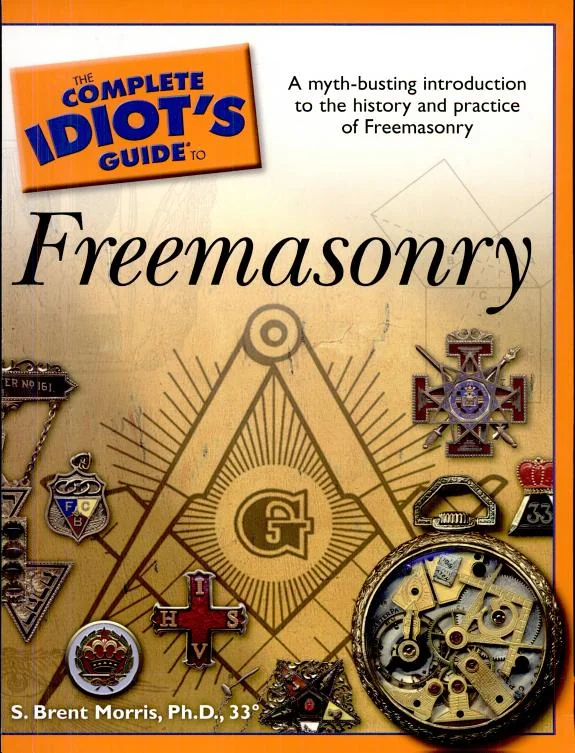
The Complete Idiot's Guide to Freemasonry
 79
79

The Complete Idiot's Guide to Freemasonry
S. Brent Morris's 2008 guide attempts a Herculean task: to make Freemasonry comprehensible to the uninitiated without alienating its members. The book succeeds admirably in its clarity, particularly when explaining the basic structure of lodge meetings and the common symbols like the square and compasses. Morris’s background as a Mason and a scholar lends authority. However, the very attempt to simplify often smooths over the deeper, more controversial interpretations that attract certain individuals to esoteric studies. The section on historical origins, while broad, sometimes feels hesitant to engage with the more speculative theories that are, for better or worse, part of Masonic lore. For a beginner seeking a factual overview, it's a solid starting point. For those drawn by the mystical or secret aspects, it may feel a bit too terrestrial. The work offers a clear, if somewhat sanitized, introduction to a complex subject.
📝 Description
79
S. Brent Morris's 2008 guide demystifies the world's largest fraternity for newcomers.
Published in 2008, S. Brent Morris's guide aims to clarify Freemasonry for those unfamiliar with its practices, history, and symbolism. The book traces the fraternity's origins from medieval stonemason guilds to its formal establishment in London in 1717. It addresses common misconceptions and explains the core tenets of the Craft in an accessible way.
The guide covers the structure of Masonic lodges, the allegorical degrees of the Blue Lodge, and the use of operative masonry tools as moral symbols. Morris also discusses the principles of brotherhood, charity, and truth that guide Masonic members. The work situates Freemasonry within its historical development, noting its spread across Europe and the Americas during the 18th and 19th centuries and acknowledging the influence of the Enlightenment.
While presented as an introductory guide, Morris's work touches upon the symbolic and allegorical interpretations found within Masonic teachings. It acknowledges the esoteric traditions and mystery schools sometimes associated with the fraternity's origins. The book explains how operative masonry tools are adapted into moral and spiritual symbols for the speculative Mason, hinting at deeper layers of meaning beyond the literal practices.
💡 Why Read This Book?
• Gain a clear understanding of the basic structure and rituals of Masonic lodges, including the three degrees of the Blue Lodge, which are fundamental to understanding Masonic progression. • Learn about the philosophical underpinnings and moral allegories associated with common Masonic symbols, such as the Square and Compasses, as explained by Morris. • Explore the historical development of Freemasonry from its guild origins in the late Middle Ages to its formal establishment in 1717, providing context for its societal impact.
⭐ Reader Reviews
Honest opinions from readers who have explored this book.
❓ Frequently Asked Questions
What are the primary symbols explained in The Complete Idiot's Guide to Freemasonry?
The book details key symbols like the Square and Compasses, the G (often interpreted as God or Geometry), the Trowel, and the Level. Each is presented with its operative and speculative meanings.
Does S. Brent Morris discuss the history of Freemasonry before 1717?
Yes, Morris addresses the pre-1717 period, discussing theories linking Freemasonry to operative stonemason guilds and earlier speculative traditions, though he emphasizes the formal organization in London in 1717.
Is Freemasonry presented as a religion in this book?
No, Morris clarifies that Freemasonry is not a religion but a 'school of morality' that requires belief in a Supreme Being. It does not interfere with a Mason's personal religious beliefs.
What is the significance of the 'Entered Apprentice' degree?
The Entered Apprentice degree is the first step in a Mason's journey. The book explains it as a period of instruction and learning fundamental Masonic principles and symbols.
Can non-Masons join or participate in Masonic activities discussed in the book?
Generally, no. Membership requires belief in a Supreme Being and adherence to specific Masonic obligations. While Masons engage in public charitable works, lodge rituals are typically for members only.
What does the book say about the alleged secrecy of Freemasonry?
Morris distinguishes between Masonic secrets (modes of recognition) and the fraternity's principles, which are openly discussed. The book aims to demystify, explaining that much about Freemasonry is not secret.
🔮 Key Themes & Symbolism
Symbolic Interpretation
The work meticulously unpacks the symbolic language of Freemasonry, reinterpreting the tools of operative stonemasons as allegorical devices for moral and spiritual development. Morris explains how symbols like the Square, Compasses, and Level are not merely decorative but integral to Masonic teachings on virtue, rectitude, and human conduct. The book explores the layered meanings, moving from practical application to philosophical contemplation, offering a framework for understanding the Craft's ethical system.
Historical Development
Morris charts the evolution of Freemasonry from its likely roots in medieval stonemason guilds to its formal establishment as a speculative fraternity in London in 1717. The narrative covers its expansion during the Age of Enlightenment, its philosophical leanings influenced by thinkers of the era, and its subsequent spread across continents. This historical arc provides context for the fraternity's structure and its societal role.
Fraternal Structure and Ritual
A significant portion of the guide is dedicated to explaining the organizational framework of Masonic lodges and the nature of their rituals. Morris describes the progression through the three degrees of the Blue Lodge – Entered Apprentice, Fellowcraft, and Master Mason – detailing the purpose and significance of each ritualistic step. The emphasis is on the didactic and character-building aspects of these ceremonies.
Moral and Ethical Tenets
Fundamentally, Freemasonry, as presented by Morris, is a system of morality veiled in allegory. The book highlights key tenets such as brotherhood, charity, truth, and the pursuit of self-improvement. It explains the Masonic obligation to support fellow members and contribute positively to society, framing the fraternity as a force for personal betterment and community welfare.
💬 Memorable Quotes
Direct passages from the work, attributed to the author.
“Freemasonry is not a religion, but a school of morality.”
— This statement underscores the book's central thesis: that Masonry's primary function is ethical instruction, not theological doctrine. It clarifies that while belief in a Supreme Being is required, the fraternity itself is a framework for moral education rather than a faith system.
“The tools of the operative stonemason become symbols for the speculative Mason.”
— This succinctly captures the essence of Masonic symbolism. The book explains how practical tools used for building physical structures are metaphorically applied to the construction of character and the building of a virtuous life.
“The Entered Apprentice is taught to lay the foundation.”
— This highlights the foundational nature of the first degree. It signifies that the initial stage of Masonic learning is about establishing core principles and understanding the basic tenets before progressing to more complex teachings.
“Brotherhood is a central to the fraternity.”
— This emphasizes the importance of mutual support and fellowship among Masons. The concept of brotherhood extends beyond the lodge room, influencing how members are expected to interact with each other and the wider community.
💡 Key Ideas
Editorial paraphrase of the work's core concepts — not direct quotes.
Charity is a duty and a privilege.
The book discusses the Masonic commitment to charitable works. This quote reflects the view that aiding those in need is not just an obligation but a rewarding aspect of Masonic practice.
🌙 Esoteric Significance
Tradition
Morris's work engages with the Western Esoteric Tradition, particularly its manifestation within Freemasonry. While not strictly adhering to a single lineage like Kabbalah or Hermeticism, it draws from the symbolic and philosophical currents that have informed Masonic ritual since the Enlightenment. It represents a modern, accessible interpretation of a tradition that historically integrated elements from various mystical and philosophical schools, presenting them in a structured, fraternal context.
Symbolism
Key symbols explored include the Square and Compasses, representing morality and self-control, and the G, often interpreted as Geometry or the Grand Architect of the Universe, linking Masonic thought to divine order and creation. The Level and Plumb Rule are also discussed as symbols of equality and rectitude, respectively, demonstrating how mundane tools are imbued with profound ethical and spiritual meaning.
Modern Relevance
This guide remains relevant for contemporary students of Western Esotericism seeking to understand Freemasonry's place within the broader field of mystical and philosophical traditions. It serves as a foundational text for those interested in comparative studies of secret societies, ritual, and symbolic language, influencing modern discussions on fraternalism and its enduring appeal in a secularizing world.
👥 Who Should Read This Book
• Inquisitive individuals contemplating joining Freemasonry: This book provides essential background on membership, rituals, and the fraternity's principles, clarifying the process. • Students of comparative religion and secret societies: Readers interested in the historical development and symbolic language of Western fraternal orders will find a clear, structured overview. • Those seeking to understand Masonic influence in history and culture: The guide offers context for Freemasonry's societal role and philosophical contributions, particularly from the Enlightenment onwards.
📜 Historical Context
Published in 2008, S. Brent Morris's guide emerged in an era where interest in fraternal organizations, including Freemasonry, was experiencing a resurgence, partly fueled by popular culture and a desire for community. The work arrived decades after the sensationalism of the anti-Masonic movements of the 19th century, seeking to provide a balanced, factual counterpoint. Morris engages with the established historical narrative, acknowledging the formal founding of the Premier Grand Lodge of England in 1717, a central moment that cemented the transition from operative guilds to speculative lodges. He implicitly contrasts his approach with more esoteric or conspiracy-laden interpretations that often circulated, positioning his work as a clear, accessible explanation grounded in historical consensus, while still acknowledging the speculative theories surrounding earlier origins.
📔 Journal Prompts
The Square and Compasses as symbols of moral guidance.
Reflecting on the transition from operative to speculative Masonry.
The significance of 'brotherhood' in fraternal organizations.
Understanding the allegorical use of working tools in Masonic ritual.
The role of belief in a Supreme Being within Freemasonry.
🗂️ Glossary
Blue Lodge
The basic organizational unit of Freemasonry, conferring the first three degrees: Entered Apprentice, Fellowcraft, and Master Mason. It is the foundation of Masonic structure.
Entered Apprentice
The first degree in Freemasonry, focused on introducing the candidate to basic principles, symbols, and the concept of moral instruction through allegory.
Fellowcraft
The second degree in Freemasonry, which typically explores the intellectual and scientific aspects of Masonry, often involving a journey of learning and discovery.
Master Mason
The highest degree in the Blue Lodge, representing the completion of the symbolic journey and the attainment of full membership with its associated rights and responsibilities.
Grand Architect of the Universe
A term used in Freemasonry to refer to the Supreme Being, without specifying a particular religious doctrine, emphasizing a universal creator.
Ritual
The prescribed form and ceremonies used in Masonic lodges for conferring degrees and conducting business, employing symbolism and allegory for instruction.
Speculative Masonry
Freemasonry as practiced today, focusing on philosophical and moral teachings rather than the literal building practices of ancient stonemasons (operative masonry).
🔮 Readers Also Liked
Browse all →


![The Freemasons' quarterly (magazine and) review [afterw.] The Freemasons' monthly magazine](/img/thumb/the-freemasons-quarterly-magazine-and-review-afterw-the-freemasons-monthly-magazine-freemasons-magazine-ia.webp)


More by S. Brent Morris
All books →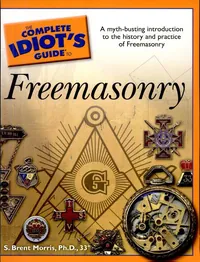
More Free Freemasonry & Secret Societies Books
View all →