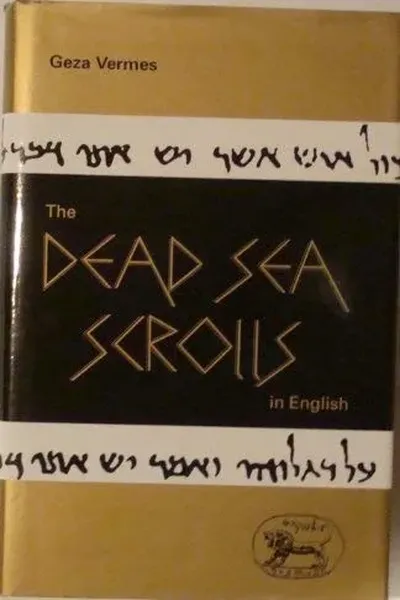
The complete Dead Sea scrolls in English

 75
75

The complete Dead Sea scrolls in English
Géza Vermès's translation of the Dead Sea Scrolls offers a lucid and authoritative rendering of these pivotal ancient texts. The strength of this compilation lies in its accessibility; Vermès, a leading scholar, provides annotations that guide the reader through potentially obscure passages without overwhelming them. He makes a compelling case for the Essene authorship of many Qumran documents, a viewpoint still debated but persuasively argued here. A point of consideration for some readers might be the sheer volume and variety of the texts, which can initially feel daunting. However, the organization and Vermès's clear prose mitigate this challenge. The inclusion of previously unpublished fragments in later editions further solidifies its status. This translation is a vital resource for anyone serious about the historical roots of Abrahamic faiths.
📝 Description
75
Géza Vermès's 1995 translation presents the Dead Sea Scrolls in English.
This volume collects the complete English translation of the Dead Sea Scrolls, ancient Jewish manuscripts found near the Dead Sea between 1947 and 1956. The texts date from the 3rd century BCE to the 1st century CE and reveal much about religious and social life in Second Temple Judaism. It includes biblical texts, writings from specific Jewish sects, and other documents.
The scrolls offer a direct look at the beliefs and practices of groups like the Essenes, who are thought to be connected to the Qumran community. They provide a contrast to later rabbinic traditions and information from historians like Josephus. The discovery and publication of these texts generated significant academic discussion and led to a reassessment of historical accounts of the period.
This translation is useful for understanding the origins of both Judaism and Christianity, as well as for anyone interested in Jewish mysticism or apocalyptic literature.
The Dead Sea Scrolls emerged from a period of intense religious activity in ancient Judea, a context often considered fertile ground for esoteric thought. While not exclusively esoteric, the scrolls reveal the detailed doctrines and communal rules of a specific sect, the Essenes, whose practices and apocalyptic expectations touched upon themes that resonate with esoteric traditions. Their focus on communal living, strict adherence to law, and unique interpretations of scripture offer a glimpse into a less mainstream spiritual path within Judaism, distinct from later rabbinic Judaism and early Christianity.
💡 Why Read This Book?
• Gain direct insight into the communal rules and ethical codes of the Qumran sect, as detailed in texts like the 'Community Rule,' to understand their unique approach to religious observance. • Comprehend the specific eschatological visions found in scrolls such as the 'War Scroll,' revealing the apocalyptic expectations prevalent in 1st-century Judea. • Analyze the biblical manuscripts, including proto-Masoretic texts and paraphrases, to observe variations and textual development predating the standardized Hebrew Bible.
⭐ Reader Reviews
Honest opinions from readers who have explored this book.
❓ Frequently Asked Questions
What is the significance of the Dead Sea Scrolls for understanding early Christianity?
The scrolls predate and are contemporaneous with the emergence of Christianity, offering crucial context. They reveal shared theological concepts, messianic expectations, and apocalyptic ideas prevalent in Judaism at the time, illuminating the environment in which Jesus and his followers lived and preached.
Which specific community is most often associated with the Dead Sea Scrolls?
The Essenes are the community most frequently linked to the Dead Sea Scrolls. Scholars believe they may have deposited the scrolls in the caves at Qumran, as many of the sectarian texts describe practices and beliefs consistent with historical accounts of the Essenes.
When were the Dead Sea Scrolls discovered?
The initial discovery occurred in 1947 by a Bedouin shepherd near the ancient settlement of Qumran. Subsequent excavations and explorations between 1947 and 1956 uncovered thousands of manuscript fragments across eleven caves.
Are the Dead Sea Scrolls primarily religious texts?
Yes, the majority are religious texts. This includes copies of books from the Hebrew Bible, apocryphal works, and unique sectarian documents detailing the beliefs and practices of a specific Jewish group during the Second Temple period.
What languages are the Dead Sea Scrolls written in?
The Dead Sea Scrolls are primarily written in Hebrew. However, significant portions are also in Aramaic, the common vernacular of the time, and a smaller number are in Greek, reflecting the Hellenistic influence in the region.
How does Géza Vermès's translation compare to others?
Vermès's translation is highly regarded for its scholarly accuracy and clear, accessible English prose. It incorporates decades of research and provides valuable commentary, making it a definitive resource for both academic and general readers.
🔮 Key Themes & Symbolism
Sectarian Judaism
The scrolls offer a direct look at the diversity of Jewish belief and practice during the Second Temple period, particularly the ideology of a specific ascetic group, likely the Essenes. Texts like the 'Community Rule' reveal their emphasis on communal living, strict adherence to the Law, and a dualistic worldview contrasting "sons of light" with "sons of darkness." This provides a crucial counterpoint to the more widely known Pharisaic and Sadducean traditions, revealing a complex religious landscape that influenced early Christianity.
Apocalyptic Expectations
A significant theme is the fervent expectation of divine intervention and the end times. The 'War Scroll' vividly depicts a future cosmic struggle between good and evil, culminating in divine victory. This apocalyptic fervor, a common thread in many Jewish groups of the era, sheds light on the mindset of communities anticipating radical societal and spiritual transformation, a perspective that finds echoes in early Christian eschatology.
Biblical Textual Variants
The scrolls contain the oldest known manuscripts of books from the Hebrew Bible. Their study reveals textual variations and different versions of biblical books circulating before the standardization of the Masoretic Text. This includes texts that align closely with the Septuagint (the Greek translation) and others that show unique readings, offering invaluable data for understanding the transmission and evolution of scripture.
Messianic Hopes
The nature of messianic expectation is a prominent subject. The scrolls hint at various conceptions of the Messiah, sometimes referring to a priestly figure, other times to a Davidic king, and occasionally to multiple messianic figures. This diversity contrasts with later, more unified rabbinic views and highlights the fluid and many-sided nature of messianic hope within Judaism leading up to the Roman period.
💬 Memorable Quotes
Direct passages from the work, attributed to the author.
“The War Scroll describes a final, divinely ordained battle against the forces of evil.”
— This captures the intense eschatological outlook present in some scrolls. It reflects a belief in an imminent cosmic conflict where divine justice would triumph over wickedness.
“Biblical texts found at Qumran show variations from later standardized versions.”
— This refers to the significant discovery that the Hebrew Bible texts known today were not the only versions in circulation during the Second Temple period, offering insights into textual history.
“The scrolls provide evidence of diverse messianic expectations within ancient Judaism.”
— This interpretation points to the varied figures and roles envisioned for a future messianic leader, demonstrating a less monolithic understanding of this concept than might be assumed.
“Purity laws and their meticulous observance were central to the Qumran sect's identity.”
— This highlights the importance of ritual and physical cleanness within the community's daily life and religious practice, as detailed in various sectarian documents.
💡 Key Ideas
Editorial paraphrase of the work's core concepts — not direct quotes.
The Community Rule lays out the organization and principles for a communal life dedicated to God's truth.
This paraphrased concept highlights the structured, almost monastic, nature of the Qumran community. It emphasizes their focus on divine law and communal harmony as central to their spiritual path.
🌙 Esoteric Significance
Tradition
While not strictly part of a single defined esoteric lineage like Kabbalah or Hermeticism, the Dead Sea Scrolls resonate deeply with Gnostic and proto-Gnostic thought due to their dualistic cosmology, emphasis on hidden knowledge ('knowledge' - *gnosis* - being central), and strict community rules. The concept of the "Sons of Light" versus "Sons of Darkness" echoes Gnostic dualism. Furthermore, their exploration of angelic hierarchies and esoteric interpretations of scripture connect them to broader mystical traditions seeking direct experience of the divine and hidden truths.
Symbolism
Key symbols include light and darkness, representing the fundamental dualism within the Qumran sect's worldview, signifying the cosmic struggle between good and evil and the spiritual state of individuals. Water also holds symbolic weight, particularly in relation to ritual purity and purification practices central to the community's identity, reflecting a need for cleansing to approach the divine. The concept of the 'New Covenant' signifies a renewed, exclusive relationship with God, distinct from mainstream Israelite practice.
Modern Relevance
Contemporary esoteric thinkers and groups often draw parallels between the Qumran community's disciplined lifestyle, search for spiritual purity, and apocalyptic worldview, and their own practices. The scrolls' emphasis on communal living, esoteric interpretation of scripture, and the pursuit of divine knowledge continue to inspire modern intentional communities, mystical study groups, and scholars exploring the roots of Western esotericism and early Christian mysticism.
👥 Who Should Read This Book
• Scholars of Ancient Judaism and Early Christianity: To access primary source material that fundamentally reshaped our understanding of the Second Temple period and the religious landscape Jesus inhabited. • Students of Comparative Religion: To examine the diversity of Jewish sects and beliefs contemporary with nascent Christianity, offering a crucial point of comparison. • Mystics and Esoteric Students: To explore ancient traditions of communal discipline, dualistic cosmology, and apocalyptic expectation that echo in various Western esoteric lineages.
📜 Historical Context
The Dead Sea Scrolls emerged from the turbulent milieu of Judea during the Second Temple period, roughly from the 3rd century BCE to the 1st century CE. This era was characterized by intense religious diversity, foreign domination (Ptolemaic, Seleucid, and Roman rule), and fervent messianic expectations. The scrolls provide a unique, internal perspective on Jewish life, particularly from a sectarian group often identified as the Essenes, whose communal practices and beliefs are detailed in documents like the Community Rule. This contrasts with the more Hellenized views of groups like the Sadducees or the rabbinic precursors. The discovery and subsequent publication of the scrolls, beginning in the late 1940s, revolutionized biblical scholarship, challenging established notions of the Hebrew Bible's textual history and the origins of early Christianity. Scholars like Yigael Yadin played an important role in their acquisition and study, while figures like Eleazar Sukenik were among the first to recognize their immense historical value, even amidst the turmoil of the 1948 Arab-Israeli War.
📔 Journal Prompts
The dualistic worldview presented in the 'War Scroll' and its implications for ethical choice.
Reflection on the communal structure described in the 'Community Rule' and its emphasis on shared resources.
Comparing the Qumran sect's interpretation of biblical prophecy with modern eschatological views.
The role of ritual purity in establishing and maintaining the identity of the Qumran community.
Exploring the concept of a 'New Covenant' as understood by the Essenes and its potential meaning.
🗂️ Glossary
Second Temple Period
The era in Jewish history from the rebuilding of the Jerusalem Temple by Zerubbabel (c. 516 BCE) until its destruction by the Romans in 70 CE. This period saw significant religious, political, and social developments.
Essenes
An ascetic Jewish sect flourishing during the Second Temple period, widely believed to be associated with the Qumran community and the Dead Sea Scrolls. Known for communal living and strict adherence to purity laws.
Apocalyptic Literature
A genre of literature, prominent in ancient Judaism and Christianity, characterized by visions, symbolic language, and prophecies concerning the end of the world and divine judgment.
Community Rule (Serekh HaYahad)
A key sectarian document found among the Dead Sea Scrolls, outlining the rules, organization, and beliefs of the Qumran community, likely the Essenes.
War Scroll (Milhamah)
Another significant sectarian text detailing a future eschatological war between the forces of good (Sons of Light) and evil (Sons of Darkness), guided by divine intervention.
Masoretic Text
The authoritative medieval Hebrew text of the Jewish Bible, established by the Masoretes. The Dead Sea Scrolls provide earlier textual witnesses that sometimes differ from it.
Messianism
Belief in a future messiah or messianic figures who will bring about a period of salvation, peace, and divine rule. The scrolls reveal diverse messianic expectations within ancient Judaism.
🔮 Readers Also Liked
Browse all →









More by Géza Vermès
All books →




More Free Occult Philosophy Books
View all →