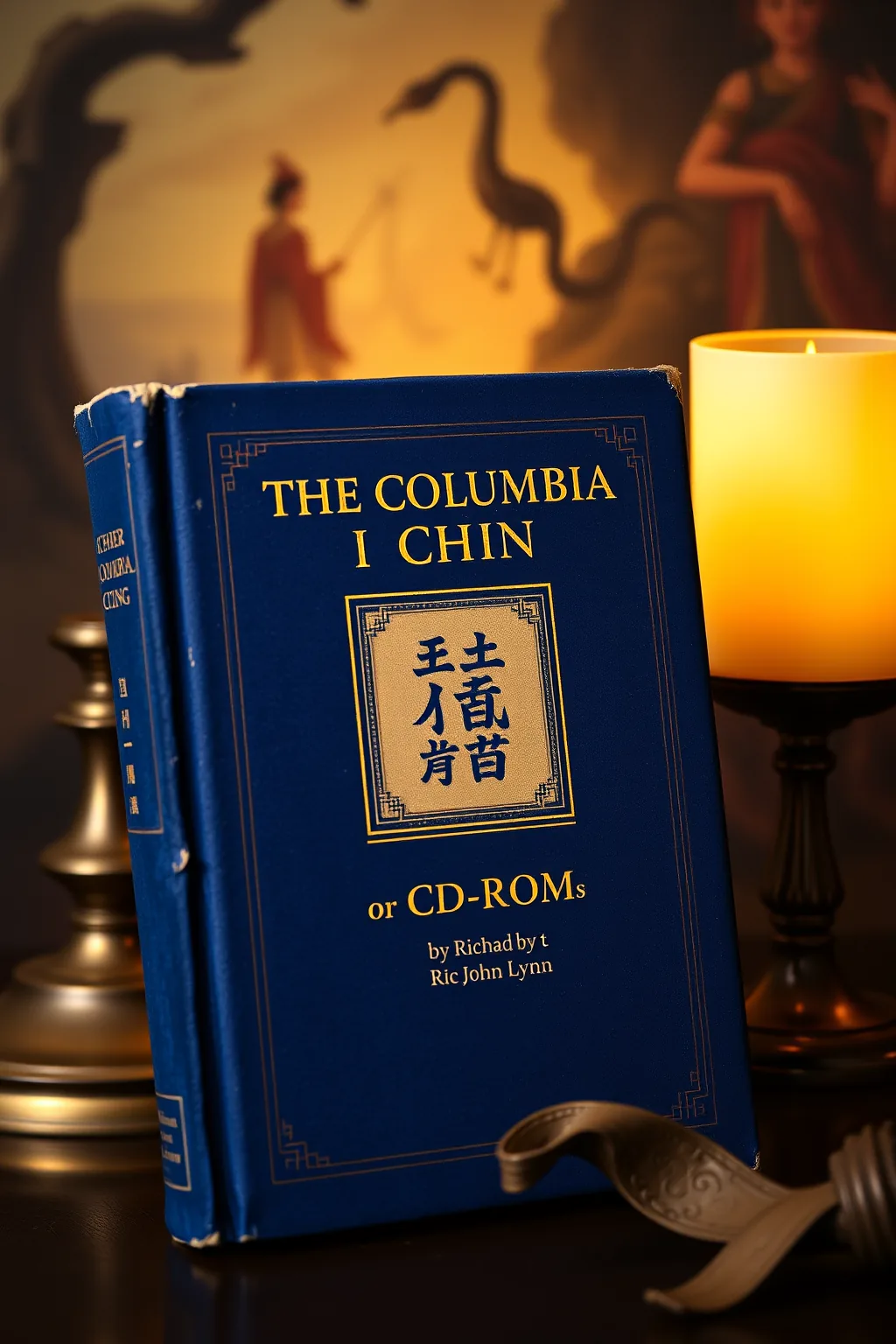
The Columbia <I>I Ching</I> on CD-ROM
 61
61

The Columbia <I>I Ching</I> on CD-ROM



Lorelei Sage (Contemplative Literature Editor) — Richard John Lynn’s digital presentation of *The Columbia I Ching* is a revelation for practitioners and scholars alike. This CD-ROM edition meticulously preserves the scholarly rigor of Lynn's translation while infusing it with an accessible, interactive format. The esoteric insights are readily available, allowing for a deeper engagement with the oracle's profound pronouncements on change and destiny. Its strength lies in bridging the gap between academic study and intuitive practice, making the complex symbolism of the hexagrams more approachable. This is an essential tool for anyone serious about consulting the *I Ching* for guidance, insight, and the cultivation of inner wisdom, offering a unique path to understanding the Tao.
📝 Description
61
Richard John Lynn's 1994 CD-ROM edition of the I Ching provides interactive access to the ancient Chinese oracle.
This 1994 CD-ROM edition of the I Ching by Richard John Lynn allows users to interact with the classic Chinese divination text. It presents the 64 hexagrams, their changing lines, and associated commentaries. The software aims to go beyond simple translation by offering a way to engage with the symbolic interpretations that have been part of Chinese thought for centuries. Users can examine the philosophical ideas behind the I Ching, which describes the relationship between universal energies and human events.
Each hexagram is presented with its detailed layers of meaning, highlighting concepts of transformation, equilibrium, and the recurring patterns of existence. This digital version is suited for those interested in esoteric studies, classical Chinese philosophy, or personal development. It offers a way to study the text's complex symbolism and philosophical depth, intended for individuals seeking to comprehend the underlying forces influencing life.
The I Ching, or Book of Changes, is a foundational text in Chinese cosmology and divination. Its origins are traced to ancient Zhou dynasty practices, evolving over centuries through commentary and interpretation. It is used not only as an oracle but also as a philosophical guide, mapping the principles of change and balance in the universe. Within esoteric traditions, it is often studied for its insights into cyclical patterns, cause and effect, and the interconnectedness of all things. This CD-ROM edition makes these complex elements accessible through a digital interface.
💡 Why Read This Book?
Engage with a timeless oracle on a dynamic platform. *The Columbia I Ching* CD-ROM offers unprecedented interactive exploration of the Book of Changes, revealing its profound philosophical depths and symbolic language. Ideal for seekers of ancient wisdom, students of Eastern philosophy, and practitioners of divination who wish to deepen their understanding and connection to this powerful esoteric system. Uncover hidden patterns, gain clarity on life’s transitions, and cultivate a more harmonious relationship with the flow of existence.
⭐ Reader Reviews
Honest opinions from readers who have explored this book.
❓ Frequently Asked Questions
How does the CD-ROM enhance the *I Ching* experience?
The CD-ROM offers interactive navigation, allowing users to explore hexagrams, their transformations, and associated texts with ease, fostering a deeper, more intuitive understanding than traditional print formats.
Is this edition suitable for beginners?
Yes, while the *I Ching* is complex, this edition's interactive nature and clear presentation make it accessible for dedicated beginners eager to learn its foundational principles and symbolic language.
What kind of computer is needed to run the CD-ROM?
The CD-ROM is designed for standard CD-ROM drives and compatible operating systems of its era. Specific system requirements would typically be found on the product packaging.
Can I use this for practical divination?
Absolutely. This edition is a robust tool for practical divination, providing the complete text and commentary necessary for consulting the oracle for guidance on personal and situational matters.
What is the philosophical significance of the *I Ching*?
The *I Ching* is a profound philosophical text exploring the principles of change, balance, and the cyclical nature of the universe, offering insights into harmony, destiny, and the human condition.
🔮 Key Themes & Symbolism
The Dynamics of Change and Transformation
Fundamentally, the *I Ching* is a profound exploration of cosmic flux. This edition illuminates how seemingly static situations are in constant motion, governed by underlying principles of change. It reveals the cyclical nature of existence, from the rise and fall of dynasties to the personal transformations we undergo. Understanding these dynamics allows for greater adaptability, foresight, and acceptance of life’s inevitable shifts, fostering a profound sense of connection to the universal flow of energy.
Cosmic Harmony and the Mandate of Heaven
This digital archive examines the concept of 'Tian Ming' or the Mandate of Heaven, a central tenet in Chinese philosophy. It illustrates how individual actions and societal structures are interconnected with the natural order of the cosmos. The *I Ching* provides a framework for discerning the will of Heaven and aligning oneself with its harmonious principles. By understanding these cosmic connections, users can seek guidance on how to act with integrity and achieve balance in their personal lives and the wider world.
Symbolic Language of the Hexagrams
The hexagrams, composed of yin and yang lines, are a sophisticated symbolic language that captures universal archetypes and situational energies. This edition makes the intricate meanings of each hexagram and its constituent trigrams accessible. Exploring these symbols unlocks a deeper comprehension of the forces at play in any given circumstance, offering profound metaphorical insights into human psychology, relationships, and the unfolding of destiny. It is a visual and conceptual map of the human experience.
💬 Memorable Quotes
Direct passages from the work, attributed to the author.
“That which is above is like that which is below.”
— This foundational hermetic principle suggests a macrocosm-microcosm relationship, where universal laws are reflected in human affairs and the individual soul.
“Change is the only constant.”
— A philosophical central to the *I Ching*, emphasizing the impermanence of all things and the necessity of adapting to shifting circumstances.
“The superior man understands the signs of the times.”
— Highlights the importance of discernment and foresight, urging individuals to observe subtle indicators to navigate future events wisely.
“To know the changes is to know the Tao.”
— Connects understanding the principles of transformation with grasping the fundamental Way or cosmic order of the universe.
“The soft overcomes the hard.”
— A paradox illustrating the power of yielding, persistence, and subtle influence over brute force or rigidity.
🌙 Esoteric Significance
Tradition
The *I Ching* is deeply rooted in Taoist and Confucian traditions, serving as a foundational text for Chinese esoteric thought. It embodies the principles of Yin and Yang, the Five Elements, and the interconnectedness of all phenomena, offering a comprehensive cosmological system. Its oracular function aligns it with shamanistic and divinatory practices, seeking to harmonize human will with the cosmic order (Tao) and understand the subtle currents of fate.
Symbolism
The primary symbolism lies in the 64 hexagrams, each a unique combination of two trigrams. These trigrams represent fundamental forces of nature (Heaven, Earth, Thunder, Wind, Water, Fire, Mountain, Lake) and their interactions. The lines within the hexagrams (solid for Yang, broken for Yin) signify the dynamic interplay of these forces, offering nuanced interpretations of situations and potential outcomes. The imagery associated with each hexagram further enriches its symbolic meaning.
Modern Relevance
In the modern era, the *I Ching* continues to resonate as a powerful tool for self-reflection, decision-making, and spiritual growth. Its emphasis on adaptability, balance, and understanding the nature of change offers invaluable guidance in reading through the complexities of contemporary life. It provides a philosophical counterpoint to materialistic worldviews, encouraging a deeper connection with intuition, nature, and the underlying order of the universe, making it relevant for seekers of wisdom across diverse spiritual paths.
👥 Who Should Read This Book
This digital valuable collection is essential for the dedicated seeker of ancient wisdom, the scholar studying Eastern philosophies, and the practicing diviner. Beginners will find an accessible entry point into the profound world of the *I Ching*, guided by its interactive format. Experienced practitioners will appreciate the depth of scholarship and the convenience of digital consultation for nuanced readings. Those interested in comparative religion, metaphysics, or the art of mindful decision-making will discover a rich source of insight and contemplation.
📜 Historical Context
The *I Ching*, or Book of Changes, boasts a lineage stretching back to the Zhou Dynasty (c. 1046–256 BCE), making it one of the oldest and most influential texts in Chinese civilization. Its compilation and interpretation have spanned millennia, evolving through the commentaries of Confucian scholars and Taoist mystics. During the Han Dynasty (206 BCE–220 CE), it was established as one of the Five Classics, solidifying its canonical status. Its influence permeated not only philosophy and religion but also governance, military strategy, and everyday life, shaping the Chinese worldview. The development of its commentary tradition, particularly the 'Ten Wings,' attributed to Confucius, transformed it from a divinatory manual into a profound philosophical treatise on cosmology and ethics, offering a framework for understanding the world and one's place within it.
📔 Journal Prompts
Reflect on a recent situation where understanding 'change' would have been beneficial. How could the *I Ching* have offered guidance?
Consider the interplay of Yin and Yang in your relationships. Where is balance needed or currently thriving?
Meditate on the imagery of a specific hexagram that speaks to you. What lessons does it impart about your current life path?
How can the principles of the *I Ching* help you navigate uncertainty and make decisions with greater clarity and confidence?
Explore the concept of 'fate' versus 'free will' as presented by the *I Ching*. Where do you see these forces intersecting in your life?
🗂️ Glossary
Hexagram
A symbol composed of six stacked horizontal lines, each line being either Yang (unbroken) or Yin (broken). There are 64 possible hexagrams, representing fundamental archetypes and situations.
Trigram
A symbol composed of three stacked lines, each being either Yang or Yin. There are eight trigrams, representing fundamental forces of nature and cosmic principles.
Yang
In *I Ching* philosophy, represents active, light, strong, masculine, and creative principles.
Yin
In *I Ching* philosophy, represents passive, dark, soft, feminine, and receptive principles.
Tao (Dao)
The fundamental principle of the universe in Taoism; the 'Way' or 'Path' that governs all existence, emphasizing naturalness and spontaneity.
This book appears in 1 collection
🔮 Readers Also Liked
Browse all →








From the “Divination” Collection
View all →





More Free Divination & Tarot Books
View all →