The book of celestial images

 75
75

The book of celestial images
A. C. Highfield's "The Book of Celestial Images" offers a commendable dive into the visual and symbolic language of astrology, a departure from purely technical manuals. The strength lies in its meticulous cataloging of iconography, particularly the intricate representations of zodiacal figures and planetary personifications that were prevalent before the Enlightenment's rationalizing gaze. For instance, the detailed analysis of the "Medean" figures associated with the fixed stars provides a fascinating glimpse into a rich, yet often overlooked, layer of astrological tradition.
However, the work occasionally suffers from a certain academic detachment, which, while ensuring accuracy, can sometimes render the material less accessible to those seeking immediate practical application. The author tends to present information with a certain reserve, which, while laudable for scholarly integrity, might leave some readers yearning for a more direct engagement with the experiential aspects of celestial contemplation.
Read more ↓
Despite this, the book stands as a valuable resource for anyone wishing to understand the visual grammar of astrological systems. The exploration of how celestial imagery functioned as a cosmological map is particularly well-executed.
Verdict: A scholarly, albeit dry, exposition of astrological iconography and its historical context.
📝 Description
75
A. C. Highfield's The Book of Celestial Images examines astrological symbolism from antiquity to the Renaissance.
This book offers a detailed look at astrological symbolism and its historical use, going beyond simple horoscopes. It investigates the complex imagery and myths connected to stars and planets and how they were thought to affect life on Earth. The work situates astrology within the history of Western esotericism, considering the intellectual movements that guided its practice from ancient times to the Renaissance. It touches on scholarly discussions about astrology's decline during the scientific revolution and its later resurgence in occultist groups.
The text focuses on ideas like celestial influence, the connection between the cosmos and the human world, and the symbolic meanings of planets and zodiac signs. These were seen not just as ways to predict the future but as parts of a divinely structured universe, reflecting a worldview very different from today's. The book is for those interested in the symbolic languages and core texts of astrological thought, appealing to scholars of science, religion, and esoteric traditions.
The Book of Celestial Images is situated within the history of Western esotericism, tracing the intellectual currents that shaped astrological thought from antiquity through the Renaissance. It acknowledges the shifts in understanding that occurred during the scientific revolution and the subsequent revival of occultist interests. The work considers how astrological concepts were integrated into broader cosmological views, where celestial bodies and their configurations were seen as reflections of a divinely ordered universe, a perspective that contrasts with modern secular or scientific discourse.
💡 Why Read This Book?
• Gain an understanding of pre-Enlightenment cosmological views by examining the detailed iconography of zodiacal figures and planetary personifications as presented in the book, moving beyond modern horoscopes. • Discover the symbolic language of astrological imagery, exploring how concepts like macrocosm-microcosm correspondence were visually represented and understood historically. • Appreciate the scholarly approach to esoteric texts, learning from Highfield's meticulous cataloging of visual elements that shaped astrological tradition before the scientific revolution.
⭐ Reader Reviews
Honest opinions from readers who have explored this book.
❓ Frequently Asked Questions
What is the primary focus of 'The Book of Celestial Images'?
The book primarily focuses on the historical iconography and symbolic language of astrology, exploring how celestial bodies and zodiacal figures were depicted and understood within ancient and medieval cosmological frameworks, rather than solely on predictive techniques.
Who is A. C. Highfield and when was the book first published?
A. C. Highfield is the author of 'The Book of Celestial Images.' The work was first published in 1984, contributing to the scholarly discourse on Western esotericism and the history of astrology during that period.
Does this book offer practical astrological techniques?
While it delves into the symbolic underpinnings of astrology, 'The Book of Celestial Images' is less a guide to practical astrological techniques and more an academic exploration of the historical imagery and philosophical concepts that informed astrological traditions.
What historical periods does the book cover?
The book covers a broad sweep of history, examining astrological symbolism from antiquity through the medieval period and into the early modern era, touching upon its significance before the major shifts of the scientific revolution.
Is 'The Book of Celestial Images' suitable for beginners in astrology?
It can be challenging for absolute beginners due to its scholarly depth. It is best suited for those with some existing knowledge of esoteric traditions or history, or those interested in the academic study of astrological symbolism.
What makes this book unique compared to other astrology books?
Its uniqueness lies in its detailed focus on the visual and symbolic representation of astrological concepts and figures, offering a scholarly perspective on the historical 'language' of celestial imagery often absent in contemporary astrological guides.
🔮 Key Themes & Symbolism
Cosmological Iconography
The work meticulously dissects the visual language used to represent the cosmos in astrological traditions. It highlights how figures like the zodiacal constellations and personified planets were not merely decorative but served as mnemonic devices and symbolic keys to understanding universal order. This iconography offered a map of perceived divine influence, connecting the celestial realm to earthly events and human destiny in a holistic manner.
Macrocosm-Microcosm Correspondence
A central theme explored is the ancient concept of 'as above, so below.' The book illustrates how astrological imagery functioned to demonstrate this correspondence, suggesting that the patterns and movements observed in the heavens were mirrored in the terrestrial world and within human nature. This principle underpinned much esoteric thought, providing a framework for understanding hidden connections and influences.
The Symbolic Language of Planets
Highfield examines the strong symbolism attributed to the planets, tracing their personifications and associated meanings across various historical periods. These celestial bodies were understood not just as astronomical objects but as active agents or divine intelligences, each possessing distinct qualities and influences that shaped the character and fate of individuals and nations.
Astrology as a Philosophical System
Beyond mere fortune-telling, the book presents astrology as an integrated philosophical and spiritual system. It emphasizes how celestial imagery formed part of a worldview that sought to find order, meaning, and divine structure in the universe. This perspective highlights the intellectual and spiritual aspirations embedded within historical astrological practice.
💬 Memorable Quotes
Direct passages from the work, attributed to the author.
“The celestial spheres were viewed as a grand book, its pages filled with divine characters and narratives.”
— This highlights the perception of the cosmos as a text to be read and interpreted, where celestial bodies and their movements conveyed meaningful messages about the divine plan and earthly occurrences.
“Planetary personifications offered archetypal keys to understanding forces shaping human experience.”
— This suggests that the human-like qualities attributed to planets in astrological tradition served as symbolic representations of fundamental psychological and existential forces that influence individuals' lives.
“Zodiacal figures were not mere constellations but potent symbols of cosmic energies.”
— This interpretation emphasizes the symbolic weight given to zodiacal signs, portraying them as active reservoirs of cosmic power rather than passive star patterns, influencing events and character.
“The practice sought to align earthly endeavors with celestial rhythms.”
— This points to the goal of astrological practice as achieving harmony between human actions and the perceived natural order of the cosmos, suggesting a holistic approach to life.
“Understanding celestial images was key to comprehending the divine order.”
— This underscores the belief that the study of astrological symbolism was a path to grasping the underlying structure and intention of the universe as designed by a higher power.
🌙 Esoteric Significance
Tradition
This work aligns with the Western Esoteric tradition, particularly its branches concerned with Hermeticism, Kabbalah, and Renaissance Neoplatonism, all of which heavily utilized astrological symbolism. It fits within a lineage that views the cosmos as a divinely ordered system imbued with meaning and accessible through symbolic interpretation, bridging philosophical inquiry with spiritual practice.
Symbolism
Key symbols include the personified planets (e.g., Mars as the warrior, Venus as the lover) and the zodiacal figures, each carrying a complex set of mythological and psychological associations. The book likely explores the depiction of celestial phenomena like eclipses or planetary conjunctions as significant omens or indicators within this symbolic framework.
Modern Relevance
Contemporary practitioners of Western esotericism, including astrologers seeking deeper historical context, occult scholars, and artists interested in archetypal imagery, draw upon the kind of detailed iconographic analysis found here. It informs modern approaches to psychological astrology and provides source material for those exploring ritual or meditative practices based on ancient celestial models.
👥 Who Should Read This Book
• Students of Western Esotericism seeking to understand the visual and symbolic foundations of historical astrological systems. • Historians of science and religion interested in pre-Enlightenment cosmological views and the role of celestial imagery. • Practitioners of modern astrology who wish to deepen their knowledge of the historical context and symbolic richness underpinning their craft.
📜 Historical Context
Published in 1984, "The Book of Celestial Images" emerged during a period of renewed academic and popular interest in esoteric traditions, following the counter-cultural movements of the 1960s and 70s. The intellectual climate saw a growing scholarly engagement with the history of science and magic, challenging the rigid positivist views that had long marginalized such subjects. Highfield's work implicitly engaged with historians like Frances Yates, whose studies on Hermeticism and the Renaissance had paved the way for a more nuanced understanding of occult philosophies. This era also saw a distinct revival of astrological practice, often drawing upon historical sources. While mainstream science had largely dismissed astrology during the Enlightenment and subsequent centuries, esoteric circles and a growing segment of humanities scholarship began to re-examine its historical significance as a complex worldview and symbolic language, rather than solely as a predictive pseudoscience.
📔 Journal Prompts
Analyze the 'celestial book' metaphor as applied to astrological texts.
Reflect on the archetypal keys represented by planetary personifications.
Consider the depiction of zodiacal figures as symbols of cosmic energies.
Explore the concept of aligning earthly actions with celestial rhythms.
How did understanding 'celestial images' contribute to a sense of divine order for historical practitioners?
🗂️ Glossary
Macrocosm-Microcosm
The principle that the universe (macrocosm) is reflected in the individual human being or smaller systems (microcosm), suggesting a fundamental interconnectedness and correspondence between different levels of reality.
Hermeticism
A philosophical and religious tradition based primarily upon writings attributed to Hermes Trismegistus, emphasizing divine wisdom, the unity of all things, and the potential for human spiritual ascent.
Renaissance Neoplatonism
A revival and reinterpretation of Platonic philosophy during the Renaissance, often incorporating elements of Hermeticism and Kabbalah, focusing on divine emanations and the ascent of the soul.
Iconography
The visual images and symbols used in a work of art or the study or interpretation of these images and symbols.
Personification
The attribution of a personal nature or human characteristics to something non-human, or the representation of an abstract quality in human form.
Esotericism
Belief systems and practices characterized by esoteric knowledge or attainment, typically reserved for a select group of initiates, and often involving symbolic interpretation and mystical experience.
Cosmology
The branch of astronomy or philosophy dealing with the origin and structure of the universe; the study of the universe as a totality.
🔮 Readers Also Liked
Browse all →








More by Highfield, A. C.
All books →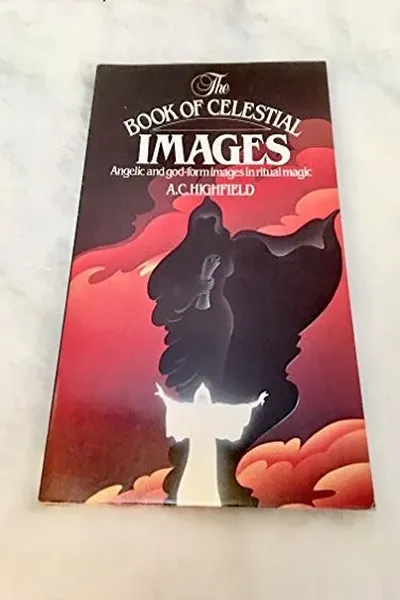
More Free Magic & Ritual Books
View all →