The Bhagavad Gita

 78
78

The Bhagavad Gita
Yogananda Paramahansa's rendition of the Bhagavad Gita offers a compelling, though sometimes overtly devotional, lens through which to view this ancient scripture. The interpretive annotations, particularly those emphasizing the yogic and esoteric dimensions, provide a unique perspective often absent in purely academic translations. Yogananda's strength lies in his ability to connect the Gita's philosophical pronouncements to practical spiritual disciplines. However, the commentary occasionally leans heavily into a specific devotional interpretation, which might overshadow other valid philosophical readings for some readers. A particularly illuminating passage for me was Krishna's explanation of the three gunas (sattva, rajas, tamas) as qualities influencing human action and perception, which Yogananda contextualizes within the psycho-spiritual framework of yogic practice. Ultimately, this edition serves as an accessible gateway for those seeking a deeply spiritual and yogic understanding of the Gita's profound teachings.
📝 Description
78
Composed between the 5th and 2nd centuries BCE, the Bhagavad Gita is a dialogue on a battlefield.
The Bhagavad Gita presents a conversation between Prince Arjuna and Lord Krishna, his charioteer, on the battlefield of Kurukshetra. It is more than a religious text; it is a philosophical work that examines duty, justice, and the nature of being. The text details karma yoga, the practice of action without regard for outcomes, jnana yoga, the path of wisdom, and bhakti yoga, the way of devotion. These yogas together form a way toward spiritual freedom.
This scripture is valuable for anyone wanting a deeper grasp of Eastern thought and its real-world uses. It suits students of religion, spiritual seekers looking into different yogic paths, and people facing moral or existential questions. Those interested in how action, knowledge, and devotion connect will find its lessons particularly fitting. It acts as a guide to finding inner calm amidst outer turmoil.
Emerging from a period of intense philosophical development in ancient India, the Bhagavad Gita synthesized earlier Upanishadic ideas. It offered a more personal and devotion-focused route to liberation (moksha) compared to the asceticism common at the time. The text integrates concepts from Samkhya and Yoga philosophies, refining them within a devotional framework. Its integration into the Mahabharata epic by Vyasa cemented its place as a central text influencing various South Asian spiritual traditions, including Vedanta and devotional movements.
💡 Why Read This Book?
• Gain a practical framework for understanding and fulfilling your Dharma (duty) through Krishna's teachings on righteous action, as exemplified in the battlefield dialogue. • Explore the concept of the Atman (eternal soul) and its relationship to the physical body, learning how to cultivate detachment from impermanent worldly concerns. • Discover the path of Bhakti Yoga (devotion) as presented by Krishna, offering a direct route to spiritual realization through love and surrender.
⭐ Reader Reviews
Honest opinions from readers who have explored this book.
❓ Frequently Asked Questions
When was the Bhagavad Gita likely composed?
Scholars generally place the composition of the Bhagavad Gita between the 5th and 2nd centuries BCE. It is believed to have been integrated into the epic Mahabharata during this period.
What is the central theme of the Bhagavad Gita?
The central theme revolves around the dialogue between Arjuna and Krishna concerning duty (Dharma), the nature of the soul (Atman), and the various paths to spiritual liberation, including action, knowledge, and devotion.
Who are the main characters in the Bhagavad Gita?
The primary characters are Prince Arjuna, a warrior facing a moral crisis, and Lord Krishna, his divine charioteer and guide, who imparts the philosophical teachings.
What is Karma Yoga as explained in the Gita?
Karma Yoga is the path of selfless action, performing one's duties without attachment to the outcomes. Krishna teaches Arjuna to act virtuously without being motivated by personal gain or fear of consequences.
How does the Bhagavad Gita relate to Hinduism?
The Bhagavad Gita is a revered scripture within Hinduism, considered a key text of Vedanta philosophy. It synthesizes various Hindu traditions and offers a comprehensive spiritual guide for life.
What does 'Bhagavad Gita' translate to?
The name 'Bhagavad Gita' translates from Sanskrit to 'The Song of the Lord' or 'The Divine Song'.
🔮 Key Themes & Symbolism
Dharma and Duty
The concept of Dharma is central, representing one's intrinsic nature, righteous duty, and cosmic order. Arjuna's crisis stems from his perceived conflict between familial obligations and his Kshatriya (warrior) duty. Krishna's discourse elucidates that true Dharma involves performing one's prescribed actions with detachment, understanding that the soul is eternal and unaffected by the physical consequences of action. This theme guides the reader toward ethical conduct and fulfilling one's purpose without egoic attachment, a core tenet for spiritual progress within the yogic framework.
The Nature of the Soul (Atman)
A critical exploration of the Atman, the eternal, unchanging self, forms a core part of the Gita's philosophy. Krishna distinguishes the Atman from the perishable body, senses, and mind, asserting its divine and immortal nature. This understanding is presented as fundamental to overcoming fear, grief, and attachment to worldly phenomena. By realizing the true nature of the self, one can achieve equanimity and liberation from the cycle of birth and death, fostering a perspective essential for advanced spiritual aspirants.
Paths to Liberation (Moksha)
The scripture meticulously outlines three primary paths to Moksha: Karma Yoga (the yoga of action), Jnana Yoga (the yoga of knowledge), and Bhakti Yoga (the yoga of devotion). Karma Yoga emphasizes selfless action, Jnana Yoga focuses on discerning the real from the unreal through wisdom, and Bhakti Yoga centers on unconditional love and surrender to the Divine. Yogananda's interpretation often highlights the interconnectedness of these paths, suggesting that true liberation is achieved through a balanced integration of all three, a synthesis vital for holistic spiritual development.
The Three Gunas
The Bhagavad Gita introduces the concept of the three Gunas—Sattva (purity, harmony), Rajas (passion, activity), and Tamas (inertia, ignorance)—as fundamental forces that influence all existence, including human consciousness and behavior. These qualities bind the soul to the material world and affect one's thoughts, actions, and perceptions. Understanding the Gunas is crucial for self-awareness and for transcending their influence, enabling the practitioner to cultivate higher states of consciousness and progress on the spiritual path toward liberation.
💬 Memorable Quotes
Direct passages from the work, attributed to the author.
“Perform your prescribed duty, O Arjuna, for indeed, action is superior to inaction.”
— This expresses the Gita's emphasis on Karma Yoga. It suggests that even if one understands the ultimate reality, engaging in one's righteous duties is paramount for spiritual growth and societal well-being.
“The soul can never be cut, nor burned, nor wounded, nor dried.”
— This highlights the eternal and immutable nature of the Atman (soul). It's a core teaching meant to detach the individual from the fear of death and the impermanence of the physical body.
“Whatever you do, whatever you eat, whatever you offer or give, whatever austerities you perform—do it as an offering unto Me.”
— This verse underscores the path of Bhakti Yoga, encouraging the devotee to consecrate all actions, experiences, and offerings to the Divine, thereby transforming ordinary life into a spiritual practice.
“The wise see the same spirit in all beings.”
— This reflects the profound Vedantic understanding of the unity of existence, where the divine essence (Brahman) is present in all creatures. It promotes compassion and universal brotherhood.
💡 Key Ideas
Editorial paraphrase of the work's core concepts — not direct quotes.
Those who are driven by desire, O mighty-armed, are born again and again. But those who are freed from all desires and have realized the Self, they go to the Supreme.
This passage contrasts the cycle of reincarnation driven by worldly desires with the liberation achieved through self-realization and the eradication of craving, pointing towards transcendence.
🌙 Esoteric Significance
Tradition
The Bhagavad Gita is a seminal text within the broader Vedanta tradition of Hinduism, which itself has numerous esoteric interpretations. It aligns with the non-dualistic philosophy of Advaita Vedanta, emphasizing the ultimate unity of the individual soul (Atman) with the Absolute Reality (Brahman). However, its detailed exposition of yogic practices and devotional surrender also connects it to Tantric and yogic lineages, offering practical methods for spiritual realization beyond mere intellectual understanding.
Symbolism
The battlefield of Kurukshetra itself is a powerful symbol, representing the inner human consciousness where the eternal struggle between righteous duty (Dharma) and selfish desires takes place. Lord Krishna, as the divine charioteer, symbolizes the guiding presence of the higher Self or Divine consciousness within, steering the individual soul (Arjuna) through life's challenges. The chariot itself, with its horses and reins, is a common yogic metaphor for the body and the control of the senses and mind.
Modern Relevance
Contemporary spiritual thinkers and practitioners across various traditions frequently draw upon the Bhagavad Gita. Its emphasis on Karma Yoga, or performing action without attachment, remains highly relevant for modern professionals and individuals seeking to balance worldly responsibilities with inner peace. The Gita's exploration of consciousness and the nature of reality continues to inform fields like transpersonal psychology and mindfulness practices, while its devotional aspects resonate with global spiritual movements seeking direct experience of the Divine.
👥 Who Should Read This Book
• Students of comparative philosophy and religion seeking to understand a core text of Indian thought that bridges theological and practical ethics. • Aspiring yogis and meditators interested in the philosophical underpinnings of various yogic paths, particularly Karma, Jnana, and Bhakti Yoga. • Individuals grappling with ethical dilemmas, life purpose, and the nature of suffering, looking for ancient wisdom to guide their personal growth.
📜 Historical Context
The Bhagavad Gita emerged during a vibrant period of philosophical discourse in ancient India, likely between the 5th and 2nd centuries BCE. It was integrated into the vast epic, the Mahabharata, by its redactor, Vyasa. This era saw the flourishing of various schools of thought, including the analytical philosophy of Samkhya and the early practices of Yoga, alongside the Upanishadic traditions. The Gita synthesized these streams, offering a more accessible, devotional approach to moksha (liberation) than the austere asceticism previously emphasized. Its teachings provided a counterpoint to purely ritualistic Vedic practices and philosophical schools that might have been perceived as too abstract. The text's eventual widespread acceptance and integration into the Hindu canon mark its significant reception and influence on subsequent religious and philosophical developments across South Asia.
📔 Journal Prompts
Arjuna's crisis on the battlefield: How does your own Dharma conflict with perceived personal or familial duties?
The Atman's immortality: Reflect on a time you experienced profound grief or fear related to impermanence.
Krishna's discourse on Karma Yoga: How can you approach a current task with detachment from its outcome?
The three Gunas: Identify a situation where Sattva, Rajas, or Tamas clearly influenced your thoughts or actions.
The path of Bhakti: Describe an act of surrender or devotion you have experienced or could cultivate.
🗂️ Glossary
Dharma
One's duty, righteousness, moral law, or intrinsic nature. In the Gita, it refers to the principled actions aligned with cosmic order and one's specific role in life.
Atman
The eternal, unchanging self or soul. It is considered the true essence of an individual, distinct from the physical body, mind, and ego.
Karma Yoga
The spiritual path of selfless action. It involves performing one's duties diligently without attachment to the results or fruits of labor.
Jnana Yoga
The spiritual path of knowledge and wisdom. It emphasizes the discrimination between the real (eternal Self) and the unreal (transient material world).
Bhakti Yoga
The spiritual path of devotion and love. It involves cultivating intense love and surrender to the Divine as the ultimate goal.
Moksha
Liberation or release from the cycle of birth, death, and rebirth (samsara). It is the ultimate spiritual goal in many Indian traditions.
Gunas
The three fundamental qualities or modes of nature—Sattva (purity), Rajas (passion), and Tamas (inertia)—that influence all existence and bind the soul.
🔮 Readers Also Liked
Browse all →









More by Yogananda Paramahansa
All books →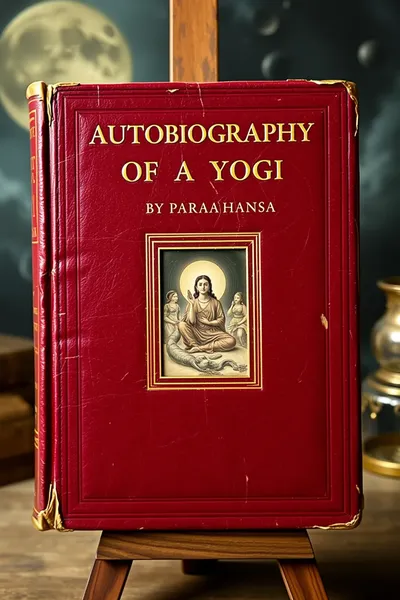





More Free Occult Philosophy Books
View all →