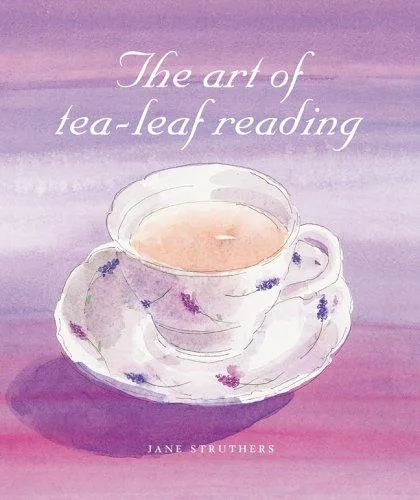
The Art of Tea Leaf Reading
 62
62

The Art of Tea Leaf Reading



Silas Hawthorne (Hermetic Studies Editor) — Jane Struthers’ 'The Art of Tea Leaf Reading' is a masterful exposition on a divinatory practice too often relegated to the superficial. Struthers imbues the text with an authentic reverence for tasseography, revealing its deep roots in esoteric traditions and its potent capacity for psychological and spiritual insight. Her approach is both scholarly and deeply intuitive, making complex symbolic language accessible. This work is an indispensable guide for practitioners seeking to deepen their understanding and for neophytes drawn to the subtle whispers of the universe. A truly illuminating addition to any occult library.
📝 Description
62
Jane Struthers' 'The Art of Tea Leaf Reading' was published in 2001.
Jane Struthers' book approaches tea leaf reading not simply as a method of predicting the future, but as a practice rooted in symbolism and intuition. It teaches readers to interpret the patterns formed by tea leaves in a cup, viewing them as reflections of inner states and external circumstances. The text covers methods for performing the reading, from preparing the tea to observing the residue left in the cup.
Struthers explains how to understand the shapes and symbols that appear, connecting them to personal insights and potential life events. The book aims to transform the act of drinking tea into a ritual for self-reflection and a way to access a deeper understanding of oneself. It emphasizes the connection between the physical act of drinking tea and the subtler energies or insights that may arise, making the ordinary act of preparing a beverage a gateway to personal discovery.
This book fits within the broader field of divination and esoteric arts, which seek to understand hidden truths or future events through symbolic interpretation. Tasseography, or tea leaf reading, is one such practice that has historical roots in various cultures. It shares common ground with other forms of scrying or pattern-based divination, where random or natural formations are analyzed for meaning. The book positions this practice as a tool for personal insight, linking it to traditions that explore the connection between the material world and subjective experience.
💡 Why Read This Book?
Uncover the ancient art of tasseography and unlock profound personal insights. 'The Art of Tea Leaf Reading' offers a unique pathway to self-discovery through intuitive interpretation of everyday symbols. Ideal for seekers of hidden knowledge, practitioners of divination, and scholars of esoteric traditions who wish to expand their repertoire with a practice rich in symbolism and philosophical depth.
⭐ Reader Reviews
Honest opinions from readers who have explored this book.
❓ Frequently Asked Questions
What is tea leaf reading (tasseography)?
Tea leaf reading, or tasseography, is an ancient form of divination where the patterns left by tea leaves in a cup are interpreted to reveal insights into the past, present, and future, offering guidance and self-understanding.
Do I need special tea or equipment?
No, standard loose-leaf tea and a simple teacup are all that are required. The magic lies in the intention and the intuitive interpretation of the patterns that emerge.
How quickly can I learn to read tea leaves?
While mastery takes practice, basic interpretation skills can be developed relatively quickly with focused study and consistent practice. The book provides a solid foundation for beginners.
What kind of insights can tea leaf reading provide?
Tea leaf reading can offer insights into relationships, career, personal growth, challenges, opportunities, and subconscious influences, acting as a mirror to your inner world and outer circumstances.
Is this book for beginners or experienced practitioners?
This book is suitable for both. Beginners will find a clear, accessible introduction, while experienced practitioners will appreciate the depth of symbolism and nuanced interpretations offered.
🔮 Key Themes & Symbolism
The Language of Symbols
This book meticulously deciphers the rich lexicon of symbols that emerge from tea leaves. Each shape—from the celestial crescent to the grounded anchor, the flowing river to the protective shield—carries a multitude of meanings, often intertwined with archetypal imagery found across mythologies and esoteric traditions. Struthers guides the reader to understand how these symbols interact, forming a narrative unique to each reading, fostering a deeper connection to the universal language of the cosmos.
Ritual and Intention
Beyond mere technique, 'The Art of Tea Leaf Reading' emphasizes the sacred nature of the practice. It highlights how intention, mindfulness, and a genuine desire for clarity transform a simple act into a profound ritual. The preparation of the tea, the swirling of the cup, and the focused contemplation of the patterns are presented not as arbitrary steps, but as integral components that attune the reader to subtle energies and enhance the accuracy and depth of the divination.
Intuitive Perception and Inner Wisdom
Struthers champions the development of intuitive perception as the a core part of effective tea leaf reading. The book encourages readers to move beyond rote memorization of symbol meanings and to cultivate their inner knowing. By fostering a mindful presence and encouraging personal resonance with the visual cues, the reader is empowered to access their own innate wisdom, interpreting the leaves not just as external signs, but as reflections of their own subconscious landscape and spiritual journey.
💬 Memorable Quotes
Direct passages from the work, attributed to the author.
“In every cup, a universe unfolds.”
— This highlights the vast potential for insight and meaning found within the seemingly simple act of reading tea leaves, likening each reading to a microcosm of the greater cosmos.
“The true art lies not in seeing, but in understanding.”
— Emphasizes that effective tea leaf reading requires more than just visual recognition; it demands intuitive comprehension and the ability to synthesize symbolic meanings.
“Let the steam carry away your doubts, and the leaves reveal your truths.”
— A poetic instruction on cleansing one's mind before a reading, separating anxiety from the pursuit of clarity through the divination.
“The past is sediment, the present is swirling, the future is yet to form.”
— A metaphorical representation of how tea leaf patterns can be interpreted to reflect different temporal aspects of life and potential outcomes.
💡 Key Ideas
Editorial paraphrase of the work's core concepts — not direct quotes.
The leaves whisper secrets the mind has yet to grasp.
This quote expresses the essence of tasseography as a conduit for subconscious or pre-cognitive information, suggesting the wisdom held within the tea leaves transcends rational thought.
🌙 Esoteric Significance
Tradition
Tasseography is deeply interwoven with various esoteric traditions, including occultism, spiritualism, and folk magic. It aligns with the Hermetic principle of 'As Above, So Below,' where the microcosm of the teacup reflects the macrocosm of the universe. Its practice shares common ground with other symbolic divinatory systems like Tarot and I Ching, emphasizing the interpretation of patterns and archetypes to glean hidden knowledge and divine guidance.
Symbolism
The symbolism in tea leaf reading is vast and many-sided, drawing from universal archetypes, nature, and everyday objects. Symbols like birds can represent messages or freedom, animals often signify primal energies or specific traits, while shapes like hearts denote love or emotional matters. The placement and density of leaves also hold significance, with patterns in the bottom of the cup often relating to the past or deep-seated issues, and those near the rim indicating more immediate future influences.
Modern Relevance
In our fast-paced, often disconnected world, 'The Art of Tea Leaf Reading' offers a vital practice for slowing down, fostering mindfulness, and cultivating intuition. It provides a tangible ritual that encourages introspection and self-awareness, allowing individuals to navigate life's complexities with greater clarity and inner wisdom. The book's accessible approach makes this ancient art relevant and empowering for contemporary seekers looking for meaningful connection and personal insight beyond the digital realm.
👥 Who Should Read This Book
This comprehensive guide is an invaluable resource for anyone drawn to the subtle arts of divination. **Beginners** will find a clear and encouraging introduction to the practice, explaining the process of reading tea leaves. **Spiritual seekers** and those on a path of self-discovery will appreciate the book's focus on intuition and personal insight. **Practitioners of other divinatory arts** such as Tarot or astrology will find tasseography a complementary tool for expanding their divinatory repertoire. **Scholars of esoteric traditions** will appreciate the historical context and the exploration of symbolic language within this unique practice.
📜 Historical Context
Tea leaf reading, or tasseography, boasts a lineage stretching back centuries, with roots often traced to ancient practices of divination using natural elements. Its popularity surged in the 18th and 19th centuries, coinciding with the global expansion of tea trade and a burgeoning interest in spiritualism and esoteric arts in Victorian England and Europe. During this era, as society grappled with rapid industrialization and societal change, many sought solace and answers in mystical practices. Books on fortune-telling and occult arts became widespread, making tea leaf reading an accessible and popular method for individuals to connect with the unseen, offering a sense of control and understanding in an often unpredictable world.
📔 Journal Prompts
After reading a passage about a specific symbol, brew a cup of tea and observe if that symbol appears. How does its presence resonate with your current life situation?
Reflect on a recent challenge you faced. How might the symbols appearing in your tea leaves offer a new perspective or a potential path forward?
Consider the ritual of tea preparation. What intentions do you set before you begin to read the leaves? How does this intention influence the reading?
If you encountered a symbol that feels particularly potent or confusing, how does your intuition interpret its meaning beyond the book's definitions?
Imagine you are teaching someone else the art of tea leaf reading. What is the single most important piece of advice you would offer them about connecting with the symbols?
🗂️ Glossary
Tasseography
The art or practice of reading fortunes by interpreting the patterns of tea leaves left in a cup after the tea has been drunk.
Divination
The practice of seeking knowledge of the future or the unknown by supernatural means.
Archetype
A universal symbol or motif that recurs in literature and mythology, representing a fundamental human experience or pattern of behavior.
Intuition
The ability to understand something immediately, without the need for conscious reasoning; inner knowing.
Symbolism
The use of symbols to represent ideas or qualities; the interpretation of the meaning of symbols.
This book appears in 1 collection
🔮 Readers Also Liked
Browse all →






![SQL [asterisk] forms operator's reference card](/img/thumb/sql-asterisk-forms-operator-s-reference-card-oracle-corporation.webp)
More by Jane Struthers
All books →




From the “Tea Leaf Reading” Collection
View all →


More Free Divination & Tarot Books
View all →







![Cicero in twenty eight volumes. Vol.20: De senectute, De amicitia, De divinatione [Loeb 154]](/img/thumb/cicero-in-twenty-eight-volumes-vol-20-de-senectute-de-amicitia-de-divinatione-loeb-154-cicero-marcus-tulius-106-43-bce.webp)
