Tarot Journal
 61
61

Tarot Journal



Silas Hawthorne, Hermetic Studies Editor: Rodding Rodding's 'Tarot Journal' is a masterful testament to the enduring power of cartomancy as a tool for esoteric exploration. This work transcends superficial interpretations, offering a profound dive into the archetypal language and symbolic resonance of the Tarot. Rodding skillfully guides the reader towards a deeply personal engagement with the cards, fostering intuition and illuminating the hidden connections between the individual and the greater cosmic order. It is an essential acquisition for anyone serious about integrating Tarot into their spiritual practice, offering clarity and depth that will resonate for years to come.
📝 Description
61
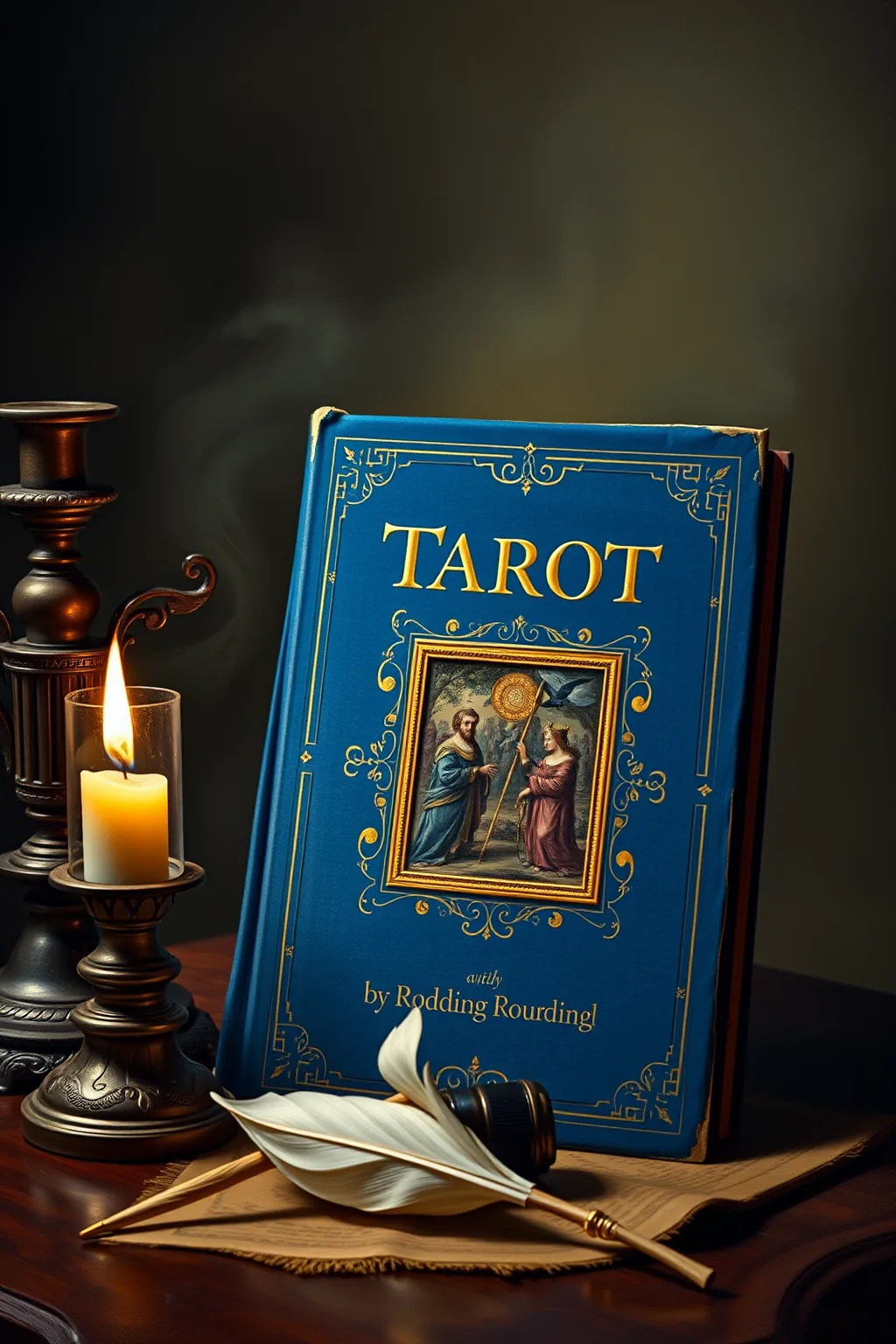
Rodding Rodding's Tarot Journal, published in 2023, offers a structured approach to personal Tarot study.
This volume by Rodding Rodding is designed for those who wish to deepen their understanding of the Tarot. It focuses on the seventy-eight cards of the Major and Minor Arcana, moving beyond simple interpretation to encourage personal engagement with the symbolism. The author guides readers toward developing an intuitive relationship with the cards, rather than relying solely on memorized meanings.
'Tarot Journal' is intended as a practical tool for ongoing study and reflection. It helps users connect with the archetypal energies represented in the cards and understand their potential role in personal growth and awareness. The book aims to facilitate self-discovery through a consistent practice of journaling with the Tarot, illuminating the dynamics of fate and transformation.
This work is situated within the Western esoteric tradition of Tarot study, which views the cards not just as fortune telling tools, but as a symbolic language describing universal principles and the human condition. It aligns with approaches that emphasize personal gnosis and psychological insight derived from the archetypal imagery, rather than strictly divinatory or ritualistic applications. The journal format encourages a contemplative practice akin to that found in other contemplative or magical traditions that utilize symbolic systems for self-awareness.
💡 Why Read This Book?
Unveil the veiled meanings of the Tarot, transforming your connection with this ancient oracle. 'Tarot Journal' is your personal sanctuary for introspection, offering guided prompts and space for insightful reflections. Ideal for seekers of hidden knowledge, practitioners aiming to deepen their readings, and anyone on a path of self-discovery through symbolic language. Discover the profound wisdom that awaits within each card.
⭐ Reader Reviews
Honest opinions from readers who have explored this book.
❓ Frequently Asked Questions
What is the primary purpose of this Tarot Journal?
This journal is designed to facilitate a deeper, more intuitive understanding of the Tarot by providing a dedicated space for personal reflection, recording readings, and exploring the symbolic language of the cards.
Is this journal suitable for beginners?
Absolutely. While it offers profound depth for experienced readers, its structure and guidance make it an excellent starting point for those new to Tarot, encouraging a personal connection from the outset.
How does this journal aid in divination?
By encouraging consistent practice, detailed record-keeping, and contemplative engagement with card meanings, the journal sharpens intuitive faculties and reveals patterns in readings over time, enhancing divinatory accuracy.
What kind of exercises are included?
The journal features a variety of prompts designed to encourage journaling on card meanings, personal interpretations, dream connections, and the application of Tarot insights to daily life and spiritual growth.
Can this journal be used with any Tarot deck?
Yes, the journal's focus is on the archetypal meanings and personal exploration, making it universally applicable to any Tarot deck, regardless of its specific artistic style or tradition.
🔮 Key Themes & Symbolism
The Language of Symbols
The Tarot is a visual language, a cosmic hieroglyphic system rich with archetypal imagery that speaks directly to the subconscious. This journal invites readers to decode these potent symbols, understanding how the Fool’s journey mirrors our own, how the Empress embodies generative power, and how the Tower signifies transformative upheaval. By looking at the nuanced symbolism of each card, practitioners gain access to a profound wellspring of universal wisdom, connecting personal experiences to timeless truths and archetypal patterns that shape human consciousness and destiny.
Intuitive Connection and Personal Resonance
Beyond mere intellectual understanding, the true power of the Tarot lies in its ability to foster an intuitive connection. This journal encourages a dialogue between the reader and the cards, moving beyond memorized meanings to embrace personal resonance and subjective interpretation. Through guided prompts and dedicated space for reflection, users are empowered to discover how each card's energy manifests in their own lives. This cultivation of inner knowing transforms the Tarot from a predictive tool into a profound instrument of self-awareness and spiritual guidance, revealing the subtle whispers of the soul.
The Path of Self-Discovery and Transformation
The Tarot acts as a mirror reflecting the inner landscape and the unfolding journey of the soul. 'Tarot Journal' serves as a sacred companion on this path of self-discovery, offering a structured yet flexible framework for exploring life's challenges and opportunities. By meticulously documenting readings, noting recurring themes, and integrating insights, readers start a transformative process. This consistent engagement with the archetypal energies within the cards illuminates personal patterns, fosters growth, and ultimately empowers individuals to navigate their life path with greater awareness, courage, and conscious intent.
💬 Memorable Quotes
Direct passages from the work, attributed to the author.
“Within each symbol lies a universe of meaning waiting to be awakened.”
— This speaks to the profound depth and layered symbolism inherent in Tarot cards. It suggests that through dedicated study and contemplation, hidden wisdom and useful insights can be revealed.
“To read the cards is to converse with the archetypes that shape our reality.”
— This highlights the connection between Tarot imagery and Jungian archetypes, portraying the cards as conduits to the fundamental patterns of human experience and consciousness.
“Your journal is the sacred space where intuition takes root and grows.”
— This emphasizes the journal's function as a nurturing environment for developing one's intuitive abilities, framing it as a vital tool for personal spiritual growth and divination.
“The future is not written in stone, but painted with the colors of present intention.”
— This philosophical statement underscores the Tarot's ability to illuminate potential futures based on current energies and choices, empowering the reader to actively shape their destiny.
💡 Key Ideas
Editorial paraphrase of the work's core concepts — not direct quotes.
The cards are not arbiters of fate, but mirrors of the soul's unfolding journey.
This quote emphasizes the Tarot's role as a tool for introspection and self-understanding, rather than a deterministic prediction of events. It highlights the agency of the individual in their own life's narrative.
🌙 Esoteric Significance
Tradition
This work deeply engages with the Western Esoteric Tradition, drawing heavily on Hermeticism, Kabbalah, and Jungian psychology. It views the Tarot not merely as a predictive tool, but as a symbolic map of the soul's journey, a microcosm of the universe, and a key to understanding the interconnectedness of all things. The journal facilitates a dialogue with these ancient wisdom streams, encouraging the reader to integrate their insights into personal spiritual development and a deeper understanding of cosmic principles.
Symbolism
The Tarot is a profound repository of symbolic language. The Major Arcana represent archetypal stages of human consciousness and spiritual evolution, from the innocent leap of the Fool to the final completion of the World. The Minor Arcana, divided into four suits (Wands, Cups, Swords, Pentacles), mirror the elements and the different facets of human experience – creativity, emotion, intellect, and material reality. Each card's imagery, color, and numerological value contribute to a wide range of meaning, offering insights into life's challenges and opportunities.
Modern Relevance
In an age often characterized by rapid change and digital disconnection, the Tarot offers a grounding anchor and a path to profound introspection. 'Tarot Journal' bridges ancient wisdom with contemporary needs, providing a framework for mindful engagement with life's complexities. It empowers individuals to cultivate intuition, enhance self-awareness, and navigate personal challenges with greater clarity. The journal's emphasis on personal reflection and symbolic understanding makes it a vital tool for modern seekers, offering a timeless method for personal growth and spiritual exploration in the 21st century.
👥 Who Should Read This Book
This 'Tarot Journal' is an essential companion for a diverse range of seekers. For the **beginner**, it offers a gentle yet profound introduction to the Tarot, fostering an intuitive connection from the first page. **Scholars** of esotericism will find its depth and thoughtful approach to symbolism enriching their existing knowledge. **Spiritual seekers** and those on a path of self-discovery will appreciate its capacity to illuminate inner landscapes and guide personal growth. **Dedicated Tarot practitioners** will discover a powerful tool for deepening their readings, refining their intuition, and integrating Tarot wisdom into their daily lives.
📜 Historical Context
The Tarot, emerging from the mid-15th century in Italy, initially served as a popular card game. However, its rich symbolic imagery soon attracted the attention of esotericists and occultists. By the late 18th century, figures like Antoine Court de Gébelin began to theorize its ancient Egyptian origins and divinatory powers. The 19th century saw the rise of prominent figures such as Eliphas Lévi and the creation of iconic decks like the Rider-Waite-Smith, which solidified the Tarot's place within Western esotericism. This era witnessed a surge in occult societies and the integration of Tarot into mystical practices, viewing it as a key to unlocking hidden knowledge, understanding the Kabbalah, and exploring the subconscious mind. 'Tarot Journal' by Rodding Rodding stands as a modern evidence of this enduring legacy, offering a contemporary approach to these ancient traditions.
📔 Journal Prompts
Reflect on the imagery of The Fool. What does its journey signify in your life right now?
When drawing a card for a specific situation, what immediate feelings or intuitive insights arise before consulting any book?
How does the element associated with this suit (Wands, Cups, Swords, Pentacles) manifest in your current challenges or aspirations?
If you were to embody the archetype of The High Priestess, what hidden truths would you seek to uncover within yourself?
Consider a recent reading. What recurring symbols or themes emerged, and how might they be guiding your path forward?
🗂️ Glossary
Archetype
A universal, archaic pattern or image that derives from the collective unconscious and is part of the inherited structure of the human psyche. In Tarot, archetypes are represented by the Major Arcana figures.
Divination
The practice of seeking knowledge of the future or the unknown by supernatural means. In the context of Tarot, it involves interpreting card symbolism to gain insight into situations and potential outcomes.
Esotericism
Beliefs and practices related to hidden knowledge or spiritual enlightenment, often understood as accessible only to a select group of initiates. Tarot is a central tool in many esoteric traditions.
Intuition
The ability to understand something immediately, without the need for conscious reasoning. Developing intuition is a key aspect of working with the Tarot.
Symbolism
The use of symbols to represent ideas or qualities. Tarot cards are rich with symbolic imagery that conveys complex meanings and concepts.
This book appears in 3 collections
🔮 Readers Also Liked
Browse all →







![Abandonment to Divine Providence [Annotated]](/img/thumb/abandonment-to-divine-providence-annotated-jean-pierre-de-caussade.webp)

From the “Tarot” Collection
View all →







More Free Divination & Tarot Books
View all →