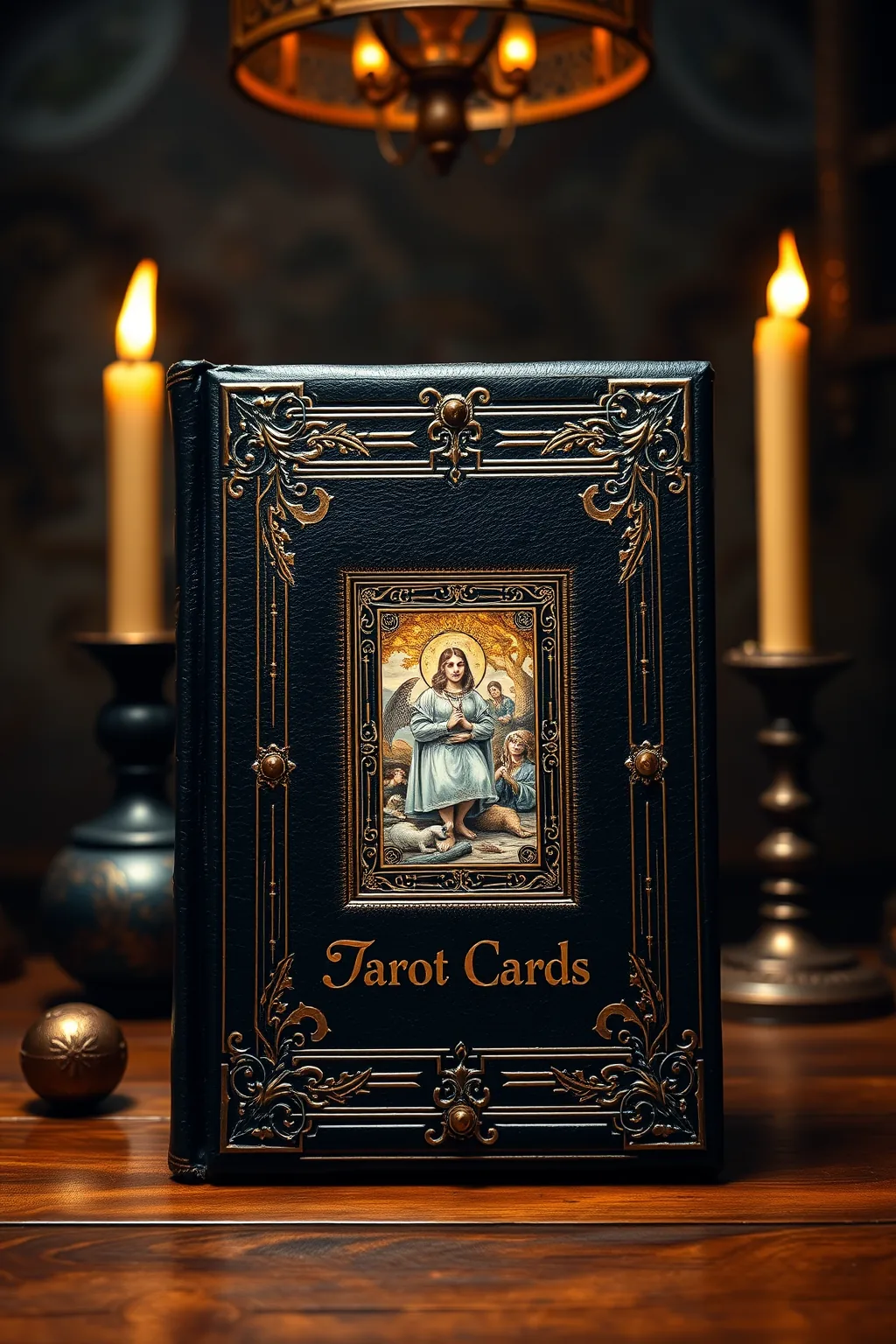
Tarot Cards
 82
82

Tarot Cards
Loretta Johnson’s "Tarot Cards" tackles the perennial question of how one actually starts using a tarot deck. The book’s strength lies in its direct, no-nonsense approach, stripping away esoteric jargon to provide practical steps for beginners. Johnson clearly delineates the purpose of tarot as a tool for guidance and self-understanding, a concept she revisits throughout the text. I found the section on initial card interpretation particularly useful, offering a structured way to approach the Rider-Waite-Smith deck, a common choice for new practitioners. However, the book could benefit from a more robust exploration of the historical evolution beyond brief mentions of lore; the actual origins and development of tarot as a system remain somewhat underdeveloped. While the book focuses on foundational knowledge, it occasionally feels like it’s skimming the surface of deeper symbolic meanings, which might leave those seeking a more complex understanding wanting more. Nevertheless, "Tarot Cards" functions effectively as a clear, actionable guide for the curious novice.
📝 Description
82
Loretta Johnson's "Tarot Cards" argues the tarot is a structured system for self-inquiry, not just a game.
Loretta Johnson's "Tarot Cards" frames the tarot as a system for self-inquiry and divination, distinct from simple card games. The book establishes the unique purpose of the tarot deck, guiding readers beyond surface interpretations to its deeper potential. It serves as an accessible introduction for those curious about tarot readings, whether new to the practice or having only encountered it casually. Johnson aims to move readers from passive interest to active engagement, providing the essential groundwork for interpreting and sharing tarot insights. The text acknowledges the historical roots and lore of tarot, referencing the myths and legends that shaped its perception over centuries. This background is presented as important for appreciating the symbolic language and interpretive frameworks of the deck. Johnson posits tarot as a tool for understanding life's challenges and future possibilities. The book covers interpreting card spreads, individual card meanings, and synthesizing this knowledge for practical guidance. It emphasizes tarot's role in illuminating problems and aiding decision-making, framing it as a method for personal development.
This work situates the tarot within traditions of divination and introspection. It moves past the perception of tarot as mere fortune-telling, aligning it with practices that use symbolic systems for psychological insight and guidance. The book touches on the historical lineage of the cards, acknowledging how centuries of lore and interpretation have contributed to their current use as a tool for self-understanding and exploring potential future paths.
💡 Why Read This Book?
• Gain a practical framework for understanding what tarot is, moving beyond common misconceptions to grasp its function as a tool for guidance, as detailed in the 'What Tarot Is' section. • Acquire foundational knowledge for reading and interpreting tarot cards, specifically focusing on the Rider-Waite-Smith system, enabling you to begin personal readings. • Explore the historical backdrop and lore of tarot, understanding how myths and legends contribute to its symbolic depth, providing context for deeper study.
⭐ Reader Reviews
Honest opinions from readers who have explored this book.
❓ Frequently Asked Questions
What is the primary purpose of tarot cards as explained in Loretta Johnson's book?
The book explains tarot cards as a structured system for self-inquiry and divination, designed to help users understand their lives, futures, and how to handle problems, serving as a tool for personal development and insight.
Who is the target audience for 'Tarot Cards' by Loretta Johnson?
This book is intended for individuals intrigued by tarot readings who want to learn how to read, understand, and interpret the cards, serving as an accessible entry point for novices.
Does Loretta Johnson's 'Tarot Cards' cover the history of tarot?
Yes, the book touches upon the historical roots, legends, myths, and lore surrounding tarot's origins, providing context for understanding its symbolic language and interpretive frameworks.
What specific tarot deck does the book primarily focus on for interpretation?
While the book explains general principles, its practical examples and guidance often implicitly refer to or are best applied using the Rider-Waite-Smith deck, a common choice for beginners.
How does the book help readers overcome the initial hurdle of learning tarot?
It offers a structured approach to understanding the deck's purpose, learning card meanings, and beginning interpretation, effectively addressing the common question of 'where to start' for aspiring readers.
Is 'Tarot Cards' suitable for experienced tarot readers?
While primarily aimed at beginners, experienced readers might find its straightforward approach a useful refresher or a different perspective on foundational concepts, though it may not offer advanced techniques.
🔮 Key Themes & Symbolism
Tarot as a Guidance System
Johnson positions tarot cards as more than just symbolic imagery; they form a coherent system for navigating life's complexities. The book emphasizes their function as a tool for divination, offering clarity on personal challenges and future trajectories. This perspective frames the tarot deck as an active participant in self-discovery, enabling users to receive guidance and make more informed decisions about their path forward.
Foundational Knowledge for Interpretation
A core theme is providing the essential building blocks for understanding and interpreting tarot readings. This involves clarifying the deck's structure, explaining the significance of individual cards, and offering methods for synthesizing these elements into a cohesive reading. The work aims to equip readers with the confidence to move beyond passive curiosity to active engagement with the cards.
Historical and Mythological Roots
The book acknowledges the deep historical currents and collection of lore that surround the tarot. By referencing the legends and myths associated with its origins, Johnson provides a crucial context for appreciating the symbolic language inherent in the cards. This historical grounding is presented as integral to a deeper, more nuanced understanding of tarot's divinatory power and cultural significance.
Practical Application for Personal Growth
Beyond theory, a significant theme is the practical application of tarot for personal growth and problem-solving. The work encourages readers to utilize their newfound knowledge to assist themselves and others seeking clarity. This focus on actionable insight highlights tarot's potential as a method for self-reflection and empowerment, transforming abstract symbols into concrete guidance for everyday life.
💬 Memorable Quotes
Direct passages from the work, attributed to the author.
“What tarot is, and how you can use it”
— This phrase succinctly captures the book's primary objective: to define the essence of tarot and demonstrate its practical utility as a tool for guidance and self-understanding.
“The history, legends, myths, and lore of tarot's origins”
— This highlights the book's commitment to providing historical and mythological context, suggesting that understanding the background of tarot is key to appreciating its symbolic depth and divinatory power.
“How to read, understand, interpret, and share your new-found knowledge”
— This outlines the practical skill progression the book aims to impart, moving readers from basic comprehension to confident application and even the ability to assist others with tarot insights.
💡 Key Ideas
Editorial paraphrase of the work's core concepts — not direct quotes.
Gain the knowledge you need to read... your lives, their future, or how to handle a problem.
This paraphrased concept underscores the book's focus on empowering readers with practical skills to address real-life concerns and gain clarity through tarot interpretation.
The perfect tool to help you get past that hurdle and gain the knowledge you need
This paraphrased concept emphasizes the book's role as an introductory resource, designed to overcome common barriers for beginners and provide essential knowledge for starting with tarot.
🌙 Esoteric Significance
Tradition
This work engages with the Western esoteric tradition, particularly the lineage that views tarot as a symbolic language for understanding the cosmos and the human psyche. It aligns with the interpretive frameworks popularized in the late 19th and early 20th centuries, which saw tarot as a coded system of occult knowledge, often linked to Hermeticism and Kabbalah, though Johnson focuses on practical application rather than deep theoretical exegesis.
Symbolism
The book implicitly relies on the established symbolism of the Rider-Waite-Smith deck, which has become a core part of modern esoteric tarot. Key symbols like The Fool's journey (representing new beginnings and leaps of faith), The High Priestess (intuition and hidden knowledge), and The World (completion and integration) are fundamental to the interpretive process Johnson outlines.
Modern Relevance
In contemporary esoteric circles, Johnson's approach speaks to the trend towards practical, self-help-oriented divination. Modern practitioners often use tarot for psychological insight and personal development, echoing the book's emphasis on using the cards for guidance and problem-solving, rather than solely for predictive purposes.
👥 Who Should Read This Book
• Individuals new to tarot seeking a clear, step-by-step introduction to understanding and reading the cards. • Those curious about the historical and mythological background of tarot, wanting context beyond simple card meanings. • Aspiring readers looking for a practical guide to begin interpreting spreads and applying tarot insights to their lives.
📜 Historical Context
Loretta Johnson's "Tarot Cards," first published in May 2021, emerges in an era where interest in esoteric practices, including tarot, has seen a significant resurgence. While the book itself is contemporary, it engages with a tradition stretching back centuries. The origins of tarot are often traced to 15th-century Italy, with early decks like the Visconti-Sforza deck serving as precursors to modern forms. The esoteric interpretation of tarot, however, largely developed in the 18th and 19th centuries, notably through figures like Antoine Court de Gébelin and later the Hermetic Order of the Golden Dawn. Johnson's work implicitly situates itself within this lineage, aiming to make these practices accessible. The book’s publication date places it alongside a vast body of modern tarot literature, yet its focus remains on providing a clear, foundational entry point for newcomers, distinguishing it from more academic or advanced texts that engage directly with historical occult societies or compare tarot to other divinatory systems.
📔 Journal Prompts
The Fool's journey: What new beginning does this concept inspire in your current life path?
The High Priestess and intuition: How can you better access your inner knowing as suggested by this archetype?
Interpreting The World card: Reflect on a recent sense of completion or integration in your experiences.
Practical application of tarot: How can the structured guidance of tarot address a specific problem you are facing?
Historical context of tarot: What aspect of tarot's lore most intrigues you for further exploration?
🗂️ Glossary
Divination
The practice of seeking knowledge of the future or the unknown by supernatural means. In the context of tarot, it refers to using the cards to gain insight into questions or situations.
Major Arcana
The 22 trump cards in a tarot deck, representing significant life lessons, archetypal energies, and major events or turning points in a person's life journey.
Minor Arcana
The 56 cards in a tarot deck, divided into four suits (Wands, Cups, Swords, Pentacles), which typically represent daily events, challenges, and practical matters.
Spread
A specific arrangement of tarot cards laid out in a pattern, designed to answer a particular question or explore a specific aspect of a situation.
Interpretation
The process of understanding and explaining the meaning of tarot cards within the context of a spread and the question asked, synthesizing individual card meanings.
Archetype
A universal, archaic symbol or motif that recurs in the imagery of literature and religion, representing a fundamental human experience or pattern, such as The Fool or The Magician.
Lore
A body of traditions and knowledge on a subject or held by a particular group, typically passed from person to person by word of mouth. In tarot, this includes myths and legends surrounding its origins and meanings.