Somatic Tantra
 71
71

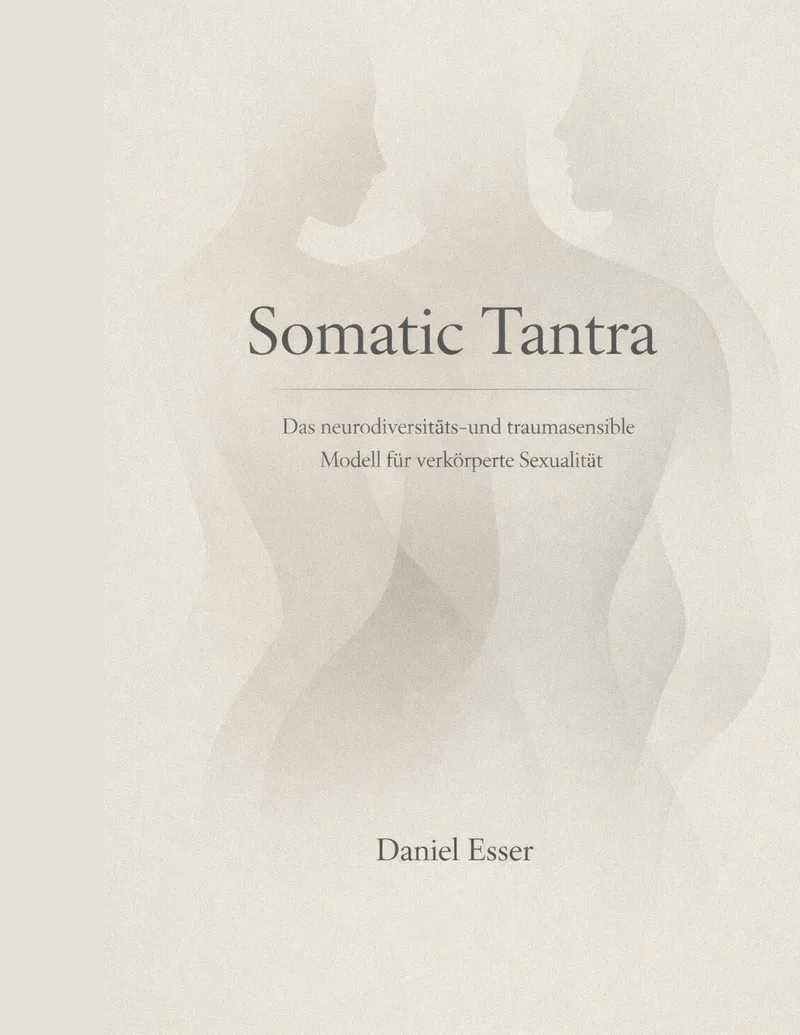
Somatic Tantra
Daniel Esser's *Somatic Tantra* offers a much-needed recalibration for understanding intimacy. Instead of leaning on the often-opaque spiritual jargon of traditional tantra, Esser anchors the practice in the tangible realities of nervous system regulation and embodied awareness. The strength of the book lies in its meticulous deconstruction of sexual experience into observable, relational phenomena—particularly its emphasis on "conscious touch" as a primary modality for connection and healing. However, the very precision that makes it scientifically sound can, at times, feel overly clinical, potentially distancing readers who seek a more overtly mystical or devotional dimension. The section detailing the "Neurobiology of Connection" is particularly illuminating, demonstrating how somatic practices can directly impact attachment patterns. While grounded, it occasionally feels like it sacrifices poetic license for empirical rigor. Esser’s work is a significant contribution to embodied sexuality, albeit one that may require readers to bring their own sense of the ineffable to the practice.
📝 Description
71
Published in 2026, Somatic Tantra offers a modern, science-informed view of sexuality and intimacy.
Daniel Esser's *Somatic Tantra* presents a contemporary approach to sexuality and intimacy, integrating modern somatic practices, sexual science, and tantric principles. The book argues that sexuality is an embodied process, rooted in the nervous system, bodily sensations, and interpersonal dynamics, rather than just technique or performance. It emphasizes somatic awareness, consent, communication, and intentional touch, all within a trauma-informed and neurodiversity-affirming framework. Esser moves away from purely esoteric exercises, focusing instead on grounded, practical application for individuals seeking a more integrated understanding of their sexuality.
This text is for those who want to move beyond psychological or technical views of sexuality and explore somatic experiencing, relational psychology, and tantric philosophy without dogma. Therapists, somatic practitioners, educators, and anyone interested in developing deeper, more conscious intimacy will find its detailed framework valuable. The book's focus on consent and neurodiversity makes it especially relevant for current discussions on relational and sexual health.
Esser's work arrives as interest grows in the body's role in psychological and relational well-being. It builds on somatic psychology pioneered by figures like Wilhelm Reich and Alexander Lowen's Bioenergetics. The book also engages with sexology's mid-20th century efforts to understand human sexual response empirically. Esser's synthesis reflects a cultural shift toward embodied understanding, influenced by trauma research and the neurobiology of attachment and affect regulation, moving away from purely mind-centric paradigms.
💡 Why Read This Book?
• Learn a science-informed framework for understanding sexuality not as performance, but as an embodied, nervous system process, drawing directly from the book's concept of "embodied process." • Gain practical tools for enhancing intimacy through "conscious touch" and clear communication, grounded in the book's focus on somatic awareness and consent. • Explore the integration of tantric principles with modern somatic psychology, a synthesis uniquely presented in Esser's work, offering a secularized approach to ancient wisdom.
⭐ Reader Reviews
Honest opinions from readers who have explored this book.
❓ Frequently Asked Questions
What distinguishes Somatic Tantra from traditional tantric practices?
Somatic Tantra, as presented by Daniel Esser, emphasizes a science-informed, secular approach. It integrates modern somatic psychology and sexual science, focusing on nervous system regulation, embodied awareness, and consent, rather than relying on esoteric rituals or purely spiritual interpretations found in many traditional tantric lineages.
Is Somatic Tantra suitable for beginners in understanding sexuality?
Yes, the book is designed to be practical and accessible. It grounds complex concepts in bodily experience and emphasizes clear communication, making it suitable for those new to exploring sexuality from an embodied and conscious perspective.
How does Somatic Tantra address trauma and neurodiversity?
The approach is explicitly trauma-informed and neurodiversity-sensitive. It prioritizes safety, consent, and individual bodily experience, understanding that nervous system responses and sensory experiences can vary significantly, creating an inclusive framework for sexual exploration.
What role does "conscious touch" play in Somatic Tantra?
Conscious touch is a central element, viewed as a primary vehicle for connection, healing, and self-awareness. It involves intentionality, presence, and attunement to both one's own sensations and the responses of a partner, fostering deeper intimacy and understanding.
Does Somatic Tantra require specific physical exercises or rituals?
While it involves somatic awareness and practice, the book focuses on integrating these principles into everyday interactions and a grounded understanding of the body. It moves away from prescribed esoteric exercises towards a more adaptable, embodied approach to sexuality and intimacy.
When was Somatic Tantra first published?
The book *Somatic Tantra* by Daniel Esser was first published on January 8, 2026.
🔮 Key Themes & Symbolism
Embodied Sexuality
This theme reframes sexuality not as a mental construct or a performance, but as a fundamental bodily experience. It emphasizes the nervous system's role, interoception (internal body awareness), and the integration of physical sensations with emotional states. The work moves beyond technique to explore how sexuality is lived and felt within the body, advocating for a holistic understanding that includes proprioception and kinesthetic sense.
Conscious Touch & Relational Attunement
Central to Somatic Tantra is the practice of "conscious touch." This involves intentional, present, and attuned physical contact that prioritizes mutual awareness and responsiveness. It's not merely about physical sensation but about the energetic and emotional exchange it facilitates, fostering deeper intimacy and understanding between individuals. This practice is explored through the lens of relational psychology and attachment theory.
Neurodiversity and Trauma Sensitivity
The book champions an inclusive approach to sexuality, explicitly addressing trauma and neurodivergent experiences. It recognizes that individuals process stimuli and express themselves differently. By prioritizing consent, clear communication, and adapting practices to individual nervous system needs, it creates a safer, more accessible framework for exploring intimacy, challenging rigid norms.
Integration of Somatics and Tantra
Somatic Tantra bridges contemporary somatic practices (like Somatic Experiencing) with select, secularized principles of tantra. It clarifies tantra, focusing on its potential for enhancing embodied presence and intimacy, while grounding it in scientific understanding of the body and mind. The aim is a practical, non-dogmatic application relevant to modern life.
💬 Memorable Quotes
Direct passages from the work, attributed to the author.
“Sexualität als verkörperter Prozess, der im Nervensystem, im Körpererleben und in Beziehung stattfindet.”
— This core concept defines sexuality not as an abstract idea or a set of actions, but as a lived, felt experience deeply rooted in our biological and interpersonal reality. It highlights the interconnectedness of our internal states, physical sensations, and relational dynamics.
“Das Zentrum sind Körperwahrnehmung, Konsens, Kommunikation und bewusste Berührung.”
— This highlights the foundational pillars of the Somatic Tantra approach. It prioritizes internal awareness, mutual agreement, clear dialogue, and intentional physical contact as essential elements for healthy and fulfilling sexual intimacy.
“Praxisnah und ohne esoterische Übungen.”
— This statement clarifies the book's practical orientation. It aims to provide actionable insights and techniques directly applicable to daily life and relationships, deliberately avoiding abstract or ritualistic practices often associated with esotericism.
“Ein zeitgemäßer, wissenschaftlich fundierter Zugang zu Sexualität und Intimität.”
— This describes the book's primary contribution: offering a modern perspective on sexuality and intimacy that is informed by scientific research, making it relevant and accessible to contemporary readers.
“Sexualität nicht als Technik oder Performance.”
— This directly challenges common misconceptions about sex, shifting the focus from achieving specific outcomes or mastering techniques to experiencing and relating through embodied presence and authentic connection.
🌙 Esoteric Significance
Tradition
While the book consciously distances itself from overt esotericism, its roots touch upon the perennial philosophy's exploration of embodied consciousness and sacred sexuality, often associated with various Tantric lineages. However, Esser's approach is explicitly secular and scientific, focusing on psychophysiological mechanisms rather than metaphysical cosmology or deity-based practices. It represents a modern reinterpretation, stripping away ritualistic elements to focus on the tangible energetic and relational dynamics accessible through somatic awareness.
Symbolism
The primary 'symbolism' in Somatic Tantra operates not through arcane imagery but through the body's own language. Concepts like "embodied process" and "conscious touch" function as symbolic representations of a deeper, felt reality. The nervous system itself becomes a symbolic map of relational health and trauma. The emphasis on breath and subtle bodily sensations acts as a motif, symbolizing presence, aliveness, and the ongoing dialogue between self and other.
Modern Relevance
This work appeals to contemporary movements in embodied cognition, relational psychology, and trauma-informed practices. Thinkers and practitioners in fields like attachment theory, neuroscience of relationships, and somatic therapy find Esser's integration of scientific understanding with relational intimacy highly relevant. It offers a secular, grounded framework for those seeking to deepen connection and sexual well-being without recourse to purely spiritual or dogmatic systems.
👥 Who Should Read This Book
• Individuals exploring embodied sexuality and intimacy who seek a scientifically grounded, secular approach distinct from traditional spiritual or performance-based models. • Therapists, counselors, and somatic practitioners looking to integrate a nuanced understanding of nervous system regulation, consent, and conscious touch into their work with clients. • Anyone interested in contemporary applications of tantric principles focused on relational depth, self-awareness, and trauma-informed intimacy, presented without esoteric dogma.
📜 Historical Context
Daniel Esser's *Somatic Tantra*, published in 2026, arrives at a moment when somatic psychology has moved from the fringes to the mainstream of therapeutic and self-help discourse. Building on the foundations laid by figures like Fritz Perls and the Gestalt movement, and the later developments in trauma-informed care influenced by Peter A. Levine's Somatic Experiencing (developed from the 1970s onwards), Esser synthesizes these body-centered approaches with contemporary sexological research. This contrasts with earlier esoteric traditions, such as the Hermetic Order of the Golden Dawn's approach to sexual magic or more ritualistic forms of Indian Tantra, which often emphasized spiritual attainment through specific, sometimes arcane, practices. Esser’s work is part of a broader trend that seeks to explain and secularize ancient wisdom, making it accessible through a scientific lens. While authors like G.I. Gurdjieff explored embodied consciousness in the early 20th century, Esser's specific focus on integrating modern somatic science with tantric principles for sexual health marks a distinct evolution.
📔 Journal Prompts
Reflect on the 'embodied process' of your own sexuality, noting specific physical sensations and nervous system responses.
Analyze a recent intimate interaction through the lens of 'conscious touch' and relational attunement.
Consider how 'trauma-informed' principles might shift your understanding of consent and communication in sexual contexts.
Explore the distinction between sexuality as 'technique or performance' versus as an 'embodied process' in your personal experience.
Document moments where 'body perception' enhanced or altered your experience of intimacy.
🗂️ Glossary
Somatic Experiencing
A body-oriented therapeutic model developed by Peter A. Levine, focusing on the release of stored trauma and stress through direct awareness of bodily sensations and autonomic nervous system regulation.
Embodied Process
The concept that sexuality and intimacy are fundamentally lived experiences rooted in the body, nervous system, and physical sensations, rather than purely mental or performative activities.
Conscious Touch
Intentional, present, and attuned physical contact that prioritizes mutual awareness, responsiveness, and the exchange of subtle energies and emotions, fostering deeper connection.
Neurodiversity-Sensitive
An approach that acknowledges and respects the wide range of neurological differences in how individuals perceive, process, and express themselves, particularly in relational and sexual contexts.
Interoception
The sense of the physiological state of the body, involving the perception of stimuli originating from inside the body, such as hunger, heart rate, and subtle bodily sensations.
Relational Attunement
The process of being sensitively aware and responsive to the emotional and physical states of another person, fostering a sense of connection and understanding.
Trauma-Informed
An approach that recognizes the widespread impact of trauma and understands potential paths for recovery, emphasizing safety, trust, choice, collaboration, and empowerment.