Secrets of the Pentagram Ritual

 72
72

Secrets of the Pentagram Ritual
Frater Shaddai's "Secrets of the Pentagram Ritual" offers a refreshingly direct approach to a symbol often shrouded in esoteric jargon. The author eschews flowery language for a practical, almost instructional tone, which is a considerable strength. The section detailing the precise mechanics of inscribing the pentagram for banishing versus invoking specific elemental forces, a core component of many 20th-century magical systems, is particularly well-articulated. However, the work sometimes feels overly reliant on established Golden Dawn principles without substantial critical engagement, making it less innovative than it could be for seasoned practitioners. A more thorough examination of non-Western pentagram traditions, even in brief, might have broadened its scope. Nevertheless, for those seeking a clear, no-nonsense guide to pentagram ritual, this book provides a solid foundation.
📝 Description
72
Frater Shaddai's 2006 text, Secrets of the Pentagram Ritual, examines the pentagram's role in Western ceremonial magic.
This book by Frater Shaddai, first published in 2006, details the pentagram's use in ritual. It goes beyond simple interpretations to show the pentagram as a symbol for protection, elemental balance, and energy manipulation. The author systematically explains how to use it in Western ceremonial magic.
It is written for those practicing Western esotericism, especially those in magical traditions that use elemental correspondences and symbolic geometry. Students of ceremonial magic, hermeticism, and witchcraft seeking a deeper grasp of core magical symbols will find it useful. Anyone interested in the history and practical use of ritual tools will also benefit.
The pentagram, a symbol with roots in ancient Mesopotamia, has been used by Pythagoreanism, Neoplatonism, and Renaissance occultism. Frater Shaddai's 2006 work connects to the modern revival of ceremonial magic, influenced by late 19th and 20th-century figures and groups like Aleister Crowley and the Hermetic Order of the Golden Dawn.
💡 Why Read This Book?
• Gain a precise understanding of the pentagram's five points and their elemental associations, moving beyond general symbolism to practical application as detailed in the text's elemental correspondences. • Learn the distinct methods for inscribing the pentagram for invocation versus banishing, a critical technique for energy management in ceremonial magic, as explained by Frater Shaddai. • Discover the pentagram's function as a protective sigil and its role in creating sacred space, a concept central to ritual work, allowing for safer and more effective magical operations.
⭐ Reader Reviews
Honest opinions from readers who have explored this book.
❓ Frequently Asked Questions
What is the primary purpose of the pentagram ritual as described by Frater Shaddai?
The primary purpose is to utilize the pentagram as a tool for invoking or banishing elemental and spiritual forces, establishing a consecrated space, and protecting the practitioner during ritual work, according to the text's exploration of ceremonial magic.
When was "Secrets of the Pentagram Ritual" first published?
The book was first published in 2006, placing it within the contemporary wave of esoteric literature that revisits and synthesizes older magical traditions.
Does the book explain how to draw the pentagram correctly for magical purposes?
Yes, the book provides detailed instructions on the correct methods for inscribing the pentagram, emphasizing the directional flow and its impact on invoking or banishing energies, a key aspect of ritual practice.
What elements are associated with the points of the pentagram in this text?
The text associates the five points of the pentagram with the classical elements: Earth, Air, Fire, Water, and Spirit, explaining their hierarchical and interactive significance within ritual.
Is "Secrets of the Pentagram Ritual" suitable for absolute beginners in magic?
While it offers clear explanations, its focus on ceremonial magic and specific ritualistic techniques makes it most beneficial for those with some foundational knowledge of esoteric concepts or a serious interest in Western magical traditions.
What is the significance of the author's chosen name, Frater Shaddai?
The name 'Frater' signifies brotherhood within esoteric orders, while 'Shaddai' is a Hebrew name for God often associated with divine power and protection, suggesting the author's lineage and focus within Kabbalistic and ceremonial traditions.
🔮 Key Themes & Symbolism
Elemental Dynamics
The work dissects the pentagram's role as a nexus for the five classical elements: Earth, Air, Fire, Water, and Spirit. It details how the symbol's orientation and inscription method dictate the invocation or banishing of these elemental forces. This goes beyond mere symbolism, presenting a practical framework for manipulating energies through elemental correspondences, a central to ceremonial magic as understood in traditions influenced by the Hermetic Order of the Golden Dawn.
Ritualistic Application
Central to the text is the practical application of the pentagram within ritual. Frater Shaddai explains its function in creating a sacred circle, acting as a protective ward, and serving as a focal point for magical intent. The book outlines specific procedures for performing pentagram rituals, emphasizing precision in gesture, visualization, and intention, crucial for effective ceremonial work.
Microcosm and Macrocosm
The book explores the pentagram's symbolic connection between the human being (microcosm) and the universe (macrocosm). It posits that understanding and mastering the pentagram ritual allows the practitioner to align their inner world with the outer cosmic order. This principle is rooted in Hermetic philosophy, particularly the axiom 'As above, so below,' suggesting the pentagram acts as a key to this universal correspondence.
Symbolic Geometry
Beyond its elemental associations, the pentagram is examined as a potent geometric form. The text explores the significance of its five points, the inherent balance it represents, and how its precise construction within ritual space influences energetic fields. This geometric perspective highlights the pentagram not just as a symbol but as a fundamental aspect of divine architecture and magical technology.
💬 Memorable Quotes
Direct passages from the work, attributed to the author.
“The pentagram, when properly drawn, acts as both a shield and a gateway.”
— This highlights the dual nature of the symbol in ritual: its capacity to repel unwanted energies and simultaneously to serve as an entrance for desired forces, underscoring its active role in ceremonial magic.
“Each point corresponds to an element, but the direction of movement defines its purpose.”
— This emphasizes that the pentagram is not static; its efficacy in ritual hinges on the practitioner's understanding of elemental attributions and the specific trajectory of its inscription for invocation or banishing.
“The ritual space is consecrated through the mastery of the pentagram.”
— This suggests that the act of performing the pentagram ritual is what transforms ordinary space into a sacred, magically charged environment, making the symbol fundamental to the creation of a ritualistic arena.
“Spirit crowns the other four elements, governing their interplay.”
— This interpretation focuses on the pentagram's hierarchical structure, positioning the fifth point (Spirit) as the supreme force that oversees and integrates the lower four elemental energies within the ritual context.
“To banish is to push away; to invoke is to draw near.”
— This simple articulation clarifies the core functions of pentagram rituals, distinguishing between the outward-directed force of banishing and the inward-drawing energy of invocation, essential for practical magical work.
🌙 Esoteric Significance
Tradition
This work firmly belongs to the Western Esoteric Tradition, specifically within the lineage of ceremonial magic influenced by Hermeticism and Kabbalah. It draws heavily on systems developed by organizations like the Hermetic Order of the Golden Dawn, which standardized the use of the pentagram in ritual. Frater Shaddai's approach emphasizes the practical, systematic application of these established principles, fitting within a tradition that values precise execution of ritual forms.
Symbolism
The pentagram's symbolism is central. Its five points represent the classical elements (Earth, Air, Fire, Water) and Spirit, with Spirit typically depicted at the top, signifying its mastery over the other four. The upward-pointing pentagram is often associated with invocation and the triumph of spirit over matter, while the downward-pointing version can signify invocation of earthly forces or, when inverted and with two points up, is sometimes associated with darker or chthonic energies, though this text focuses on the former.
Modern Relevance
Contemporary practitioners of Wicca, Golden Dawn-derived traditions, and various forms of ceremonial magic continue to utilize the pentagram ritual as a fundamental practice. Thinkers and practitioners who focus on elemental magic, ritual structure, and the creation of sacred space often refer back to the foundational principles laid out in works like this. It remains relevant for those seeking to understand the historical underpinnings of modern magical techniques and the symbolic language of Western esotericism.
👥 Who Should Read This Book
• Aspiring ceremonial magicians seeking a clear explanation of pentagram ritual mechanics and elemental correspondences. • Students of Hermeticism and Kabbalah interested in the practical application of symbolic geometry within ritual contexts. • Witches and occultists looking to deepen their understanding of protective sigils and energy management techniques as practiced in Western magical traditions.
📜 Historical Context
Published in 2006, "Secrets of the Pentagram Ritual" emerges from a long lineage of esoteric study and practice. The pentagram itself has a history that spans millennia, appearing in ancient Mesopotamian cultures, Pythagorean philosophy, and later being heavily codified within Renaissance occultism and the ceremonial magic revival of the late 19th and early 20th centuries. Frater Shaddai's work is situated within this latter tradition, heavily influenced by the Hermetic Order of the Golden Dawn and figures like Aleister Crowley, who extensively documented and utilized pentagram rituals. While contemporary magical practices sometimes diverge, this book engages with the foundational interpretations established during that period. Its release occurred during a time when esoteric knowledge was increasingly accessible online, yet books like this sought to provide structured, traditional approaches distinct from more eclectic modern trends. It stands as a contribution to the ongoing discourse on Western ceremonial magic, offering a focused perspective on a universally recognized symbol.
📔 Journal Prompts
The symbolic relationship between the pentagram's points and the five elements.
The precise method for inscribing the pentagram for invocation versus banishing.
Your personal experience with creating sacred space using symbolic forms.
The concept of Spirit crowning the four elements in ritual practice.
The pentagram as a tool for aligning the microcosm with the macrocosm.
🗂️ Glossary
Invocation
A ritual act of calling forth or drawing in a specific spiritual force, deity, element, or energy for purposes such as enlightenment, assistance, or manifestation.
Banishing
A ritual act of expelling or sending away unwanted energies, entities, or influences from a person, place, or situation, often used to purify space.
Elemental Correspondences
The system of assigning specific qualities, symbols, and energies to the classical elements (Earth, Air, Fire, Water, Spirit) as used in esoteric traditions.
Ceremonial Magic
A structured form of Western magic that emphasizes ritual, symbolism, and the invocation/banishing of forces, often drawing from Hermetic, Kabbalistic, and Gnostic traditions.
Microcosm
In esoteric philosophy, the human being or the smaller universe, seen as a reflection or miniature version of the greater universe (macrocosm).
Macrocosm
The greater universe or cosmos, often viewed as a divine, ordered system that is mirrored in the microcosm (humanity).
Sigil
A symbol created for a magical purpose, often derived from intent or complex concepts, used to manifest a desired outcome or represent a specific force.
🔮 Readers Also Liked
Browse all →









More by Frater, Shaddai
All books →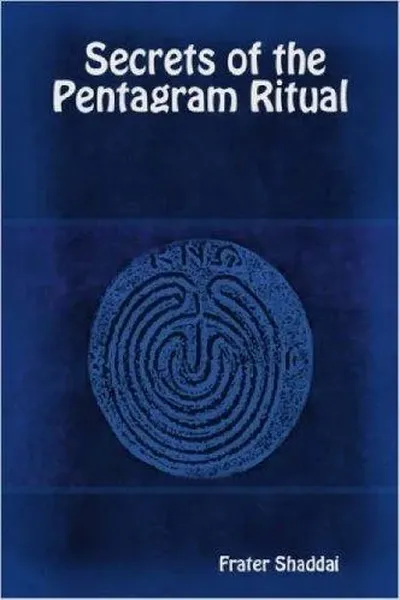
More Free Magic & Ritual Books
View all →