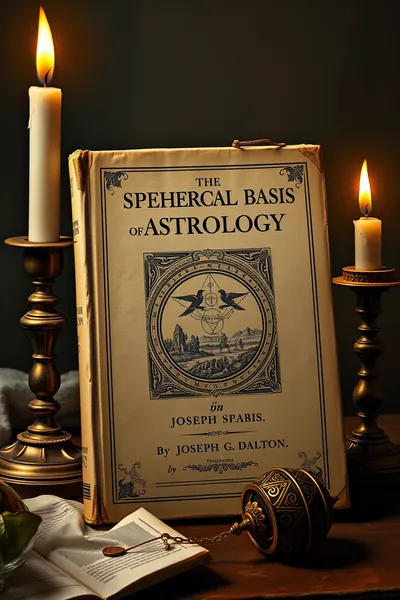
Persian Nativities IV: On the Revolutions of the Years of Nativities

 75
75

Persian Nativities IV: On the Revolutions of the Years of Nativities
Benjamin N. Dykes' translation of Abū Ma'shar's "On the Revolutions of the Years of Nativities" is a significant contribution to the field of historical astrology. The clarity with which Dykes renders the complex Arabic source material allows for an unprecedentedly direct engagement with Abū Ma'shar's predictive techniques. The work excels in its detailed exposition of annual revolutions, a subject often treated superficially in modern astrological literature. A particular strength lies in the methodical approach to identifying the ruler of the year and its implications for the native's life. However, the sheer density of technical detail, while accurate, might present a steep learning curve for those not already steeped in medieval astrological methodology; the original Arabic is indeed quite dense. The section on the "lord of the year" calculation and interpretation, for instance, is both illuminating and demanding. This volume is an essential resource for serious researchers of astrological history and advanced practitioners.
📝 Description
75
This 2024 translation presents Abū Ma'shar's complete treatise on the annual revolutions of the nativity.
Benjamin N. Dykes' translation of Abū Ma'shar's "On the Revolutions of the Years of Nativities" offers a direct look at medieval Islamic predictive astrology. The book focuses on techniques for interpreting the "years of nativities," a system that assigns astrological significance to each year of a person's life.
It details how to identify the "lord of the year" and "lord of the nativity," along with other key astrological points, to understand the character and likely events of each twelve-month period. The text provides methods for calculating and interpreting these annual progressions and solar returns, aiming to forecast life tendencies on a year-by-year basis. This work is intended for serious students of traditional astrology who are familiar with basic astrological concepts like dignities, houses, and aspects.
Abū Ma'shar al-Balkhi, a 9th-century Persian astrologer, was a central figure in transmitting and developing Hellenistic astrological traditions. His works significantly shaped both Islamic and medieval European astrology. This treatise on annual revolutions is a vital piece of his corpus, offering a specific method for yearly prediction that built upon earlier Greek foundations. Accessing this text in translation allows for a clearer understanding of a critical historical current within Western astrological practice.
💡 Why Read This Book?
• Gain direct insight into Abū Ma'shar's specific techniques for interpreting annual revolutions, a core predictive method in medieval astrology, as detailed in the "Calculation of the Lord of the Year" sections. • Understand the historical lineage of yearly predictive astrology, tracing its development from the 9th-century Islamic Golden Age to its later influence on European practice. • Acquire practical, historically validated methods for forecasting life events and tendencies on a year-by-year basis, moving beyond generalized modern techniques.
⭐ Reader Reviews
Honest opinions from readers who have explored this book.
❓ Frequently Asked Questions
What specific astrological techniques does "Persian Nativities IV" focus on?
This volume concentrates on the interpretation of "revolutions of the years of nativities," specifically detailing how to calculate and interpret the lord of each year of a person's life, as well as solar returns.
Who was Abū Ma'shar al-Balkhi and why is he important?
Abū Ma'shar (c. 787–886 CE) was a highly influential Persian astrologer whose works were translated into Latin and significantly shaped medieval European astrology. He synthesized earlier Greek traditions and transmitted them onwards.
Is this book suitable for beginners in astrology?
This book is best suited for intermediate to advanced students of astrology who are familiar with foundational concepts like houses, planets, and aspects, and who have an interest in historical predictive techniques.
What does 'revolutions of the years of nativities' mean in astrology?
It refers to a system of annual prediction where specific astrological configurations are analyzed for each year of a person's life, often focusing on the "lord of the year" and its significations.
What is the primary contribution of this translation?
The primary contribution is providing the first complete English translation of Abū Ma'shar's specific treatise on annual predictive techniques, offering direct access to his methods previously unavailable in full.
Does this book cover general natal chart interpretation?
While it builds upon natal chart foundations, the primary focus is on predictive techniques related to annual progressions and revolutions, not a comprehensive guide to initial natal chart interpretation.
🔮 Key Themes & Symbolism
Annual Predictive Techniques
The core of this work lies in its detailed exposition of methods for forecasting events and life tendencies on a year-by-year basis. It focuses on the concept of "revolutions of the years of nativities," assigning significance to the ruler of each solar year of life. This includes calculations for the "lord of the year" and other factors that color the experiences of that specific twelve-month period, offering a systematic approach to temporal forecasting.
The Lord of the Year
A central concept is the identification and interpretation of the "lord of the year." This involves intricate calculations to determine which planet or celestial point holds primary dominion over a specific year in a person's life. The book elaborates on how the nature, condition, and aspects of this lord significantly influence the events, challenges, and opportunities encountered during that year.
Solar Returns
While focusing on annual revolutions, the work also addresses solar returns, which mark the moment the Sun returns to its natal position each year. The interpretation of the chart cast for this precise moment is discussed as a complementary technique to understand the unfolding of the year ahead, providing context for the lord of the year's significations.
Medieval Astrological Practice
This volume offers a direct window into the sophisticated astrological practices of the medieval Islamic world, specifically from the 9th century. It showcases the systematic, technical approach favored by scholars like Abū Ma'shar, contrasting with more generalized or simplified astrological methods. Understanding these techniques provides historical context for the evolution of Western astrology.
💬 Memorable Quotes
Direct passages from the work, attributed to the author.
“The lord of the year is he who rules the year in which the revolution occurs.”
— This concise statement highlights the fundamental principle of annual revolutions: identifying the primary significator (lord) that governs the astrological themes and events of a specific year.
“When the lord of the year is fortunate, the year will be fortunate.”
— This reflects a core tenet of Hellenistic and medieval astrology, where the inherent nature of the planetary ruler directly informs the quality and outcome of the period it governs.
“Consider the Moon in the revolution, for she is the body of the year.”
— This emphasizes the Moon's critical role in astrological interpretation, particularly in shorter-term predictions like annual revolutions, signifying the general conditions and flow of events.
“The revolutions of the years are like the nativity, but for a specific period.”
— This analogy underscores the method's approach: treating each year's astrological configuration as a miniature, focused nativity chart that describes the potentials and events of that particular twelve-month cycle.
“The seventh house signifies enemies and the end of things.”
— This refers to a standard signification within the astrological tradition, applied here within the context of annual revolutions to understand potential conflicts or conclusions relevant to a specific year.
🌙 Esoteric Significance
Tradition
This work is firmly rooted in the Hellenistic and medieval astrological tradition, which forms a core part of Western esotericism. It represents a lineage that seeks to understand divine providence or cosmic order through the predictable movements of celestial bodies. Abū Ma'shar's methods, focusing on meticulous calculation and interpretation, align with the Hermetic principle of "as above, so below," viewing the individual's life as a microcosm reflecting macrocosmic patterns.
Symbolism
Key symbols include the planets, each assigned specific dignities and significations that dictate their influence in the "lord of the year" calculation. The houses also function symbolically, with the 1st house representing the native and the year's general condition, the 10th house representing honor and career, and the 7th house representing open enemies or partnerships. The Sun's return to its natal position is a powerful symbol of renewal and the year's overarching theme.
Modern Relevance
Contemporary astrologers interested in traditional techniques, particularly those practicing horoscopic astrology or studying predictive methods, draw heavily on Abū Ma'shar's systematization. Schools focusing on Hellenistic and medieval astrology, such as Project Hindsight and various modern practitioners reviving these arts, utilize translations like this to refine their understanding of annual predictive cycles. The work informs modern approaches to solar returns and yearly progressions.
👥 Who Should Read This Book
• Students of traditional Western astrology seeking to master historical predictive techniques beyond modern progressions. • Scholars of the history of science, astronomy, and divination in the medieval Islamic world and its influence on Europe. • Occultists and esoteric practitioners interested in the theoretical underpinnings and practical application of ancient astrological methods for personal forecasting.
📜 Historical Context
Abū Ma'shar al-Balkhi (787–886 CE) was an important figure in the transmission of astrological knowledge from the Hellenistic and Indian traditions to the medieval Islamic world and subsequently to Europe. During the Abbasid Caliphate's "House of Wisdom" era in Baghdad, scholars synthesized vast amounts of scientific and philosophical texts. Abū Ma'shar's prolific writings, including this treatise on annual revolutions, were instrumental in shaping astrological thought. His work was later translated into Latin starting in the 12th century, profoundly influencing European astrologers like Guido Bonatti and William Lilly. While Hellenistic astrology was the primary source, Abū Ma'shar's systematization and integration of various techniques marked a significant development. His influence was so pervasive that he became known in the West simply as "Albumasar," a name synonymous with astrological authority for centuries.
📔 Journal Prompts
The lord of the year's placement in a specific house: how might its significations manifest in your current life phase?
Abū Ma'shar's calculation of the "lord of the year": analyze your own nativity's potential annual rulers.
The role of the Moon in the "body of the year": reflect on its influence during significant annual periods.
Compare the predictive emphasis on annual revolutions in this text with contemporary astrological forecasting methods.
The concept of "revolutions of the years": how does this cyclical view of time impact your understanding of personal growth and destiny?
🗂️ Glossary
Nativity
A birth chart or horoscope, representing the positions of celestial bodies at the exact moment of a person's birth, used for astrological interpretation.
Revolutions of the Years
A system of astrological prediction focusing on annual cycles, analyzing the configurations that occur each year after birth to forecast events and tendencies.
Lord of the Year
The primary planet or celestial point identified through specific calculations as governing the significations and events of a particular year in a person's life.
Solar Return
An astrological chart cast for the exact moment the Sun returns to its precise degree and minute of longitude as it was at the moment of birth, occurring annually.
Abū Ma'shar al-Balkhi
A highly influential Persian astrologer of the 9th century CE, whose works were foundational for both Islamic and medieval European astrology.
Hellenistic Astrology
The astrological tradition originating in the Hellenistic period (roughly 3rd century BCE to 7th century CE), characterized by systematic techniques and philosophical underpinnings, forming the basis for later traditions.
Significator
A planet or point in the horoscope that represents a specific person, thing, or matter, such as the lord of the year representing the year's events.
This book appears in 1 collection
🔮 Readers Also Liked
Browse all →









From the “Natal Astrology” Collection
View all →








More Free Astrology & Cosmology Books
View all →