Secrets in the Hand
 71
71

Secrets in the Hand
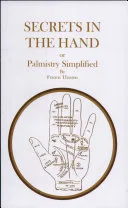
Francis Thomas’s "Secrets in the Hand" presents a systematic breakdown of chiromancy that is both thorough and accessible. Its strength lies in its methodical organization, dissecting the palm into its fundamental components – from the shape of the hand and fingers to the intricate patterns of lines and markings. The inclusion of "Age or How to Calculate Time on the Hand" is a particularly useful section for beginners trying to contextualize the information. However, the book’s reliance on the 1902 edition's framing sometimes feels dated, particularly in its comparative approach to physiognomy. A limitation is the lack of exploration into more modern psychological interpretations of palmistry, focusing instead on traditional predictive and characterological analysis. The detailed examination of "Bracelets" and their significance offers a concrete example of the book's depth. Ultimately, "Secrets in the Hand" serves as a solid, if traditional, introduction to the practice of palm reading.
📝 Description
71
Francis Thomas's "Secrets in the Hand" first appeared in 1996, detailing the art of palmistry.
Francis Thomas's "Secrets in the Hand" is a detailed manual on palmistry, published in 1996. It moves beyond simple interpretations to explain the complex language found in hand markings. The book guides readers through the various lines, mounts, shapes, and signs used in chiromancy, providing a methodical approach for both newcomers and those already familiar with the practice.
This book is for anyone interested in esoteric divination, particularly palmistry. It will be useful for those wanting a thorough, organized understanding of hand analysis. This includes students of metaphysics, amateur diviners, and people curious about the history and practical application of reading palms. Readers seeking a core text that covers basic elements like line formations, finger shapes, and hand contours will find its contents valuable.
This work emerges from the long tradition of chiromancy, an art studied for centuries across different cultures. Thomas's book, though a modern compilation, builds upon principles and observations from earlier practitioners. Its subtitle references a 1902 edition, connecting it to the revival of occult studies in the late 19th and early 20th centuries. This period saw a renewed interest in divination and esoteric knowledge, influenced by movements like Theosophy.
💡 Why Read This Book?
• Gain a foundational understanding of palmistry by dissecting the 'Principle Lines in the Hands,' learning how the Life, Head, and Heart lines are interpreted for character and potential life path. • Understand the specific meanings attributed to hand shapes and finger formations, as detailed in the 'Hands, Shape & Signs' and 'Fingers, Shape' sections, offering a unique lens for self-analysis. • Explore the esoteric significance of markings like 'Bracelets' and 'Islands' on the palm, providing insights into subtle energies and life influences not readily apparent.
⭐ Reader Reviews
Honest opinions from readers who have explored this book.
❓ Frequently Asked Questions
What is the primary focus of "Secrets in the Hand"?
The book's primary focus is chiromancy, or palmistry. It offers a detailed guide to interpreting the lines, mounts, shapes, and signs found on the human hand to understand character and potential life events.
When was "Secrets in the Hand" first published?
Francis Thomas's "Secrets in the Hand" was first published in 1996. However, it is presented alongside material from a 1902 publication, "Physiogomy Illustrated."
Does the book cover physiognomy as well as palmistry?
While the subtitle mentions "Physiogomy Illustrated," the core content of "Secrets in the Hand" is dedicated to palmistry. It explores hand analysis in depth, with physiognomy likely serving as a related or comparative subject in the older material.
What specific elements of the hand does the book analyze?
The book analyzes numerous elements, including the shape of the hand and fingers, fingernails, principle lines (Life, Head, Heart), bracelets (wrist lines), forks on lines, grilles, and mounts on the palm.
Is this book suitable for absolute beginners in palmistry?
Yes, "Secrets in the Hand" is structured to guide beginners through the fundamentals. It covers basic concepts like calculating age on the hand and interpreting major lines and shapes.
What makes this book different from modern palmistry guides?
Its primary difference lies in its connection to early 20th-century occult literature, offering a more traditional and less psychologically-oriented approach compared to some contemporary guides.
🔮 Key Themes & Symbolism
Chiromancy Fundamentals
The work meticulously outlines the core components of palm reading. It provides detailed explanations for interpreting the primary lines, such as the Life, Head, and Heart lines, and explores the significance of secondary markings like forks and islands. The shape of the hand, fingers, and even fingernails are presented as crucial indicators of character and destiny, forming a comprehensive system for analysis.
The Language of the Palm
Thomas presents the hand as a living text, encoding personal history and potential. Concepts like 'Bracelets' (lines on the wrist) and 'Age or How to Calculate Time on the Hand' illustrate this textual metaphor. The book suggests that by understanding these specific signs and patterns, one can decipher a unique narrative written upon the individual's palm.
Historical Esoteric Practices
By referencing a 1902 publication, "Secrets in the Hand" situates itself within a lineage of esoteric study. It reflects the late 19th and early 20th-century fascination with divination and occult sciences. The book's approach to interpreting hand signs aligns with traditional Western esotericism's interest in symbolic systems for understanding the microcosm (human) and macrocosm (universe).
Integrated Divination
The book implicitly connects palmistry with other forms of divination and character analysis, such as physiognomy. It suggests that various physical attributes and markings offer complementary insights. This holistic view encourages readers to consider multiple symbolic languages to gain a fuller picture of an individual.
💬 Memorable Quotes
Direct passages from the work, attributed to the author.
“Age or How to Calculate Time on the Hand”
— This chapter title highlights the book's practical approach, suggesting that the palm is not just a map of character but also a chronometer, allowing for the temporal analysis of life events.
“Bracelets”
— Referring to the lines on the wrist as 'Bracelets' imbues these seemingly minor markings with significant meaning, suggesting they are adornments or indicators of vital energy and health.
“Forks on Lines”
— The concept of 'Forks on Lines' implies that the branching of major palm lines signifies divisions, choices, or opportunities, adding a dynamic element to the static lines.
“Islands”
— The term 'Islands' used for specific markings suggests isolated periods, challenges, or concentrated influences along the main lines of the hand, representing distinct phases or obstacles.
“Principle Lines in the Hands”
— This phrase emphasizes that the core lines of the palm are foundational, serving as the primary text for interpretation in chiromancy, guiding the reader through the most significant aspects of a person's life.
🌙 Esoteric Significance
Tradition
The work aligns with the Western Hermetic tradition, which historically incorporates various divinatory arts as tools for understanding the divine order and human potential. Chiromancy, in this context, is not merely fortune-telling but a method of reading the 'as above, so below' principle reflected in the human form, specifically the hand as a microcosm.
Symbolism
Key symbols include the 'Principle Lines' (Life, Head, Heart), which represent fundamental aspects of existence: vitality, intellect, and emotion. 'Bracelets' symbolize health and longevity, while 'Forks on Lines' and 'Islands' denote specific influences or disturbances in the flow of energy along these fundamental paths.
Modern Relevance
Contemporary practitioners of Western esotericism, including students of Hermeticism and comparative divination, continue to draw on foundational texts like Thomas's. It informs modern approaches to psychological astrology and tarot, offering a historical perspective on symbolic interpretation of the human form.
👥 Who Should Read This Book
['• Aspiring palmists seeking a structured introduction to interpreting hand lines, shapes, and markings.', '• Enthusiasts of esoteric history interested in the development of divination practices in the early 20th century.', '• Individuals exploring comparative divination seeking to understand the principles of chiromancy alongside other symbolic systems.']
📜 Historical Context
Francis Thomas's "Secrets in the Hand" emerges from a rich historical milieu of esoteric revivalism that characterized the late 19th and early 20th centuries. The book's direct link to a 1902 publication places it within a period where occult sciences, including chiromancy, experienced a significant resurgence in Western Europe and North America. This era saw figures like Arthur Edward Waite championing occult studies, often in dialogue with or reaction against the more scientific and materialist currents of the time. Palmistry was widely practiced and discussed, often integrated with other divinatory arts and considered alongside physiognomy. While not a direct contemporary of the Victorian occult boom, Thomas's work draws from its foundational texts and popular interest. The continued publication and study of such manuals indicate an enduring fascination with symbolic systems for self-understanding and divination, even as modern psychology offered alternative frameworks for personality assessment.
📔 Journal Prompts
The interpretation of 'Bracelets' on the wrist.
The significance of 'Forks on Lines' in decision-making.
How the shape of the 'Fingers' relates to personality traits.
Reflecting on the 'Principle Lines' and their correspondence to life phases.
The meaning of 'Islands' on the major palm lines.
🗂️ Glossary
Chiromancy
The practice of fortune-telling and character analysis through the examination of the palm of the hand, including lines, mounts, and shapes.
Principle Lines
The major lines on the palm, typically including the Life Line, Head Line, and Heart Line, which are considered the most significant indicators of a person's vitality, intellect, and emotional nature.
Bracelets
The horizontal lines found on the wrist, below the palm, which are traditionally interpreted in relation to health, vitality, and longevity.
Forks on Lines
Branching patterns where a line on the palm divides into two or more smaller lines, often interpreted as indicating divisions, choices, or dual influences.
Islands
Markings on the palm lines that appear as oval or circular shapes, typically indicating periods of weakness, difficulty, or concentrated influence along the path of the line.
Grille
A network of fine lines crossing over a mount on the palm, often seen as a sign of scattered energy or difficulty in manifesting the mount's qualities.
Physiognomy
A system of judging character or personality from outward appearance, especially the face, often studied alongside palmistry in historical esoteric traditions.