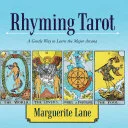
Rhyming Tarot
 81
81

Rhyming Tarot
Marguerite Lane’s Rhyming Tarot offers a novel, if somewhat uneven, approach to learning the Major Arcana. The author’s stated goal of easing beginners into tarot study by employing verse is commendable. The strength lies in its attempt to create a memorable, almost song-like, quality to the card meanings, particularly evident in the sections for cards like The Fool or The World, where the rhymes feel natural and illustrative. However, the chosen rhyme schemes occasionally feel forced, sometimes sacrificing clarity for the sake of meter, which can hinder the very accessibility it aims to achieve. A passage discussing The High Priestess, for instance, struggles to convey the card’s subtle nuances of intuition and hidden knowledge without resorting to overly simplistic language, a common pitfall when translating complex symbolism into rhyme. Despite these limitations, the book serves as a unique entry point for those intimidated by denser tarot texts.
Verdict: A creative, though not always perfectly executed, primer for novice tarot enthusiasts.
📝 Description
81
Marguerite Lane published Rhyming Tarot in 2017, using verse to explain the Major Arcana.
Rhyming Tarot approaches the Major Arcana through poetry, aiming to clarify its symbolism for new students. Each card's interpretation is presented in a rhyming narrative designed to make learning easier. The book connects directly with the visual elements of the traditional Rider-Waite-Smith deck, explaining how the rhymes illuminate the imagery.
This book is for individuals beginning their journey with tarot or divination. It speaks to those who find standard explanations difficult and want a more engaging way to learn. Lane's work uses mnemonic devices and storytelling to help readers understand the archetypes and scenes of the Major Arcana.
Lane's central idea is linking poetic structure, like rhyme and meter, to the meanings of tarot cards. She stresses the importance of looking closely at the card images and immersing oneself in them. The verse, she suggests, acts as a guide to these visual stories. The book operates on the idea that memory aids can speed up understanding of complex archetypes, making tarot more accessible.
Published in 2017, Rhyming Tarot arrived during a period of growing interest in esoteric subjects, especially online. While tarot cards originated in 15th-century Italy for games, their use in occult interpretations developed significantly in the late 19th and early 20th centuries. Arthur Edward Waite and Pamela Colman Smith, whose deck imagery Lane uses, were key figures in this development. Lane's book builds on this history by providing a structured, pedagogical method for engaging with the cards.
💡 Why Read This Book?
• Learn a mnemonic technique for memorizing Major Arcana meanings by associating them with specific rhymes, as exemplified by the verse for The Chariot, allowing for quicker recall during readings. • Understand how visual cues on the Rider-Waite-Smith deck, specifically the imagery on The Emperor card, are directly linked to poetic interpretations, aiding in deeper visual analysis. • Gain a more accessible entry into esoteric studies by engaging with the archetypes of the Major Arcana through a narrative structure, making complex concepts like The Hierophant's spiritual guidance more relatable.
⭐ Reader Reviews
Honest opinions from readers who have explored this book.
❓ Frequently Asked Questions
What is the primary purpose of Rhyming Tarot by Marguerite Lane?
The book's main goal is to simplify the learning process for the Major Arcana of the tarot. It uses rhyming verse to explain card meanings, aiming to make them easier for beginners to remember and understand, especially those new to spiritual journeys.
When was Rhyming Tarot first published?
Rhyming Tarot by Marguerite Lane was first published on April 4, 2017. This publication date places it within a contemporary wave of interest in accessible esoteric literature.
Which tarot deck's imagery does Rhyming Tarot focus on?
The book primarily uses the imagery of the traditional Rider-Waite-Smith tarot deck as a basis for its rhyming interpretations. Lane connects the visual elements of these cards directly to the verses presented.
Is Rhyming Tarot suitable for advanced tarot readers?
While it can serve as a quick refresher, Rhyming Tarot is primarily designed for beginners. Its focus is on foundational understanding and memorization through rhyme, rather than the in-depth, nuanced interpretations sought by experienced practitioners.
How does the rhyming format aid in learning tarot?
The rhyming format acts as a mnemonic device, making the meanings of the Major Arcana more memorable. By associating specific verses with card images and concepts, readers can build a stronger, more intuitive connection to the tarot's symbolism.
Does the book cover the Minor Arcana as well?
No, Rhyming Tarot specifically focuses on the Major Arcana. It aims to build a solid foundation by demystifying these 22 archetypal cards before potentially moving on to other aspects of the tarot.
🔮 Key Themes & Symbolism
Archetypal Narrative
The book frames the Major Arcana as a narrative journey, mirroring the Fool's path. Each card represents a distinct stage or challenge, with the rhymes serving to encapsulate the core lesson of that stage. This approach transforms abstract concepts like The Hermit's introspection or The Devil's material bondage into digestible, story-like segments, making the archetypes feel more like characters in a universal drama.
Visual-Symbolic Correlation
Lane emphasizes direct correspondence between the visual elements of the Rider-Waite-Smith cards and their rhyming interpretations. For instance, the imagery of Justice's scales is linked to concepts of balance and consequence through verse. This method encourages readers to actively observe the card art, seeing how specific symbols like the cup, sword, or pentacle are woven into the poetic explanation, fostering a deeper visual literacy.
Pedagogical Rhyme
The core innovation is the use of rhyme as a pedagogical tool for tarot study. The author posits that the rhythm and structure of verse can enhance memorization and comprehension, particularly for newcomers. This technique aims to bypass the dry memorization of keywords, instead embedding meanings within memorable poetic lines, as seen in the treatment of cards like The Star or The Moon.
Beginner Accessibility
The entire structure is built around lowering the barrier to entry for tarot novices. By presenting the often-intimidating Major Arcana in a user-friendly, rhyming format, Lane seeks to explain the practice. The blurb itself addresses 'you, who are starting the spiritual journey,' positioning the book as a supportive first step away from daunting explanations.
💬 Memorable Quotes
Direct passages from the work, attributed to the author.
“Each step of the way, see what they portray in each picture, you fully immerse.”
— This statement highlights the book's pedagogical approach, urging the reader to engage actively with the visual elements of the tarot cards. It suggests that true understanding comes not just from reading definitions, but from immersing oneself in the artwork and letting it speak.
“Upon first departing so daunting, the learning but not if the meanings are clear.”
— This addresses the common initial apprehension beginners feel towards tarot study. The verse acknowledges the perceived difficulty but immediately offers the book's rhyming format as the solution to making the meanings clear and the learning process less intimidating.
“The Major Arcana is here.”
— A straightforward declaration that introduces the book's scope. It signifies that the content will focus specifically on the 22 trump cards, the foundational archetypes within the tarot system, presented in an accessible manner.
💡 Key Ideas
Editorial paraphrase of the work's core concepts — not direct quotes.
All you need is a clue, for the meaning comes through if you will rely on the verse.
This quote captures the book's central premise: the rhymes are intended as the primary 'clue' or key to unlocking the tarot's meanings. It empowers the beginner, suggesting that the poetic interpretations provided are sufficient to begin grasping the card's significance.
Upon first departing so daunting, the learning but not if the meanings are clear.
This line directly acknowledges the intimidation factor many beginners experience when first encountering tarot. It sets up the book's core promise: that its unique method will clarify these meanings and ease the learning curve.
🌙 Esoteric Significance
Tradition
This work operates within the broad stream of Western Esotericism, particularly the lineage influenced by the Hermetic Order of the Golden Dawn and subsequent interpretations like those of Arthur Edward Waite. While not strictly adhering to complex Kabbalistic or Hermetic doctrines, it draws heavily on the symbolic language and archetypal framework established by Waite and Pamela Colman Smith in their 1909 deck, which itself synthesized various esoteric traditions. Lane’s departure lies in its pedagogical method, prioritizing rhyme and narrative over intricate doctrinal exposition.
Symbolism
The book engages with the core symbolism of the Rider-Waite-Smith Major Arcana. Key symbols like The Fool's white rose (purity, innocence) or The Chariot's sphinxes (duality, control) are interpreted through verse. Lane links the imagery of The Hierophant's keys to spiritual authority or The Tower's lightning bolt to sudden revelation, translating these visual cues into rhyming couplets designed for easier comprehension and retention by the novice.
Modern Relevance
Rhyming Tarot speaks to the contemporary trend of making esoteric knowledge accessible through digital platforms and simplified formats. Its approach aligns with modern pedagogical techniques that emphasize engagement and memorization aids. Contemporary practitioners exploring pathworking or simple divination, especially those active in online tarot communities, might find its verse-based method a refreshing alternative to dense theoretical texts or purely intuitive learning.
👥 Who Should Read This Book
['• Absolute beginners in tarot seeking a gentle introduction to the Major Arcana, who find traditional explanations overwhelming.', '• Students of esoteric symbolism who benefit from mnemonic devices and narrative structures to grasp complex archetypes.', '• Individuals interested in comparative mysticism who wish to understand the foundational archetypes presented in the Rider-Waite-Smith system through a unique lens.']
📜 Historical Context
Marguerite Lane's Rhyming Tarot, published in 2017, arrived during a period of significant popular resurgence for tarot and esoteric studies, fueled largely by online platforms and accessible print media. While tarot's esoteric interpretations solidified in the late 19th century, notably with figures like Eliphas Lévi and later Arthur Edward Waite, Lane’s work targets a contemporary audience seeking simplified entry points. This contrasts with the more academic or rigorously traditional approaches found in earlier 20th-century occult literature or the psychoanalytic readings popularized by Carl Jung. The book’s pedagogical focus on rhyme and verse echoes earlier mnemonic devices used in education but applies them specifically to the archetypal symbolism of the Rider-Waite-Smith deck, which itself was a departure from earlier tarot traditions when published in 1909. The reception of such introductory works is often marked by their engagement with a broad, non-specialist audience, differing from the more niche, sometimes controversial, discourse surrounding occultism in previous eras.
📔 Journal Prompts
The Fool's leap: Reflect on a moment of unexpected beginning prompted by a simple clue.
The High Priestess's veil: Consider what hidden knowledge might be revealed through intuitive listening.
The Emperor's structure: Analyze the balance between authority and personal freedom in your life.
The Lovers' choice: Explore a significant decision where two paths diverged.
The Tower's upheaval: Contemplate a sudden change that led to unexpected clarity.
🗂️ Glossary
Major Arcana
The set of 22 trump cards in a tarot deck, representing significant life lessons, archetypal figures, and spiritual milestones. They are considered the core of the tarot's wisdom.
Rider-Waite-Smith deck
A highly influential tarot deck first published in 1909, known for its detailed pictorial imagery on all 78 cards, created by Pamela Colman Smith under the direction of Arthur Edward Waite.
Archetype
In a psychological and esoteric context, a universal, primal symbol or theme that recurs across cultures and time, representing fundamental human experiences or spiritual principles.
Verse
Poetic composition, often characterized by rhyme and meter. In this book, verse is used as a tool to explain and memorize the meanings of tarot cards.
Divination
The practice of seeking knowledge of the future or the unknown by supernatural means, often through tools like tarot cards, astrology, or runes.
Spiritual Journey
A personal process of seeking self-discovery, understanding, and connection to something larger than oneself, often involving exploration of beliefs, values, and consciousness.
Mnemonic Device
A technique used to aid memory, such as a rhyme, acronym, or visualization. Rhyming Tarot employs verse as its primary mnemonic.