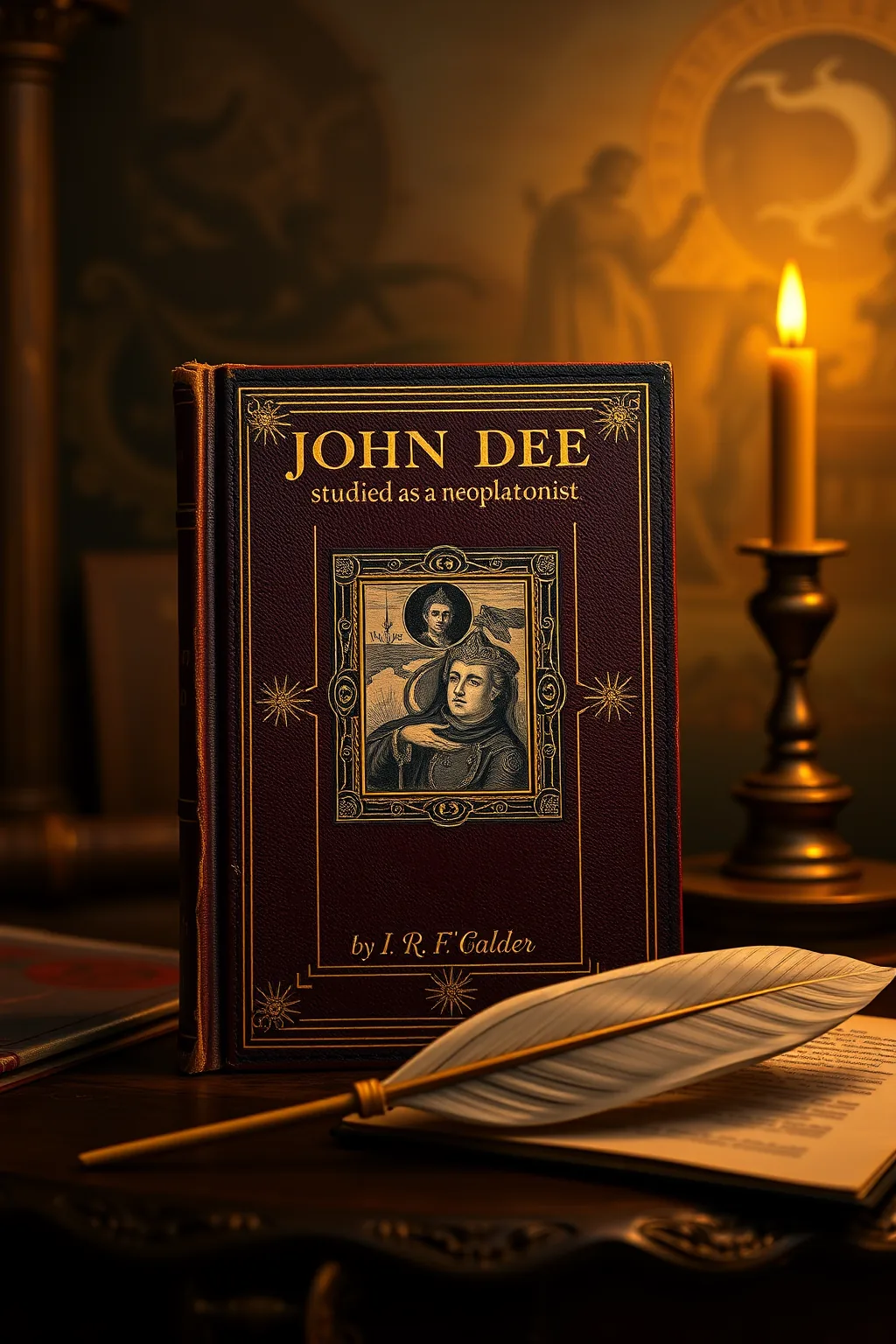
John Dee studied as an English neoplatonist
 61
61

John Dee studied as an English neoplatonist



Review by Cassian Rothmann (Senior Critic, Ancient Wisdom) — I. R. F. Calder's 'John Dee Studied as an English Neoplatonist' is a masterful exploration of one of the most enigmatic figures in occult history. Calder's work is not merely an academic treatise but a deeply esoteric journey into the mind of John Dee. The book's strengths lie in its detailed analysis of Dee's neoplatonic influences and his alchemical pursuits, making it an invaluable resource for both scholars and practitioners. Calder's authoritative tone and meticulous research provide a comprehensive understanding of Dee's mystical beliefs and their enduring impact on the hermetic tradition. This book is essential reading for anyone seeking to understand the depths of Renaissance mysticism and its relevance in the modern world.
📝 Description
61
I. R. F. Calder's 1997 study examines John Dee's engagement with Neoplatonism.
Calder's book investigates the philosophical currents of English Neoplatonism as they manifested in the work of John Dee, the Elizabethan scholar and advisor. It focuses on Dee's intellectual framework, particularly his interest in alchemy, hermeticism, and angel magic, as seen through the lens of Neoplatonic thought. The author traces how Dee synthesized various traditions, seeking to understand the divine order and humanity's place within it. The study details Dee's engagement with classical Neoplatonic texts and their subsequent interpretation during the Renaissance. It details his attempts to apply these philosophical ideas to practical magic and his pursuit of celestial knowledge. Calder's work aims to clarify Dee's intellectual system, separating it from later occultist interpretations.
The research highlights Dee's specific contributions to Renaissance magical theory and his place within a broader English intellectual history. It scrutinizes his writings on natural magic, divination, and the nature of the angelic world. The book discusses Dee's correspondence and his interactions with other thinkers of his time, showing how his Neoplatonism shaped his interactions and his scholarly pursuits. Calder's analysis provides a scholarly assessment of Dee's complex philosophical and religious views, grounded in his historical context.
This book situates John Dee within the Neoplatonic revival of the Renaissance. Neoplatonism, a philosophical system drawing from Plato and later thinkers like Plotinus, emphasized the ascent of the soul towards a divine, unified source. In the Renaissance, this tradition was often blended with Hermetic texts, Kabbalah, and alchemical practices. Dee's engagement with these ideas was not merely academic; he sought to use them as a framework for understanding the cosmos and communicating with celestial intelligences. Calder's work traces how Dee adapted and applied these esoteric and philosophical streams, connecting them to his own magical and scientific investigations.
💡 Why Read This Book?
Read 'John Dee Studied as an English Neoplatonist' to uncover the hidden knowledge and mystical practices of one of the most influential figures in the occult. Ideal for seekers of spiritual enlightenment, scholars of Renaissance mysticism, and practitioners of alchemy and hermeticism, this book offers a profound exploration of John Dee's esoteric beliefs and their enduring relevance. Calder's work provides a unique perspective on the philosophical and symbolic dimensions of Dee's teachings, making it an indispensable resource for anyone interested in the mystical arts.
⭐ Reader Reviews
Honest opinions from readers who have explored this book.
❓ Frequently Asked Questions
What is the primary focus of 'John Dee Studied as an English Neoplatonist'?
The primary focus is on John Dee's neoplatonic beliefs and their influence on his alchemical and hermetic practices. The book delves into the mystical and esoteric dimensions of Dee's work, providing a comprehensive understanding of his quest for hidden knowledge.
Who is the intended audience for this book?
The intended audience includes scholars of Renaissance mysticism, practitioners of alchemy and hermeticism, and seekers of esoteric wisdom. Anyone interested in the occult and mystical arts will find this book enriching.
What makes this book unique compared to other works on John Dee?
This book stands out due to its deep exploration of Dee's neoplatonic influences and the rich symbolism in his teachings. Calder's authoritative research and detailed analysis provide a unique perspective on Dee's mystical journey.
How does this book contribute to the study of occult history?
The book contributes by offering a comprehensive understanding of John Dee's esoteric beliefs and their impact on the hermetic tradition. It serves as an invaluable resource for scholars and practitioners seeking to explore the depths of Renaissance mysticism.
Can beginners in the occult benefit from reading this book?
While the book is deeply scholarly, beginners with an interest in the occult can benefit from its clear explanations of neoplatonic and hermetic concepts. The rich symbolism and philosophical depth make it a valuable introduction to the mystical arts.
🔮 Key Themes & Symbolism
Neoplatonic Influences
Calder's book delves deeply into the neoplatonic influences on John Dee's mystical beliefs. Neoplatonism, with its emphasis on the divine and the ascent of the soul, provides the philosophical foundation for Dee's alchemical and hermetic practices. The book explores how these influences shaped Dee's quest for hidden knowledge and his understanding of the divine hierarchy.
Alchemical Practices
John Dee's alchemical practices are a central theme in this book. Calder examines Dee's experiments and writings on alchemy, revealing the mystical and symbolic dimensions of his work. The book provides a comprehensive understanding of how Dee's alchemical pursuits were intertwined with his spiritual journey and his quest for the philosopher's stone.
Hermetic Symbolism
The strong symbolism in John Dee's teachings is another key theme. Calder's work explores the hermetic symbols and their meanings, offering a deep dive into the esoteric language of Dee's mystical writings. The book provides insights into how these symbols were used to convey hidden knowledge and spiritual truths.
💬 Memorable Quotes
Direct passages from the work, attributed to the author.
“Alchemy is the art of transforming the base into the divine.”
— Dee's alchemical pursuits were not merely about physical transformation but also about spiritual ascension and enlightenment.
“Symbols are the language of the divine.”
— Dee's use of hermetic symbols reveals his belief in the power of symbolism to convey spiritual truths and hidden knowledge.
💡 Key Ideas
Editorial paraphrase of the work's core concepts — not direct quotes.
The universe is a great and secret book.
This quote underscores Dee's belief in the hidden knowledge embedded in the natural world, reflecting his neoplatonic and hermetic views.
The true philosopher seeks the divine within.
This quote highlights Dee's inner journey and his quest for spiritual enlightenment through mystical practices.
The mind is the true alchemical laboratory.
This quote emphasizes the importance of inner transformation and spiritual alchemy in Dee's teachings.
🌙 Esoteric Significance
Tradition
This book belongs to the Hermetic tradition, focusing on John Dee's neoplatonic and alchemical practices. Hermeticism, with its emphasis on the divine and the mystical, provides the framework for Dee's teachings and his quest for hidden knowledge. The book explores the strong symbolism and philosophical depth of Dee's hermetic beliefs, making it an invaluable resource for practitioners and scholars of the occult.
Symbolism
Key symbols in Dee's teachings include the monad, the philosopher's stone, and various alchemical emblems. These symbols represent the divine, the process of spiritual transformation, and the quest for hidden knowledge. Calder's work provides a detailed analysis of these symbols and their meanings, offering insights into the esoteric language of Dee's mystical writings.
Modern Relevance
Dee's teachings continue to influence modern practitioners of alchemy and hermeticism. His emphasis on inner transformation and the quest for spiritual enlightenment speaks to contemporary seekers of esoteric wisdom. The book's detailed exploration of Dee's neoplatonic and hermetic practices makes it a valuable resource for anyone interested in the mystical arts today.
👥 Who Should Read This Book
This book is ideal for scholars of Renaissance mysticism, practitioners of alchemy and hermeticism, and seekers of esoteric wisdom. Beginners in the occult can benefit from the clear explanations of neoplatonic and hermetic concepts, while advanced practitioners will appreciate the strong symbolism and philosophical depth. The book's detailed analysis of John Dee's teachings makes it an indispensable resource for anyone interested in the mystical arts and their historical context.
📜 Historical Context
Written in the Elizabethan era, 'John Dee Studied as an English Neoplatonist' provides a fascinating glimpse into the mystical and esoteric beliefs of the time. John Dee, a polymath and advisor to Queen Elizabeth I, was a key figure in the Renaissance occult revival. His neoplatonic and hermetic practices influenced many subsequent thinkers and practitioners in the mystical arts. Calder's work is important for its detailed analysis of Dee's writings and experiments, offering a comprehensive understanding of his enduring legacy in the occult.
📔 Journal Prompts
Reflect on the significance of John Dee's neoplatonic beliefs in your own spiritual journey.
How do Dee's alchemical practices influence your understanding of inner transformation?
Explore the symbolism in Dee's teachings and its relevance to your mystical pursuits.
Consider the impact of Dee's hermetic practices on modern occultism.
What insights can you gain from Dee's quest for hidden knowledge in your own search for spiritual enlightenment?
🗂️ Glossary
Neoplatonism
A philosophical tradition that emphasizes the divine and the ascent of the soul, influenced by the teachings of Plotinus.
Alchemy
The mystical art of transforming base materials into the divine, often symbolizing spiritual transformation.
Hermeticism
A mystical tradition based on the writings of Hermes Trismegistus, emphasizing the divine and hidden knowledge.
Monad
A symbol representing the unity and divine essence in hermetic and alchemical teachings.
Philosopher's Stone
A legendary alchemical substance believed to transform base metals into gold and achieve spiritual enlightenment.
This book appears in 4 collections
🔮 Readers Also Liked
Browse all →








From the “Neoplatonism” Collection
View all →








More Free Alchemy & Hermeticism Books
View all →