Sara Ahbel-Rappe
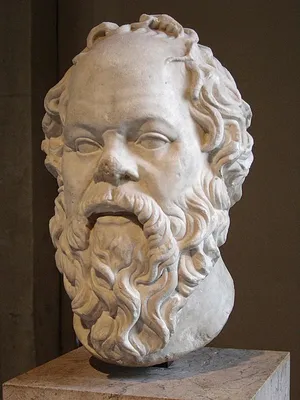
Socrates was a classical Athenian philosopher known for his questioning method, influencing Plato and Western thought, but left no writings.
Socrates, an ancient Greek philosopher from Athens, is considered a foundational figure in Western moral philosophy and a significant influence on his student Plato. Due to Socrates authoring no texts, his teachings are primarily known through the writings of his contemporaries and students, such as Plato and Xenophon. These accounts often present conflicting views, leading to the "Socratic problem"—the difficulty in reconstructing a definitive picture of his philosophy. Socrates's method involved engaging in question-and-answer dialogues to examine concepts, particularly virtues, often concluding with an admission of ignorance.
His trial and execution in 399 BC, on charges of impiety and corrupting the youth, are documented in these accounts. Socrates's legacy extends through antiquity and into the modern era, impacting medieval, Islamic, and Renaissance thought, and continuing to inspire philosophers and cultural depictions. The interpretation of his life and thought remains complex due to the varied and sometimes contradictory nature of the surviving sources, including dramatic portrayals and philosophical analyses.
The Socratic Problem and Sources
Reconstructing the historical Socrates is challenging due to his lack of written works. Our understanding relies heavily on accounts from figures like Plato, Xenophon, and Aristophanes, as well as Aristotle. These sources often present contradictory narratives, creating what is known as the "Socratic problem." Plato's dialogues, written in a question-and-answer style, are a primary source, but the extent to which they accurately represent Socrates versus Plato's own ideas is debated. Xenophon's accounts differ significantly, portraying a less philosophical and more conventionally moral Socrates. Aristophanes's comedic play "The Clouds" offers a caricature, depicting Socrates as an absurd sophist and atheist. The varied perspectives and potential biases of these authors make it difficult to ascertain Socrates's true philosophical positions.
Socratic Method and Philosophical Legacy
Socrates is renowned for his distinctive method of philosophical inquiry, often referred to as the Socratic method or elenchus. This involved engaging in dialogues where he would pose short, probing questions to his interlocutors, dissecting their assumptions and definitions, particularly concerning virtues. This process frequently led to an impasse, highlighting the limits of conventional understanding and Socrates's own famous assertion of knowing only that he knows nothing. This method, along with concepts like Socratic irony, profoundly influenced Plato and subsequently the entire Western philosophical tradition. His impact resonated through later antiquity, medieval and Islamic scholarship, the Renaissance humanism, and continues to be felt through modern philosophical discourse and cultural representations.
Biography and Trial
Born in Athens around 470/469 BC to parents Sophroniscus and Phaenarete, Socrates was an Athenian citizen who inherited property, allowing him a life relatively free from financial worries. His upbringing followed Athenian customs and laws. He served as a soldier for Athens. In 399 BC, Socrates faced charges of impiety and corrupting the youth. Following a trial, he was sentenced to death. Accounts suggest he accepted his fate, refusing opportunities to escape, and was executed by drinking poison, as described by Plato.
Key Ideas
- Socratic method (elenchus): A form of cooperative argumentative dialogue between individuals, based on asking and answering questions to stimulate critical thinking and to draw out ideas and underlying presuppositions.
- Socratic irony: A mode of speech or writing in which the speaker or writer says one thing but means another, often to mock or convey contempt.
- Ignorance: The philosophical stance of acknowledging one's own lack of knowledge as a starting point for inquiry.
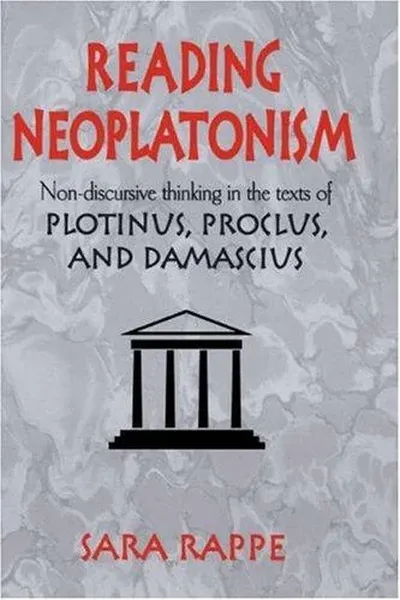
Books by Sara Ahbel-Rappe
0 free public domain books · Read online or download