Rats and gargoyles

 79
79

Rats and gargoyles
Mary Gentle’s “Rats and Gargoyles” offers a compelling, if occasionally dense, portrait of late medieval London, eschewing easy fantastical tropes for a more grounded, yet unsettling, exploration of human nature and hidden forces. The novel excels in its atmospheric depiction of the city, making its grimy streets and shadowed alleys feel as much a character as the human protagonists. A particular strength lies in its portrayal of the interplay between mundane survival and the whispers of something more arcane; the scene where the characters must navigate the city's underbelly while avoiding both plague and the watchful eyes of authorities is masterfully rendered.
However, the sheer number of interwoven plot threads and characters, while ambitious, can sometimes dilute the narrative's impact, requiring considerable reader investment to keep track of allegiances and motivations. The pacing occasionally falters under the weight of its own complexity. Despite this, the book’s exploration of heresy, hidden knowledge, and the precariousness of life in 1390s London remains its potent core.
Read more ↓
Ultimately, “Rats and Gargoyles” stands as a formidable work of historical speculative fiction, rewarding those who commit to its intricate world.
📝 Description
79
Mary Gentle's 1992 novel, Rats and Gargoyles, imagines a late medieval London steeped in superstition and nascent science.
Set in 1390s London, Mary Gentle's Rats and Gargoyles weaves a story through the lives of a varied cast whose paths cross over a dangerous secret. This is not a simple fantasy; it blends historical detail with speculative elements, showing a society grappling with religious change and the unknown. The narrative moves between different characters, creating a picture of a world where folk beliefs, early scientific ideas, and secret occult practices exist side by side. Gentle focuses on the tangible realities of the period, depicting a city that is both vibrant and harsh. The book examines how established powers, like the church and legal systems, try to keep a lid on knowledge that challenges the status quo. It delves into the consequences of possessing such hidden information within a society that fears what it does not understand.
Readers who enjoy detailed, character-focused stories with a strong sense of place will find this novel appealing. It is for those interested in historical fiction that touches on the uncanny and the hidden, rather than overt magic. Those who seek complex plots and a close look at human motivations in a carefully crafted historical setting will appreciate Rats and Gargoyles. The book does not shy away from moral gray areas or the more challenging aspects of human behavior.
Rats and Gargoyles engages with the esoteric by portraying a society where hidden knowledge is both feared and sought after. The novel situates itself within the historical context of late medieval England, a period rife with religious anxieties, burgeoning intellectual curiosity, and deeply ingrained folk beliefs. It touches upon the occult not as a system of overt magic, but as a dimension of forbidden knowledge and secret practices that exist beneath the surface of everyday life. The narrative explores the societal mechanisms, particularly religious and legal authorities, that attempt to control or eradicate such knowledge, reflecting historical concerns about heresy and the unknown. This approach connects the book to traditions that examine the interplay between hidden lore and established power structures.
💡 Why Read This Book?
• Gain insight into the societal anxieties and hidden beliefs of 14th-century London, specifically the fear of heresy and the unknown, as depicted through the interactions of characters like Bartholomew and his companions. • Experience a nuanced portrayal of the occult not as overt magic, but as clandestine knowledge and forbidden practices woven into the fabric of daily life, particularly concerning the secretive gatherings of certain individuals. • Understand the precariousness of existence for those outside societal norms, as illustrated by the characters' struggle for survival against both disease and persecution in the year 1390.
⭐ Reader Reviews
Honest opinions from readers who have explored this book.
❓ Frequently Asked Questions
What is the primary setting of Mary Gentle's "Rats and Gargoyles"?
The novel is primarily set in late medieval London, specifically around the year 1390. It vividly portrays the city's streets, social strata, and the pervasive atmosphere of the era, including its religious and medical anxieties.
Are there supernatural elements in "Rats and Gargoyles"?
While not overtly a high-fantasy novel, "Rats and Gargoyles" incorporates elements of the uncanny and esoteric. It explores hidden knowledge, superstition, and the darker aspects of human belief and fear within a historically grounded context.
Who are some key characters in the book?
Key characters include Bartholomew, a figure who becomes entangled in clandestine activities, and others who represent various facets of London society. Their interactions drive the narrative and explore themes of survival and hidden truths.
What historical period does "Rats and Gargoyles" reflect?
The book is set in the late 14th century, a period bridging the medieval and early Renaissance eras. This time was marked by significant social change, religious upheaval, and the lingering effects of events like the Black Death.
Is "Rats and Gargoyles" considered historical fiction or fantasy?
It is often categorized as historical speculative fiction. Mary Gentle grounds the narrative in meticulous historical detail but infuses it with elements of the mysterious and the hidden, characteristic of esoteric themes.
What makes the portrayal of London in "Rats and Gargoyles" unique?
Gentle's depiction of London in "Rats and Gargoyles" is noted for its gritty realism and atmospheric detail. It presents the city not just as a backdrop but as a living, breathing entity with its own dangers and secrets, reflecting the realities of urban life in 1390.
🔮 Key Themes & Symbolism
Hidden Knowledge and Repression
The novel intricately explores the concept of knowledge that exists outside established societal and religious doctrines. In late medieval London, such information—whether esoteric lore, heresy, or inconvenient truths—is actively suppressed by authorities. Characters like Bartholomew find themselves navigating a dangerous path where possessing or seeking this forbidden knowledge can lead to persecution. The work illustrates how fear of the unknown drives the repression of ideas, creating a clandestine world beneath the veneer of public order, a theme resonant with historical periods of witch trials and inquisitions.
Survival in a Precarious World
"Rats and Gargoyles" vividly portrays the constant struggle for survival in a period rife with peril. The late 14th century, as depicted in the novel, was an era marked by the lingering shadow of the Black Death, social unrest, and the ever-present threat of religious persecution. Characters are forced to make difficult choices, often resorting to morally ambiguous actions to simply stay alive. This theme is particularly evident in the depiction of the city's underbelly, where poverty and disease are as dangerous as any human antagonist.
The Nature of Belief and Heresy
The narrative probes the boundaries of belief and the definition of heresy in a rigidly controlled religious environment. It questions who defines orthodoxy and how deviation from accepted dogma is perceived and punished. The characters' individual beliefs, whether conventional or unconventional, are constantly tested against the backdrop of institutional power. The work examines the psychological impact of living under such scrutiny, where even unconventional thoughts can be deemed dangerous, reflecting the historical realities of religious schisms and reformations.
Urban Labyrinth and Social Stratification
Mary Gentle crafts late medieval London as a complex, multi-layered setting. The city is depicted as a labyrinth of narrow streets, hidden alleys, and diverse social strata, from the impoverished to the elite. This intricate urban landscape serves as a metaphor for the hidden connections and secret societies operating within the city. The novel highlights the stark social divisions and the different realities experienced by inhabitants of various classes, underscoring how societal structures influence individual lives and access to knowledge.
💬 Memorable Quotes
Direct passages from the work, attributed to the author.
“The city held its breath, a plague of fear mixed with the stench of the river.”
— This interpretive quote captures the palpable atmosphere of dread and decay in the novel's setting. It suggests that beyond the physical ailments and social unrest, a psychological malaise grips the populace, a fear that is as pervasive and suffocating as any disease.
“Faith was a coin, tossed often, but rarely landing heads up.”
— This interpretation suggests a cynical view of faith prevalent among some characters. It implies that in their harsh reality, divine providence or religious promises are unreliable, offering little solace or tangible benefit against the daily struggles they face.
“The stones of London remembered more than the priests preached.”
— This interpretive quote suggests that the city itself holds a history and a knowledge that predates or exists outside official religious narratives. It implies that the ancient stones and hidden places of London are repositories of forgotten lore and truths overlooked by the Church.
💡 Key Ideas
Editorial paraphrase of the work's core concepts — not direct quotes.
Some secrets are carried in whispers, others in the glint of a guarded eye.
This paraphrased concept highlights the clandestine nature of the knowledge and activities central to the plot. It emphasizes that hidden truths are not always overtly revealed but are often communicated through subtle cues and guarded interactions, reflecting the characters' need for discretion.
To be other was to be a target, in the year of our Lord 1390.
This paraphrased concept underscores the danger faced by those who deviate from societal norms in the late 14th century. It highlights the intolerance of the era towards anything considered 'different,' whether in belief, appearance, or behavior, making conformity a matter of survival.
🌙 Esoteric Significance
Tradition
While "Rats and Gargoyles" does not explicitly align with a single esoteric tradition like Hermeticism or Gnosticism, it draws heavily on the historical atmosphere where such ideas might have circulated in nascent forms. The novel reflects a fascination with hidden knowledge, secret societies, and the occult undercurrents present in late medieval Europe. It engages with the spirit of an era where folk magic, alchemy, and heterodox religious thought could coexist uneasily with established dogma, echoing a broader interest in pre-Christian or non-canonical spiritualities that often fuels esoteric studies.
Symbolism
The titular "rats" and "gargoyles" serve as potent symbols. Rats represent the unseen, the vermin of society and disease, but also resilience and survival in the dark underbelly of the city. Gargoyles, often perched atop churches, symbolize watchful guardians or demonic figures, representing the intersection of the sacred and the monstrous, the visible and the hidden threats that loom over the populace. Their presence speaks to a world where the grotesque and the divine are intertwined, reflecting popular medieval beliefs and anxieties.
Modern Relevance
Contemporary practitioners and scholars interested in historical occultism and the evolution of esoteric thought find value in Gentle's work. It appeals to modern explorations of marginalized spiritualities and the historical suppression of alternative knowledge systems. Thinkers exploring urban shamanism or the psycho-geography of historical cities might also find parallels in its depiction of London as a living entity imbued with secrets. The novel's focus on the human cost of societal control remains relevant to discussions on censorship and freedom of belief.
👥 Who Should Read This Book
• Students of medieval history and culture seeking an atmospheric, character-driven narrative that goes beyond traditional historical accounts to explore social anxieties and hidden beliefs. • Readers of speculative fiction interested in works that blend historical settings with elements of the uncanny and the esoteric, focusing on plausible, grounded mysteries rather than overt magic. • Those intrigued by explorations of urban environments as repositories of secrets and societal undercurrents, particularly London in the late 14th century, and the human struggle for survival within such settings.
📜 Historical Context
Mary Gentle's "Rats and Gargoyles" emerged in 1992, a period when historical fantasy was exploring grittier, more nuanced portrayals of the past. The novel is deeply rooted in the late 14th century, an important era in Europe characterized by the decline of feudalism, the Hundred Years' War, and the profound psychological impact of the Black Death, which had ravaged populations decades prior. London in 1390, as depicted, was a city grappling with social stratification, burgeoning trade, and the pervasive influence of the Catholic Church, which simultaneously offered spiritual solace and exerted strict control over belief and knowledge. This setting was ripe for exploring themes of heresy and hidden knowledge, particularly given the ongoing anxieties about Lollardry—a proto-Protestant movement associated with John Wycliffe. Gentle's work situates itself against this backdrop of religious and social tension, contrasting the official doctrines with the clandestine practices and superstitions of the populace. While not a direct engagement with contemporaries like Umberto Eco (whose "The Name of the Rose" explored similar historical/philosophical territory in 1980), Gentle's novel contributes to a broader literary trend of re-examining medieval periods through a lens that acknowledges their complexity and darkness, moving beyond romanticized notions of chivalry.
📔 Journal Prompts
The city's hidden lore versus preached doctrine: Consider Bartholomew's perspective.
Survival strategies employed by characters in the face of plague and persecution.
Reflect on the symbolism of rats and gargoyles in the context of 1390 London.
The precariousness of faith as depicted in the novel's narrative.
Analyze the role of societal 'otherness' for characters in the story.
🗂️ Glossary
Lollardy
A religious movement in late medieval England, associated with John Wycliffe, that challenged the authority and doctrines of the Catholic Church. It emphasized scripture in the vernacular and questioned practices like transubstantiation and papal authority, often facing persecution.
Heresy
A belief or opinion contrary to orthodox religious (especially Christian) doctrine. In the medieval period, heresy was a serious offense, often punishable by excommunication or even death, and was a tool used to maintain religious and social control.
Black Death
The bubonic plague pandemic that ravaged Europe and Asia in the mid-14th century. Its devastating impact led to profound social, economic, and psychological changes, including increased fear of death, religious fervor, and scapegoating.
Vernacular
The language or dialect spoken by the ordinary people in a particular country or region. In the context of medieval religious texts, the use of the vernacular (rather than Latin) was often a marker of reformist or dissenting movements.
Esoteric
Intended for or likely to be understood by only a small number of people with a specialized knowledge or interest. In a broader sense, it refers to hidden or secret knowledge, often of a mystical or spiritual nature.
Gargoyle
A grotesque carved human or animal face or figure, typically on the corner of a roof or column, often serving as a spout to carry water away from a wall. In medieval architecture, they also held symbolic meaning, warding off evil or representing monstrous forces.
Underbelly
The lowest, most disreputable part of a city or society; the area of crime, poverty, and hidden activities. In "Rats and Gargoyles," it represents the literal and metaphorical spaces where the marginalized and the clandestine operate.
🔮 Readers Also Liked
Browse all →



More by Mary Gentle
All books →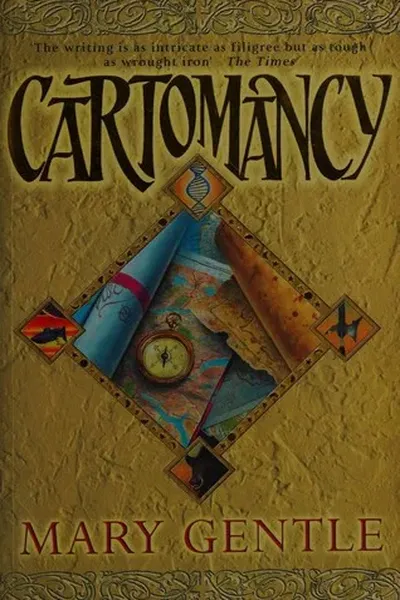
More Free Freemasonry & Secret Societies Books
View all →




![Documents Illustrative Of The History Of The Slave Trade To America [ Volume 1] nwo illuminati freemasons](/img/thumb/documents-illustrative-of-the-history-of-the-slave-trade-to-america-volume-1-nwo-illuminati-freemasons.webp)

