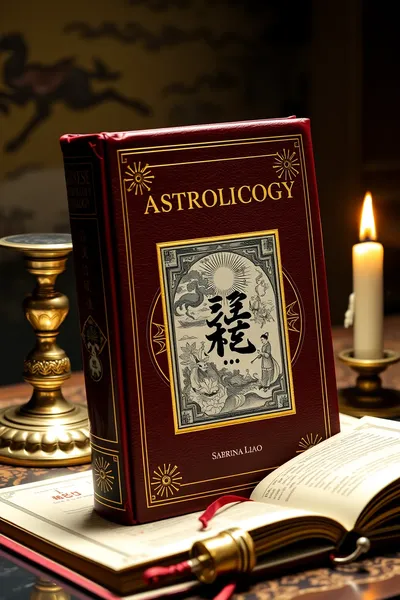
Qi men dun jia xin shu

 73
73

Qi men dun jia xin shu
Bingxun Fei's Qi Men Dun Jia Xin Shu offers a structured approach to a discipline that can often feel overwhelming. The clarity with which the foundational elements—the Heavenly Stems, Earthly Branches, and their placement within the eight palaces—are presented is a notable strength. Fei doesn't shy away from the computational demands of the art, which is refreshing for practitioners seeking rigor. However, the book’s relative recency (1991) means it lacks the historical depth found in older, more classical texts, and some readers might find the practical application examples somewhat generalized. A particularly effective section details the "Four Gates," illustrating their crucial role in determining auspicious timings for specific undertakings. It's a solid, if not revolutionary, addition for those committed to mastering Qi Men Dun Jia.
📝 Description
73
Bingxun Fei's Qi Men Dun Jia Xin Shu, published in 1991, explains an ancient Chinese divination and strategic art.
This book details the foundational principles of Qi Men Dun Jia (奇門遁甲), an ancient Chinese divination and strategic art. Originally published in 1991 by Bingxun Fei, it serves as a guide to understanding the systems of this practice. The text explains the theoretical framework and practical applications for mastering its charts and calculations. It is intended for students of Chinese Metaphysics, particularly those familiar with concepts like the I Ching, Bazi, or Feng Shui. Practitioners seeking to deepen their understanding of advanced divination techniques and strategic planning rooted in cosmological principles will find value. Individuals interested in historical Chinese esoteric arts and their practical deployment will also benefit.
The book emerges from a long lineage of Chinese esoteric arts documented for over two millennia, intertwined with Daoist cosmology and military strategy. Fei's 1991 publication aimed to systematize and disseminate knowledge that had previously been passed down through more secretive channels. This made the practice accessible to a wider audience interested in traditional Chinese arts.
Qi Men Dun Jia Xin Shu connects to a tradition of Chinese esoteric arts with roots stretching back over two thousand years. Its principles are linked to Daoist cosmology and historical military strategy. The art itself has seen periods of both intense study and historical suppression. Bingxun Fei's 1991 work sought to organize and share knowledge that was often transmitted through less public means. This publication made the complex system available to more people interested in Chinese traditional practices.
💡 Why Read This Book?
• Gain a systematic understanding of Qi Men Dun Jia's core mechanics, including the interplay of the Eight Palaces and Nine Stars, enabling you to interpret complex divination charts. • Learn to practically apply Qi Men Dun Jia principles for strategic decision-making, drawing on Fei's detailed explanations of how to use the "Four Gates" to identify optimal timing. • Explore the historical roots of this esoteric art, understanding its place within Chinese metaphysics and its evolution from ancient strategic doctrines to a divination system.
⭐ Reader Reviews
Honest opinions from readers who have explored this book.
❓ Frequently Asked Questions
What is the original publication year of Qi Men Dun Jia Xin Shu?
Qi Men Dun Jia Xin Shu was first published in 1991 by Bingxun Fei, making it a relatively modern compilation of ancient esoteric knowledge.
Is Qi Men Dun Jia Xin Shu suitable for complete beginners in Chinese Metaphysics?
While the book covers foundational elements, it is best suited for those with some familiarity with concepts like the I Ching or Bazi, as it delves into advanced applications of Qi Men Dun Jia.
What specific elements of Qi Men Dun Jia does the book detail?
The book elaborates on key components such as Heavenly Stems, Earthly Branches, the Eight Palaces, Nine Stars, and the critical "Four Gates" used in chart analysis.
What kind of applications are discussed in Qi Men Dun Jia Xin Shu?
The text focuses on using Qi Men Dun Jia for strategic planning and divination, helping users identify auspicious timings and make informed decisions based on cosmological patterns.
Who is the author, Bingxun Fei?
Bingxun Fei is the author of Qi Men Dun Jia Xin Shu, a work that aims to systematize and disseminate the principles of this complex Chinese esoteric art.
Does the book explain the symbolism of the Nine Stars in Qi Men Dun Jia?
Yes, Qi Men Dun Jia Xin Shu explains the significance of the Nine Stars within the context of Qi Men Dun Jia charts, detailing their influence on various aspects of divination.
🔮 Key Themes & Symbolism
Chart Construction and Interpretation
The book meticulously details the construction of Qi Men Dun Jia charts, focusing on the precise arrangement of Heavenly Stems, Earthly Branches, and the Nine Palaces. It guides the reader through understanding how these elements interact based on specific temporal and spatial coordinates. Interpretation hinges on analyzing the relationships between these components, the "Four Gates," and the influence of celestial bodies to discern auspiciousness for various undertakings, from personal decisions to strategic planning.
Strategic Application and Divination
Qi Men Dun Jia Xin Shu emphasizes the practical utility of the art beyond mere prediction. It outlines how to leverage the insights gained from chart analysis for strategic advantage, whether in military campaigns, business ventures, or personal endeavors. The text elucidates methods for selecting optimal timings and directions, effectively using the cosmological map provided by the charts to guide actions and mitigate potential challenges.
Cosmological Framework
Central to the book is the underlying Daoist cosmological framework that informs Qi Men Dun Jia. It explains the symbolic representation of celestial and terrestrial forces through the Eight Trigrams (Ba Gua), the Five Elements (Wu Xing), and the cyclical nature of time. Understanding this framework is presented as essential for accurately interpreting the energetic patterns and influences depicted in the Qi Men Dun Jia charts.
The Role of the Divine and Ghost
The text explores the integration of "Divine" (神) and "Ghost" (鬼) elements within the Qi Men Dun Jia system. These represent specific energies and influences that manifest within the chart, often related to spiritual or subtle forces. Understanding their placement and interactions is crucial for a nuanced interpretation, providing insights into unseen factors that can affect outcomes and guiding the practitioner's approach.
💬 Memorable Quotes
Direct passages from the work, attributed to the author.
“The arrangement of Heavenly Stems and Earthly Branches within the Eight Palaces dictates the flow of Qi.”
— This statement highlights the core mechanism of Qi Men Dun Jia: the dynamic interplay of fundamental cosmic energies (Stems and Branches) within a structured spatial framework (the Palaces) that governs the energetic currents influencing events.
“The Four Gates provide the decisive points for action and inaction.”
— This emphasizes the practical utility of the 'Four Gates' within Qi Men Dun Jia. They are presented not just as analytical points but as critical junctures that inform the timing and efficacy of specific undertakings, guiding strategic choices.
“Strategic advantage is achieved by aligning actions with cosmic timing.”
— This interpretation reflects the book's focus on practical application. It suggests that success in any endeavor, from personal goals to broader strategies, is significantly enhanced by harmonizing one's actions with the auspicious timings and energetic patterns identified through Qi Men Dun Jia.
“The interplay of Yin and Yang is reflected in the celestial and terrestrial configurations.”
— This concept points to the foundational Daoist principle of Yin and Yang as the underlying structure of the universe, which is mirrored and analyzed within the Qi Men Dun Jia system through its celestial and terrestrial components.
💡 Key Ideas
Editorial paraphrase of the work's core concepts — not direct quotes.
Understanding the Nine Stars reveals the underlying tendencies of a situation.
This paraphrased concept underscores the diagnostic power of the Nine Stars in Qi Men Dun Jia. Their position and attributes within a chart are interpreted to reveal the inherent nature, potential challenges, and prevailing influences of the matter being analyzed.
🌙 Esoteric Significance
Tradition
Qi Men Dun Jia Xin Shu is rooted in the Daoist tradition of Chinese Metaphysics. It draws heavily on cosmological principles, the I Ching, and the cyclical understanding of time and space prevalent in ancient Chinese philosophy. While not strictly a religious text, it operates within a worldview where the cosmos is imbued with intelligent energy, and human actions can be harmonized with these energies for beneficial outcomes. It represents a sophisticated system of divination and strategy that emerged from this philosophical bedrock.
Symbolism
Key symbols include the Eight Palaces (八宮), representing directions and energetic fields, and the Nine Stars (九星), which embody different qualities and influences. The Heavenly Stems (天干) and Earthly Branches (地支) form the temporal axis, symbolizing the ceaseless cycle of change. The "Four Gates" (四門)—Open, Rest, Injury, Death—are critical symbolic markers within the chart, indicating the auspiciousness or danger associated with specific actions and directions.
Modern Relevance
Contemporary practitioners of Chinese Metaphysics, including Feng Shui consultants, Bazi analysts, and dedicated Qi Men Dun Jia students, continue to draw upon foundational texts like this. Its systematic approach makes it valuable for those seeking to understand the mechanics of Qi Men Dun Jia beyond anecdotal accounts. Modern applications often extend beyond traditional divination to include life coaching, business strategy, and personal development, adapting ancient principles to contemporary challenges.
👥 Who Should Read This Book
• Students of advanced Chinese Metaphysics seeking to master Qi Men Dun Jia, who will benefit from its structured explanation of chart construction and interpretation. • Practitioners of strategic arts and divination who wish to incorporate a powerful, historically significant Chinese system into their toolkit. • Researchers of esoteric traditions interested in understanding the practical and cosmological underpinnings of ancient Chinese divination and decision-making arts.
📜 Historical Context
Published in 1991, Bingxun Fei's Qi Men Dun Jia Xin Shu arrived at a time when interest in traditional Chinese esoteric arts was experiencing a resurgence, partly due to increased cultural exchange and academic study. While Qi Men Dun Jia itself boasts a history dating back to the Han Dynasty (206 BCE – 220 CE), its transmission had often been secretive, passed through lineages like those associated with military strategy. This work sought to clarify the art for a broader audience, contrasting with the more esoteric, less systematic approaches found in older, handwritten manuscripts. It emerged in an intellectual climate where Western analytical methods were also being applied to Eastern philosophical systems, yet Fei's work remained firmly rooted in traditional Chinese cosmological thought, distinct from contemporary Western esoteric movements.
📔 Journal Prompts
Analyze the positioning of the Four Gates in a hypothetical Qi Men Dun Jia chart for a new venture.
Reflect on the symbolic meaning of the Nine Stars as they relate to personal challenges.
Consider how the interaction of Heavenly Stems and Earthly Branches might influence daily decision-making.
Explore the concept of aligning personal actions with the energetic flow indicated by the Eight Palaces.
How does the cosmological framework presented in Qi Men Dun Jia Xin Shu differ from other divination systems you know?
🗂️ Glossary
Qi Men Dun Jia (奇門遁甲)
An ancient Chinese metaphysical art combining astrology, divination, and strategy, utilizing specific arrangements of Heavenly Stems, Earthly Branches, and other celestial/terrestrial factors to determine auspicious timings and directions.
Heavenly Stems (天干)
The ten cyclical characters (Jia, Yi, Bing, Ding, Wu, Ji, Geng, Xin, Ren, Gui) that form part of the Chinese calendrical and metaphysical system, representing fundamental energies.
Earthly Branches (地支)
The twelve cyclical animals (Rat, Ox, Tiger, etc.) that, along with the Heavenly Stems, form the sexagenary cycle (Jiazi), crucial for dating and astrological calculations in Chinese metaphysics.
Eight Palaces (八宮)
The eight directional sectors within a Qi Men Dun Jia chart, derived from the Bagua, each associated with specific energies, influences, and symbolic meanings.
Nine Stars (九星)
A set of nine celestial influences or energies used in Qi Men Dun Jia and other Chinese arts, each possessing distinct characteristics that affect outcomes and interpretations.
Four Gates (四門)
Key auspicious (Open, Rest) and inauspicious (Injury, Death) points within a Qi Men Dun Jia chart, used to determine the suitability of specific timings and actions.
Divine (神) and Ghost (鬼)
In Qi Men Dun Jia, these refer to specific energetic patterns or subtle influences within a chart that represent spiritual or unseen forces, impacting the interpretation of events.
🔮 Readers Also Liked
Browse all →









More Free Astrology & Cosmology Books
View all →