Pyramids
 80
80

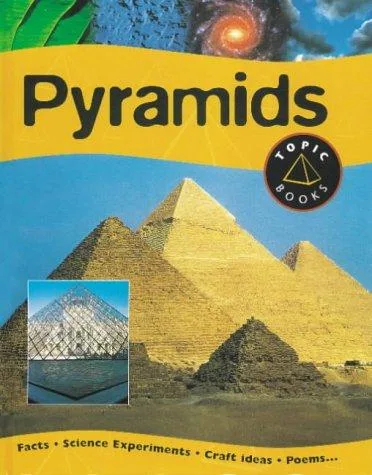
Pyramids
Fiona MacDonald's "Pyramids" attempts to bridge the gap between historical fact and esoteric speculation, a common endeavor for books published around the turn of the millennium. The author succeeds in detailing the sheer scale and engineering challenges of pyramid construction, offering a solid foundation of factual data. A particular strength lies in the exploration of potential astronomical alignments, a recurring theme in pyramid literature that MacDonald handles with a degree of methodical inquiry. However, the work occasionally falters by presenting theories as established fact without sufficient critical distance. For instance, the discussion surrounding the precise methods of stone manipulation sometimes leans heavily on conjecture rather than verifiable archaeological evidence. While the book offers a compelling overview for those already inclined towards esoteric interpretations, its lack of rigorous academic sourcing for some of its more speculative claims might limit its appeal to a more critical audience. Ultimately, "Pyramids" serves as an accessible, if sometimes overly enthusiastic, introduction to the mysteries surrounding these ancient monuments.
📝 Description
80
Fiona MacDonald's 2000 book examines the pyramids' construction, purpose, and esoteric mystique.
Published in 2000, Fiona MacDonald's "Pyramids" goes beyond a standard historical account to investigate the symbolic and esoteric dimensions of these ancient structures. The book analyzes the architectural and engineering achievements involved in their construction, focusing particularly on Egyptian examples. MacDonald considers the societal and religious frameworks that fostered these ambitious building projects, viewing them not simply as tombs but as centers of belief and cosmic understanding.
The work is for readers interested in the intersection of ancient architecture, history, and esoteric thought. It discusses the practical aspects of ancient construction, including quarrying and transporting massive stones. The book also addresses the deeper meanings attributed to the pyramids throughout history, such as their astronomical alignments and their potential roles in spiritual practices or as gateways. Students of comparative religion, ancient civilizations, and architectural history will find a unique perspective.
MacDonald's book emerged during a period of heightened interest in ancient mysteries and alternative historical views. While acknowledging mainstream archaeological findings, "Pyramids" engages with theories proposing advanced knowledge or external influences in their creation. It connects to a tradition of reinterpretation exemplified by authors like Graham Hancock and Robert Bauval, who linked pyramids to celestial patterns and questioned their conventional dating and purpose.
This book engages with esoteric interpretations of ancient monuments, a tradition that views structures like the pyramids as more than mere historical artifacts. It follows a line of thought that suggests these edifices hold deeper, symbolic, or even cosmic significance, often linked to lost knowledge or celestial observations. MacDonald's work is situated within discussions that challenge purely materialist explanations for ancient achievements, often drawing parallels between them and esoteric philosophies concerning cosmology, consciousness, and spiritual gateways.
💡 Why Read This Book?
• Understand the engineering marvels and potential astronomical alignments of ancient Egyptian pyramids, a focus MacDonald details when discussing the precise orientation of the Great Pyramid of Giza to the cardinal points. • Explore the symbolic significance of pyramids beyond mere tombs, examining their representation as conduits for cosmic energy or ascension, a concept the book elaborates on in its analysis of their geometric form. • Gain insight into the historical and esoteric discourse surrounding pyramid construction, appreciating how theories from the late 20th century, such as those linking pyramids to celestial patterns, are presented and contextualized.
⭐ Reader Reviews
Honest opinions from readers who have explored this book.
❓ Frequently Asked Questions
What specific ancient civilization is most prominently featured in Fiona MacDonald's "Pyramids"?
The book "Pyramids" by Fiona MacDonald prominently features the ancient Egyptian civilization, focusing on their monumental construction achievements, particularly the famous pyramids of Giza and their associated symbolism.
Does "Pyramids" by Fiona MacDonald discuss the construction methods used for the pyramids?
Yes, Fiona MacDonald's "Pyramids" explores the construction methods, detailing the immense engineering challenges, quarrying, transportation, and placement of massive stone blocks required for these structures.
What is the publication year of Fiona MacDonald's book "Pyramids"?
Fiona MacDonald's book "Pyramids" was first published in the year 2000, placing it within a period of significant interest in ancient mysteries and alternative historical theories.
Are astronomical alignments a key topic in "Pyramids" by Fiona MacDonald?
Yes, astronomical alignments are a key topic in "Pyramids". The book examines how pyramids were oriented with celestial bodies and cardinal directions, suggesting intentional cosmic connections.
Who is the author of the book "Pyramids" discussed?
The author of the book "Pyramids" is Fiona MacDonald, whose work was first published in 2000 and explores the historical and esoteric aspects of these ancient structures.
What kind of esoteric themes are explored in Fiona MacDonald's "Pyramids"?
Esoteric themes explored include the symbolic representation of pyramids as conduits for cosmic energy, their potential roles in spiritual practices, and their connection to ascension or bridging earthly and divine realms.
🔮 Key Themes & Symbolism
Architectural Ingenuity
The work highlights the extraordinary engineering and logistical prowess required to erect the pyramids, particularly focusing on the precision and scale achieved by ancient civilizations. It discusses the challenges of quarrying, transporting, and lifting colossal stone blocks, often questioning whether known technologies of the era fully account for these feats, inviting contemplation on potentially lost knowledge or methods.
Cosmic and Celestial Alignment
A significant theme is the deliberate astronomical alignment of the pyramids. The book examines how these structures were oriented with cardinal directions and celestial bodies, suggesting a profound understanding of the cosmos and a desire to connect earthly existence with universal energies or divine order, exemplified by discussions of the Great Pyramid's orientation.
Symbolism of Ascension
MacDonald explores the symbolic meaning of the pyramid form itself, often interpreted as a representation of ascension, a bridge between the terrestrial and the divine, or a conduit for spiritual energy. This interpretation suggests the pyramids served purposes far beyond mere burial sites, embodying concepts of spiritual ascent and cosmic harmony.
Societal and Religious Foundations
The book touches upon the societal structures and belief systems that underpinned the construction of these monuments. It considers the immense mobilization of labor, resources, and organized effort necessary, linking the physical act of building to the religious and cultural imperatives of the time, framing the pyramids as focal points of ancient worldviews.
💬 Memorable Quotes
Direct passages from the work, attributed to the author.
“The precise orientation of the Great Pyramid to the cardinal points suggests an advanced understanding of astronomy.”
— This statement highlights a core argument: the meticulous alignment of the Giza pyramid indicates deliberate astronomical knowledge, implying purposes beyond mere architecture and pointing towards a symbolic or spiritual connection to the cosmos.
“Pyramids served as focal points for belief and cosmic understanding.”
— This interpretation suggests that the pyramids were not simply tombs or monuments but central elements in the religious and philosophical systems of their creators, acting as physical anchors for their understanding of the universe.
“The engineering required for pyramid construction challenges conventional views of ancient capabilities.”
— This implies that the scale and precision of pyramid building push the boundaries of what is commonly accepted regarding the technological abilities of ancient peoples, opening the door to discussions about unknown methods or knowledge.
“The geometric form of the pyramid may symbolize ascension.”
— This points to the symbolic interpretation of the pyramid's shape, suggesting it was designed to represent or facilitate a spiritual ascent, a connection between the earthly realm and higher planes of existence.
“Massive stone blocks were quarried, transported, and placed with remarkable accuracy.”
— This statement focuses on the practical aspects of construction, emphasizing the skill and precision involved in manipulating enormous stones, underscoring the logistical and technical mastery demonstrated by ancient builders.
🌙 Esoteric Significance
Tradition
The work aligns with modern esoteric traditions that seek symbolic and energetic interpretations of ancient structures, rather than purely historical or archaeological ones. It draws implicitly from Hermetic principles of "as above, so below" by linking earthly architecture to celestial order. While not strictly tied to a single lineage like Gnosticism or Kabbalah, it speaks to Theosophical interests in ancient wisdom and advanced pre-diluvian civilizations.
Symbolism
Central symbols include the pyramid's geometric form, often interpreted as a representation of ascension, a conduit for cosmic energy, or a manifestation of divine order. Astronomical alignments, such as orientation to cardinal points or specific stars, symbolize a connection to universal cycles and cosmic consciousness. The sheer scale and precision of construction themselves symbolize human potential, ancient mastery, and the enduring quest for immortality or transcendence.
Modern Relevance
Contemporary thinkers and practitioners in fields like sacred geometry, archaeoastronomy, and New Age spirituality continue to draw inspiration from the symbolic and energetic interpretations of pyramids discussed in this book. It informs discussions on ancient consciousness, ley lines, and the potential for energetic resonance within ancient sites, influencing modern meditation practices and explorations of consciousness related to these monumental structures.
👥 Who Should Read This Book
• Individuals fascinated by ancient Egypt and its iconic structures, seeking explanations that go beyond conventional historical accounts. • Readers interested in archaeoastronomy and the potential connections between ancient architecture, celestial events, and symbolic meaning. • Those exploring esoteric or metaphysical interpretations of history, looking for insights into theories about lost civilizations and ancient wisdom.
📜 Historical Context
Published in 2000, Fiona MacDonald's "Pyramids" emerged during a period of intense popular interest in ancient mysteries, fueled by works like Graham Hancock's "Fingerprints of the Gods" (1995). This era saw a surge in speculative archaeology and alternative history, challenging established Egyptological timelines and interpretations. MacDonald's book engages with this milieu, exploring theories about advanced ancient knowledge and construction techniques that often diverge from mainstream academic consensus. Contemporaries like Robert Bauval were also publishing influential theories linking the Giza pyramids to celestial patterns, such as the Orion Correlation Theory. While mainstream archaeology, represented by scholars like Zahi Hawass, largely dismissed these speculative theories as lacking empirical evidence, works like MacDonald's found a receptive audience among those seeking deeper, often esoteric, meanings behind ancient monuments. The reception was generally one of engagement within alternative history circles, rather than formal academic critique.
📔 Journal Prompts
The Great Pyramid's orientation to cardinal points.
The symbolic meaning of the pyramid's geometric form.
The potential societal implications of mobilizing labor for pyramid construction.
The concept of pyramids as conduits for cosmic energy.
Comparing the engineering challenges described with modern construction capabilities.
🗂️ Glossary
Archaeoastronomy
The interdisciplinary study of how people in the past understood astronomical phenomena and how they used these phenomena in their cultures. It examines how celestial bodies and events influenced ancient beliefs, practices, and architecture.
Esoteric
Intended for or likely to be understood by only a small number of people with a specialized knowledge or interest. In the context of literature, it refers to teachings concerned with the supernatural, mystical, or occult.
Giza Plateau
A desert plateau in the Giza Necropolis, on the outskirts of Cairo, Egypt, famous as the location of the Great Pyramid of Giza, the Pyramid of Khafre, the Pyramid of Menkaure, and the Great Sphinx.
Cardinal Directions
The four main points of a compass: North, South, East, and West. Their precise alignment in ancient structures is often studied for symbolic or astronomical significance.
Symbolic Interpretation
The practice of understanding objects, structures, or events not just by their literal meaning but by the deeper, often hidden, meanings they represent, particularly in spiritual or philosophical contexts.
Cosmic Energy
A metaphysical concept referring to a pervasive, unseen force or energy believed to originate from the cosmos and influence life and consciousness on Earth, often associated with celestial bodies and universal cycles.
Ascension
In a spiritual or esoteric context, the act of rising or moving upward, often signifying a transition to a higher state of being, consciousness, or spiritual plane.
🔮 Readers Also Liked
Browse all →









More by Fiona MacDonald
All books →

More Free Occult Philosophy Books
View all →