Proof of the Illuminati
 71
71

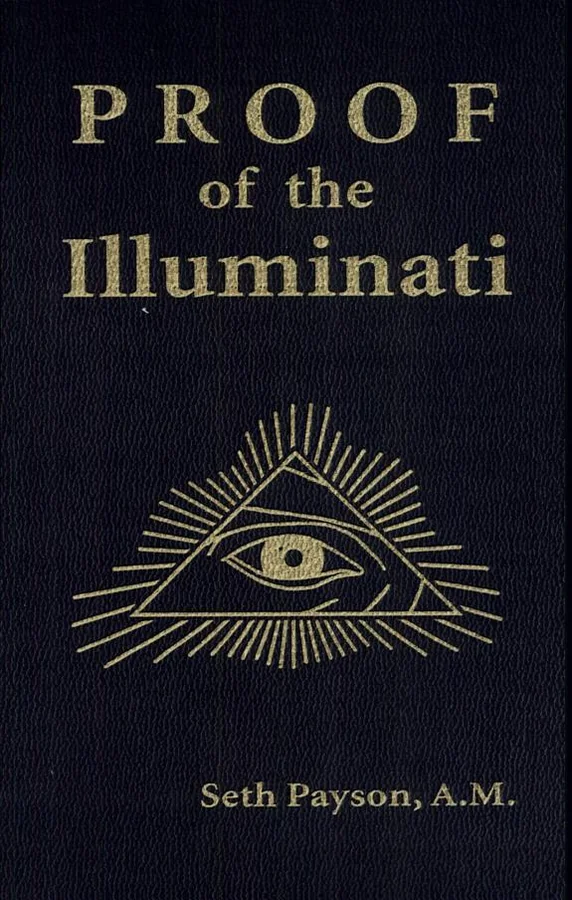
Proof of the Illuminati
Payson's 1802 treatise, here reprinted, offers a stark, almost breathless account of the Bavarian Illuminati, framed as a revolutionary contagion. He details Adam Weishaupt's society not as a philosophical club but as a meticulously organized engine of subversion, intent on dismantling thrones and altars. The strength of the work lies in its immediacy; it captures the palpable fear of secret societies that permeated post-revolutionary Europe. Payson's meticulous cataloging of alleged Illuminati rituals and communication codes, though likely embellished, provides a fascinating glimpse into contemporary anxieties. However, the author's relentless conviction leaves little room for nuance; he presents the Illuminati as an unalloyed evil, lacking any exploration of the intellectual currents that might have inspired such a movement, beyond a condemnation of their heterodoxy. A particularly vivid section describes their supposed use of coded language and symbols to infiltrate institutions. Ultimately, Proof of the Illuminati serves less as balanced history and more as a potent artifact of paranoid speculation from a pivotal historical moment.
📝 Description
71
Published in 1802, Seth Payson's 'Proof of the Illuminati' critiques the Bavarian secret society.
Seth Payson's 1802 book, originally titled 'Proofs of the real existence, and dangerous tendency, of illuminism,' offers a historical examination and critique of the Bavarian Illuminati. Payson details the group's alleged origins, organizational structure, and ultimate aims, portraying it as a hidden force working to destabilize established religious and political systems. The text emerged from the period's anxieties about secret societies and their potential to cause societal upheaval.
This work is particularly relevant for historians studying the late 18th and early 19th centuries, especially those focused on political and religious dissent, secret societies, and the radical elements of the Enlightenment. Students of esoteric movements and those tracking the development of conspiracy theories will find this a valuable primary source. The book appeals to readers interested in primary source analysis of historical events, even acknowledging the author's strongly polemical stance.
Payson's work engages with the historical fears surrounding clandestine organizations that flourished in the wake of the French Revolution. The Bavarian Illuminati, founded by Adam Weishaupt in 1776, was a real entity whose suppression in the 1780s did not end public fascination. This book contributes to a tradition of literature that sought to expose or warn against such societies, reflecting anxieties about their supposed subversive agendas and influence on societal structures, particularly concerning traditional morality and governance.
💡 Why Read This Book?
• Understand the specific fears surrounding secret societies like the Bavarian Illuminati in the late 18th century, as detailed in the text's portrayal of their alleged subversive aims. • Analyze the historical rhetoric used to demonize intellectual and political movements, by examining Payson's polemical descriptions of 'illuminism's' 'dangerous tendency.' • Gain insight into early conspiracy theories by studying the specific methods Payson attributes to the Illuminati, such as their alleged use of coded language and infiltration tactics.
⭐ Reader Reviews
Honest opinions from readers who have explored this book.
❓ Frequently Asked Questions
What was the original publication date and title of 'Proof of the Illuminati'?
The work was originally published in 1802 under the title 'Proofs of the real existence, and dangerous tendency, of illuminism.' This reprint makes the historical text accessible to modern readers interested in the era's perceptions of secret societies.
Who was Adam Weishaupt and what was his connection to the Illuminati?
Adam Weishaupt, a professor of canon law, founded the Order of the Illuminati in Bavaria in 1776. Payson's book focuses heavily on Weishaupt's alleged role in establishing and directing this secret society's activities.
What historical period does Seth Payson's book primarily address?
The book primarily addresses the late 18th century, focusing on the period when the Bavarian Illuminati was active and subsequently suppressed by the government in the 1780s, and the ensuing public discourse.
Is 'Proof of the Illuminati' considered a neutral historical account?
No, the book is highly polemical and reflects the strong anti-secret society sentiments prevalent after the French Revolution. It presents a critical and alarmist view of the Illuminati, rather than a balanced historical analysis.
What is meant by 'illuminism' in the context of this book?
In Payson's work, 'illuminism' refers to the ideology, perceived aims, and alleged practices of the Bavarian Illuminati. He uses the term to denote a dangerous, subversive movement seeking to overthrow established order.
What kind of reception did books like this receive in the early 19th century?
Works like Payson's were often widely read and debated, fueling public suspicion and fear of secret societies. They contributed to a climate of anxiety regarding hidden influences on political and social events.
🔮 Key Themes & Symbolism
The Subversive Nature of Secret Societies
Payson's work is fundamentally an argument about the inherent danger posed by clandestine organizations like the Bavarian Illuminati. He posits that their secrecy allows for the propagation of doctrines and plans inimical to societal stability and religious faith. The text details alleged methods of infiltration and subversion, portraying 'illuminism' as a pervasive threat. This theme positions secret societies not as mere historical curiosities but as active agents of disruption, a perspective reflecting the anxieties of the post-Enlightenment and post-French Revolution era.
Critique of Enlightenment Radicalism
While not explicitly naming Enlightenment philosophers, Payson's critique of the Illuminati implicitly targets the more radical strains of Enlightenment thought that questioned traditional authority, religion, and social structures. The 'dangerous tendency' of illuminism is presented as a direct outgrowth of ideas that undermine established hierarchies. The book functions as a counter-Enlightenment tract, warning against the societal consequences of unchecked rationalism and the pursuit of utopian ideals through clandestine means, framing these as potentially leading to chaos and moral decay.
Historical Anxiety and Conspiracy
The text is a primary artifact of historical anxiety concerning hidden powers. Payson meticulously catalogues supposed Illuminati symbols, rituals, and communication methods, constructing a narrative of a vast, organized conspiracy. This reflects a broader cultural tendency in the late 18th and early 19th centuries to attribute significant societal events, like the French Revolution, to the machinations of secret groups. The work serves as an early example of how fears about 'illuminism' became embedded in a developing conspiracy theory landscape.
Moral and Religious Defense
A significant undercurrent in Payson's argument is the defense of traditional morality and religious orthodoxy against the perceived secularizing and destabilizing forces of illuminism. The Illuminati's alleged aims are presented as directly attacking the foundations of Christian society. The book frames itself as a bulwark against moral relativism and atheism, arguing that the societal order relies on adherence to established religious principles. This aspect highlights the intertwined nature of religious, political, and social concerns in the period.
💬 Memorable Quotes
Direct passages from the work, attributed to the author.
“The existence of Illuminism is not a phantom, but a reality.”
— This declaration underscores the author's conviction that the Illuminati were not merely a theoretical threat or a figment of imagination, but a concrete, active force. It sets the tone for the entire work, framing it as an exposé of an existing danger.
💡 Key Ideas
Editorial paraphrase of the work's core concepts — not direct quotes.
Their aim was to extinguish the light of reason and substitute the dark lanterns of infidelity.
This quote expresses Payson's view of the Illuminati's purpose: to replace traditional enlightenment and faith with a destructive, atheistic ideology. It frames their movement as a battle between opposing forces of knowledge and ignorance, faith and disbelief.
The dangerous tendency of this society is in its secrecy and its principles.
This paraphrased concept highlights the two core elements Payson identifies as threatening: the clandestine nature of the Illuminati, which allows for unchecked plotting, and their underlying philosophy, deemed inimical to societal well-being.
Weishaupt devised a system of degrees and symbols to control the minds of his followers.
This paraphrased concept points to the organizational structure and psychological manipulation Payson believed the Illuminati employed. It suggests a hierarchical system designed for indoctrination and loyalty, a common fear associated with secret societies.
The society sought to corrupt public morals and undermine established governments.
This paraphrased concept summarizes the alleged ultimate goals of the Illuminati according to Payson. It paints them as actively working towards societal breakdown through moral decay and political upheaval.
🌙 Esoteric Significance
Tradition
While not strictly adhering to a defined esoteric lineage like Hermeticism or Kabbalah, Payson's work engages with the discourse surrounding secret societies that often intersected with esoteric interests. The Bavarian Illuminati itself, though secular in its stated aims, incorporated hierarchical degrees and symbolic language that appealed to those familiar with alchemical or Rosicrucian traditions. Payson's critique, by focusing on the 'dangerous tendency' of such hidden orders, indirectly acknowledges their perceived power and influence, placing him in dialogue with, albeit oppositionally, the historical fascination with concealed knowledge and organized mystical or philosophical groups.
Symbolism
Payson's text references the symbolic language allegedly used by the Illuminati, framing it as a tool for indoctrination and clandestine communication. While he doesn't deeply interpret these symbols in an esoteric manner, he notes their presence and function within the society's structure. For instance, the hierarchical degrees themselves can be seen as symbolic representations of spiritual or intellectual ascent, a common motif in esoteric orders. The alleged use of coded language and secret signs is presented as a practical application of symbolic systems to maintain secrecy and control.
Modern Relevance
The enduring fascination with the Illuminati, despite their historical suppression, means Payson's work continues to be referenced in discussions about conspiracy theories and secret societies. Modern interpretations of the Illuminati, often divorced from Payson's specific 1802 context, draw on the foundational narratives he helped popularize. Thinkers and groups exploring the history of conspiracy narratives, the psychology of belief in hidden powers, or the evolution of anti-establishment rhetoric often cite such early critiques as evidence of long-standing societal fears and the construction of powerful 'other' figures.
👥 Who Should Read This Book
• Historians specializing in the late Enlightenment, the French Revolution era, and the study of secret societies will find this a primary source document offering insight into contemporary fears and polemics. • Students of conspiracy theories and their historical development will benefit from examining an early, influential exposé of the Illuminati narrative. • Readers interested in the intersection of political discourse, religious anxieties, and clandestine organizations in the early 19th century will appreciate the text's direct engagement with these themes.
📜 Historical Context
Seth Payson's 'Proofs of the real existence, and dangerous tendency, of illuminism' emerged in 1802, a period still reeling from the social and political upheavals of the French Revolution. The late 18th century had witnessed the rise of numerous secret societies, most notably Adam Weishaupt's Bavarian Illuminati, founded in 1776. This organization, with its hierarchical structure and purportedly radical aims of challenging religious and state authority, was suppressed by Bavarian authorities in the 1780s. However, fears of its resurgence and hidden influence persisted, fueled by revolutionary anxieties and counter-Enlightenment sentiment. Payson's work was part of a broader discourse grappling with the perceived threat of clandestine movements. Contemporaries like Augustin Barruel and John Robison published influential works around the same time, such as Barruel's 'Memoirs Illustrating the History of Jacobinism' (1797-98), which also blamed secret societies for the French Revolution. Payson’s text, therefore, is situated within a climate of intense suspicion, aiming to expose and condemn a perceived enemy within.
📔 Journal Prompts
The specific 'dangerous tendency' of illuminism as described by Payson.
Payson's portrayal of Adam Weishaupt's methods for controlling followers.
The role of secrecy in the alleged effectiveness of the Illuminati.
Comparison of Payson's fears with modern anxieties about influential groups.
The societal context of 1802 that made such accusations credible.
🗂️ Glossary
Illuminism
In the context of Payson's work, this term refers to the ideology, alleged doctrines, and practices of the Bavarian Illuminati. It is used to denote a perceived movement aiming to undermine religious and political authority.
Bavarian Illuminati
A historical secret society founded by Adam Weishaupt in Bavaria in 1776. Payson's book focuses on its alleged existence, structure, and subversive aims, portraying it as a significant threat to established order.
Adam Weishaupt
The founder of the Bavarian Illuminati. Payson's text critically examines Weishaupt's role in establishing the society and its alleged methods of operation and indoctrination.
Clandestine
Describes something kept secret or hidden, often for illicit or unauthorized purposes. Payson emphasizes the clandestine nature of the Illuminati as a key element of their perceived danger.
Infidelity
In this context, 'infidelity' refers not to marital unfaithfulness, but to a lack of religious faith or adherence to heterodox beliefs, particularly atheism or rejection of established religious doctrines.
Subversion
The act of undermining the authority, power, or established system of an organization or government. Payson argues that the Illuminati's primary goal was the subversion of existing social and political structures.
Enlightenment
A European intellectual movement of the 17th and 18th centuries emphasizing reason, individualism, and skepticism towards traditional authority. Payson views the radical fringe of this movement, embodied by the Illuminati, as dangerous.
This book appears in 1 collection
🔮 Readers Also Liked
Browse all →



![The Freemasons' quarterly (magazine and) review [afterw.] The Freemasons' monthly magazine](/img/thumb/the-freemasons-quarterly-magazine-and-review-afterw-the-freemasons-monthly-magazine-freemasons-magazine-ia.webp)

![[Comte de Gabalis. English]. The diverting history of the Count de Gabalis: containing, I. An account of the Rosicrucian doctrine of spirits, viz. sylphs, salamanders, gnomes, and d¶mons; ... To which is prefix'd, Monsieur Bayle's account of this work, ... 1714](/img/thumb/comte-de-gabalis-english-the-diverting-history-of-the-count-de-gabalis-containing-i-an-account-of-the-rosicrucian-doctrine-of-spirits-viz-sylphs-salamanders-gnomes-and-d-mons-to-which-is-prefix-d-mons.webp)

From the “Secret Societies” Collection
View all →




More Free Freemasonry & Secret Societies Books
View all →