Predicting Events with Astrology
 76
76

Predicting Events with Astrology
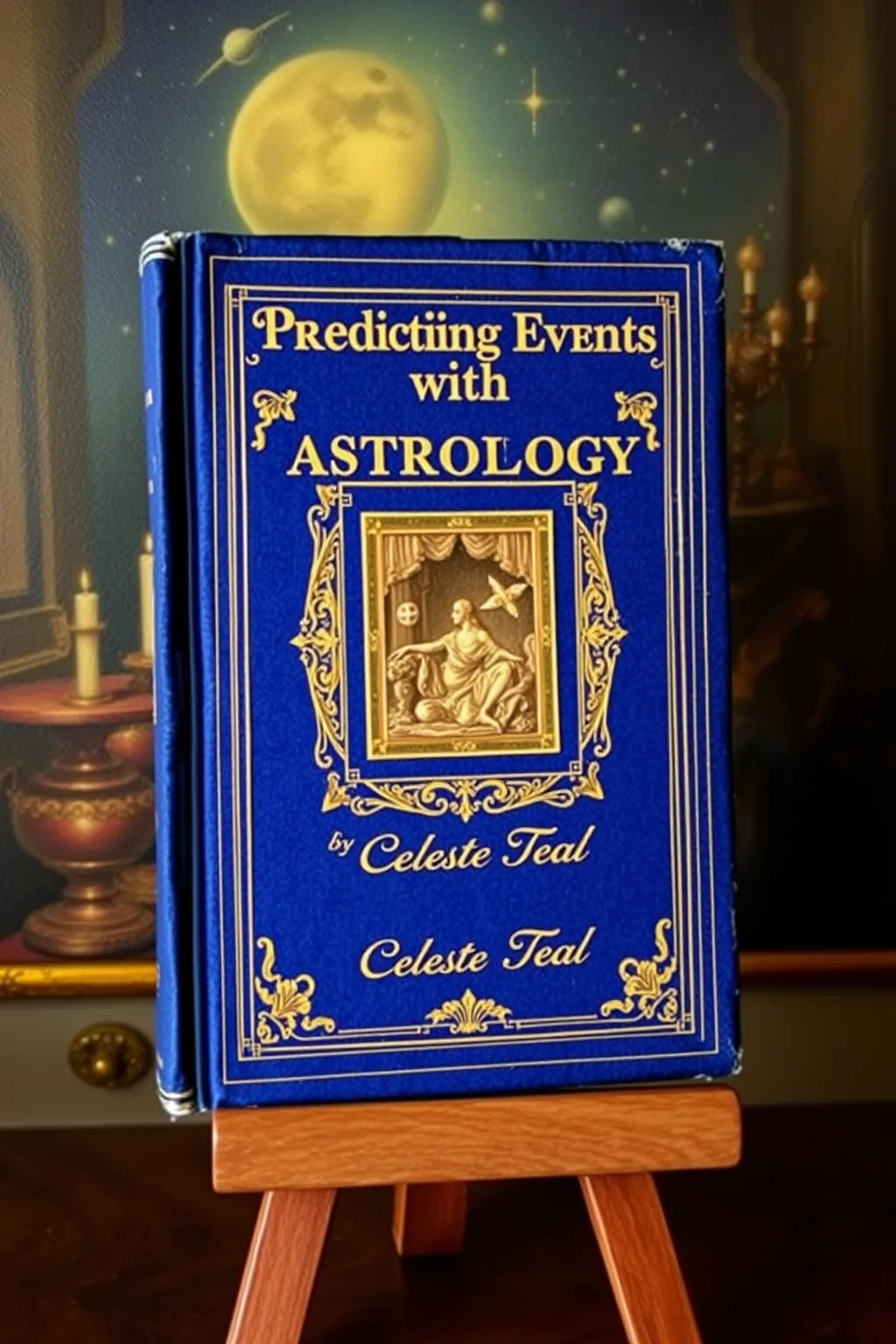
Celeste Teal's "Predicting Events with Astrology" offers a refreshingly direct approach to a subject often shrouded in vagueness. Teal avoids esoteric jargon where possible, focusing instead on the mechanics of forecasting. The strength of the revised edition lies in its clarity; the chapter on "Transits and Mundane Events" provides a particularly robust framework for understanding how daily planetary movements can correlate with significant world occurrences. However, the book's limitation is its occasional lack of depth on the philosophical underpinnings of why these correlations exist, leaning heavily on the 'how' rather than the 'why'. A concrete passage that illustrates this is Teal's explanation of "The Lunar Eclipse as a Predictive Factor," which, while technically sound, could benefit from a deeper dive into the symbolic resonance of eclipses beyond mere timing mechanisms.
Teal's work is a competent, if somewhat dry, manual for the aspiring predictive astrologer.
📝 Description
76
Celeste Teal's 2009 guide offers a methodical approach to astrological forecasting.
Celeste Teal's "Predicting Events with Astrology," first published in 2009, provides a systematic method for understanding astrological forecasting. The book breaks down predictive techniques into clear steps, making them accessible to both newcomers and experienced astrologers. It focuses on the practical application of astrological principles to anticipate trends and specific future occurrences. This revised and expanded edition aims to help readers move beyond natal chart interpretation to grasp the influence of time and celestial cycles. Teal's work is structured around core principles, offering a clear path for those who prefer a methodical study of astrology.
Teal's book draws on a long history of astrological prediction, tracing techniques from Babylonian, Hellenistic, and medieval traditions. It reconnects with a persistent human interest in understanding temporal patterns through symbolic systems, particularly in the context of renewed Western esotericism. The work integrates these historical foundations with modern observations of planetary cycles. It addresses the desire to anticipate future events using established astrological frameworks.
💡 Why Read This Book?
• Gain a structured methodology for interpreting transits and progressions, moving beyond basic natal chart analysis to understand future potentials. • Learn to identify specific predictive markers, such as the role of eclipses and planetary stations, enabling more precise event timing. • Understand how to apply astrological principles to mundane events, connecting celestial patterns to observable occurrences in the world.
⭐ Reader Reviews
Honest opinions from readers who have explored this book.
❓ Frequently Asked Questions
What is the primary focus of Celeste Teal's "Predicting Events with Astrology"?
The book's primary focus is on teaching practical astrological techniques for forecasting future events. It guides readers through interpreting transits, progressions, and other predictive factors to understand potential occurrences.
Is this book suitable for beginner astrologers?
Yes, the revised and expanded edition is designed for all levels, including beginners. It breaks down complex predictive methods into understandable steps, making it accessible to those new to astrological forecasting.
What specific astrological concepts does Teal cover for prediction?
Teal covers essential concepts like transits, progressions, and the significance of eclipses and planetary stations. The work details how to analyze these dynamic celestial movements in relation to a natal chart.
When was the original publication of "Predicting Events with Astrology"?
The original publication of Celeste Teal's "Predicting Events with Astrology" was in 2009. This edition is a revised and expanded version of that initial work.
Does the book discuss mundane astrology or personal prediction?
The book addresses both. It provides frameworks for understanding personal future potentials through chart interpretation and also touches upon correlating celestial patterns with broader mundane or world events.
What makes this edition different from the original?
This edition is described as revised and expanded, suggesting updated content, clearer explanations, and potentially a more in-depth exploration of the predictive techniques discussed in the 2009 original.
🔮 Key Themes & Symbolism
Transits and Progressions
The book meticulously details the interpretation of transits and progressions, two cornerstone techniques in astrological forecasting. Teal explains how the ongoing movement of planets (transits) and the symbolic advancement of natal planets (progressions) interact with an individual's birth chart. It emphasizes identifying patterns and potential energetic shifts indicated by these celestial motions, offering a structured method for understanding the unfolding of personal destiny and cyclical influences over time.
Timing of Events
A significant focus is placed on the precise timing of events. Teal elaborates on how specific astrological configurations, such as eclipses and the apparent stations (periods of apparent standstill) of planets, can serve as critical indicators for when certain potentials are likely to manifest. The work provides practical examples and methodologies for pinpointing opportune moments for action or anticipating periods of change based on these celestial markers.
Mundane Astrology
Beyond personal horoscopes, the book touches upon the principles of mundane astrology, exploring how astrological patterns can correlate with significant world events. Teal offers insights into analyzing broader celestial cycles and configurations to understand societal trends, political shifts, or collective phenomena. This aspect connects individual predictive astrology to a larger understanding of global temporal flows.
Applied Astrological Principles
The core of Teal's work lies in its applied nature. It moves beyond theoretical discussions to provide a practical toolkit for astrological prediction. The book is structured to empower readers to actively use astrological knowledge for forecasting, emphasizing a clear, systematic approach to chart interpretation for predictive purposes.
💬 Memorable Quotes
Direct passages from the work, attributed to the author.
“The analysis of transits is fundamental to understanding the unfolding of future events.”
— This statement underscores the central role of planetary movements relative to the birth chart in astrological prediction, highlighting it as a primary tool for forecasting.
“Eclipses often signal periods of significant culmination or initiation.”
— This points to the intensified energetic influence of solar and lunar eclipses, suggesting they act as potent catalysts for important life changes or the bringing of matters to a head.
“Progression techniques offer a slower, evolutionary perspective on life's journey.”
— This contrasts progressions with the more immediate nature of transits, framing them as indicators of long-term development and the gradual unfolding of the soul's purpose.
“Planetary stations mark periods where a planet's energy is particularly emphasized.”
— This highlights the importance of understanding the apparent slowing and reversal of planetary motion, indicating times when that planet's core themes become especially potent or decisive.
“Astrology provides a symbolic language for understanding temporal patterns.”
— This interpretation frames astrology not as deterministic fate, but as a symbolic system that offers meaning and insight into the cyclical nature of time and human experience.
🌙 Esoteric Significance
Tradition
Teal's work can be situated within the broader stream of Western esotericism, specifically drawing from practical astrological traditions that emphasize divination and forecasting. It aligns with a Hermetic impulse to understand the correspondences between the celestial and terrestrial realms, as famously encapsulated in the phrase 'As Above, So Below.' While not explicitly Kabbalistic or Gnostic, it utilizes the established symbolic language of planets and zodiacal signs, a common language across many esoteric lineages, to map potential future events.
Symbolism
Central symbols include the planets, each representing distinct archetypal energies and potentials, and the zodiacal signs, which color the expression of these planetary energies. The concept of 'eclipses' also carries significant symbolic weight, often representing points of intensified destiny or critical junctures where hidden matters are revealed or forcefully brought to light. Planetary 'stations' symbolize moments of profound emphasis or decision, where the planet's influence is particularly potent and directive.
Modern Relevance
Contemporary astrologers interested in predictive accuracy and event timing continue to draw upon Teal's methodical approach. Her work serves as a practical counterpoint to more psychologically or spiritually focused astrological discourse. Modern practitioners in fields ranging from electional astrology (choosing auspicious times) to mundane forecasting find value in her clear explanations of techniques that aim for tangible results and observable correlations between celestial phenomena and earthly happenings.
👥 Who Should Read This Book
• Aspiring predictive astrologers seeking a foundational text that clearly explains core forecasting techniques like transits and progressions. • Experienced astrologers looking to refine their event timing skills and gain a more systematic approach to analyzing future potentials. • Students of Western esotericism interested in the practical application of astrological symbolism for understanding temporal patterns and potential future occurrences.
📜 Historical Context
Celeste Teal's "Predicting Events with Astrology" emerged in 2009, a period marked by a resurgence of interest in Western esoteric traditions and practical occult applications. While astrology has ancient roots, dating back to Babylonian times and flourishing in Hellenistic and medieval Europe, its modern practice often diverges. Teal's work builds on these historical foundations, particularly the predictive techniques refined by astrologers like William Lilly in the 17th century. The book arrived in an era where digital resources democratized astrological knowledge, yet many practitioners sought more structured, less New Age-influenced guidance. Unlike the more philosophical or psychological approaches gaining traction, Teal's text offered a return to mechanics and observable correlations. Its reception has been largely positive among those seeking concrete forecasting methods, contrasting with schools of thought that prioritize evolutionary or archetypal interpretations without a strong emphasis on event timing.
📔 Journal Prompts
The interplay of natal placements and transiting planets.
Periods of planetary station and their energetic significance.
Interpreting the role of eclipses in personal and mundane events.
The evolutionary perspective offered by secondary progressions.
Applying predictive techniques to anticipate specific mundane cycles.
🗂️ Glossary
Transits
The current positions and movements of planets in the sky relative to the positions in an individual's natal chart. These are used to indicate current influences and potential events.
Progressions
Symbolic movements of natal planets and points forward in time, often using a one-day-equals-one-year ratio (Secondary Progressions), to represent psychological and life evolution.
Eclipses
Astronomical events where the Sun, Moon, and Earth align, causing solar or lunar eclipses. In astrology, they are considered potent indicators of significant events or turning points.
Planetary Stations
The points in a planet's orbit where it appears to slow down, stop, and reverse direction (retrograde) or slow down, stop, and resume forward motion (direct). These are seen as times of intensified planetary influence.
Natal Chart
A map of the heavens at the precise moment and location of a person's birth, serving as the foundation for astrological interpretation and prediction.
Mundane Astrology
A branch of astrology that deals with the forecasting of events related to nations, politics, economies, and collective human affairs, rather than individuals.
Electional Astrology
The practice of using astrology to choose the most auspicious time to begin an undertaking, such as a business venture, marriage, or important project.