Pluto
 71
71

Pluto
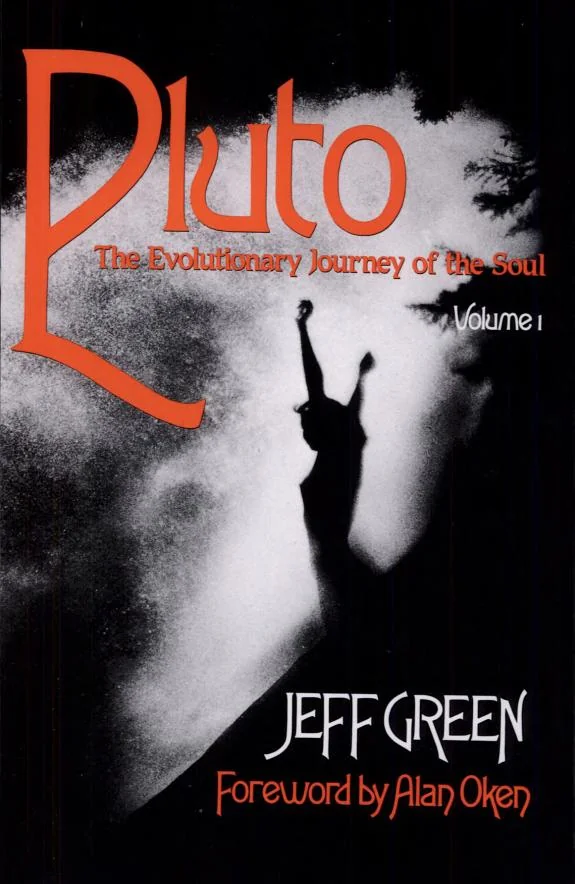
Jeff Green’s "Pluto" offers a rigorous, sign-by-sign and house-by-house examination of the dwarf planet’s astrological influence, a project that feels both deeply researched and intensely practical. Green, a full-time practicing astrologer, grounds his analysis in a wealth of example charts, eschewing airy speculation for grounded interpretation. The sheer volume of illustrative material is a significant strength, allowing readers to see Pluto’s archetypal energies manifest across diverse life circumstances. One limitation, however, is the book’s density; its exhaustive approach can sometimes feel overwhelming, demanding sustained attention from the reader. A particularly salient concept is the exploration of Pluto in the 7th house, which Green links to intense relationship dynamics and the potential for profound personal dissolution and subsequent reconstruction through partnership. This work serves as a substantial reference for those committed to understanding Pluto's intricate role in the astrological map.
📝 Description
71
Jeff Green's 1986 book offers a detailed astrological analysis of Pluto.
First published in 1986, Jeff Green's "Pluto" presents a thorough astrological examination of the planet. The work details Pluto's influence as it moves through the twelve zodiac signs and the twelve houses of a birth chart. Green, a professional astrologer, built this analysis on extensive research and empirical observation. He aimed to give readers a deep understanding of Pluto's archetypal and psychological effects on individual lives. The book includes a substantial collection of example charts to support its interpretations.
This text is for serious astrology students and practitioners interested in Pluto's transformative and symbolic meanings. It appeals to those seeking to grasp the evolutionary or karmic patterns in their lives, as shown by Pluto's position and expression. Astrologers aiming to improve their interpretive skills, especially regarding generational patterns and significant personal change, will find the detailed case studies and theoretical structure useful. The book focuses on Pluto's mechanics and chart interpretation, supported by dense empirical data and practical application.
Published in the mid-1980s, "Pluto" arrived during a growing interest in outer planet symbolism within psychological astrology. This period saw a rise in humanistic astrology, influenced by figures like Dane Rudhyar. While other astrologers examined similar themes, Jeff Green's work concentrated specifically on Pluto's astrological mechanics and chart interpretation. Its strength lies in its dense empirical data and practical application, distinguishing it from more mythological or purely psychological approaches.
💡 Why Read This Book?
• Gain a granular understanding of Pluto's specific manifestation in each of the twelve astrological houses, allowing for precise self-analysis of transformative life areas, a detail explored extensively in chapters dedicated to house placements. • Learn to interpret Pluto's influence through the zodiac signs, understanding how generational themes of power and rebirth are uniquely filtered through individual natal charts, a core subject of the book's sign analyses. • Appreciate the astrological significance of Pluto's discovery in 1930 and its subsequent integration into interpretive astrology, providing crucial historical context for understanding its modern esoteric meaning.
⭐ Reader Reviews
Honest opinions from readers who have explored this book.
❓ Frequently Asked Questions
What is the primary focus of Jeff Green's book 'Pluto'?
The book's primary focus is a detailed astrological analysis of Pluto's placement and transit through the signs and houses of the birth chart, based on extensive research and example charts.
When was Jeff Green's 'Pluto' first published?
Jeff Green's 'Pluto' was first published in 1986, positioning it within the developing field of psychological and evolutionary astrology during that era.
Who is Jeff Green, the author of 'Pluto'?
Jeff Green is described as a full-time practicing professional astrologer whose extensive research forms the foundation of this detailed astrological work on Pluto.
What kind of astrological approach does 'Pluto' by Jeff Green utilize?
The book utilizes a detailed, empirical approach, analyzing Pluto through signs and houses with numerous example charts and illustrations derived from the author's professional practice.
What are the key astrological concepts explored in relation to Pluto in this book?
Key concepts include Pluto's symbolism of transformation, power, death and rebirth, the unconscious, and its influence on generational trends and intense personal psychological dynamics.
Is 'Pluto' by Jeff Green suitable for beginner astrologers?
While comprehensive, the book's depth and reliance on extensive chart examples might be best suited for intermediate to advanced astrology students and practitioners seeking detailed insights.
🔮 Key Themes & Symbolism
Pluto Through the Signs
This section meticulously examines Pluto's passage through each of the twelve zodiac signs, from Aries to Pisces. Green interprets how Pluto's archetypal energies of power, transformation, and the underworld manifest differently depending on the sign it occupies. The book provides detailed descriptions of the psychological drives, potential crises, and evolutionary imperatives associated with each sign placement, offering readers a framework to understand generational influences and personal intensity related to Pluto's position in their own natal charts or those they study.
Pluto Through the Houses
The work offers an in-depth exploration of Pluto's placement within the twelve astrological houses. This analysis connects Pluto's themes of power, obsession, and profound change to specific areas of life experience, such as relationships (7th house), career (10th house), or personal identity (1st house). Green uses numerous example charts to illustrate how Pluto's intensity and transformative potential manifest in concrete situations, providing practical insights for understanding the subconscious drivers and evolutionary challenges associated with each house.
Psychological and Evolutionary Impact
Central to Green's analysis is Pluto's role as a catalyst for psychological integration and evolutionary growth. The book frames Pluto not merely as a destructive force but as an agent of necessary endings that pave the way for profound rebirth. It studies the unconscious mind, exploring how Pluto's influence can bring repressed issues to the surface, demanding confrontation and ultimately leading to a more authentic self, a process often initiated through crisis or intense personal experience.
Power Dynamics and Control
A significant theme is the exploration of power dynamics, control, and manipulation as signified by Pluto. The book examines how individuals with prominent Pluto placements might grapple with issues of authority, dominance, or victimhood. Green analyzes the spectrum of Pluto's expression, from overt displays of power to subtle subconscious maneuvering, offering insights into the complex interplay of control and surrender inherent in Pluto-ruled territories of the psyche and life experience.
💬 Memorable Quotes
Direct passages from the work, attributed to the author.
“The house placement of Pluto indicates the area of life where the individual will experience the most intense power struggles and transformative crises.”
— This interpretation points to the practical application of Pluto's astrological symbolism within the framework of the birth chart. It emphasizes that the house position directs Pluto's potent energy toward specific life domains, necessitating confrontation with deep-seated issues for personal growth.
“Generational trends in power and societal transformation are linked to Pluto's slow movement through the zodiac.”
— This concept underscores the outer planet's role in shaping collective consciousness and historical movements. Pluto's long transit times mean its influence affects entire generations, imprinting them with shared themes of control, revolution, and deep societal restructuring.
“Pluto's influence compels us to face our deepest fears and desires, leading to eventual empowerment.”
— This interpretation emphasizes the initiatory and ultimately empowering nature of Pluto's transit. It suggests that the intense experiences associated with Pluto, though frightening, serve to strip away illusions and reveal inner strength and authentic desires.
💡 Key Ideas
Editorial paraphrase of the work's core concepts — not direct quotes.
Pluto signifies the principle of death and rebirth, the dissolution of the old to make way for the new.
This paraphrased concept highlights Pluto's core astrological meaning as an agent of profound change. It suggests that experiences associated with Pluto, while potentially challenging or destructive, are ultimately necessary for renewal and evolutionary progress.
Understanding Pluto involves confronting the shadow self and integrating repressed psychological material.
This paraphrased idea connects Pluto to the psychological concept of the 'shadow'—the unconscious aspects of the personality. It suggests that working with Pluto's energy requires acknowledging and integrating darker, often feared, parts of oneself for wholeness.
🌙 Esoteric Significance
Tradition
This work firmly sits within the Hermetic and psychological astrology traditions, which seek to understand celestial movements not just as predictive tools but as symbolic maps of the psyche and the evolutionary journey of the soul. While not explicitly Kabbalistic or Gnostic, it draws on the Hermetic principle of 'As Above, So Below,' interpreting planetary positions as reflections of inner states and potentials for growth. It departs from purely classical astrology by focusing intensely on the psychological and evolutionary implications of Pluto, a planet discovered only in 1930, integrating modern discovery into an ancient symbolic language.
Symbolism
The primary symbol is Pluto itself, representing the underworld, the unconscious, death, rebirth, and the deep, often hidden, forces of transformation and power. The zodiac signs through which Pluto travels symbolize the archetypal energies or 'style' through which these Plutonian forces manifest, while the houses represent the specific life arenas where these intense dynamics are most likely to play out. The book also implicitly uses the symbolism of the underworld myths (e.g., Hades/Pluto) to convey themes of descent, confrontation with the hidden, and eventual emergence with newfound power or understanding.
Modern Relevance
Green's detailed analysis of Pluto continues to be highly relevant for contemporary astrologers and depth psychologists. Thinkers in evolutionary astrology, which focuses on the soul's journey and past-life influences, often reference works like this for understanding Pluto's role in karmic patterns and profound personal transformation. Practices focused on shadow work, power dynamics in relationships, and confronting existential crises frequently draw upon the archetypal interpretations of Pluto explored in this book.
👥 Who Should Read This Book
• Students of psychological astrology seeking a deep dive into the archetypal meanings and practical interpretation of Pluto, particularly those interested in transformation and power dynamics. • Professional astrologers looking for extensive case studies and detailed sign/house analyses to enhance their interpretative skills regarding outer planet influences. • Individuals undergoing significant life transitions or confronting deep personal challenges who wish to understand the astrological underpinnings of their transformative processes.
📜 Historical Context
Published in 1986, Jeff Green's "Pluto" emerged during a vibrant period for psychological and evolutionary astrology, a field significantly influenced by thinkers like Dane Rudhyar and the humanistic astrology movement that gained prominence in the late 1960s and 70s. This era saw a deeper exploration of outer planet symbolism beyond traditional predictive methods, focusing instead on archetypal meanings and psychological development. While astrologers like Liz Greene were simultaneously exploring mythological and psychological dimensions of the planets, Jeff Green’s work distinguished itself through a highly detailed, empirical approach, heavily reliant on case studies and a systematic analysis of Pluto’s effects through every sign and house. The book contributed to the growing body of astrological literature that sought to integrate astrological principles with modern psychological understanding, offering a rigorous framework for interpreting Pluto's profound, often challenging, influence on the individual and collective psyche.
📔 Journal Prompts
Pluto's position in your natal chart: identify the house and sign and reflect on its core themes of power and transformation.
The concept of the 'underworld' as explored through Pluto: how does it relate to your own experiences of confronting hidden fears or desires?
Pluto's manifestation in the 7th house: consider the dynamics of power and dissolution within your significant relationships.
Generational Pluto themes: how do the societal shifts associated with Pluto's transit in your birth decade resonate with your personal experience?
The cycle of death and rebirth symbolized by Pluto: reflect on a significant ending in your life and the subsequent emergence of something new.
🗂️ Glossary
Pluto
In astrology, the dwarf planet Pluto is associated with transformation, death and rebirth, power, control, obsession, the unconscious, and the underworld. Its slow orbit means it influences entire generations.
Zodiac Signs
The twelve divisions of the ecliptic, each associated with a specific archetypal energy or quality (e.g., Aries, Taurus, Gemini). Pluto's sign placement colors the expression of its transformative energies.
Astrological Houses
The twelve divisions of the celestial sphere based on the local horizon and meridian. Each house represents a different area of life experience, and Pluto's house placement indicates where its intense dynamics are most likely to manifest.
Natal Chart
A map of the heavens at the exact moment of a person's birth, showing the positions of planets and their relationships to each other. It is used for astrological interpretation of personality and life path.
Transit
The ongoing movement of planets through the zodiac. Astrologers interpret transits by comparing the current positions of planets to those in a natal chart, signifying periods of psychological and life events.
Archetype
A universal, archaic symbol or motif that recurs in the literature, art, and mythology of many cultures, representing fundamental human experiences or patterns of behavior. Pluto is seen as a powerful astrological archetype.
Shadow Self
In psychology, the unconscious aspects of the personality that the conscious ego does not identify in itself. Pluto's astrology often relates to confronting and integrating these hidden parts of the psyche.
This book appears in 1 collection
🔮 Readers Also Liked
Browse all →








From the “Astrology” Collection
View all →









More Free Astrology & Cosmology Books
View all →



![The celestial science of astrology vindicated, from the calumny of those who are biggotted [sic] against what they do not understand, by R. Phillips. 1785](/img/thumb/the-celestial-science-of-astrology-vindicated-from-the-calumny-of-those-who-are-biggotted-sic-against-what-they-do-not-understand-by-r-phillips-1785-phillips-r-astrologer.webp)