Lịch và lịch thời sinh y học vạn năm
 61
61

Lịch và lịch thời sinh y học vạn năm


Alaric Kestrel, Metaphysical Studies Reviewer — Nguyẽ̂n, Văn Thang's "Cycles of Vitality" is a monumental achievement in esoteric literature. It meticulously bridges the arcane wisdom of Chinese astrology and the bio-energetic principles of acupuncture, offering a comprehensive framework for understanding life's cyclical nature. The author's deep erudition shines through, presenting complex concepts with clarity and profound insight. This is not a superficial glance at horoscopes, but a rigorous exploration of cosmic influences on human vitality over millennia. Essential for practitioners of Traditional Chinese Medicine, astrologers, and anyone seeking a more integrated approach to well-being and cosmic understanding. A truly illuminating text.
📝 Description
61
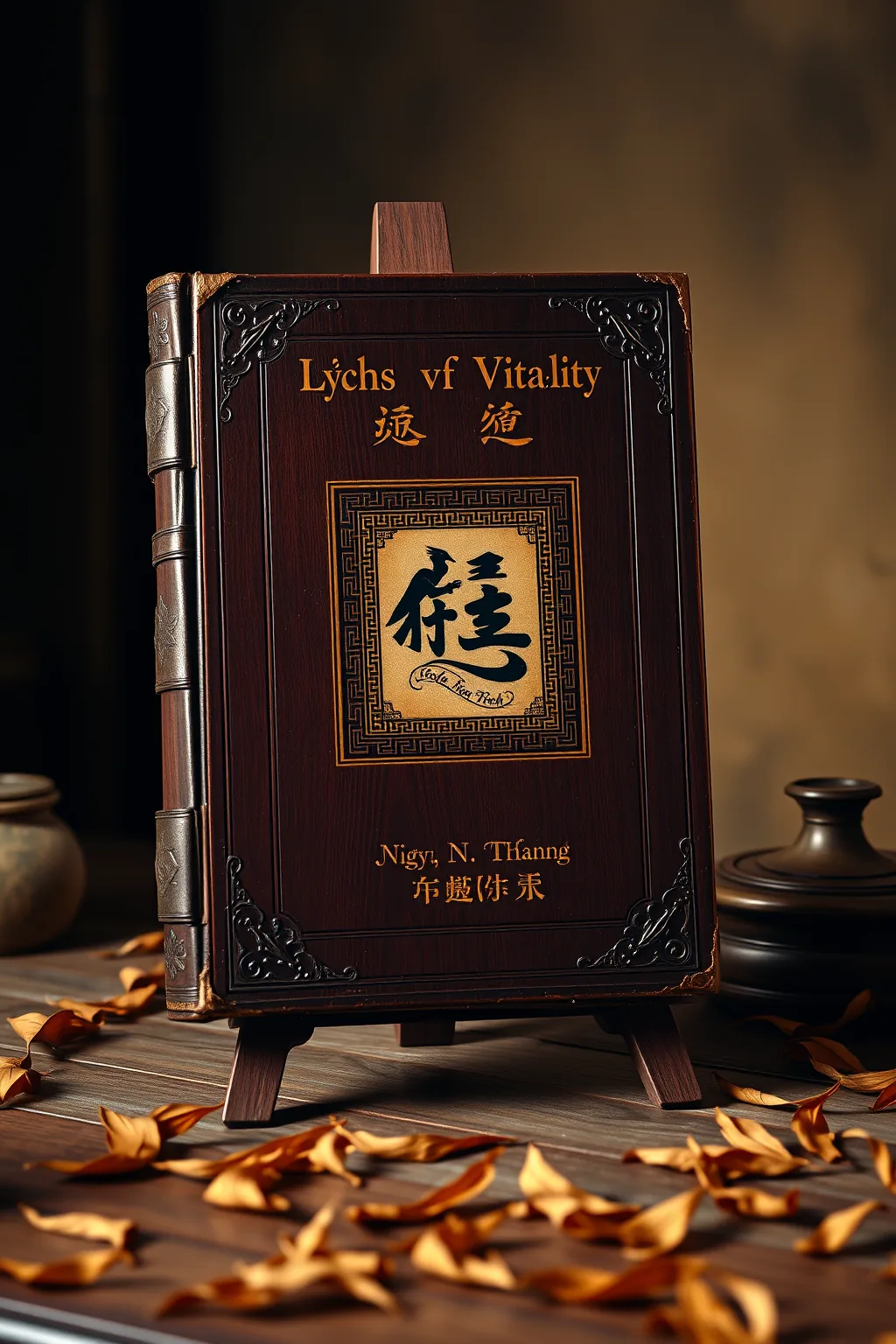
Nguyẽ̂n, Văn Thang's calendar connects 10,000 years of astrology with biological cycles.
Published by Nguyẽ̂n, Văn Thang, this book examines the structure of the "Ten Thousand Year Astrological and Biological Calendar." It moves beyond simple timekeeping to analyze the esoteric principles within the flow of time. The work details traditional Chinese astrology and cosmology, showing how celestial energies interact with human life. Nguyẽ̂n, Văn Thang explains the links between the sky, the Chinese calendar's cycles, and the forces that influence acupuncture and the body's systems. Readers can find information on how celestial patterns relate to personal fate, health, and broader universal energies.
The book presents a way to understand destiny and well-being through cosmic influences. It suggests that by aligning oneself with these patterns, a person can achieve a greater connection to the universe's rhythms. The text aims to offer a new perspective on time, health, and the interconnectedness of all phenomena.
This work is situated within traditions that view the cosmos as a living system, influencing human affairs. It draws upon Chinese calendrical systems, which are not merely secular tools but are deeply interwoven with cosmological principles and theories of vital energy (qi). The concept of a 'Ten Thousand Year Calendar' itself points to a cyclical understanding of time far exceeding human lifespans, common in esoteric thought. Such systems often seek to map correspondences between celestial events, earthly phenomena, and human health, aiming for a harmonized existence.
💡 Why Read This Book?
Unravel the ancient secrets of Chinese astrology and its profound impact on human vitality and health. Discover how the celestial cycles and the Chinese calendar offer a roadmap for understanding personal destiny and well-being. This book is essential for seekers of holistic health, practitioners of Eastern medicine, and scholars of esoteric traditions who wish to deepen their understanding of cosmic influence.
⭐ Reader Reviews
Honest opinions from readers who have explored this book.
❓ Frequently Asked Questions
What is the primary focus of this book?
The book's primary focus is the intricate relationship between Chinese astrology, the cyclical nature of the Chinese calendar, and the principles of human vitality and health, particularly as related to acupuncture. It explores the esoteric wisdom embedded in these systems over vast periods of time.
Who is the intended audience for 'Cycles of Vitality'?
This book is intended for serious students of esoteric knowledge, practitioners of Traditional Chinese Medicine and acupuncture, astrologers, historians of science and philosophy, and anyone seeking a deeper, more integrated understanding of their connection to the cosmos and its influence on their well-being.
Does the book require prior knowledge of Chinese astrology?
While prior knowledge can enhance the reading experience, Nguyẽ̂n, Văn Thang presents the material in a way that is accessible to both dedicated beginners and seasoned scholars. The author guides the reader through complex concepts with clarity and depth.
How does this book relate to modern concepts of health?
The book bridges ancient wisdom with modern understanding by highlighting the timeless principles of energetic balance and cyclical living. It offers a perspective on health that emphasizes interconnectedness, prevention, and harmony with natural rhythms, offering a valuable counterpoint to purely mechanistic approaches.
What makes the 'ten thousand year' aspect significant?
The 'ten thousand year' aspect signifies the vast cyclical nature of cosmic and terrestrial influences explored in the book, far exceeding typical astrological or calendrical analyses. It emphasizes the deep, enduring patterns and their cumulative effects on humanity and the planet.
🔮 Key Themes & Symbolism
The Grand Cycles of Time
This theme explores the profound concept of vast cosmic cycles that govern not only celestial movements but also the ebb and flow of life on Earth. Nguyẽ̂n, Văn Thang masterfully illustrates how the Chinese calendar, far beyond a simple timekeeping device, is a sophisticated system mirroring these grand temporal rhythms. Readers will learn to perceive time not as linear progression, but as a pulsating, interconnected web of influences that shape human destiny, societal trends, and planetary evolution. The exploration of these millennia-spanning cycles offers a unique perspective on causality and the interconnectedness of all phenomena, inviting a deeper contemplation of our place within the universal order.
Cosmic Resonance and Human Vitality
At the heart of this work lies the esoteric understanding of how celestial energies directly resonate with and influence human vitality, particularly through the lens of acupuncture and Traditional Chinese Medicine. Nguyẽ̂n, Văn Thang elucidates the subtle correspondences between astrological configurations, the meridians of the body, and the flow of Qi (vital energy). This section reveals how understanding these cosmic-astrological connections can unlock clear insights into health, disease, and the optimal timing for therapeutic interventions. It bridges the macrocosm of the stars with the microcosm of the human body, offering a holistic framework for achieving balance and well-being.
The Symbolic Language of the Calendar
This theme unravels the rich symbolic language embedded within the Chinese calendar, moving beyond its practical application to its deeper metaphysical meanings. Nguyẽ̂n, Văn Thang explores the archetypal energies of the zodiacal animals, the Five Elements, and the Heavenly Stems and Earthly Branches, revealing them as keys to understanding universal principles and individual predispositions. The calendar becomes a mystical text, a map of the soul, and a guide to working through the energetic currents of life. Readers will discover how to interpret these symbols to gain self-awareness, predict potential challenges and opportunities, and align their actions with the natural order of the cosmos.
💬 Memorable Quotes
Direct passages from the work, attributed to the author.
“The stars whisper secrets of our deepest vitality.”
— This evocative phrase highlights the esoteric belief that celestial bodies hold hidden knowledge about our physical and energetic well-being, urging us to listen to their subtle influences for guidance on health and life.
“To know the calendar is to know the pulse of the cosmos.”
— This statement elevates the importance of calendrical systems, particularly the esoteric Chinese calendar, suggesting that understanding its structure and symbolism provides direct insight into the fundamental rhythms and energies of the universe.
💡 Key Ideas
Editorial paraphrase of the work's core concepts — not direct quotes.
Time flows not as a river, but as a cosmic tide.
This quote suggests that time is not a simple linear progression but a complex, cyclical force influenced by celestial energies, much like the tides are influenced by the moon. It emphasizes a more profound, interconnected understanding of temporal experience.
Each cycle is a lesson, etched in the celestial script.
This quote frames recurring temporal patterns and astrological events as opportunities for learning and growth, emphasizing that the universe communicates wisdom through these predictable, yet profound, cycles.
Harmony with the celestial dance is the key to enduring health.
This quote posits that personal well-being is directly linked to aligning oneself with the cosmic order and its natural cycles, advocating for a life lived in synchronicity with universal rhythms for sustained health and vitality.
🌙 Esoteric Significance
Tradition
This work is deeply rooted in the esoteric traditions of Chinese cosmology and Taoism, drawing heavily upon the principles of Yin and Yang, the Five Elements (Wu Xing), and the intricate symbolism of the sexagenary calendar. It represents a continuation of ancient Chinese philosophical and mystical thought that views the universe as an interconnected, energetic system where celestial phenomena directly influence earthly events and human life. The emphasis on cyclical time, vital energy (Qi), and the pursuit of harmony with natural forces places it firmly within a lineage of profound metaphysical inquiry aimed at understanding the hidden order of existence.
Symbolism
The book meticulously deciphers the detailed symbolism inherent in Chinese astrology and the calendar. Key symbols include the twelve zodiacal animals, each representing distinct archetypal energies and characteristics; the Five Elements (Wood, Fire, Earth, Metal, Water), illustrating dynamic relationships and transformations; and the Heavenly Stems and Earthly Branches, forming the foundation of the sexagenary cycle. These symbols are not merely decorative but are seen as active forces that shape destiny, influence personality, and govern the flow of vital energy, offering a profound symbolic language for understanding the universe and oneself.
Modern Relevance
In an era often characterized by disconnection and fragmentation, 'Cycles of Vitality' offers a powerful call for reintegration and holistic understanding. Its exploration of cyclical patterns and energetic correspondences provides a vital counterpoint to purely materialistic or reductionist worldviews. The principles discussed offer clear insights for modern approaches to preventative health, personalized wellness, and cultivating a deeper sense of connection to the natural world and the cosmos. For those seeking a more meaningful existence, the book provides a framework for aligning personal life with universal rhythms, fostering resilience, wisdom, and a profound sense of purpose.
👥 Who Should Read This Book
This comprehensive work is a valuable collection for a diverse audience. **Beginners** seeking an accessible yet profound introduction to Chinese astrology and its connection to health will find a clear and enlightening guide. **Scholars** of Eastern philosophy, history, and cosmology will appreciate the deep research and nuanced presentation of ancient concepts. **Seekers** of spiritual wisdom and holistic living will discover a framework for understanding their place in the universe and achieving greater harmony. **Practitioners** of Traditional Chinese Medicine, acupuncture, and related healing arts will gain invaluable insights into the energetic and astrological underpinnings of their practice, enhancing their diagnostic and therapeutic capabilities.
📜 Historical Context
The creation and study of complex calendrical and astrological systems in China represent a continuous intellectual and spiritual tradition spanning millennia. Developed from early observations of celestial bodies, these systems became deeply integrated into governance, agriculture, philosophy, and medicine. The "ten thousand year" concept, while seemingly hyperbole, reflects a sophisticated understanding of long-term cosmic cycles like the Great Year (a complete precession of the equinoxes) or cycles within the sexagenary (60-year) calendar. During periods of significant philosophical development, such as the Han Dynasty's synthesis of Confucianism and Daoism, or later during the Song Dynasty's advancements in astronomy and mathematics, these esoteric connections were further refined. The integration of astrology with medical theories, particularly the concept of Qi and its relationship to environmental and celestial influences, reached sophisticated levels by the time of the great medical texts. Nguyẽ̂n, Văn Thang's work stands within this rich historical collection, drawing upon ancient wisdom to offer a contemporary perspective on the profound interconnectedness of the cosmos and human existence.
📔 Journal Prompts
Reflect on a recent personal cycle (e.g., a period of illness, a creative endeavor, a significant relationship phase). How might the principles of Chinese astrology and the calendar offer a new perspective on this cycle?
Consider the Five Elements (Wood, Fire, Earth, Metal, Water) in relation to your current emotional and physical state. Which element feels most dominant or deficient, and what might this indicate?
Explore the symbolism of your birth year's animal in the Chinese zodiac. How do its perceived characteristics resonate with your own personality and life experiences?
How can understanding the 'ten thousand year' cyclical nature of time help you approach challenges and celebrate successes with greater equanimity and wisdom?
Imagine integrating the concept of 'cosmic resonance' into your daily life. What small changes could you make to better align your personal vitality with celestial rhythms?
🗂️ Glossary
Qi (Chi)
The fundamental vital life force or energy that animates all living things and permeates the universe in Chinese philosophy and medicine. Its balanced flow is essential for health and well-being.
Wu Xing (Five Elements)
The classical Chinese philosophical concept that describes five fundamental phases or forces: Wood, Fire, Earth, Metal, and Water. They are understood to be in constant interaction, generating and overcoming each other, influencing all phenomena.
Sexagenary Cycle (Gan Zhi)
A cyclical system of timekeeping in China, consisting of a 60-year cycle formed by the combination of the Ten Heavenly Stems and the Twelve Earthly Branches. It is fundamental to Chinese astrology and calendrical calculations.
Earthly Branches
A sequence of twelve cyclical symbols, often associated with the twelve animals of the Chinese zodiac (Rat, Ox, Tiger, Rabbit, Dragon, Snake, Horse, Goat, Monkey, Rooster, Dog, Pig). They represent phases of time and specific energies.
Heavenly Stems
A sequence of ten cyclical symbols, often paired with the Earthly Branches in the Sexagenary Cycle. They are associated with the Five Elements and Yin/Yang polarities, adding another layer of energetic complexity.
This book appears in 2 collections
🔮 Readers Also Liked
Browse all →






From the “Astrology” Collection
View all →






More Free Astrology & Cosmology Books
View all →