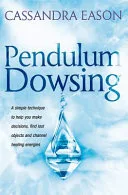
Pendulum Dowsing
 78
78

Pendulum Dowsing
Cassandra Eason's "Pendulum Dowsing" offers a refreshingly direct approach to a practice often obscured by mysticism. The book excels in its clarity, particularly in the early chapters detailing the mechanics of holding the pendulum and formulating effective questions. Eason avoids overly ornate language, focusing on actionable advice. For instance, her explanation of how to 'clear' a pendulum between uses, ensuring unbiased readings, is practical and grounded. A limitation, however, is that the historical context, while present, could be more deeply explored; the book primarily focuses on the 'how-to' rather than the extensive lineage of dowsing across cultures. Despite this, the chapter on 'Interpreting the Swings' provides a solid interpretive framework, making it a reliable guide for newcomers. It serves as a capable manual for initiating oneself into the art.
📝 Description
78
Cassandra Eason's 2000 book explains pendulum dowsing as a method for accessing subconscious knowledge.
Pendulum dowsing uses a suspended weight on a string to gain information. The pendulum translates subtle energies or subconscious knowledge into observable movements. This practice is useful for finding hidden objects, water sources, and for divination.
Cassandra Eason's work covers the basic principles and practical uses of this focused, intuitive method. The book is for anyone curious about dowsing, from beginners to those wanting to improve their skills. It is also for people interested in esoteric knowledge, energy work, or developing their intuition. Students of radiesthesia, psychometry, and other divination forms will find useful material.
Key concepts include subtle energy, subconscious connection, and symbolic interpretation. The pendulum amplifies the user's inner knowing. Eason details how to calibrate the pendulum, ask clear questions, and understand the meanings of its movements.
Dowsing, or radiesthesia, has roots going back centuries, notably for finding water and minerals. Its use in esoteric circles grew in the late 19th and early 20th centuries, influenced by figures like Helena Blavatsky. Eason's book connects this historical practice to modern understanding, making it accessible. It treats the pendulum as a tool for amplifying the user's own inner knowing, rather than a source of external power.
💡 Why Read This Book?
• Learn the fundamental techniques for using a pendulum, including proper holding and question formulation, as detailed in Eason's practical guidance on radiesthesia. • Understand how to interpret pendulum movements by recognizing distinct swings and oscillations, a core skill for accurate readings as outlined in the 'Interpreting the Swings' section. • Gain insight into the historical use of dowsing, connecting to practices that date back to at least the 17th century for locating resources.
⭐ Reader Reviews
Honest opinions from readers who have explored this book.
❓ Frequently Asked Questions
What is the origin of pendulum dowsing?
Pendulum dowsing, also known as radiesthesia, has historical roots tracing back to at least 17th-century Germany, primarily for locating underground water and mineral deposits.
Can anyone learn to use a pendulum for dowsing?
Yes, Cassandra Eason's book suggests that anyone can learn pendulum dowsing by understanding the principles of subtle energy and practicing clear question formulation and interpretation of pendulum movements.
What is the role of the pendulum in dowsing?
The pendulum acts as a transducer, translating subconscious knowledge or subtle energies into observable movements, helping the user access information beyond conscious awareness.
How does one prepare a pendulum for use?
Preparation involves holding the pendulum correctly and, as Eason suggests, 'clearing' it between uses to ensure unbiased readings and a clear connection to the user's intention.
What types of questions can be asked using a pendulum?
Pendulum dowsing can be used for a wide range of questions, from practical matters like locating lost items to more introspective queries about personal direction or energy assessment.
Is pendulum dowsing a form of divination?
While often used for divination, pendulum dowsing is also considered a tool for accessing subconscious information and understanding energetic fields, as explored in esoteric literature.
🔮 Key Themes & Symbolism
Subtle Energy Transduction
The core of pendulum dowsing lies in its ability to act as a conduit for subtle energies. The pendulum, whether a crystal pendant or a simple weight on a cord, is believed to amplify or indicate shifts in these unseen forces. Eason explains how the user's own bioenergetic field interacts with the pendulum, creating observable motion. This concept bridges the gap between the physical tool and the energetic or subconscious information being sought, making it a practice rooted in sensing rather than just logic.
Intuitive Questioning
Effective dowsing hinges on the clarity and precision of the questions posed. The book emphasizes formulating questions that elicit a direct yes/no or directional response, avoiding ambiguity. This process trains the user to refine their focus and intent, which in turn enhances the accuracy of the pendulum's feedback. It’s not just about asking; it’s about asking the *right* question, a skill applicable to many areas of life beyond dowsing.
Symbolic Movement Interpretation
The language of the pendulum is expressed through its movements: swings in different directions, circles, or oscillations. Cassandra Eason provides guidance on understanding these symbolic gestures. Each type of movement is interpreted as a specific answer or indication, forming a code that the dowser learns to read. This symbolic system allows for a nuanced communication with the subconscious or external energetic influences.
Practical Application
Beyond theoretical understanding, "Pendulum Dowsing" offers practical applications. The book details how to use the pendulum for locating lost objects, finding water sources (a traditional use), or even for personal assessment of energy fields. This hands-on approach makes the esoteric practice accessible and useful for everyday concerns, demonstrating its utility as more than just a spiritual tool.
💬 Memorable Quotes
Direct passages from the work, attributed to the author.
“The pendulum is a tool that translates subtle energies or subconscious knowledge into observable movements.”
— This highlights the pendulum's function not as an independent oracle, but as an instrument that makes internal or imperceptible information manifest through physical motion.
“Formulate questions with precision to ensure clear responses.”
— This underscores the importance of focused intent and clear communication when working with the pendulum, suggesting that ambiguity in questioning leads to ambiguous results.
“Observe the direction and type of swing for interpretation.”
— This points to the symbolic language of dowsing, where different pendulum movements (e.g., forward-back, side-to-side, circular) correspond to specific answers or meanings.
“Clearing the pendulum between uses is vital for unbiased readings.”
— This emphasizes the need for maintaining energetic neutrality and preventing residual energies from influencing subsequent dowsing sessions, ensuring personal integrity in the practice.
“Dowsing can be used to locate hidden objects or resources.”
— This highlights a practical, real-world application of pendulum dowsing, moving beyond abstract divination to tangible results.
🌙 Esoteric Significance
Tradition
Pendulum dowsing, as presented by Eason, aligns with the broader tradition of psychometry and radiesthesia, which are often situated within Western esotericism. It draws on the Hermetic principle of 'As Above, So Below,' suggesting a connection between the macrocosm and microcosm, and the idea that all things are interconnected through subtle energies. While not strictly Kabbalistic or Gnostic, it shares the Gnostic pursuit of hidden knowledge and the Hermetic emphasis on understanding the energetic underpinnings of reality.
Symbolism
The primary symbol is the pendulum itself – a suspended weight representing a focused point of inquiry, acting as an antenna for subtle energies. The movements of the pendulum (swings, circles) are symbolic language, translating the unseen into visual cues. The string or chain can symbolize the connection between the conscious mind and the subconscious, or between the user and the object of inquiry. Different materials used for pendulums (e.g., quartz, metal) can also carry symbolic associations within esoteric traditions.
Modern Relevance
Modern practitioners of energy healing, geomancy, and even some branches of psychology that explore intuition draw upon the principles of pendulum dowsing. Contemporary thinkers in consciousness studies and those exploring bioenergetic fields often reference or utilize dowsing techniques. The work remains relevant for individuals seeking practical methods to enhance intuition, assess energetic imbalances, or simply connect with a more subtle layer of reality in their daily lives.
👥 Who Should Read This Book
• Aspiring dowsers seeking a clear, practical introduction to pendulum use, including how to select, prepare, and interpret pendulum movements. • Practitioners of alternative therapies interested in learning a tool for assessing energetic fields or locating subtle imbalances in themselves or others. • Individuals curious about developing their intuition and subconscious connection, looking for a structured method to access inner guidance beyond logical reasoning.
📜 Historical Context
Published in 2000, Cassandra Eason's "Pendulum Dowsing" arrived at a time when interest in esoteric practices was steadily growing, fueled by the internet and a resurgence of interest in alternative spirituality. Dowsing itself, or radiesthesia, has a lineage stretching back centuries, with significant development and popularization in 19th-century Europe. Figures like Abbé Mermet were key in documenting and teaching dowsing techniques during the early 20th century. Eason's work builds upon this foundation, presenting the practice in a clear, accessible manner for a contemporary audience. While competing schools of thought in divination existed, such as Tarot or astrology, dowsing offered a more direct, tool-based approach to seeking information. The reception of dowsing has often been divided, with skepticism from the scientific community contrasting with its acceptance within various esoteric and New Age circles.
📔 Journal Prompts
Reflect on the pendulum's role as an amplifier of subconscious knowledge.
Consider the precision required for formulating effective dowsing questions.
Explore the symbolic meaning of different pendulum swing directions.
Document a dowsing session, noting the question asked and the pendulum's response.
Examine the concept of energetic neutrality when using a pendulum.
🗂️ Glossary
Dowsing
The practice of using a pendulum or similar instrument to detect hidden information, such as water, minerals, or answers to questions.
Radiesthesia
A term often used interchangeably with dowsing, referring to the detection of subtle energies or vibrations through an instrument like a pendulum.
Pendulum
A weight suspended on a string or chain, used as a tool to respond to subtle energies or subconscious cues by moving.
Subtle Energy
Unseen or imperceptible energies believed to permeate the universe, often associated with consciousness, life force, or electromagnetic fields.
Transducer
A device that converts energy from one form to another; in dowsing, the pendulum converts subtle energy or subconscious information into physical motion.
Intuition
The ability to understand something immediately, without the need for conscious reasoning; often seen as a connection to subconscious knowledge.
Bi-stable Pendulum
A pendulum that tends to swing in one of two primary directions (e.g., forward-back or side-to-side), often used for yes/no answers.