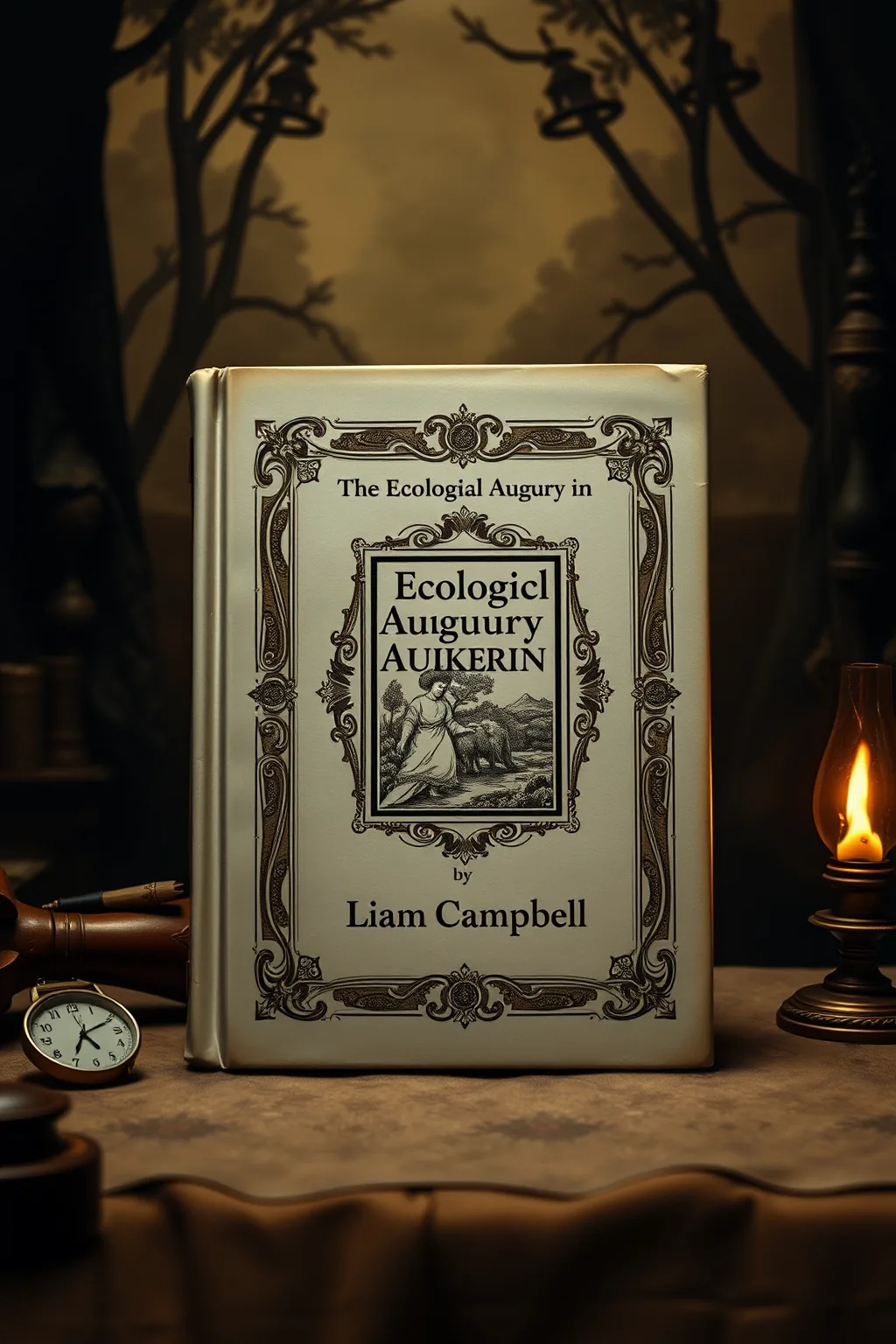
The ecological augury in the works of JRR Tolkien
 62
62

The ecological augury in the works of JRR Tolkien



Celeste Moreau, Divination & Symbolism Reviewer: Liam Campbell's 'The Ecological Augury' is a revelation for those who perceive the subtle currents of nature's wisdom. Campbell masterfully deciphers the ecological symbolism in Tolkien's oeuvre, presenting a compelling case for nature as a divinatory force within Middle-earth. The book resonates with an almost shamanistic understanding of the land, revealing how forests, mountains, and rivers act as conduits of fate and prophecy. Its strength lies in its ability to bridge literary criticism with esoteric interpretation, offering profound insights for scholars, fantasy enthusiasts, and practitioners of nature-based spirituality alike. This is essential reading for anyone seeking to understand the deeper, animistic heart of Tolkien's enduring mythology.
📝 Description
62
Liam Campbell's 2023 book examines the ecological augury in J.R.R. Tolkien's writings.
This study analyzes how ecological elements function as omens and active forces within J.R.R. Tolkien's mythology. Campbell argues that Tolkien imbues the natural world of Middle-earth with a sentience that directly influences events and characters. The book details specific examples, such as the prophetic whispers of ancient trees and the lore carried by rivers, demonstrating a deep animistic current that underpins the narrative.
It posits that Tolkien's depiction of nature goes beyond mere setting, presenting it as a sentient entity that shapes destiny. The work aims to illuminate the philosophical weight of ecological awareness in fantasy literature, encouraging readers to perceive a spiritual connection in all living things. Campbell invites a reconsideration of Middle-earth through the lens of its primal spirit, appealing to those interested in myth and hidden symbolism.
This work engages with the esoteric tradition of animism, which perceives spirit or consciousness in all natural phenomena. It aligns with currents in environmental philosophy that see nature not as a passive resource but as an active, communicative presence. The book finds parallels between Tolkien's fictional world and ancient belief systems where natural elements served as divine or spiritual messengers, suggesting a connection to hermetic or pantheistic interpretations of the cosmos.
💡 Why Read This Book?
Uncover the secret ecological prophecies embedded within Tolkien's legendary tales. This book offers a mystical interpretation of Middle-earth, revealing nature as a sentient force guiding destinies. Ideal for seekers of hidden knowledge, literary scholars, and practitioners of ecocriticism who wish to connect with the primal wisdom of the natural world through a beloved fantasy epic.
⭐ Reader Reviews
Honest opinions from readers who have explored this book.
❓ Frequently Asked Questions
What is 'ecological augury' in the context of Tolkien's work?
It refers to the interpretation of signs and omens derived from the natural world within Tolkien's writings, suggesting that the environment itself possesses a predictive or divinatory quality regarding events and destinies in Middle-earth.
Does this book focus on real-world divination techniques?
While it draws parallels to esoteric traditions of nature observation and interpretation, the primary focus is on analyzing the symbolic and thematic use of ecological elements as divinatory forces within Tolkien's fictional universe.
Is this book suitable for readers unfamiliar with Tolkien?
While familiarity with Tolkien's major works enhances the experience, the book provides sufficient context for readers to appreciate the ecological themes and interpretations presented, making it accessible to a broader audience interested in ecocriticism and mythology.
What kind of 'hidden knowledge' does the book reveal?
It unveils the author's perspective on the profound, often overlooked, connection between the natural world and the spiritual or fated trajectory of characters and realms within Middle-earth, suggesting a deeper, animistic consciousness at play.
Can this book be considered a work of ecocriticism?
Yes, it is a significant contribution to ecocriticism, but it transcends typical academic analysis by infusing literary study with esoteric and metaphysical interpretations, exploring the 'spiritual ecology' of Tolkien's creation.
🔮 Key Themes & Symbolism
Nature as Sentient Oracle
This theme explores the profound notion that the natural world in Tolkien's legendarium is not merely a passive setting but an active, sentient entity capable of communicating wisdom and foretelling events. From the ancient whispers of Fangorn Forest to the ominous murmurs of the Misty Mountains, the land itself acts as a silent oracle, its moods and movements imbued with prophetic significance. Campbell posits that understanding the subtle language of flora, fauna, and geological formations is akin to reading the signs of the cosmos, a practice deeply rooted in ancient divinatory traditions. This perspective shifts the reader’s perception from a merely descriptive ecology to a dynamic, spiritual one, where the health and disposition of the land directly mirror the fate of its inhabitants.
The Spirit of Place and Destiny
Campbell looks at the concept of the 'genius loci' – the spirit of place – as a crucial element in Tolkien's creation. Each significant location in Middle-earth possesses a unique spiritual essence that influences and is influenced by the events unfolding within it. This is not merely about atmosphere; it's about the inherent power and ancient consciousness residing in sacred groves, ancient ruins, and flowing rivers. The book argues that these places act as anchors for destiny, their very existence and vitality intrinsically linked to the overarching narrative of good versus evil. By attuning to the spirit of these places, characters (and readers) can gain insight into the unfolding patterns of fate and the moral underpinnings of their world.
Ecocritical Prophecy and Moral Imperative
This theme examines how Tolkien's depiction of ecological harmony and disharmony serves as a form of prophecy, warning against the destructive consequences of unchecked industrialization and a disconnect from nature. The flourishing of vibrant, ancient forests symbolizes spiritual health and resilience, while the blighted, corrupted lands reflect moral decay and the corrupting influence of dark powers. Campbell draws parallels to historical and contemporary environmental concerns, suggesting that Tolkien's narrative functions as an allegorical augury, urging readers to recognize the intrinsic value of the natural world and the profound moral imperative to protect it. The ecological balance in Middle-earth is presented as a mirror to our own world, a powerful, enduring lesson.
💬 Memorable Quotes
Direct passages from the work, attributed to the author.
“The rivers flow with the secrets of ages.”
— This suggests that natural waterways are repositories of deep, historical knowledge and elemental truths, accessible to those who listen with reverence and an open heart.
“Earth's breath is the pulse of fate.”
— This evocative phrase links the very respiration of the planet to the unfolding of destiny, implying that the natural cycles and health of the earth are intrinsically tied to the grand design of existence.
“In the rustle of leaves, prophecies are spun.”
— This highlights the idea that even the seemingly mundane sounds of nature are, in fact, intricate messages and omens, tying the set of future events for those attuned to their subtle language.
“The roots run deeper than any king's decree.”
— This emphasizes the primal, enduring power of nature and its ancient foundations, suggesting that the fundamental forces of the earth hold a greater, more lasting authority than any transient human institution or law.
💡 Key Ideas
Editorial paraphrase of the work's core concepts — not direct quotes.
The trees remember what the men forget.
This quote speaks to the ancient wisdom and enduring memory of the natural world, contrasting it with the transience and often short-sightedness of human endeavors and recollections.
🌙 Esoteric Significance
Tradition
This work draws heavily from animistic and shamanistic traditions, wherein nature is perceived as inherently alive and imbued with spirit. It reflects the Hermetic principle of 'As Above, So Below,' suggesting that the ecological health and symbolic language of Middle-earth reflects universal spiritual laws. The book also touches upon the Hermetic concept of the 'Great Work,' interpreting the struggle against Sauron as a cosmic battle for the soul of the world, intrinsically linked to the preservation of its natural, sacred essence.
Symbolism
Key symbols include ancient trees (wisdom, endurance, connection to the spirit world), flowing waters (life, purification, memory, destiny), mountains (stability, hidden power, challenges), and corrupted lands (moral decay, spiritual sickness, consequences of imbalance). These elements are not merely descriptive but function as archetypal images carrying potent divinatory and spiritual meaning, akin to symbols found in Tarot or ancient runic systems.
Modern Relevance
In an era facing ecological crisis, Campbell's analysis offers a timely and profound reminder of humanity's interconnectedness with the natural world. It provides a spiritual framework for understanding environmental stewardship, suggesting that respecting and harmonizing with nature is not just an ethical choice but a path to spiritual well-being and planetary survival, mirroring the stakes faced by characters in Middle-earth.
👥 Who Should Read This Book
This useful text is crafted for a diverse readership. **Scholars and literary critics** will find a novel, deeply insightful approach to ecocriticism and Tolkien studies. **Fantasy enthusiasts** will discover a richer, more spiritual dimension to their beloved Middle-earth. **Seekers of esoteric wisdom and spiritual practitioners** will resonate with the book's exploration of nature as a divinatory force and its connection to ancient traditions. **Beginners** interested in mythology and the hidden meanings within stories will find an accessible yet profound entry point into the mystical ecological underpinnings of classic fantasy.
📜 Historical Context
Liam Campbell's 'The Ecological Augury' emerges from a collection of literary and philosophical currents, particularly flourishing in the late 20th and early 21st centuries. The rise of ecocriticism as an academic discipline provided a fertile ground for dissecting literary works through an environmental lens. Simultaneously, a resurgence of interest in esoteric traditions, nature spirituality, and animistic philosophies fueled a desire to find deeper, often mystical, meanings within established narratives. Tolkien himself was writing in the shadow of the Industrial Revolution and the burgeoning environmental awareness of his time, subtly tying his concerns about industrialization and the loss of ancient ways into his creation. This book bridges these contexts, interpreting Tolkien's work not just as fantasy, but as a profound ecological prophecy imbued with ancient, nature-based wisdom that resonates deeply with contemporary anxieties and spiritual quests.
📔 Journal Prompts
How does the natural environment in your immediate surroundings seem to communicate with you? What 'omens' or feelings do you perceive?
Reflect on a place in nature that holds significant personal meaning for you. What 'spirit' or essence do you feel resides there?
Consider a time when you felt a profound connection to the earth. What did this experience teach you about your place in the wider web of life?
In what ways do you observe the 'health' or 'sickness' of nature reflecting larger societal or personal issues?
Imagine a specific natural element (e.g., a river, a mountain, a tree) in your life acting as a divinatory force. What messages might it convey to you today?
🗂️ Glossary
Augury
The practice of interpreting omens from the behavior of birds or other natural phenomena, traditionally used for divination. In this context, it extends to signs from all aspects of the natural world.
Animism
The belief that all natural objects, phenomena, and the universe itself possess a soul or spirit. It is a worldview where the distinction between animate and inanimate is blurred.
Genius Loci
Latin for 'spirit of place.' It refers to the unique character or atmosphere of a location, often attributed to a specific guardian spirit or inherent spiritual essence.
Ecocriticism
A field of literary criticism that studies the relationship between literature and the physical environment, focusing on environmental themes and concerns within texts.
Esoteric
Intended for or likely to be understood by only a small number of people with a specialized knowledge or interest. Pertaining to hidden or mysterious knowledge.
This book appears in 1 collection
🔮 Readers Also Liked
Browse all →







More by Liam Campbell
All books →
From the “Augury” Collection
View all →







More Free Divination & Tarot Books
View all →