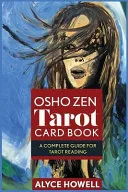
Osho Zen Tarot Card Book: A Complete Guide for Tarot Reading
 73
73

Osho Zen Tarot Card Book: A Complete Guide for Tarot Reading
Alyce Howell’s guide to the Osho Zen Tarot offers a structured approach to a deck that intentionally deviates from traditional Rider-Waite-Smith symbolism. The book’s strength lies in its clear exposition of the 78 cards, each accompanied by explanations that connect the visual narrative to Osho’s teachings on mindfulness and awareness. Howell effectively presents the Osho Zen Tarot's unique suit structure and its emphasis on the present moment. However, the work sometimes feels overly didactic, occasionally lacking the spontaneous, intuitive feel that the Osho Zen system itself encourages. A passage detailing the 'Master' card’s significance, for example, clearly explains its role but could benefit from more interpretive flexibility. Despite this, the comprehensive layout explanations, particularly the Celtic Cross, are practical and well-executed. Howell's guide serves as a competent, if somewhat conventional, entry point into this unconventional deck.
📝 Description
73
Alyce Howell's Osho Zen Tarot Card Book, published in 2018, details the 78 cards of this unique deck.
This guide offers a complete manual for understanding and using the Osho Zen Tarot system. It covers each of the 78 cards, describing their imagery and meaning. The book also provides instruction on various tarot spreads, from simple single-card readings to the more involved Celtic Cross. Howell's work aims to make tarot reading accessible to beginners while offering sufficient depth for those already familiar with the practice. It is designed for anyone interested in the Osho Zen Tarot, which combines Eastern spiritual ideas with Western psychological concepts. The book will appeal to newcomers to divination and experienced readers alike. It is particularly suited for individuals drawn to meditation, mindfulness, and self-exploration through symbolic systems, viewing tarot as a tool for self-awareness and intention setting.
The Osho Zen Tarot system, reflected in Howell's 2018 book, draws from the teachings of Osho, a spiritual figure active from the 1970s to 1990. His philosophy merged Eastern meditation techniques with Western psychological thought. This deck's approach emphasizes mindfulness and awareness of the present moment, setting it apart from traditional tarot systems. It aligns with a contemporary interest in divination as a path for personal growth and psychological insight, rather than solely predicting the future.
💡 Why Read This Book?
• Gain a practical understanding of the Osho Zen Tarot's 78 cards, focusing on their unique 'fairy-tale appearance' and connection to Osho's philosophy of present moment awareness, as detailed in the book's card explanations. • Learn specific divination methods, from single-card readings to the Celtic Cross layout, as presented in the book's dedicated section on 'divination layout,' allowing for immediate application. • Discover how to use the Osho Zen Tarot for manifesting dreams and breaking through obstructions, as highlighted in the original blurb, by understanding the system's focus on intent setting and inner transformation.
⭐ Reader Reviews
Honest opinions from readers who have explored this book.
❓ Frequently Asked Questions
What is the primary difference between the Osho Zen Tarot and traditional tarot decks?
The Osho Zen Tarot, as explained in Alyce Howell's book, emphasizes mindfulness and the present moment, diverging from traditional decks that often focus on prediction. Its imagery is also distinct, drawing from Osho's teachings rather than historical symbolism.
How does the Osho Zen Tarot book explain the 78 cards?
The book provides detailed explanations for each of the 78 Osho Zen Tarot cards, describing their unique 'fairy-tale appearance' and interpreting their meaning within the context of Osho's philosophical and meditative principles.
Can beginners use the Osho Zen Tarot card book for reading?
Yes, the book is designed to make tarot cards easy to use, offering explanations of card meanings and various divination layouts, including simpler single-card readings suitable for beginners.
What kind of divination layouts are covered in the book?
The book covers a range of divination layouts, from straightforward single-card readings to more complex spreads like the popular Celtic Cross, providing practical tools for interpretation.
What is the core philosophy behind the Osho Zen Tarot system presented in the book?
The core philosophy, as detailed in the book, centers on self-awareness, breaking through personal obstructions, and manifesting dreams through present moment consciousness and meditative insight.
When was the Osho Zen Tarot Card Book first published?
Alyce Howell's Osho Zen Tarot Card Book was first published on October 5, 2018, making it a relatively recent guide to this specific tarot system.
🔮 Key Themes & Symbolism
Present Moment Awareness
The Osho Zen Tarot system, as detailed in Howell's book, fundamentally shifts focus from predicting the future to understanding the present. Cards are interpreted not as fixed destinies but as reflections of the reader's current state of consciousness and energy. This aligns with Osho's broader teachings on meditation and mindfulness, encouraging practitioners to engage fully with 'what is' rather than getting lost in past regrets or future anxieties. The book guides readers to see each card draw as an opportunity for immediate insight and growth.
Manifestation and Intent Setting
Beyond simple divination, the Osho Zen Tarot is presented as a tool for actively shaping one's reality. The book emphasizes setting clear intentions before a reading and using the card interpretations to identify pathways toward manifesting dreams. This involves recognizing and dismantling internal 'obstructions' that hinder progress. The system encourages a proactive approach, where understanding the energetic landscape revealed by the cards empowers the user to consciously influence outcomes.
Symbolic Language of the Cards
Howell's work meticulously explains the symbolic language of the 78 Osho Zen Tarot cards. Unlike traditional decks, these cards feature unique 'fairy-tale' aesthetics and draw heavily on Osho's philosophical concepts. The book details how symbols related to nature, inner states, and archetypal figures (like the 'Master' or 'Fool') convey messages about psychological dynamics and spiritual development. Understanding this specific symbolic lexicon is crucial for unlocking the deck's potential for self-discovery.
Inner Transformation
The Osho Zen Tarot serves as a mirror to the inner world, facilitating profound personal change. The book guides readers through interpreting cards that highlight psychological patterns, shadow aspects, and areas ripe for spiritual growth. The emphasis is on using the tarot not as an external oracle, but as a catalyst for introspection and self-mastery. This approach promotes a journey of inner alchemy, transforming challenges into opportunities for deeper self-understanding and enlightenment.
💬 Memorable Quotes
Direct passages from the work, attributed to the author.
“This prophecy book contains explanation of 78 cards of Osho Zen tarot deck, all with their own fairy-tale appearance.”
— This statement highlights the unique visual aesthetic of the Osho Zen Tarot deck, emphasizing its narrative and imaginative quality, which differs significantly from more traditional tarot imagery.
“The divination layout range from simple single card readings to most popular celtic cross card layout.”
— This indicates the book's practical utility, providing readers with a spectrum of reading techniques suitable for various levels of complexity and inquiry, from quick insights to in-depth analysis.
“This book will make tarot cards easy to use.”
— This assertion speaks to the accessibility and pedagogical approach of the guide, aiming to clarify the tarot process for newcomers and simplify complex interpretations.
“detailed divination layout, origin of tarot, uses of tarot and much more.”
— This highlights the comprehensive nature of the book, suggesting it covers not only practical application but also foundational knowledge and the broader context of tarot usage.
💡 Key Ideas
Editorial paraphrase of the work's core concepts — not direct quotes.
Set your intents, break through obstructions and learn methods to manifest your dreams using this book.
This paraphrased concept underscores the book's focus on proactive self-development and goal achievement, positioning the tarot not just for insight but as a tool for actively creating desired outcomes.
🌙 Esoteric Significance
Tradition
The Osho Zen Tarot system draws heavily from Osho's eclectic blend of Eastern mysticism (particularly Zen Buddhism and Vedanta) and Western psychological principles. While not strictly adhering to a single historical esoteric lineage like Hermeticism or Kabbalah, it incorporates archetypal psychology (influenced by Jung) and Eastern concepts of mindfulness, ego dissolution, and the nature of the mind. It departs from traditional tarot by de-emphasizing fortune-telling and focusing on present-moment awareness and inner transformation, aligning more with meditative and self-realization paths than predictive occultism.
Symbolism
Central to the Osho Zen Tarot's symbolism is its emphasis on the present moment and inner states. Unlike decks that rely on centuries-old esoteric iconography, the Osho Zen Tarot features artwork often described as 'fairy-tale-like,' using contemporary or archetypal imagery to convey psychological and spiritual truths. Key symbols include the 'Master' card, representing enlightenment or the awakened state; the 'Fool,' symbolizing pure consciousness and spontaneous beginning; and 'Shadow' cards, which bring repressed aspects of the psyche to conscious awareness, facilitating integration and healing.
Modern Relevance
In contemporary esoteric circles, the Osho Zen Tarot is highly relevant for practitioners interested in mindfulness-based divination, psychological self-exploration, and non-dualistic spiritual paths. It appeals to those who find traditional tarot overly deterministic or steeped in outdated symbolism. Thinkers and communities focusing on conscious living, meditation, and personal development often utilize this deck. Its approach speaks to modern therapeutic modalities that emphasize present-moment awareness and acceptance, making it a valuable tool for contemporary seekers working through the complexities of modern life.
👥 Who Should Read This Book
• Individuals interested in mindfulness and meditation who wish to integrate these practices with a symbolic system for self-discovery. • Tarot readers seeking to explore alternative systems that prioritize present-moment awareness and psychological insight over traditional prediction. • Beginners looking for an accessible yet profound introduction to tarot, with clear explanations and practical guidance on reading layouts.
📜 Historical Context
The Osho Zen Tarot, and by extension Alyce Howell's 2018 guide, emerged from the unique spiritual environment cultivated by Osho (Bhagwan Shree Rajneesh). Osho, active from the 1970s until his death in 1990, synthesized Eastern meditative traditions with Western psychotherapy and philosophical inquiry. His teachings often critiqued traditional religious dogma and emphasized individual consciousness and direct experience. The Osho Zen Tarot itself was developed in the late 1980s, reflecting a period where esoteric practices were increasingly being reinterpreted through a psychological lens, moving away from strict occultism towards self-help and personal growth paradigms. This approach stood in contrast to the more occult-focused tarot revival spurred by figures like Aleister Crowley and A.E. Waite in the early 20th century. While the book itself is a modern interpretation, it draws from a lineage of thought that sought to integrate spiritual seeking with contemporary understanding, resonating with a generation looking for meaning beyond conventional structures.
📔 Journal Prompts
The 'fairy-tale appearance' of the Osho Zen Tarot cards and its impact on interpretation.
How the concept of 'breaking through obstructions' relates to your current life situation.
The role of the 'Master' card in achieving present moment awareness.
Methods for setting intentions before a tarot reading for dream manifestation.
Comparing the Osho Zen Tarot's approach to divination with other esoteric systems you know.
🗂️ Glossary
Osho Zen Tarot
A specific tarot deck and system developed based on the teachings of Osho, emphasizing mindfulness, present moment awareness, and psychological insight over traditional divination.
Divination Layout
The arrangement of tarot cards in a specific pattern for interpretation during a reading, designed to address particular questions or explore a situation.
Celtic Cross
A popular and comprehensive tarot spread typically using ten cards, designed to provide a detailed overview of a situation, its influences, and potential outcomes.
Manifest Dreams
The process of actively bringing desired outcomes or goals into reality, often facilitated by focused intention and understanding energetic pathways, as supported by the Osho Zen Tarot system.
Obstructions
Internal or external barriers, psychological patterns, or limiting beliefs that prevent an individual from achieving their goals or realizing their potential.
Present Moment Awareness
A state of consciousness focused on the 'here and now,' without judgment, central to Buddhist meditation and heavily emphasized in the Osho Zen Tarot philosophy.
Fairy-tale Appearance
Refers to the unique, imaginative, and often narrative-driven artistic style of the Osho Zen Tarot cards, distinguishing them from more conventional tarot imagery.










![SQL [asterisk] forms operator's reference card](/img/thumb/sql-asterisk-forms-operator-s-reference-card-oracle-corporation.webp)