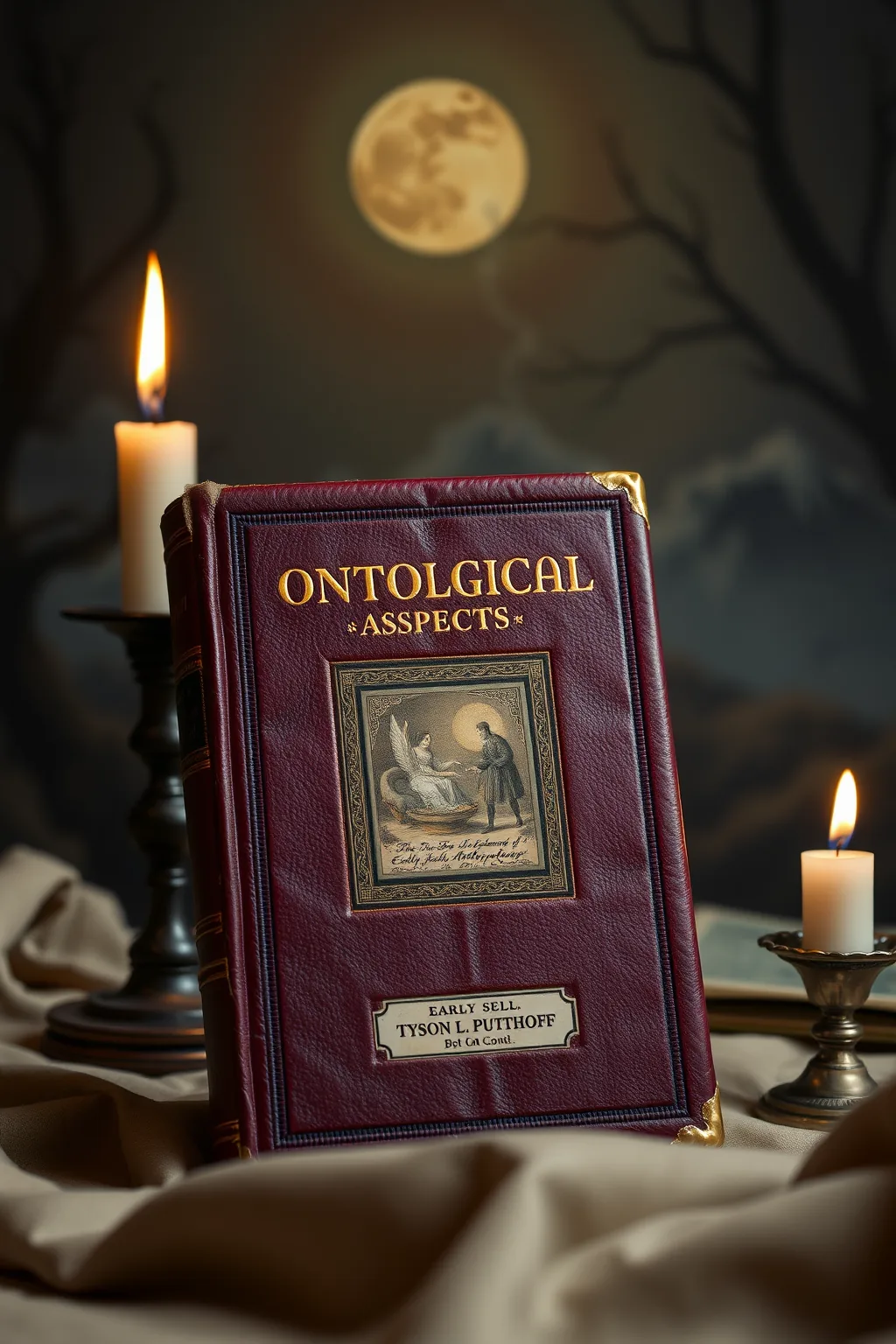
Ontological Aspects of Early Jewish Anthropology
 61
61

Ontological Aspects of Early Jewish Anthropology



Celeste Moreau (Divination & Symbolism Reviewer) — In 'Ontological Aspects of Early Jewish Anthropology,' Tyson L. Putthoff achieves a remarkable synthesis of rigorous scholarship and profound mystical insight. He masterfully unpacks the early Jewish conception of the self as an ontologically dynamic entity, capable of mirroring the divine presence. Putthoff's ability to weave together ancient texts with modern theoretical lenses offers a fresh and potent perspective on theological anthropology. This book is essential for scholars of Kabbalah and Jewish mysticism, but also deeply rewarding for any seeker interested in the nature of consciousness and its relationship to the Absolute. It offers a rare glimpse into a tradition where the self is not merely observed, but transformed.
📝 Description
61
Tyson L. Putthoff's 2023 work examines how early Jewish thought understood the human self in relation to the divine.
This book investigates the concept of the human self as understood in early Jewish traditions. Putthoff analyzes how the nascent Jewish mind perceived the soul's connection to the Divine, moving beyond a simple historical survey to consider the structure of spiritual existence. The text argues that the self was viewed not as fixed, but as a dynamic reflection mirroring the ontological nature of its sacred environment.
Through careful analysis of texts and engagement with philosophical ideas, Putthoff highlights the concept that in the presence of God, human essence can extend beyond normal limits, participating in the Infinite. The book serves those interested in theological anthropology, the development of divine concepts, and the mystical aspects of creation. It encourages readers to consider the adaptability of their own being and its capacity for union with the divine.
This work situates itself within the study of early Jewish mysticism and esoteric thought, a tradition that often explores the hidden dimensions of creation and the human relationship with the divine. It engages with concepts that bridge philosophical inquiry and theological speculation, focusing on the internal spiritual life and its potential for union with the ultimate reality. The book's examination of how the self is understood in relation to the Infinite touches upon themes common in esoteric traditions worldwide, particularly those concerned with spiritual cosmology and the transformation of consciousness.
💡 Why Read This Book?
Uncover the radical early Jewish concept of a malleable self intrinsically linked to the divine. This book offers a profound exploration of theological anthropology, bridging ancient wisdom with contemporary thought. Ideal for seekers of hidden knowledge, scholars of mysticism, and practitioners interested in the transformative power of spiritual presence.
⭐ Reader Reviews
Honest opinions from readers who have explored this book.
❓ Frequently Asked Questions
What is ontological anthropology?
Ontological anthropology, in this context, examines the fundamental nature of being and existence as understood within a specific cultural or religious framework, particularly focusing on how the self perceives its own reality in relation to divine or cosmic forces.
How does the self mimic divine presence in this framework?
The book posits that early Jewish thought viewed the self as inherently adaptable, capable of reflecting and absorbing the ontological qualities of its surrounding spiritual environment, including the divine realm.
Is this book suitable for beginners in Jewish mysticism?
While it engages with complex theological and philosophical concepts, the clear exposition and scholarly approach make it accessible to dedicated beginners eager to explore the deeper layers of Jewish thought and mysticism.
What historical period does 'early Jewish anthropology' refer to?
This typically encompasses the Second Temple period and early Rabbinic literature, a foundational era for the development of Jewish theological and anthropological ideas, including nascent mystical concepts.
Can this book be used for spiritual practice?
While primarily an academic exploration, the insights into the self's potential for divine communion can certainly inspire and inform personal contemplation and spiritual practice for those engaged with Kabbalistic or mystical traditions.
🔮 Key Themes & Symbolism
The Malleable Self and Divine Resonance
Putthoff's central thesis posits the early Jewish understanding of the human self as inherently plastic, capable of profound transformation through its proximity to the Divine. This is not a passive reception, but an active mirroring, where the self absorbs and reflects the ontological state of God's presence. The book meticulously unpacks the textual evidence that suggests a widespread belief in the self's capacity to partake in the Infinite, transcending its finite boundaries and aligning its very essence with the Divine. This concept challenges static notions of identity, offering a dynamic vision of human existence interwoven with the sacred.
The Exegesis of Divine Space
Central to this exploration is the concept of 'divine space' – the sacred environment, whether conceived as the Temple, the cosmic order, or God's immediate presence. Putthoff demonstrates how early Jews perceived this space not merely as a location, but as an ontological field that actively shapes those within it. The book's rigorous exegesis of ancient texts reveals how the boundaries between the human and the Divine were understood to become porous within this sacred milieu. Understanding divine space is key to grasping the radical implications of human ontological participation, moving beyond mere proximity to true spiritual immersion.
Bridging Ancient Wisdom and Contemporary Theory
A significant strength of 'Ontological Aspects of Early Jewish Anthropology' lies in its sophisticated dialogue between ancient Jewish thought and contemporary philosophical discourse. Putthoff masterfully employs modern theoretical frameworks to illuminate the nuanced interpretations of ancient texts, revealing the enduring relevance of these early anthropological concepts. This interdisciplinary approach allows for a deeper, more critical engagement with the subject matter, making the profound ideas of early Jewish thinkers accessible and impactful for a modern audience interested in metaphysics, theology, and the nature of consciousness. It demonstrates the timeless quest for understanding our place in the cosmos.
💬 Memorable Quotes
Direct passages from the work, attributed to the author.
“In the sacred precinct, the boundaries of being blur.”
— Suggests a mystical state where the distinction between the finite human and the infinite divine becomes less pronounced, leading to a shared ontological reality.
“Ontological malleability is the key to divine communion.”
— Highlights the active role of the self's inherent adaptability in achieving a profound connection and shared existence with the Divine.
“God's presence is not merely observed, but absorbed.”
— Emphasizes the transformative power of divine proximity, where the self undergoes a fundamental shift in its very being rather than just experiencing an external phenomenon.
“Early Jews charted the existential field of the soul.”
— Suggests that ancient Jewish thinkers engaged in deep philosophical and theological inquiry into the fundamental nature and experience of the human soul.
💡 Key Ideas
Editorial paraphrase of the work's core concepts — not direct quotes.
The self is a mirror, reflecting the essence of the divine space it inhabits.
This quote expresses the core idea that human identity is not fixed but fluid, dynamically shaped by its spiritual environment, particularly in the presence of God.
🌙 Esoteric Significance
Tradition
This book deeply engages with the foundational layers of Kabbalah and Jewish Mysticism. It illuminates pre-Kabbalistic concepts that informed later esoteric schools, particularly concerning the nature of the soul, divine immanence, and the transformation of consciousness. The exploration of 'divine space' and the self's ontological resonance with God offers a rare glimpse into the early mystical underpinnings of Jewish spirituality, providing a crucial historical and philosophical context for understanding the development of Kabbalistic cosmology and practice.
Symbolism
The key symbols explored revolve around the concept of 'divine space' as a transformative medium, the human self as a 'mirror' or vessel capable of ontological absorption, and the idea of 'malleability' as a divine attribute accessible to humanity. These symbols represent the permeable boundary between the human and the divine, the potential for spiritual assimilation, and the dynamic nature of existence within a sacred framework. Understanding these symbolic representations is vital for grasping the esoteric worldview presented, where the physical and spiritual realms are intricately interconnected and responsive to each other.
Modern Relevance
In an age often characterized by existential fragmentation and a disconnect from the sacred, the ancient Jewish understanding of an ontologically malleable self offers profound resonance. Putthoff's work reveals that the capacity for divine communion is not an abstract theological concept but an inherent potential within human being. This perspective encourages a re-evaluation of selfhood, emphasizing our interconnectedness with the cosmos and the possibility of spiritual transformation. The book's insights into divine presence and the shaping power of sacred environments offer practical guidance for those seeking deeper spiritual grounding and meaning in contemporary life.
👥 Who Should Read This Book
This scholarly yet deeply contemplative work is essential for academics specializing in Jewish Studies, Theology, and the History of Religions. Seekers of esoteric knowledge and students of Kabbalah and Jewish Mysticism will find a collection of foundational ideas. Practitioners of contemplative traditions, particularly those interested in the intersection of selfhood and divinity, will discover useful insights. Even readers new to these fields but possessing a keen interest in the nature of human consciousness and its spiritual dimensions will find this book an clear and transformative read.
📜 Historical Context
The period explored in 'Ontological Aspects of Early Jewish Anthropology' is crucial for understanding the formative stages of Jewish thought, particularly the Second Temple period and the early Rabbinic era. This was a time of immense theological innovation and adaptation, influenced by interactions with Hellenistic philosophy, Persian dualism, and diverse apocalyptic movements. As the Temple stood as a physical locus of divine presence, and later as its destruction spurred new interpretations of God's immanence, Jewish thinkers grappled with profound questions about humanity's relationship to the transcendent. This era witnessed the development of sophisticated angelology, demonology, and early mystical speculations that laid the groundwork for later Kabbalistic traditions. Putthoff's work situates these anthropological inquiries within this dynamic intellectual milieu, revealing how early Jews conceptualized the self as an active participant in the divine cosmic order, anticipating later esoteric developments.
📔 Journal Prompts
How does the concept of 'divine space' influence your perception of your own environment?
In what ways do you feel your own 'self' is ontologically malleable?
Reflect on a time you felt a profound sense of 'divine presence' and how it affected your being.
Consider the 'mirror' metaphor: what aspects of the divine might your current spiritual state reflect?
How can embracing ontological malleability foster a deeper connection with the sacred in your daily life?
🗂️ Glossary
Ontology
The philosophical study of being, existence, and reality. In this context, it refers to the fundamental nature of the human self and its existence in relation to the Divine.
Theological Anthropology
The study of the nature of humanity as understood within a theological framework, exploring the relationship between God and humankind.
Exegesis
Critical explanation or interpretation of a text, especially of the Bible or ancient writings. Putthoff uses rigorous exegesis to analyze early Jewish texts.
Malleable
Able to be hammered or pressed out of shape without breaking or cracking. In this context, it describes the self's capacity for change and adaptation.
Divine Space
The sacred environment or realm perceived as imbued with God's presence, which actively shapes and influences those within it.
This book appears in 1 collection
🔮 Readers Also Liked
Browse all →







From the “Kabbalah” Collection
View all →









More Free Kabbalah & Jewish Mysticism Books
View all →