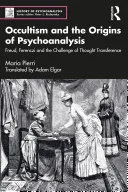
Occultism and the Origins of Psychoanalysis
 80
80

Occultism and the Origins of Psychoanalysis
Maria Pierri’s exploration into the occult roots of psychoanalysis is a necessary corrective to sanitized histories of the discipline. The book’s strength lies in its detailed mapping of Freud’s early flirtations with what he termed "thought-transmission," a concept he later largely disavowed in public but which clearly informed his private thinking. Pierri’s analysis of the "dialogue of the unconsciouses" between Freud and Ferenczi, particularly regarding the interpretation of divination, is compelling. However, the work sometimes struggles to maintain a clear distinction between genuine influence and mere contemporaneous interest, occasionally overstating the direct impact of occult practices. A passage examining Freud's correspondence concerning telepathic "experiments" is particularly illuminating, showcasing the tension between his scientific aspirations and his persistent curiosity about the paranormal. This is an essential, albeit challenging, read for anyone interested in the hidden currents of psychological theory.
📝 Description
80
Maria Pierri's 2023 book examines the occult roots of psychoanalysis.
Occultism and the Origins of Psychoanalysis by Maria Pierri investigates the connections between early psychoanalytic thought and the esoteric movements of the late 19th and early 20th centuries. Pierri tracks key psychoanalytic ideas back to their origins in spiritualism, hypnosis, and parapsychology. The book shows how prominent figures in psychoanalysis engaged with subjects that questioned the scientific views of their era.
This study is for scholars of psychology, the history of science, and esoteric traditions. Readers interested in Sigmund Freud, Carl Jung, and Sándor Ferenczi outside their clinical work will find it valuable. Those wanting to understand the cultural and philosophical background that shaped modern psychology, especially its engagement with the occult, will find this book informative. The late 19th century was a time of significant spiritual and intellectual change. As some turned away from traditional religion, interest in spiritualism, mesmerism, and occult philosophies grew. Psychology was becoming a formal discipline, often interacting with or reacting against these popular esoteric trends. Pierri's work places Freud's early research within this complex environment, where the lines between science, mysticism, and psychotherapy were unclear.
This book situates early psychoanalysis within the broader spiritual and intellectual currents of the late 19th and early 20th centuries. This was a period where scientific rationalism coexisted with a widespread fascination for spiritualism, mesmerism, and psychical research. Esoteric traditions, often dismissed by mainstream science, were nevertheless influential in shaping how individuals understood the mind, consciousness, and phenomena beyond empirical measurement. Pierri connects these movements directly to the foundational ideas of figures like Freud and Jung, demonstrating how their work was not entirely separate from, but rather engaged with, the era's occult interests.
💡 Why Read This Book?
• Gain a nuanced understanding of Sigmund Freud's early intellectual landscape, including his private investigations into "thought-transmission" before the formal establishment of psychoanalysis. • Explore the concept of a "dialogue of the unconsciouses" as discussed by Freud and Sándor Ferenczi, revealing how esoteric concepts influenced early psychotherapeutic ideas. • Understand the historical context of late 19th-century spiritualism and hypnosis, and how these movements provided fertile ground for the development of psychoanalytic theories.
⭐ Reader Reviews
Honest opinions from readers who have explored this book.
❓ Frequently Asked Questions
Did Sigmund Freud believe in telepathy?
Freud privately investigated phenomena he called "thought-transmission," which aligns with modern concepts of telepathy. While he later downplayed these interests publicly due to scientific pressures, his early work shows a definite engagement with such ideas.
What is the "dialogue of the unconsciouses" mentioned in the book?
This term refers to the theoretical and practical exchanges between Sigmund Freud and Sándor Ferenczi. They discussed how unconscious processes could interact, drawing parallels with intuitive insights found in divination and occult practices.
How did hypnosis influence psychoanalysis according to Maria Pierri?
Pierri demonstrates how hypnosis, prevalent in the late 19th century, provided a conceptual bridge for early psychoanalysts. Techniques and theories developed around hypnosis directly informed early ideas about the unconscious mind and therapeutic suggestion.
Is this book about practicing occultism or psychoanalysis?
No, the book is a historical and theoretical analysis. It examines how occult beliefs and practices influenced the *origins* and *development* of psychoanalytic thought, rather than advocating for either field.
When was Occultism and the Origins of Psychoanalysis first published?
The book was first published on November 30, 2022, making it a contemporary scholarly work on a historical subject.
Who are the key figures discussed in relation to occultism and psychoanalysis?
The primary figures are Sigmund Freud, Carl Jung, and Sándor Ferenczi. Their early engagements with spiritualism, hypnosis, and parapsychology are central to the book's thesis.
🔮 Key Themes & Symbolism
Freud's Paranormal Interests
The work meticulously details Sigmund Freud's early fascination with parapsychological phenomena, particularly "thought-transmission." It moves beyond the standard narrative of psychoanalysis by exploring his private research and correspondence concerning telepathy and other psychic events. Pierri argues that these interests were not peripheral but formed a significant, albeit often suppressed, part of his intellectual development, influencing his nascent theories of the mind.
The Unconscious Dialogue
Central to the book is the concept of a "dialogue of the unconsciouses," particularly between Freud and his close associate Sándor Ferenczi. This theme explores how unconscious processes were conceptualized as potentially interacting across individuals, drawing inspiration from esoteric traditions like spiritualism and divination. It suggests an early psychoanalytic framework that acknowledged psychic interconnectedness beyond empirical observation.
Hypnosis as a Bridge
The book examines the crucial role of hypnosis in the genesis of psychoanalysis. As a popular and controversial practice in the late 19th century, hypnosis provided a practical and theoretical precursor to exploring altered states of consciousness and the unconscious. Pierri highlights how techniques and understandings derived from mesmerism and hypnotic suggestion directly informed Freud's early clinical methods and theoretical constructs.
Occultism and Modern Psychology
This theme addresses the broader impact of occultism on the formation of modern psychological thought. It positions psychoanalysis not as an isolated scientific breakthrough, but as a discipline emerging from a complex intellectual milieu where spiritualism, occultism, and burgeoning scientific inquiry often intertwined. The work challenges the conventional separation of the psychological and the esoteric.
💬 Memorable Quotes
Direct passages from the work, attributed to the author.
“Freud’s private investigations into ‘thought-transmission’”
— This phrase expresses Pierri's central argument: that Freud's engagement with telepathy was a serious, albeit often hidden, aspect of his research, predating and informing some of his core ideas about the mind.
“a 'dialogue of the unconsciouses'”
— This concept, explored by Pierri in the context of Freud and Ferenczi's discussions, suggests an early theoretical acknowledgment of psychic links and non-local communication between individuals, inspired by esoteric notions.
“how fortune tellers could read the past from a client”
— This highlights the book's examination of how seemingly paranormal abilities, like those attributed to fortune tellers, were analyzed by early psychoanalysts as potentially revealing insights into unconscious processes and hidden knowledge.
“Freud’s early interest in 'thought-transmission'”
— This points to the specific paranormal phenomenon that Pierri identifies as a crucial, yet often minimized, influence on Freud's foundational psychological theories.
“assessed how fortune tellers could read the past”
— This interpretation focuses on the analytical approach early psychoanalysts took towards divination, viewing it not as mere superstition but as a potential manifestation of unconscious communication or psychic perception.
🌙 Esoteric Significance
Tradition
This work intersects with the Western Esoteric Tradition, particularly its Hermetic and Neoplatonic currents that explore the nature of the mind, consciousness, and hidden connections. It aligns with traditions that posit a psyche capable of transcending material limitations, challenging purely mechanistic or materialistic worldviews prevalent in early scientific psychology.
Symbolism
The concept of "thought-transmission" itself functions symbolically, representing the potential for direct, unmediated connection between minds, a core tenet in many esoteric systems. The imagery associated with hypnosis and divination also carries symbolic weight, pointing towards altered states of consciousness and the symbolic language of the unconscious.
Modern Relevance
Contemporary fields like transpersonal psychology, depth psychology, and even some branches of consciousness studies continue to explore the intersection of the psyche and phenomena that lie beyond conventional scientific paradigms. This work provides historical grounding for modern inquiries into psi phenomena, synchronicity, and the deeper connections within the human psyche.
👥 Who Should Read This Book
• Students of esoteric history seeking to understand the intellectual currents that influenced the birth of modern psychology. • Psychoanalytic scholars interested in a more complete picture of Freud's intellectual development, including his engagement with controversial topics. • Comparative religion and philosophy researchers examining the dialogue between scientific and mystical worldviews in the modern era.
📜 Historical Context
The late 19th and early 20th centuries were a fertile ground for both scientific innovation and esoteric exploration. As the Enlightenment's rationalism gained ground, a counter-movement emerged, characterized by widespread interest in spiritualism, mesmerism, and the occult. This period saw the birth of psychology as a formal discipline, often grappling with phenomena that defied conventional scientific explanation. Maria Pierri situates Sigmund Freud's early work within this dynamic milieu, where scientific inquiry and mystical pursuits were not always distinct. Freud’s own engagement with concepts like "thought-transmission" reflects this broader cultural climate. Contemporaries like William James, an American philosopher and psychologist, also explored psychic phenomena, demonstrating a shared intellectual curiosity among leading thinkers of the era regarding the boundaries of consciousness and reality.
📔 Journal Prompts
The influence of 'thought-transmission' on Freud's theories.
The concept of a 'dialogue of the unconsciouses' between Freud and Ferenczi.
The role of hypnosis in bridging occult practices and early psychotherapy.
Interpreting the significance of fortune tellers' perceived abilities within psychoanalytic discourse.
Reflecting on the historical tension between scientific empiricism and esoteric inquiry in psychology's formative years.
🗂️ Glossary
Thought-transmission
A term used by Sigmund Freud to describe the purported direct transmission of thoughts or mental states between individuals, akin to modern concepts of telepathy.
Dialogue of the Unconsciouses
A concept explored by Maria Pierri, referencing the theoretical and practical exchanges between Freud and Ferenczi concerning the interconnectedness and potential communication between unconscious minds.
Occultism
A broad category of esoteric beliefs and practices concerned with hidden knowledge, often involving supernatural, mystical, or magical powers and phenomena.
Psychoanalysis
A system of psychological theory and therapy developed by Sigmund Freud, focusing on the unconscious mind, repressed memories, and the interpretation of dreams and symbolic behavior.
Spiritualism
A religious movement prominent in the 19th century that claimed communication with the spirits of the dead, often through mediums.
Hypnosis
A state of consciousness involving focused attention and reduced peripheral awareness characterized by an enhanced capacity for response to suggestion. It was a significant area of study for early psychologists.
Parapsychology
The study of alleged psychic phenomena and other paranormal claims, including telepathy, precognition, and psychokinesis.