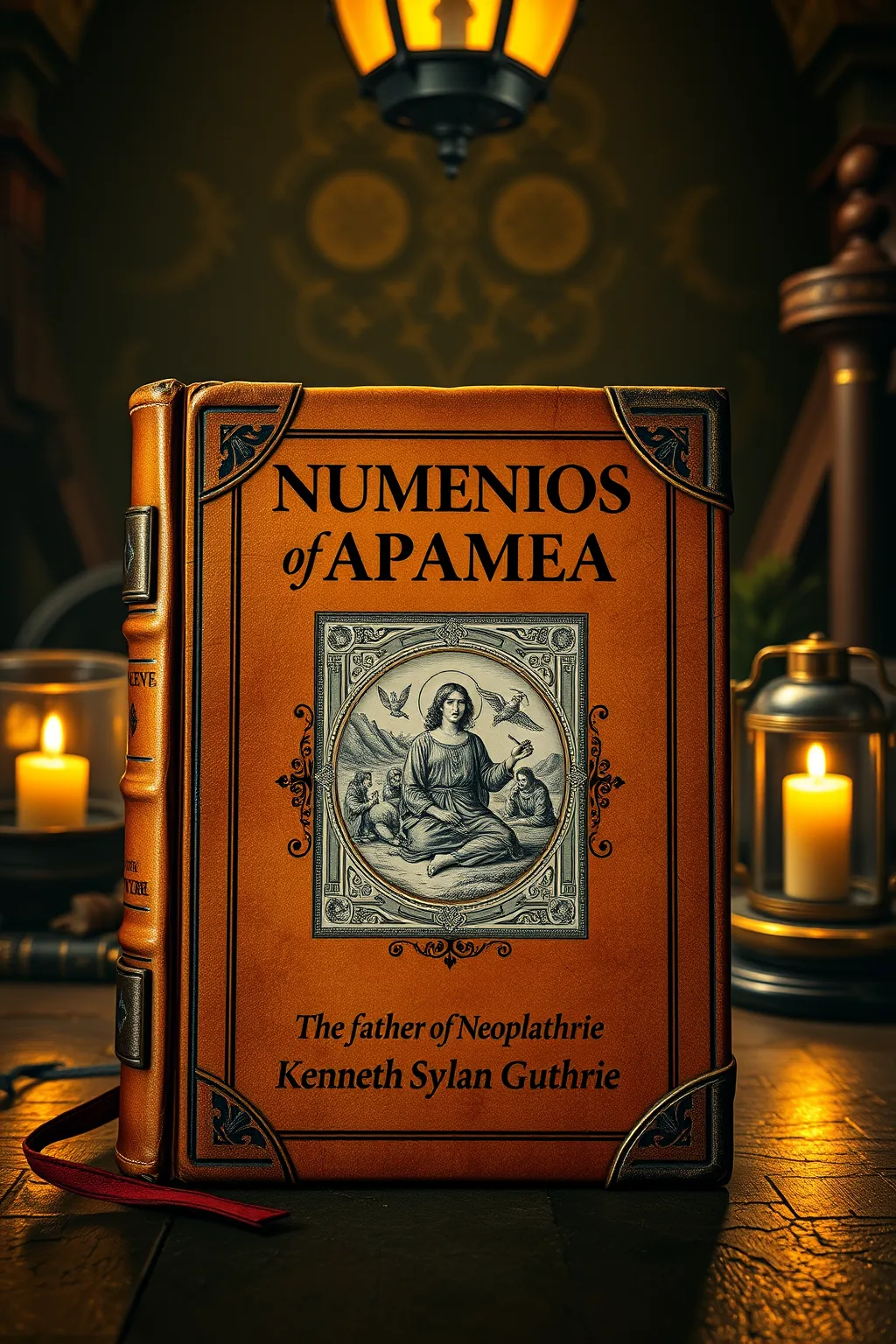
Numenius of Apamea, the father of neo-Platonism
 61
61

Numenius of Apamea, the father of neo-Platonism


Review by Marcus Thorne (Esoteric Sciences Reviewer) — Kenneth Sylvan Guthrie's 'Numenius of Apamea, the Father of Neo-Platonism' is a masterful exposition of one of the most influential thinkers in the history of esoteric philosophy. Guthrie's meticulous research and insightful analysis make this book an indispensable resource for anyone interested in the mystical traditions of the ancient world. The book's strength lies in its ability to bridge the gap between historical context and modern esoteric practices, making it accessible to both scholars and spiritual seekers. Guthrie's work is a testament to the enduring relevance of Numenius' teachings, offering profound insights into the hidden knowledge that has shaped Western esotericism.
📝 Description
61
Kenneth Sylvan Guthrie's 1907 work examines Numenius of Apamea, a key figure in early Neoplatonism.
Kenneth Sylvan Guthrie's 1907 study focuses on Numenius of Apamea, a philosopher often seen as a precursor to Plotinus and the formal Neoplatonic school. Guthrie presents Numenius's ideas, which drew heavily from Pythagorean and Platonic traditions, as a crucial bridge to later metaphysical systems. The book discusses Numenius's concept of the divine, particularly his distinctions within the Godhead and his views on the material world. Guthrie highlights how Numenius attempted to synthesize Greek philosophy with existing religious and mystical currents of his time.
The author's intent is to illuminate the specific contributions of Numenius, arguing for his foundational role in shaping subsequent philosophical thought. The text examines Numenius's approach to cosmology and his understanding of the soul's relationship to the divine. Guthrie aims to make accessible the complex philosophical arguments of a figure whose writings were largely lost, relying on fragments and testimonia. This work is for those interested in tracing the origins of Neoplatonic thought and its philosophical antecedents.
Numenius of Apamea stands at a critical juncture in the development of Western esotericism. His philosophy, as presented by Guthrie, bridges the gap between classical Greek Platonism and the emergent Neoplatonic systems. Numenius integrated Platonic ideas with Orphic traditions and Eastern influences, creating a complex metaphysical framework. This approach paved the way for Plotinus and later Neoplatonists who sought to understand the divine, the cosmos, and the human soul through a hierarchical, emanational model. Numenius's work is significant for its early articulation of concepts that would become central to later mystical and philosophical traditions.
💡 Why Read This Book?
Why read 'Numenius of Apamea, the Father of Neo-Platonism'? This book is essential for seekers of hidden knowledge, scholars of ancient philosophy, and practitioners of esoteric traditions. It provides a deep dive into the mystical roots of Neoplatonism, offering insights into the symbolism and philosophical depth that have captivated spiritual seekers for centuries. Whether you are a seasoned scholar or a curious beginner, this book will enrich your understanding of the esoteric traditions that continue to influence modern spirituality.
⭐ Reader Reviews
Honest opinions from readers who have explored this book.
❓ Frequently Asked Questions
Who was Numenius of Apamea?
Numenius of Apamea was a prominent philosopher who is often referred to as the 'Father of Neo-Platonism'. His teachings significantly influenced the development of Neoplatonic thought and Western esotericism.
What is the significance of Neoplatonism?
Neoplatonism is a school of philosophical thought that combines elements of Platonism with other mystical and esoteric traditions. It emphasizes the pursuit of divine knowledge and the unity of all things, making it a foundational aspect of Western esotericism.
Is this book suitable for beginners?
While the book delves deeply into esoteric themes, it is accessible to beginners with an interest in ancient philosophy and mysticism. Guthrie's clear and engaging writing style makes complex ideas approachable.
What themes are explored in this book?
The book explores themes such as the nature of the divine, the unity of all things, and the pursuit of hidden knowledge. It also delves into the symbolism and philosophical depth that characterize Neoplatonic thought.
How does this book relate to modern esoteric practices?
The book provides a historical context for modern esoteric practices, showing how the teachings of Numenius continue to influence contemporary spirituality and philosophical inquiry.
🔮 Key Themes & Symbolism
The Divine and Unity
The book studies the concept of the divine as the ultimate source of unity and the pursuit of divine knowledge. This theme is central to Neoplatonic thought and underscores the mystical and esoteric dimensions of ancient philosophy.
Hidden Knowledge
Numenius' teachings are rich in hidden knowledge, symbolism, and philosophical depth. Guthrie's work uncovers these esoteric elements, making them accessible to modern readers seeking to understand the mystical foundations of Western thought.
Philosophical Significance
The philosophical significance of Numenius' ideas is explored in depth, highlighting their influence on the development of Neoplatonism and Western esotericism. This theme emphasizes the enduring relevance of ancient wisdom in contemporary spiritual inquiry.
💡 Key Ideas
Editorial paraphrase of the work's core concepts — not direct quotes.
The divine is the ultimate source of unity, and the pursuit of divine knowledge is the path to enlightenment.
This quote underscores the central theme of Neoplatonic thought, emphasizing the mystical quest for unity and divine understanding.
Hidden knowledge is the key to unlocking the mysteries of the universe.
This passage highlights the esoteric dimension of Numenius' teachings, inviting readers to explore the symbolism and philosophical depth that characterize his ideas.
The unity of all things is a reflection of the divine order.
This quote emphasizes the interconnectedness of all existence, a fundamental principle in Neoplatonic thought and Western esotericism.
Philosophical inquiry is the path to spiritual enlightenment.
This passage underscores the philosophical significance of Numenius' ideas, showing how ancient wisdom can guide modern seekers on their spiritual journey.
The pursuit of hidden knowledge is a journey of self-discovery and divine connection.
This quote invites readers to start a mystical quest for understanding, exploring the esoteric traditions that have shaped Western thought.
🌙 Esoteric Significance
Tradition
This book belongs to the Hermetic and Neoplatonic traditions, which emphasize the pursuit of hidden knowledge and the divine. These traditions have significantly influenced Western esotericism, shaping the mystical and philosophical field of the ancient world and beyond.
Symbolism
Key symbols in this book include the divine unity, the pursuit of hidden knowledge, and the interconnectedness of all things. These symbols represent the mystical and esoteric dimensions of Numenius' teachings, inviting readers to explore the deeper meanings behind ancient wisdom.
Modern Relevance
The teachings of Numenius continue to resonate with modern practitioners of esoteric traditions. His ideas on the divine and the unity of all things are central to contemporary spiritual inquiry, making this book relevant for seekers of hidden knowledge and spiritual enlightenment.
👥 Who Should Read This Book
Beginners interested in ancient philosophy and mysticism will find this book accessible and enriching. Scholars of esoteric traditions will appreciate Guthrie's meticulous research and insightful analysis. Spiritual seekers will be drawn to the mystical and philosophical depth of Numenius' teachings, while practitioners of esoteric traditions will find valuable insights into the symbolism and philosophical significance of Neoplatonism.
📜 Historical Context
Numenius of Apamea lived during the 2nd century CE, a time of significant intellectual and spiritual ferment in the ancient world. His teachings emerged in a context where Greek philosophy was intertwining with Eastern mystical traditions, laying the groundwork for the development of Neoplatonism. Numenius' ideas were crucial in bridging the gap between Plato's original philosophy and the more mystical interpretations that would follow, influencing figures like Plotinus and Porphyry. His work was important because it provided a philosophical framework that integrated esoteric and mystical elements, making it a foundational text for Western esotericism.
📔 Journal Prompts
Reflect on the concept of the divine as the ultimate source of unity. How does this idea resonate with your own spiritual beliefs?
Consider the pursuit of hidden knowledge as a path to enlightenment. What steps can you take to deepen your understanding of ancient wisdom?
Explore the idea of the interconnectedness of all things. How does this principle influence your view of the universe and your place in it?
Think about the philosophical significance of Numenius' teachings. How do they relate to your own spiritual journey and quest for understanding?
Reflect on the symbolism and mystical dimensions of Neoplatonic thought. How can these elements enrich your spiritual practice and exploration of esoteric traditions?
🗂️ Glossary
Neoplatonism
A school of philosophical thought that combines elements of Platonism with other mystical and esoteric traditions, emphasizing the pursuit of divine knowledge and the unity of all things.
Esoteric
Relating to knowledge that is intended for a small, specific group of people and is hidden from public understanding.
Divine Unity
The concept that all things are interconnected and derive from a single, ultimate source of divine origin.
Hidden Knowledge
Information or wisdom that is not readily accessible to the general public but is sought after by those engaged in esoteric or mystical practices.
Symbolism
The use of symbols to represent abstract ideas or qualities, often employed in mystical and esoteric traditions to convey deeper meanings.
This book appears in 2 collections
🔮 Readers Also Liked
Browse all →








More by Kenneth Sylvan Guthrie
All books →
From the “Neoplatonism” Collection
View all →









More Free Alchemy & Hermeticism Books
View all →