New Age Tarot
 64
64

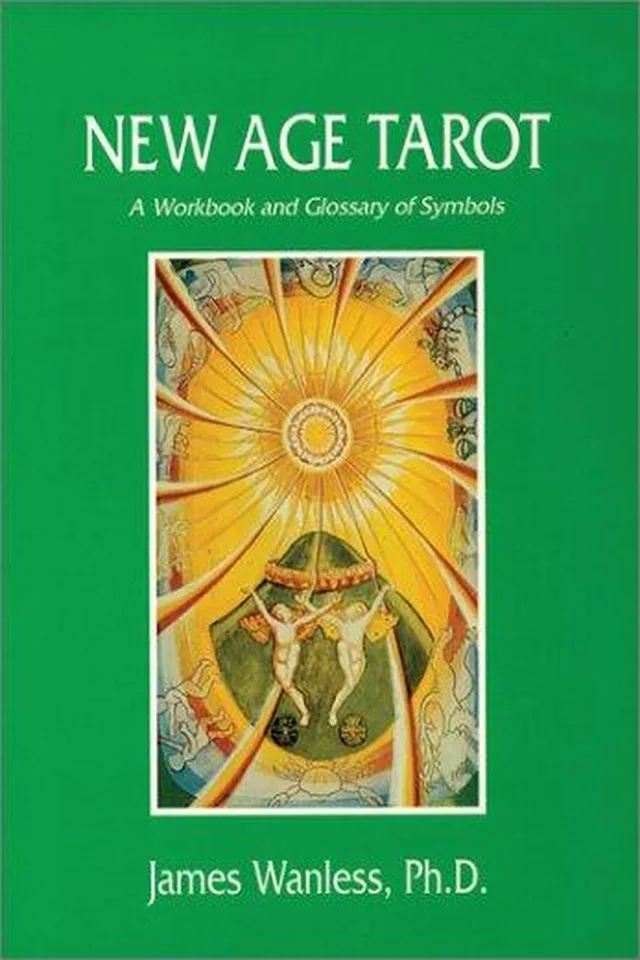
New Age Tarot



Silas Hawthorne, Hermetic Studies Editor — James Wanless's 'New Age Tarot' stands as a cornerstone in modern Tarot scholarship, offering a refreshingly nuanced perspective that bridges ancient symbolism with contemporary psychological and spiritual frameworks. Wanless's unique approach illuminates the cards as powerful archetypes, guiding readers toward profound self-discovery and inner transformation. The text is rich with esoteric insights, meticulously dissecting the layers of meaning embedded within each Major and Minor Arcana card. This book is an indispensable resource for anyone seeking to deepen their understanding of Tarot beyond mere fortune-telling, offering a pathway to holistic spiritual development and enhanced intuitive awareness. Its clarity and depth make it ideal for both nascent practitioners and seasoned occultists.
📝 Description
64
James Wanless published 'New Age Tarot' in 1986, presenting it as a map for the soul's development.
James Wanless's 'New Age Tarot,' first released in 1986, examines the Tarot's symbolism not just for divination, but as a guide to personal and spiritual growth. Wanless connects the imagery of each card to psychological states, spiritual awakening, and broader universal energies. The book aims to help readers achieve greater self-awareness and use their intuition more effectively.
It encourages a perspective that sees deeper meaning and sacred patterns in everyday life. The text seeks to bridge ancient Tarot traditions with modern spiritual exploration, offering a framework for integrating these insights into daily living. It promotes a view of existence as a meaningful, interconnected process.
This book fits within the late 20th-century wave of esoteric thought that sought to synthesize traditional mystical systems with modern psychology and New Age philosophies. It follows in a lineage that views Tarot not just as a predictive tool, but as a symbolic language reflecting inner states and cosmic principles. Wanless's approach aligns with movements that integrated Jungian psychology with spiritual practices, aiming for personal transformation and a connection to universal consciousness through symbolic interpretation.
💡 Why Read This Book?
For those on a quest for deeper self-knowledge and spiritual enlightenment, 'New Age Tarot' offers a transformative lens. It provides a profound understanding of the Tarot's symbolic language, connecting it to psychological growth and universal consciousness. Ideal for seekers, students of esotericism, and practitioners looking to elevate their divinatory practice into a path of profound personal and spiritual evolution. Unlock hidden wisdom and navigate life’s journey with divine insight.
⭐ Reader Reviews
Honest opinions from readers who have explored this book.
❓ Frequently Asked Questions
What is the primary focus of 'New Age Tarot'?
This book focuses on the Tarot as a symbolic map of consciousness and a tool for spiritual growth and self-discovery, rather than solely a predictive device. It explores archetypal meanings and their relevance to modern life.
Is 'New Age Tarot' suitable for beginners?
Absolutely. James Wanless breaks down complex symbolism into accessible language, making it an excellent starting point for those new to Tarot, while still offering depth for experienced readers.
How does this book differ from traditional Tarot interpretations?
It integrates psychological and spiritual perspectives, emphasizing personal transformation and inner awareness. It moves beyond simple fortune-telling to explore the Tarot's role in consciousness evolution.
What kind of knowledge can one expect to gain?
Readers can expect to gain insights into universal archetypes, personal shadow work, intuitive development, and the interconnectedness of all things, fostering a deeper connection with the sacred.
Does the book provide practical methods for reading the Tarot?
Yes, while deeply philosophical, the book offers practical guidance on understanding card meanings, interpreting spreads, and using the Tarot for introspection and guidance in daily life.
🔮 Key Themes & Symbolism
Archetypal Consciousness and the Soul's Journey
This theme studies the Tarot as a reflection of the collective unconscious and the archetypal patterns that govern human experience. Wanless illustrates how each card represents a stage or an aspect of the soul's ascent towards wholeness and enlightenment. The book explores the profound connection between the Tarot's imagery and the psychological and spiritual evolution of the individual, offering a framework for understanding life's challenges and triumphs as integral parts of a grander cosmic narrative. It encourages readers to recognize these archetypes within themselves, fostering self-awareness and facilitating personal transformation through conscious engagement with these universal energies.
Symbolism as a Language of the Divine
The work meticulously deciphers the body of symbolism woven into the Tarot, presenting it as a sacred language that communicates directly with the soul. Wanless illuminates how ancient symbols, geometric patterns, and visual metaphors within the cards serve as keys to unlocking hidden knowledge and understanding the subtle energies of the universe. This exploration goes beyond mere interpretation, inviting readers to attune themselves to the intuitive resonance of these symbols, thereby gaining direct access to wisdom that transcends ordinary rational thought. It emphasizes the power of visual language in spiritual communication and personal revelation.
Tarot as a Tool for Holistic Transformation
Beyond divination, 'New Age Tarot' champions the Tarot as a potent catalyst for holistic transformation, encompassing psychological, spiritual, and existential dimensions. The book guides readers in utilizing the cards for introspection, shadow work, and aligning with their highest potential. It presents a paradigm where understanding Tarot symbolism empowers individuals to navigate their life path with greater clarity, purpose, and conscious intent. This approach fosters a dynamic relationship with the cards, transforming them from passive predictors into active partners in the journey of personal evolution and the manifestation of a more awakened existence.
💬 Memorable Quotes
Direct passages from the work, attributed to the author.
“Each card is a doorway to understanding the self.”
— This highlights the introspective power of the Tarot, suggesting that by exploring the symbolism of each card, one can unlock deeper truths and insights about their own psyche and journey.
“Wisdom unfolds through the silent language of symbols.”
— This emphasizes the intuitive and non-verbal nature of esoteric knowledge, suggesting that true understanding comes from attuning to the deeper, symbolic meanings that resonate beyond literal interpretation.
“The journey of the Fool is the journey of us all.”
— This points to the universality of the Tarot's narrative, particularly the Fool's journey, suggesting that the archetypal path of growth and experience is common to all human beings.
“Align with the archetypes to work through the currents of life.”
— This practical advice encourages readers to consciously engage with the archetypal energies represented in the Tarot, using this understanding to gain mastery and flow within their life experiences.
💡 Key Ideas
Editorial paraphrase of the work's core concepts — not direct quotes.
The Tarot is a mirror reflecting the cosmos within.
This quote captures the book's core philosophy: the Tarot is not external, but an internal landscape mirroring the universal principles and energies that shape existence and consciousness.
🌙 Esoteric Significance
Tradition
This work draws heavily from Hermeticism and Jungian psychology, combining their principles into a modern interpretation of the Tarot. It aligns with the Hermetic concept of 'As Above, So Below,' viewing the Tarot as a microcosm of the macrocosm. The archetypal symbolism echoes Jung's theories of the collective unconscious, presenting the Tarot as a key to unlocking these universal psychic structures and facilitating individuation and spiritual wholeness.
Symbolism
The book's esoteric significance lies in its profound exploration of the Tarot's detailed symbolism, treating each card as a glyph containing layers of meaning. It studies the archetypal energies of the Major Arcana, the elemental forces of the Minor Arcana, and the intricate numerological and astrological correspondences. Wanless deciphers these symbols not just as predictive elements, but as profound keys to understanding the human psyche, spiritual laws, and the interconnectedness of all creation, revealing hidden patterns of consciousness.
Modern Relevance
In an age often characterized by disconnection and existential searching, 'New Age Tarot' offers a profound and accessible pathway to inner wisdom and spiritual grounding. Its emphasis on archetypal patterns and self-transformation provides timeless guidance for navigating contemporary challenges. The book's integration of psychology and spirituality makes its insights highly relevant for personal growth, intuitive development, and cultivating a more meaningful and conscious existence in the modern world.
👥 Who Should Read This Book
This book is a treasure for spiritual seekers beginning their path, offering a foundational understanding of the Tarot as a tool for self-discovery. Tarot practitioners, from beginners to seasoned readers, will find deepened insights and new perspectives on card interpretation. Scholars of esotericism and comparative religion will appreciate its synthesis of ancient symbolism with modern psychological and philosophical thought. Anyone yearning to connect with their inner wisdom, understand life's patterns, and foster profound personal transformation will find 'New Age Tarot' an indispensable guide.
📜 Historical Context
Published during the burgeoning New Age movement of the late 20th century, James Wanless's 'New Age Tarot' emerged as a significant contribution to a cultural wave seeking spiritual awakening and alternative pathways to understanding the self and the universe. This era saw a resurgence of interest in esoteric traditions, mysticism, and psychological depth, moving away from purely materialistic paradigms. The book reflects this shift by integrating Jungian psychology, Eastern philosophies, and contemporary spiritual thought with the ancient symbolism of the Tarot. It offered a modern interpretation that resonated with individuals exploring consciousness expansion, personal growth, and a more holistic view of existence, positioning the Tarot as a vital tool for navigating this evolving spiritual landscape and fostering inner transformation amidst societal change.
📔 Journal Prompts
Reflect on the Fool's journey in your own life. What 'leap of faith' are you currently contemplating or experiencing?
Choose a Minor Arcana card that appeals to your current daily challenges. How can its symbolism offer guidance or insight?
Consider the archetypal energies of the Major Arcana. Which ones feel most dominant in your life right now, and why?
How does the concept of 'As Above, So Below' manifest in your personal experiences? Use a Tarot spread to explore this connection.
Meditate on a card that represents a hidden aspect of yourself. What message does this 'shadow' or 'inner light' have for you?
🗂️ Glossary
Archetype
Universal, archaic patterns and images that derive from the collective unconscious and are the psychic counterpart of instinct. In Tarot, these are represented by the figures and scenes on the cards, embodying fundamental human experiences.
Collective Unconscious
A term coined by Carl Jung, referring to a layer of the unconscious psyche common to all humanity, containing inherited structures and patterns of thought and imagery, often manifested through archetypes.
Esotericism
The study of hidden, inner, or mystical knowledge, often concerning spiritual, philosophical, or magical traditions that are not publicly known or accessible to the uninitiated.
Individuation
A Jungian psychological concept referring to the process of integrating the conscious and unconscious aspects of the psyche to form a complete, whole individual, often facilitated by engaging with archetypal symbols.
Hermeticism
A philosophical and religious tradition based on the purported teachings of Hermes Trismegistus, emphasizing spiritual wisdom, the interconnectedness of all things ('As Above, So Below'), and the potential for human spiritual transformation.
This book appears in 3 collections
🔮 Readers Also Liked
Browse all →
More by James Wanless
All books →
From the “Tarot” Collection
View all →
More Free Divination & Tarot Books
View all →