Moving Pictures
 80
80

Moving Pictures
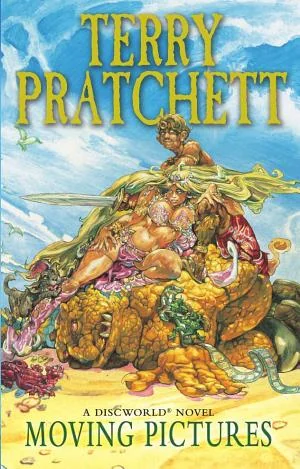
Pratchett’s "Moving Pictures" is a delightful, if somewhat chaotic, exploration of the birth of cinema through the lens of his signature Discworld. The novel excels in its broad satire of early Hollywood, particularly in the character of the grasping producer and the sheer absurdity of the filmmaking process. The introduction of the "mop" – a device that captures moving images – is a brilliant Pratchettian concept, playing with the very idea of recording reality. However, the plot occasionally feels as sprawling as a Hollywood backlot, with certain character arcs, like Victor’s, not quite reaching their full potential amidst the ensemble's antics. The novel’s strength lies in its sharp observations on the nature of fame and illusion, exemplified by the scene where the projected images of a film begin to bleed into the real world, causing genuine panic. It’s a testament to Pratchett’s skill that he can make such a commentary both funny and insightful. "Moving Pictures" is a highly enjoyable, though occasionally uneven, look at the magic and madness of movies.
📝 Description
80
Terry Pratchett's 2012 novel, Moving Pictures, satirizes early Hollywood through a Discworld lens.
Terry Pratchett's "Moving Pictures," first published in 2012, transports readers to the Discworld's early film industry. The story follows Victor Tugelbend, a student, Ginger, a milkmaid, and the entrepreneur Cut-Me-Own-Throat Dibbler as they try to make the first motion picture. The book uses the Discworld's magical rules to comment on storytelling and illusion, focusing on the creation of "The Golden Peril." This film project highlights themes of art versus commerce and the uncertain boundary between reality and fiction. The characters, including the talking dog Gaspode, add humor and unique viewpoints as they grapple with the new medium. Victor gets involved in the technical and artistic struggles, Ginger deals with the social pressures of the film set, and Dibbler focuses on making money. Gaspode's animal perspective offers sharp observations on the human drama unfolding.
The novel explores how cinematic illusion can impact real life. It discusses the power of moving images to change how people see things, create new cultural figures, and shape collective understanding on the Discworld. Pratchett shows how new technology, even in a fantasy setting, can both mirror and change the experiences of its inhabitants.
While not overtly esoteric in the traditional sense, "Moving Pictures" engages with the Discworld's unique magical system as a framework for exploring concepts of reality creation and perception. The book examines how manufactured illusions, like early cinema, can gain a form of power and influence over the minds of its audience, mirroring how belief systems and narratives can shape consensus reality. The magical "machinery" of filmmaking on the Discworld serves as a metaphor for the underlying forces that construct our understanding of the world, blurring the lines between what is real and what is imagined.
💡 Why Read This Book?
• Gain insight into the disruptive nature of new technologies, much like the "mop" in "Moving Pictures" altered perception, by examining how innovation forces societies to adapt. • Appreciate Pratchett's satirical take on the burgeoning film industry, understanding how the creation of "The Golden Peril" mirrored real-world early cinema's blend of artistry and commercialism. • Explore the philosophical implications of moving images, as characters grapple with the power of cinema to blur the lines between fiction and reality on the Discworld.
⭐ Reader Reviews
Honest opinions from readers who have explored this book.
❓ Frequently Asked Questions
What is the main satirical target of Terry Pratchett's "Moving Pictures"?
The novel primarily satirizes the early days of Hollywood and the film industry, lampooning the technology, the personalities, and the business practices involved in creating the first motion pictures.
Who are the main characters involved in making the first Discworld movie?
Key characters include Victor Tugelbend, a film student; Ginger, a milkmaid turned actress; the exploitative entrepreneur Cut-Me-Own-Throat Dibbler; and Gaspode, a talking dog.
What is the "mop" in "Moving Pictures"?
The "mop" is the Discworld's equivalent of a camera, a magical device that captures moving images, representing the nascent technology of cinema within the story.
When was "Moving Pictures" by Terry Pratchett first published?
"Moving Pictures" was first published on November 5, 2012.
Does "Moving Pictures" require prior knowledge of other Discworld books?
While it’s part of the larger Discworld series, "Moving Pictures" functions well as a standalone novel, introducing its characters and world effectively without needing extensive prior reading.
What themes does "Moving Pictures" explore?
The book explores themes of illusion versus reality, the impact of technology, the nature of art and commerce, and the power of storytelling and media.
🔮 Key Themes & Symbolism
The Illusion of Cinema
The novel scrutinizes how the nascent medium of film, represented by the "mop," creates powerful illusions. Characters are captivated and often terrified by these moving images, which begin to influence their perception of reality. This theme touches on the esoteric idea of Maya, the veil of illusion that obscures ultimate truth, and how manufactured realities can become indistinguishable from the genuine article on the Discworld.
Art vs. Commerce
"Moving Pictures" highlights the perpetual tension between artistic integrity and commercial demands, embodied by characters like the exploitative C.M.O.T. Dibbler. The book questions whether the pursuit of profit corrupts the magic of creation, a conflict mirrored in the history of many artistic movements and esoteric traditions that struggle to maintain purity while engaging with the mundane world.
Technological Disruption
The introduction of the "mop" – the moving picture camera – signifies a profound technological shift on the Discworld, akin to how new technologies often disrupt established orders. The book explores the societal impact, from the wonder and fear it inspires to its potential for manipulation, reflecting on how transformative inventions can alter collective consciousness and perceived reality.
The Nature of Performance
From the actors on screen to the filmmakers behind the scenes, the book examines the act of performance. It explores how people construct identities and present themselves, both in front of the camera and in their everyday lives. This appeals to esoteric concepts of the self as a performance and the search for authentic being amidst societal roles.
💬 Memorable Quotes
Direct passages from the work, attributed to the author.
“The dog, Gaspode, had a very clear idea of what was going on. Dogs are like that. They don't get confused by all the trappings of civilization. They just get on with being dogs.”
— Gaspode, the talking dog, represents an unvarnished perspective. This observation suggests that true understanding often comes from stripping away societal complexities and returning to more fundamental truths, a perspective often sought in esoteric disciplines.
“It was a story. It was a film. It was a story on film.”
— This simple declaration emphasizes the recursive nature of the narrative and the medium itself. It points to the self-referential quality of art and how stories, once translated into film, become a new layer of narrative to be interpreted.
💡 Key Ideas
Editorial paraphrase of the work's core concepts — not direct quotes.
It was an important part of the magic of the movies that the audience knew it wasn't real, and that the audience knew that the actors knew that it wasn't real, and that the actors knew that the audience knew that it wasn't real, and that the audience knew that the actors knew that the audience knew that it wasn't real.
This quote captures the intricate meta-awareness required to engage with cinema. It highlights the shared understanding between creators and viewers that allows for the suspension of disbelief, a delicate balance essential for the 'magic' of film to function.
There’s magic in the air. It’s the magic of the cinema.
This line directly links the mystical and the mundane, suggesting that the new art form of cinema possesses a power akin to magic. It implies that moving pictures have the ability to transport, enchant, and fundamentally alter perception.
The sausages were, in fact, the only thing that had gone right for Dibbler that week.
This quote, referring to C.M.O.T. Dibbler's infamous sausage-selling business, highlights his consistent, albeit low, success amidst larger failures. It speaks to the pragmatic, often unglamorous, realities of commerce that underpin even the most fantastical ventures.
🌙 Esoteric Significance
Tradition
While not explicitly tied to a single esoteric lineage, "Moving Pictures" engages with themes common to Hermeticism and Gnosticism, particularly concerning illusion versus reality (Maya) and the creation of artificial worlds. The novel's exploration of how fabricated images can influence perception echoes Gnostic ideas about the material world as a deceptive creation. It critiques the uncritical acceptance of manufactured realities, a theme relevant to any tradition seeking to pierce through illusion to a deeper truth.
Symbolism
The "mop" (camera) is a potent symbol, representing the power to capture and manipulate reality, akin to a magical artifact that can shape perception. The flickering images on the screen symbolize the ephemeral nature of the material world and the potential for illusion. The Discworld itself, a flat disc on the backs of elephants and a turtle, serves as a grand symbol of a constructed reality, where physics and magic coexist.
Modern Relevance
The novel's commentary on the power of media and the blurring lines between reality and fiction remains highly relevant. Contemporary thinkers and practitioners in fields like media studies, philosophy of technology, and even virtual reality design can draw parallels to Pratchett's depiction of how moving images can shape consciousness and societal understanding, influencing our perception of truth in an increasingly mediated world.
👥 Who Should Read This Book
• Aspiring filmmakers and cinephiles seeking a humorous yet insightful look at the early days of cinema and the creative process. • Fans of Terry Pratchett's Discworld series who appreciate his combination of satire, fantasy, and social commentary. • Readers interested in philosophical explorations of reality, illusion, and the impact of technology on human perception.
📜 Historical Context
Terry Pratchett's "Moving Pictures," published in 2012, arrived at a time when digital filmmaking had largely supplanted traditional methods, yet its satire harks back to the early, transformative era of cinema in the late 19th and early 20th centuries. The novel's exploration of the magic and chaos of moviemaking mirrors the actual genesis of the film industry, a period marked by rapid technological innovation and the emergence of figures like the Lumière brothers and Georges Méliès. Pratchett's work playfully engages with the nascent wonder and potential dangers of this new medium, akin to how early critics and audiences reacted to the flickering images on screen. While Pratchett wasn't directly engaging with specific contemporary esoteric movements in this particular novel, his broader work often critiques scientism and champions imaginative understanding, aligning with certain philosophical currents that question purely materialistic explanations of reality, a stance that might find common ground with figures like Douglas Hofstadter who explored consciousness and artificial intelligence.
📔 Journal Prompts
The creation of "The Golden Peril" and its impact on reality.
Gaspode's unique perspective as a talking dog amidst human drama.
The power and danger of the "mop" (camera) on the Discworld.
Victor Tugelbend's journey from student to filmmaker.
Dibbler's entrepreneurial spirit in the face of new technology.
🗂️ Glossary
The Mop
The Discworld's equivalent of a motion picture camera. This magical device captures moving images, representing the nascent technology of cinema and its ability to create illusions.
Victor Tugelbend
A central character, initially a student at the Unseen University, who becomes involved in the creation of the Discworld's first film.
A recurring Discworld character known for his dubious business practices and often inedible sausages. In "Moving Pictures," he sees the potential for profit in the new film industry.
Gaspode
A talking dog who provides often surprisingly insightful, and frequently cynical, commentary on the events unfolding around him.
The Golden Peril
The title of the first movie being made on the Discworld within the novel, representing the ambition and potential folly of the filmmaking endeavor.
Ankh-Morpork
The primary city on the Discworld, a sprawling, chaotic metropolis that serves as the setting for much of the novel's action.
The Silver Screen
A metaphorical term used in the book to refer to the nascent medium of cinema and its captivating, almost magical, quality.
🔮 Readers Also Liked
Browse all →








More Free Occult Philosophy Books
View all →