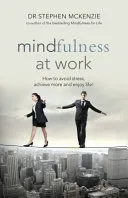
Mindfulness at Work
 79
79

Mindfulness at Work
Stephen McKenzie's 'Mindfulness at Work' arrives at a moment when workplace stress is a ubiquitous concern. The book's strength lies in its straightforward presentation of mindfulness as a practical toolkit for professional enhancement, moving beyond purely spiritual interpretations. McKenzie effectively articulates how simple attentional training can yield tangible benefits, such as improved focus and reduced anxiety. A particularly well-explained section details the practice of 'mindful pausing' – a brief, intentional moment to observe one's mental state before reacting – which offers immediate applicability. However, the work sometimes treads a fine line, risking the reduction of complex contemplative practices to mere productivity hacks. While the book aims to democratize mindfulness for the corporate world, it could benefit from deeper engagement with the ethical considerations and potential pitfalls of applying such practices in hierarchical structures. Overall, 'Mindfulness at Work' provides a valuable, accessible primer for professionals seeking to cultivate greater presence and efficacy in their daily tasks.
📝 Description
79
Stephen McKenzie's 2023 book offers a practical framework for integrating mindfulness into professional environments.
Mindfulness at Work, published in 2023, presents a method for bringing focused awareness to the workplace. The book's main idea is that by paying attention to the present moment, people can better handle the constant distractions and stress of modern jobs. This practice of observing thoughts, feelings, and sensations without judgment is shown not as a separate spiritual exercise, but as a practical skill for improving how people think and manage their emotions at work.
Professionals in any field looking to improve their work experience and output can use this book. It is for those who feel overwhelmed by daily tasks, have trouble concentrating, or want to build better relationships with colleagues. Leaders and team members interested in boosting creativity, making better decisions, and increasing job satisfaction will find it particularly useful. The straightforward style makes it accessible for newcomers to mindfulness as well as those already practicing who want to apply it specifically to their jobs.
While mindfulness practices have deep roots in ancient contemplative traditions, their application in Western psychology and business settings gained traction in the late 20th century. McKenzie's 2023 work arrives as the benefits of mindful awareness for cognitive and emotional well-being are increasingly acknowledged, even as they are sometimes weighed against more traditional management strategies. This book contributes to a growing body of literature that examines the connection between psychological balance and workplace productivity.
💡 Why Read This Book?
• Learn specific techniques for mindful pausing, directly applicable to de-escalating workplace stress and improving immediate decision-making, as detailed in the section on emotional regulation. • Discover actionable strategies to enhance creative problem-solving by understanding how focused attention, as explored in the chapter on creative flow, can unlock new perspectives. • Gain practical methods for improving colleague interactions through the principles of interpersonal mindfulness, enabling more effective communication and collaboration.
⭐ Reader Reviews
Honest opinions from readers who have explored this book.
❓ Frequently Asked Questions
What is the core principle of mindfulness presented in 'Mindfulness at Work'?
The core principle is cultivating present-moment awareness – focusing attention on what is happening now, rather than being lost in distractions or worries, as a means to enhance work life.
How does Stephen McKenzie's book differentiate mindfulness for professional settings?
McKenzie tailors mindfulness practices to address specific workplace challenges like stress, distraction, and interpersonal dynamics, framing it as a tool for productivity and well-being rather than solely a spiritual pursuit.
When was 'Mindfulness at Work' first published?
The book 'Mindfulness at Work' by Stephen McKenzie was first published on September 27, 2023.
What are some tangible benefits of practicing mindfulness at work according to the book?
Tangible benefits include reduced stress, increased productivity, improved decision-making, better colleague relationships, enhanced creativity, and stronger leadership skills.
Is prior experience with mindfulness required to read this book?
No, the book is designed to be accessible for beginners, offering practical guidance for those new to mindfulness while also providing valuable insights for experienced practitioners.
What is the concept of 'mindful pausing' discussed in the book?
Mindful pausing involves taking a brief, intentional moment to observe one's internal state – thoughts, emotions, bodily sensations – before reacting to a situation, thereby fostering more considered responses.
🔮 Key Themes & Symbolism
Attentional Cultivation
The book emphasizes that mindfulness is fundamentally an exercise in directing and sustaining attention. It posits that the ability to focus on the present, rather than being pulled by past regrets or future anxieties, is the central to enhanced cognitive function and emotional stability. This theme explores practical methods, such as focused breathing and body scans, adapted for the busy professional environment. The esoteric angle lies in viewing attention not merely as a cognitive function, but as a subtle energy that can be consciously directed and refined, akin to practices found in contemplative traditions seeking inner mastery.
Emotional Regulation Strategies
A significant portion of 'Mindfulness at Work' addresses how to manage the emotional range of the workplace. It introduces the concept of observing emotions without immediate judgment or reaction, allowing for a more measured response. This involves recognizing emotional triggers and understanding the impermanent nature of feelings. From an esoteric perspective, this aligns with the alchemical principle of transforming base emotions (like frustration or anger) into more refined states (like equanimity or compassion) through conscious awareness and skillful practice, rather than suppression.
Interpersonal Presence
McKenzie extends mindfulness beyond individual experience to interpersonal dynamics. The book suggests that being fully present during interactions can lead to improved communication, deeper empathy, and stronger professional relationships. This involves active listening and mindful speech. Esoterically, this theme connects to the understanding that true connection arises from shared presence and the recognition of the 'other' not just as a role, but as a conscious being. It echoes ancient wisdom traditions that emphasize unity and interconnectedness as fundamental aspects of existence.
Cognitive Clarity and Decision-Making
The work posits that a less cluttered mind, achieved through mindfulness, leads to superior decision-making and problem-solving abilities. By reducing mental noise, individuals can access clearer thinking and more innovative solutions. This theme explores how mindfulness can cut through cognitive biases and habitual thought patterns that impede effective judgment. The esoteric resonance here lies in the pursuit of 'Gnosis' or direct knowing, where clarity of mind allows for intuitive insights and discerning truth from illusion, a core aim in many mystical paths.
💬 Memorable Quotes
Direct passages from the work, attributed to the author.
“Focusing attention on what is rather than what isn’t.”
— This concise statement expresses the essence of mindfulness as presented in the book: a deliberate redirection of mental energy towards present reality, counteracting the common human tendency to dwell on absent possibilities or past occurrences.
“Mindfulness offers a powerful antidote to distractions and stresses.”
— This highlights the practical utility of mindfulness, positioning it not as an abstract philosophy but as a direct remedy for common workplace ailments like overwhelm and lack of focus, thereby increasing professional efficacy.
“Improve decision-making skills through present awareness.”
— This interpretation underscores the cognitive benefits of mindfulness, suggesting that by being more attuned to the current situation, individuals can make choices that are more informed, less reactive, and ultimately more effective.
“Develop leadership skills by enhancing presence.”
— This links mindfulness directly to leadership effectiveness, proposing that a leader's ability to be fully present and aware fosters trust, better communication, and more inspired team dynamics.
“Cultivate creativity by quieting mental chatter.”
— This points to the innovative potential unlocked by mindfulness, suggesting that by reducing internal noise and distractions, space is created for novel ideas and creative solutions to emerge more readily.
🌙 Esoteric Significance
Tradition
While 'Mindfulness at Work' is presented in a secular context, its practices echo fundamental principles found within Buddhist Vipassanā meditation and Stoic philosophy. The emphasis on present-moment awareness, non-judgmental observation of thoughts and feelings, and detachment from outcomes aligns with core tenets of these traditions. It represents a modern adaptation, translating ancient contemplative techniques into accessible tools for contemporary professional life, stripping away overt religious dogma while retaining the psychological and attentional mechanisms.
Symbolism
The book doesn't rely heavily on overt symbolism, instead focusing on the internal landscape. However, the act of 'focusing attention' can be seen as a symbolic representation of the 'inner light' or the focused will sought in many Western esoteric traditions. The concept of 'detachment' from distracting thoughts and emotions symbolizes the alchemical process of separation and purification, leading to a more refined mental state. The workplace itself can be viewed metaphorically as a crucible for transformation.
Modern Relevance
Contemporary thinkers and practitioners in fields like positive psychology, organizational behavior, and even secularized meditation movements continue to draw from the principles popularized by works like McKenzie's. Figures such as Dan Harris, author of '10% Happier', and organizations promoting corporate wellness programs are direct descendants of this trend. The integration of mindfulness into technology (e.g., meditation apps) and its application in therapy (e.g., MBCT, MBCT) demonstrate its ongoing, evolving relevance in modern society.
👥 Who Should Read This Book
• Professionals experiencing high levels of workplace stress and seeking practical, evidence-based techniques to manage anxiety and improve focus, as detailed in the emotional regulation sections. • Team leaders and managers aiming to foster a more positive, productive, and collaborative work environment by understanding the principles of interpersonal presence and mindful communication. • Individuals interested in enhancing their cognitive functions, such as decision-making and creativity, through the application of focused attention techniques presented in the book.
📜 Historical Context
The late 20th and early 21st centuries have witnessed a significant surge in the popularization and academic study of mindfulness, largely moving it from its ancient Buddhist roots into secular domains. Jon Kabat-Zinn's development of Mindfulness-Based Stress Reduction (MBSR) in the 1970s at the University of Massachusetts Medical School marked a key moment, demonstrating its therapeutic potential. This era also saw the rise of cognitive psychology, which provided a framework for understanding mindfulness's effects on attention and emotion regulation. While contemplative traditions often emphasized enlightenment or spiritual liberation, the contemporary secular approach, as seen in McKenzie's work, frequently frames mindfulness as a tool for enhancing performance, well-being, and resilience in demanding environments. This shift occurred alongside a growing societal emphasis on self-optimization and mental health. The reception of mindfulness in professional circles has been largely positive, though some critics, like those associated with critical psychology, have raised concerns about its potential co-option by corporate interests to increase productivity without addressing systemic workplace issues.
📔 Journal Prompts
The practice of mindful pausing before reacting.
Identifying personal emotional triggers in the workplace.
Cultivating attentive listening during colleague interactions.
The role of focused attention in creative problem-solving.
Translating present-moment awareness to daily work tasks.
🗂️ Glossary
Mindfulness
The practice of intentionally bringing one's attention to the present moment experience, observing thoughts, feelings, and sensations without judgment.
Present-Moment Awareness
The state of being fully engaged with and aware of what is happening right now, rather than being preoccupied with the past or future.
Emotional Regulation
The ability to manage and respond to emotional experiences in a way that is adaptive and productive, often involving observing emotions without being overwhelmed.
Cognitive Clarity
A state of clear and focused thinking, free from mental clutter or distraction, which aids in effective decision-making and problem-solving.
Interpersonal Mindfulness
Applying mindful awareness to social interactions, involving attentive listening, mindful speech, and empathetic presence with others.
Mindful Pausing
A brief, intentional moment taken during a situation to observe one's internal state before responding, fostering a more considered reaction.
Attention Training
The process of intentionally directing and sustaining mental focus, a core component of mindfulness practice aimed at improving concentration.