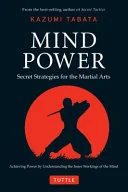
Mind Power
 72
72

Mind Power
Kazumi Tabata's Mind Power offers a rare glimpse into the martial artist's internal landscape, moving beyond the well-trodden paths of physical technique. The book's strength lies in its directness; Tabata, a Grandmaster of Shotokan and Shorinji Karate, shares his personal insights without excessive embellishment. He articulates the goal of perceiving time differently during combat, a concept that, while challenging to convey, is central to unlocking higher levels of skill. However, the original blurb, which mentions "basic physical" strategy, suggests a potential disconnect between the esoteric promise and the practical execution detailed within. The chapter titles themselves are not fully provided, leaving some ambiguity about the extent to which physical strategy is truly integrated with mental power. Despite this, Tabata's focus on harnessing spiritual and mental energy provides a valuable framework for practitioners seeking to elevate their art. The work offers a compelling, if at times abstract, exploration of the mind's capacity within the martial discipline.
📝 Description
72
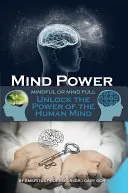
Kazumi Tabata's 2010 book, Mind Power, moves beyond physical technique to address martial arts' mental and spiritual dimensions.
Mind Power, by Grandmaster Kazumi Tabata, was first published in 2010. The book details Tabata's personal teachings, intended to develop the internal fortitude required for survival and success in martial arts. It explains how practitioners can achieve a heightened awareness, allowing them to perceive rapid movements as if in slow motion. The text guides readers in unlocking latent inner power through focused mental discipline and strategic application.
This work is primarily for martial artists who wish to go beyond the physical aspects of their practice. Students of Shotokan and Shorinji Karate will find it particularly relevant, but it also benefits practitioners of any discipline seeking to improve their focus, speed, and strategic thinking. Those interested in the psychology of peak performance, the mind-body connection, and applying esoteric principles to practical skills will gain value. It is for the dedicated student ready to engage with the subtler energies that support martial prowess.
Published in 2010, Mind Power arrived as Eastern philosophies and Western consciousness studies began to intersect more broadly. While not directly engaging with figures like Fritjof Capra, Tabata's book adds to the discussion on the non-physical aspects of skill acquisition. It distinguishes itself from earlier martial arts literature, which often centered on lineage and technical execution. Instead, it foregrounds mental energy cultivation as a central element, rather than a secondary benefit. The Shotokan style itself has a long history, originating from Okinawan martial arts traditions.
💡 Why Read This Book?
• Understand 'mind power' as a tangible, cultivable force in martial arts, directly learning from Grandmaster Kazumi Tabata's specific teachings on mental energy, as presented in chapters discussing strategy and perception. • Experience the concept of temporal dilation in combat, grasping how martial artists can perceive fast movements in slow motion, a key takeaway from Tabata's exploration of enhanced awareness. • Acquire tools for survival and success by integrating mental discipline with physical action, learning techniques directly applicable to martial arts that go beyond mere physical conditioning.
⭐ Reader Reviews
Honest opinions from readers who have explored this book.
❓ Frequently Asked Questions
What martial arts styles does Kazumi Tabata teach in Mind Power?
Kazumi Tabata, the author of Mind Power, is a Grandmaster in both the Shotokan and Shorinji styles of Karate. The book draws upon his extensive experience in these disciplines to explain the mental and spiritual aspects of martial arts.
What is the core concept of 'mind power' as presented by Tabata?
In Mind Power, 'mind power' refers to the cultivation of spiritual and mental energy. Tabata teaches how to harness this energy to achieve heightened states of awareness, enabling faster reactions and strategic advantages in martial arts.
Can Mind Power help me perceive time differently during a fight?
Yes, the book aims to teach practitioners how to reach a point where time appears to slow down during combat. This allows for the perception of quick movements in slow motion, a key outcome of harnessing one's inner power.
Is Mind Power suitable for beginners in martial arts?
While the book is aimed at deepening practice, its focus on foundational mental and spiritual energy cultivation can benefit dedicated beginners. However, prior exposure to martial arts principles, especially from Shotokan or Shorinji Karate, would enhance comprehension.
When was Mind Power first published?
Mind Power by Kazumi Tabata was first published on September 10, 2010. This allows readers to place its teachings within the context of early 21st-century martial arts philosophy.
What kind of strategies are discussed in Mind Power?
The book discusses strategies that integrate physical application with mental and spiritual energy. It moves beyond basic physical maneuvers to explore how focused intent and heightened perception can be used to gain an advantage.
🔮 Key Themes & Symbolism
Cultivating Mental Energy
The central theme is the deliberate development of 'mind power,' understood as a potent blend of spiritual and mental energy. Kazumi Tabata guides readers through practices designed to strengthen this internal force, moving beyond the physical mechanics of martial arts. This cultivation is presented not as a passive state but as an active discipline, essential for achieving peak performance and resilience in the face of adversity. The work emphasizes that true mastery lies in the integration of mind and body, allowing for intuitive and powerful responses.
Perception and Time Dilation
A significant concept explored is the ability to alter one's perception of time during critical moments. Tabata explains how focused mental energy can lead to a state where rapid actions appear in slow motion. This heightened awareness is crucial for anticipating an opponent's moves and executing precise counter-attacks. The book provides insights into achieving this state, suggesting it is a direct result of dedicated practice and the successful harnessing of inner power, transforming the martial artist's interaction with their environment.
Strategy Beyond the Physical
Mind Power redefines strategy in martial arts by incorporating mental and spiritual dimensions. It moves beyond traditional physical tactics to explore how intention, focus, and energy projection can influence the outcome of a confrontation. Tabata's teachings suggest that superior strategy stems from internal control and a deep understanding of one's own power, enabling practitioners to act with both decisive force and profound calm. This approach offers a comprehensive method for survival and success.
Integration of Mind and Body
The work underscores the inseparable link between the practitioner's mental state and their physical capabilities. It posits that true martial prowess is achieved when the mind's intent is seamlessly translated into bodily action. This integration allows for fluid, instinctive movements and a profound connection to one's own potential. Tabata's teachings encourage a holistic approach to training, where mental discipline is as vital as physical conditioning for achieving mastery.
💬 Memorable Quotes
Direct passages from the work, attributed to the author.
“Harness your spiritual and mental energy to acquire the tools for survival and success in martial arts.”
— This foundational statement expresses the book's core objective: to elevate martial practice by focusing on internal power. It suggests that true effectiveness in combat stems not just from physical skill, but from a cultivated inner strength and focused consciousness.
“Reach the point where time seems to slow down, quick movements are seen in slow motion.”
— This describes the ultimate goal of the mind power training presented. It points to a state of heightened perception where the practitioner gains a crucial temporal advantage, allowing for superior reaction and strategy execution.
“Acquire the full potential of one's inner power.”
— This highlights the book's promise of unlocking latent abilities. It suggests that individuals possess untapped reserves of energy and capability that can be accessed and directed through the methods taught by Grandmaster Tabata.
“Strategy—basic physical”
— This phrase, likely referencing a chapter or section title, indicates that the book intends to connect esoteric mental principles with practical, physical applications within martial arts strategy. It bridges the gap between inner cultivation and outward action.
“Personal teachings as to how martial arts students can reach...”
— This emphasizes the direct, experiential nature of the knowledge shared. It positions the book as a personal transmission from a high-level practitioner, offering authentic guidance rather than theoretical speculation.
🌙 Esoteric Significance
Tradition
While not explicitly aligning with a single Western esoteric lineage like Hermeticism or Kabbalah, Mind Power draws heavily from Eastern philosophical traditions that inform martial arts, particularly those influenced by Taoist concepts of internal energy (Qi/Ki) and Buddhist principles of focused awareness (Samadhi). It shares common ground with internal alchemy practices that aim to refine and direct vital energies. The work departs from purely meditative traditions by emphasizing the direct application of these cultivated energies within a combative, physical framework.
Symbolism
The primary symbolic motif is 'mind power' itself, representing the untapped potential of consciousness and vital energy. The concept of 'time slowing down' functions symbolically, representing a state of perfect presence and attunement where the practitioner transcends ordinary temporal limitations. The 'tools for survival and success' symbolize the practical manifestations of this inner power – the ability to act decisively and effectively under pressure, embodying the mastery sought in esoteric disciplines.
Modern Relevance
Mind Power's emphasis on harnessing internal energy and achieving heightened states of perception speaks to contemporary interest in neuroplasticity, peak performance psychology, and advanced meditation techniques. Thinkers and practitioners exploring fields like embodied cognition, consciousness studies, and the application of martial arts principles to leadership and resilience can find valuable conceptual frameworks within Tabata's work. It informs modern discussions on biofeedback and intentionality in skill acquisition.
👥 Who Should Read This Book
['• Dedicated martial artists of any style seeking to move beyond physical technique and explore the mental and spiritual dimensions of their practice, aiming to enhance focus and reaction time.', '• Practitioners of Shotokan and Shorinji Karate interested in understanding the personal teachings of a Grandmaster like Kazumi Tabata regarding the cultivation of inner power.', '• Individuals intrigued by the intersection of esoteric philosophy and practical skill development, particularly those looking for methods to achieve heightened states of awareness and control.']
📜 Historical Context
Published in 2010, Kazumi Tabata's Mind Power entered a literary landscape where martial arts literature was well-established, yet often focused heavily on technical manuals and historical lineage. While the early 21st century saw increased interest in the mind-body connection across various disciplines, including sports psychology, works specifically integrating esoteric mental cultivation with martial arts combat were less common. Tabata's text builds upon the legacy of figures like Gichin Funakoshi, the founder of Shotokan Karate (who himself emphasized the mental aspects), but brings a distinct focus on harnessing 'spiritual and mental energy' for practical application. Unlike purely philosophical treatises on Zen and the martial arts, Mind Power offers concrete, albeit esoteric, strategies for practitioners. Its publication predates the widespread popularization of mindfulness apps, offering a more traditional, discipline-focused approach to mental enhancement within a specific martial context.
📔 Journal Prompts
Reflect on the concept of 'mind power' as described by Kazumi Tabata and its potential application in your daily life.
Analyze the idea of time dilation in combat: how might achieving this state alter your approach to challenges?
Consider the 'tools for survival and success' that harnessing spiritual and mental energy might provide.
Explore the relationship between 'strategy—basic physical' and the cultivation of inner power.
Examine the full potential of one's 'inner power' and identify steps towards its realization.
🗂️ Glossary
Mind Power
The central concept in the book, referring to the deliberate cultivation and harnessing of spiritual and mental energy for enhanced performance and awareness in martial arts.
Spiritual Energy
A vital force or consciousness that underlies physical existence, which can be intentionally developed and directed, as taught by Kazumi Tabata.
Mental Energy
The focused power of the mind, including concentration, intention, and awareness, which can be trained and amplified.
Time Dilation (in combat)
A state of heightened perception where rapid events seem to occur in slow motion, enabling superior reaction and strategic advantage.
Inner Power
The latent potential within an individual, encompassing physical, mental, and spiritual capacities, which can be unlocked through focused practice.
Survival and Success
The dual outcomes achieved through the application of cultivated mind power in martial arts, referring to both defensive capability and the ability to prevail.
Strategy (Esoteric)
Tactics in martial arts that integrate physical movements with the directed use of mental and spiritual energy, going beyond conventional physical approaches.
This book appears in 1 collection
🔮 Readers Also Liked
Browse all →









From the “Mind Power” Collection
View all →






More Free Occult Philosophy Books
View all →