Military lodges
 73
73

Military lodges
Gould's "Military Lodges" provides a meticulously researched account of a fascinating, often overlooked, facet of Masonic history. His strength lies in cataloging the factual existence and operational details of these units, drawing on archival material to illustrate their presence across different armies and eras. The work is invaluable for its detailed exposition of how Masonic principles were practically applied in the rigorous environment of military service, a context far removed from the stable urban lodges typically studied. However, the book occasionally leans towards a dense, catalogue-like presentation, which might challenge readers seeking a more narrative flow. For instance, the detailed listing of specific regiments and their lodge affiliations, while factually important, can sometimes obscure the broader social or philosophical implications. Despite this, Gould's comprehensive approach offers a solid foundation for understanding this niche of Masonic history, making it an indispensable resource for serious students of the Craft.
📝 Description
73
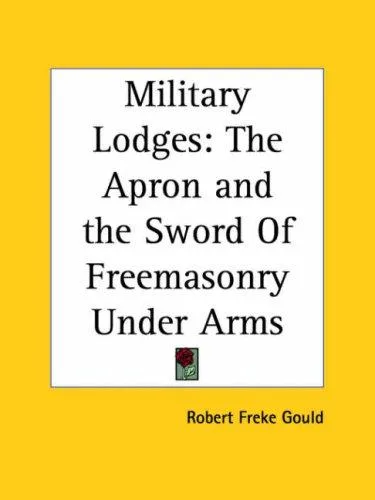
Robert Freke Gould's 1899 book examines Freemasonry's role in military regiments.
Robert Freke Gould's "Military Lodges" details the historical establishment and activities of Masonic lodges within armed forces. Published in 1899, the work traces how these fraternal organizations adapted to the mobile and often austere conditions of military life. It shows how lodges provided a framework for social cohesion and mutual support among soldiers and officers across various European and colonial theaters. The text addresses the unique social dynamics and operational challenges faced by lodges attached to military units.
The book appeals to those interested in the intersection of social history and institutional development, particularly concerning how private societies functioned within public, hierarchical structures. Readers seeking to understand the practical application of Masonic principles in non-traditional settings will find this work informative. Gould's research emerges from a late Victorian era of historical scholarship and a renewed interest in Masonic origins, contributing to a broader understanding of Masonic diffusion beyond civilian contexts.
Gould's research situates itself within a late Victorian intellectual milieu focused on Masonic origins and history. This period saw numerous attempts to codify and legitimize Freemasonry's past, often in response to external scrutiny or internal debates. "Military Lodges" contributes to understanding Masonic diffusion by examining its presence in non-civilian environments, reflecting a broader late 19th century interest in the historical and societal reach of fraternal orders beyond their typical urban settings.
💡 Why Read This Book?
• Learn about the operational realities of Freemasonry during the 18th and 19th centuries, specifically how lodges functioned within mobile military units and the challenges they faced, as detailed in Gould's examination of "travelling lodges." • Understand the social function of Masonic lodges in military settings, providing a space for fraternity and mutual support among soldiers and officers, a concept explored through Gould's discussion of regimental affiliations. • Gain insight into the historical development of Freemasonry beyond civilian life, appreciating its adaptability and reach into diverse societal structures, as evidenced by the book's focus on lodges present during campaigns and colonial service.
⭐ Reader Reviews
Honest opinions from readers who have explored this book.
❓ Frequently Asked Questions
When was Robert Freke Gould's "Military Lodges" first published?
Robert Freke Gould's "Military Lodges" was first published in 1899, marking it as a significant late Victorian contribution to Masonic historical literature.
What is a 'travelling lodge' as discussed in Gould's book?
A 'travelling lodge' refers to a Masonic lodge that was organized within or attached to a military unit, capable of moving with the regiment during campaigns or postings.
Does "Military Lodges" cover Freemasonry in the American Civil War?
While Gould's work focuses broadly on military lodges, specific coverage of the American Civil War would depend on the availability of documented Masonic activities within regiments of that conflict during his research period.
What was the historical period most covered by "Military Lodges"?
Gould's research primarily covers the 18th and 19th centuries, detailing the establishment and activities of military lodges during periods of significant European and colonial military engagements.
Is "Military Lodges" available as a free online resource?
As a work published in 1899, "Military Lodges" is in the public domain and is often available through online archives and digital libraries dedicated to historical texts.
What kind of primary sources did Gould use for "Military Lodges"?
Gould drew upon archival records, regimental histories, and potentially lodge minutes and correspondence to document the existence and activities of military Masonic lodges.
🔮 Key Themes & Symbolism
Fraternity Under Arms
The work details how Masonic principles of brotherhood and mutual aid were enacted within the structured and often perilous environment of military service. Gould's research illustrates the formation of lodges within regiments, providing a crucial social and spiritual anchor for men far from home. These "travelling lodges" were not mere social clubs but integral components of regimental life, fostering cohesion and support systems that transcended rank and origin, particularly during extended campaigns or colonial duties in the 18th and 19th centuries.
Logistical Adaptation of Masonry
A central theme is the practical adaptation required for Masonic lodges to function within military structures. Gould examines the challenges of maintaining ritualistic consistency, membership records, and regular meeting schedules while units were constantly on the move. The book highlights the ingenuity of military Masons in overcoming these obstacles, often using temporary structures or adapting existing facilities, showcasing Freemasonry's capacity for resilience and continuity in dynamic, non-traditional settings.
Social Stratification and Masonic Inclusion
Gould's exploration of military lodges sheds light on the social dynamics and class interactions within the armed forces. These lodges often included men from various ranks, from common soldiers to officers, creating a unique cross-section of society. The text implicitly explores how Masonic membership could bridge social divides, offering a common ground for individuals who might otherwise remain separated by military hierarchy, fostering a sense of shared identity and purpose.
The Diffusion of Masonic Influence
The book traces the geographical spread of Freemasonry through military personnel, demonstrating how armed forces acted as vectors for the dissemination of Masonic ideas and practices across continents. Gould's accounts of lodges attached to regiments serving in colonial territories underscore the role of military expansion in the global proliferation of fraternal organizations during the era of empires.
💬 Memorable Quotes
Direct passages from the work, attributed to the author.
“Maintaining regularity and ritualistic purity posed unique challenges for travelling lodges.”
— This interpretation points to the practical difficulties faced by Masonic lodges attached to regiments, which had to contend with constant movement, varying locations, and the demands of military operations on their fraternal activities.
“Military lodges often drew members from diverse social strata within the armed forces.”
— This reflects Gould's observation that Masonic membership in military units could bridge hierarchical divides, uniting men of different ranks and backgrounds under the common principles of the Craft.
“Regimental Masonry contributed to the global spread of the fraternity.”
— This concept underscores the role of military deployments in carrying Masonic practices and ideals to various parts of the world, particularly during the expansionist periods of the 18th and 19th centuries.
“The establishment of Masonic lodges was documented within various European armies.”
— This points to Gould's factual research, demonstrating the widespread presence and institutionalization of Freemasonry within the military structures of different nations during the periods he examines.
💡 Key Ideas
Editorial paraphrase of the work's core concepts — not direct quotes.
The formation of lodges within military units was a response to the need for fraternity during service.
This paraphrased concept highlights how Masonic organizations adapted to the transient and often isolated nature of military life, providing essential social bonds and support structures for soldiers and officers.
🌙 Esoteric Significance
Tradition
While "Military Lodges" is primarily a historical and sociological study, it touches upon the practical application of esoteric principles within a structured, hierarchical environment. It aligns with the broader tradition of Western Esotericism that seeks to understand how philosophical and spiritual ideas manifest in various societal contexts. The work implicitly relates to Hermeticism and its emphasis on universal principles, showing how these might operate even within the pragmatic confines of military life, albeit with less focus on overt ritual or mystical doctrine.
Symbolism
The primary "symbolism" explored is not overt ritualistic iconography but the symbolic weight of the "lodge" itself as a microcosm of order and fraternity within the chaos of military campaigns. The "square and compasses," though not explicitly detailed in this specific work's blurb, would implicitly represent the Masonic ideals of morality and universal connection being maintained. The "travelling lodge" itself symbolizes adaptability and the enduring nature of fraternal bonds across diverse and challenging environments.
Modern Relevance
Contemporary interest in "Military Lodges" stems from a continued fascination with the history of Freemasonry and its societal impact. Historians of fraternal organizations, military historians, and researchers of social movements find Gould's work foundational for understanding how private societies integrated with public institutions. Modern scholars of organizational studies might also examine it for case studies on group cohesion and adaptation in demanding environments, demonstrating the enduring legacy of organized brotherhoods.
👥 Who Should Read This Book
• Military historians and enthusiasts seeking to understand the social fabric and fraternal networks within armed forces during the 18th and 19th centuries. • Freemasonry scholars and practitioners interested in the historical development and geographical diffusion of the Craft beyond civilian contexts, particularly its presence in regimental life. • Students of social history and organizational studies looking for examples of how private societies operated within formal military structures, providing mutual support and cohesion.
📜 Historical Context
Published in 1899, Robert Freke Gould's "Military Lodges" emerged during a period of intense historical inquiry into Freemasonry, a movement seeking to solidify its historical narrative. The late 19th century witnessed numerous scholarly works attempting to trace the origins and development of Masonic lodges, often in response to public scrutiny or internal debates. Gould's work fits within this milieu, offering a specialized study that complements broader Masonic histories. Contemporaries like Albert Pike were also publishing extensively on Masonic ritual and philosophy during this era, though Gould's focus remained strictly on the historical presence of lodges within armed forces. The work's meticulous cataloging of regiments and their associated lodges served to legitimize Freemasonry by demonstrating its long-standing and widespread integration into military institutions across Europe and its colonies, providing a factual counterpoint to more speculative Masonic literature.
📔 Journal Prompts
The concept of the "travelling lodge" and its challenges.
Reflect on the practical application of Masonic principles within the military context described by Gould.
Analyze the social implications of fraternity crossing military ranks, as suggested by the book.
Consider the resilience of fraternal organizations like those discussed in "Military Lodges" during periods of conflict.
Explore the historical evidence for Masonic lodges attached to specific regiments mentioned in Gould's work.
🗂️ Glossary
Military Lodge
A Masonic lodge formally attached to or formed within a specific military regiment or unit, functioning alongside the unit's operational duties.
Travelling Lodge
A specific type of military lodge that was organized to move with its associated military unit, maintaining its operations across different locations and campaigns.
Regimental Lodge
Synonymous with Military Lodge, emphasizing its direct affiliation with a particular army regiment.
Fraternity
In the context of Freemasonry, the bond of brotherhood and mutual support among members, transcending social, religious, or political differences.
Ritualistic Purity
The adherence to established Masonic ceremonies, forms, and symbolic meanings, which could be challenging to maintain consistently in mobile military settings.
Dissemination
The spread or propagation of Masonic ideas, practices, and membership across different geographical regions, often facilitated by the movement of military personnel.
Victorian Era
The period of Queen Victoria's reign in the United Kingdom (1837–1901), characterized by industrial expansion, social reform, and a burgeoning interest in historical scholarship.
🔮 Readers Also Liked
Browse all →






More by Robert Freke Gould
All books →


More Free Freemasonry & Secret Societies Books
View all →