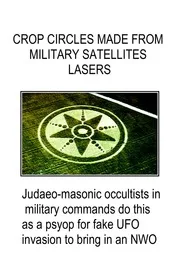
Masonic and Occult Symbols Illustrated

 75
75

Masonic and Occult Symbols Illustrated
Cathy Burns’s "Masonic and Occult Symbols Illustrated" offers a broad survey of symbols, attempting to catalog their appearances across disparate groups from Freemasons to Satanists. Its primary asset is the sheer volume of images presented, providing a visual reference point for symbols encountered in various contexts. The section detailing astrological and alchemical glyphs, for example, is particularly useful for beginners trying to map these ancient signs. However, the work occasionally sacrifices depth for breadth. The explanations, while numerous, sometimes lack the nuanced historical or philosophical grounding necessary for a truly critical understanding. For instance, the interpretation of the peace symbol feels somewhat superficial, overlooking its more complex anti-war and counter-cultural associations beyond its initial adoption. The book’s value lies in its encyclopedic scope rather than its analytical rigor. It’s a useful starting point for symbol identification, but not a definitive guide to their intricate meanings.
📝 Description
75
Cathy Burns published 'Masonic and Occult Symbols Illustrated' in 1998, cataloging esoteric iconography.
"Masonic and Occult Symbols Illustrated," by Cathy Burns, is a visual reference that catalogs symbols used in secret societies, spiritual practices, and philosophical movements. First appearing in 1998, the book's primary asset is its extensive collection of illustrations. Each image is paired with an explanation intended to clarify the symbol's origins and meanings.
This work is useful for researchers, practitioners, and anyone interested in occultism, Freemasonry, Western esotericism, or comparative religion. It acts as a guide for understanding the visual language of various traditions, from older mystical practices to contemporary New Age ideas. Readers curious about the hidden symbolism in everyday logos, art, and cultural items will find this book valuable.
This book fits within a late 20th-century trend of making esoteric subjects more accessible. As interest grew in alternative spiritualities and historical secret societies, there was a greater demand for clear, illustrated guides to their complex symbol systems. Burns's work appeared when information on these topics was often scattered or biased. It specifically addresses the visual language employed by groups like Freemasons and various occult orders, showing how these symbols convey complex ideas and historical information.
💡 Why Read This Book?
• Gain practical visual identification skills for over 500 symbols, as cataloged by Cathy Burns, useful for deciphering organizational logos and esoteric artifacts. • Understand the connections between symbols used by groups like Freemasons and witches, as explored through hundreds of illustrations and their documented meanings. • Learn about the historical use of specific symbols, such as talismans and amulets, as presented in the book's detailed explanations from its 1998 publication.
⭐ Reader Reviews
Honest opinions from readers who have explored this book.
❓ Frequently Asked Questions
What types of organizations and practices does "Masonic and Occult Symbols Illustrated" cover?
The book examines symbols from Freemasonry, occultism, witchcraft, New Age movements, Satanism, and humanist groups, illustrating their use in diverse traditions and even common organizational logos.
How many symbols are illustrated in Cathy Burns's book?
While an exact number isn't specified, the book features hundreds of illustrations, providing a substantial visual reference for esoteric and common symbols.
When was "Masonic and Occult Symbols Illustrated" first published?
Cathy Burns's "Masonic and Occult Symbols Illustrated" was first published in 1998, reflecting a period of growing interest in esoteric studies.
Does the book explain the meaning of symbols found in everyday life?
Yes, the book aims to uncover hidden meanings behind symbols seen daily, including organizational logos, hand signals, and even humanist symbols.
Is the book suitable for beginners in occult studies?
Yes, with its focus on illustrations and explanations of symbols, it serves as a good introductory resource for those new to occult iconography and symbolism.
What kind of esoteric traditions are represented in the symbol collection?
The book covers a wide spectrum, including Masonic, occult, witchcraft, New Age, Satanic, and humanist traditions, offering a broad overview of symbolic language.
🔮 Key Themes & Symbolism
The Ubiquity of Esoteric Symbols
This theme focuses on how symbols rooted in occult and fraternal traditions permeate modern society, often unnoticed. Burns illustrates how symbols from Freemasonry, witchcraft, and other esoteric orders appear in corporate logos, popular culture, and even simple hand gestures. The book argues that these visual cues carry significant, often concealed, meanings related to power, belief systems, and historical lineages, suggesting a hidden layer of communication accessible to those who understand the lexicon.
Decoding Symbolic Language
The central tenet is that symbols serve as a form of language. Burns presents this language through detailed illustrations and explanations, aiming to provide readers with the tools to interpret a vast array of glyphs, sigils, and icons. The book explores how these symbols are employed across different spiritual and philosophical frameworks, from ancient talismans to modern New Age iconography, highlighting their role in conveying complex ideas and initiatory knowledge.
Comparative Symbolism Across Traditions
Burns juxtaposes symbols used by seemingly disparate groups, such as Masons, witches, and Satanists, to reveal common archetypes and shared symbolic roots. The work highlights how similar visual motifs can carry analogous meanings or be adapted across various belief systems. By presenting a wide range of examples—including tarot cards, zodiac signs, and humanist symbols—the book encourages a comparative approach to understanding esoteric symbolism.
The Illustrated Lexicon of Esotericism
This theme emphasizes the book's function as a visual dictionary. With hundreds of illustrations, it serves as a practical reference guide rather than a purely theoretical text. The focus is on direct visual representation and accompanying explanations, making the complex world of esoteric symbols accessible through a cataloged and illustrated format. This approach is particularly valuable for identifying symbols encountered in physical artifacts or visual media.
💬 Memorable Quotes
Direct passages from the work, attributed to the author.
“Symbols are used by Masons, occultists, witches, New Agers, Satanists, and others.”
— This statement captures the book's broad scope, indicating that esoteric symbols are not confined to a single tradition but are a shared visual language across diverse, often contrasting, belief systems and organizations.
“Discover the most fascinating and in-depth meanings behind the symbols.”
— This highlights the book's objective: to move beyond superficial recognition of symbols and provide readers with deeper, often hidden, interpretations of their significance and origins.
“Uncovers the hidden meanings behind the symbols that we see around us every day.”
— This suggests that esoteric symbolism is not obscure but is integrated into the fabric of daily life, appearing in common objects and media, and the book aims to reveal this pervasive influence.
“See hundreds of illustrations along with their explanations.”
— This points to the practical, visual-first approach of the book, emphasizing its utility as a reference tool where images and their documented meanings are paramount.
“Find organizational logos, hand signals, tarot cards, zodiac signs, talismans, amulets, and humanist symbols.”
— This details the diverse categories of symbolic representation covered, demonstrating the book's comprehensive effort to catalog symbols from various domains of human activity and belief.
🌙 Esoteric Significance
Tradition
This work functions primarily as a compendium within the broader field of Western Esotericism, drawing from traditions such as Hermeticism, Kabbalah, alchemy, and Freemasonry. It acts as a practical lexicon, making the symbolic language of these lineages accessible to a wider audience. While not strictly adhering to any single tradition's initiatory framework, it compiles symbols commonly found within them, serving as a bridge between academic study and popular interest in occult symbolism.
Symbolism
The book frequently illustrates symbols like the Square and Compasses, representing Masonic principles of morality and order, and the Pentagram, a potent symbol in witchcraft and ceremonial magic often denoting elemental forces or protection. It also details the meaning of talismans and amulets, ancient objects imbued with protective or power-granting symbolism, connecting historical practices to contemporary interpretations within esoteric thought.
Modern Relevance
Contemporary practitioners of modern witchcraft, ceremonial magicians, and enthusiasts of conspiracy theories often reference Burns's work as a foundational visual resource. Its catalog of symbols informs discussions on everything from corporate branding analysis to modern occult ritual design. Thinkers and writers exploring the resurgence of esoteric symbolism in digital media and popular culture find its comprehensive illustration of diverse symbols, including those from New Age and humanist movements, particularly useful.
👥 Who Should Read This Book
['• Novice occult researchers seeking a visual introduction to a wide range of esoteric symbols, including those found in Masonic lodges and witchcraft traditions.', "• Comparative religion students interested in the visual languages employed by various spiritual and fraternal organizations documented in the book's 1998 publication.", '• Graphic designers and artists looking for inspiration or analysis of symbolic motifs appearing in logos, historical artifacts, and cultural imagery.']
📜 Historical Context
Published in 1998, Cathy Burns's "Masonic and Occult Symbols Illustrated" emerged during a period of burgeoning public interest in esoteric subjects, fueled by the rise of the internet and a growing accessibility to previously niche information. This era saw a proliferation of books attempting to catalog and explain the symbols of secret societies and occult traditions. The work positioned itself as a visual guide, contrasting with more text-heavy theoretical analyses prevalent at the time. It aimed to serve a readership drawn to comparative religion, conspiracy theories, and alternative spiritualities that gained momentum following the cultural shifts of the late 20th century. While not engaging directly with academic discourse, it tapped into a popular fascination with hidden knowledge that figures like Manly P. Hall had popularized decades earlier. Its comprehensive visual approach provided a counterpoint to abstract philosophical explorations, offering concrete examples for a curious public.
📔 Journal Prompts
The Masonic Square and Compasses: What ethical principles does this symbol suggest to you?
Reflection on the symbolism of talismans and amulets as presented in Burns's catalog.
Analyze the recurrence of specific occult symbols across different traditions shown in the book.
Consider the hidden meanings behind everyday organizational logos discussed in the text.
How does the illustration of zodiac signs connect to broader cosmological ideas?
🗂️ Glossary
Masonic Symbols
Iconography specifically associated with Freemasonry, such as the Square and Compasses, the All-Seeing Eye, and the Letter 'G', used to convey moral and philosophical teachings.
Occult Symbols
A broad category of symbols used in esoteric traditions, including sigils, alchemical emblems, astrological glyphs, and magical diagrams, often representing hidden forces or spiritual concepts.
Witchcraft Symbols
Visual elements associated with Wicca and other forms of witchcraft, such as the pentagram, the triple moon, and various ritual tools, used for spiritual practice and representation.
New Age Symbols
Icons commonly adopted by New Age spirituality, including crystals, mandalas, and representations of chakras, often symbolizing healing, consciousness expansion, and holistic well-being.
Satanic Symbols
Symbols associated with various forms of Satanism, which can include the Sigil of Baphomet, inverted crosses, and other imagery often intended to provoke or represent rebellion against established norms.
Talismans
Objects inscribed with magical symbols or spells, believed to possess protective powers or to attract good fortune, often specific to certain traditions or intentions.
Amulets
Items worn for protection against evil or harm, often bearing religious or magical symbols, distinct from talismans in their primary function of warding off negative influences.
This book appears in 1 collection
🔮 Readers Also Liked
Browse all →





From the “Freemasonry” Collection
View all →



More Free Freemasonry & Secret Societies Books
View all →